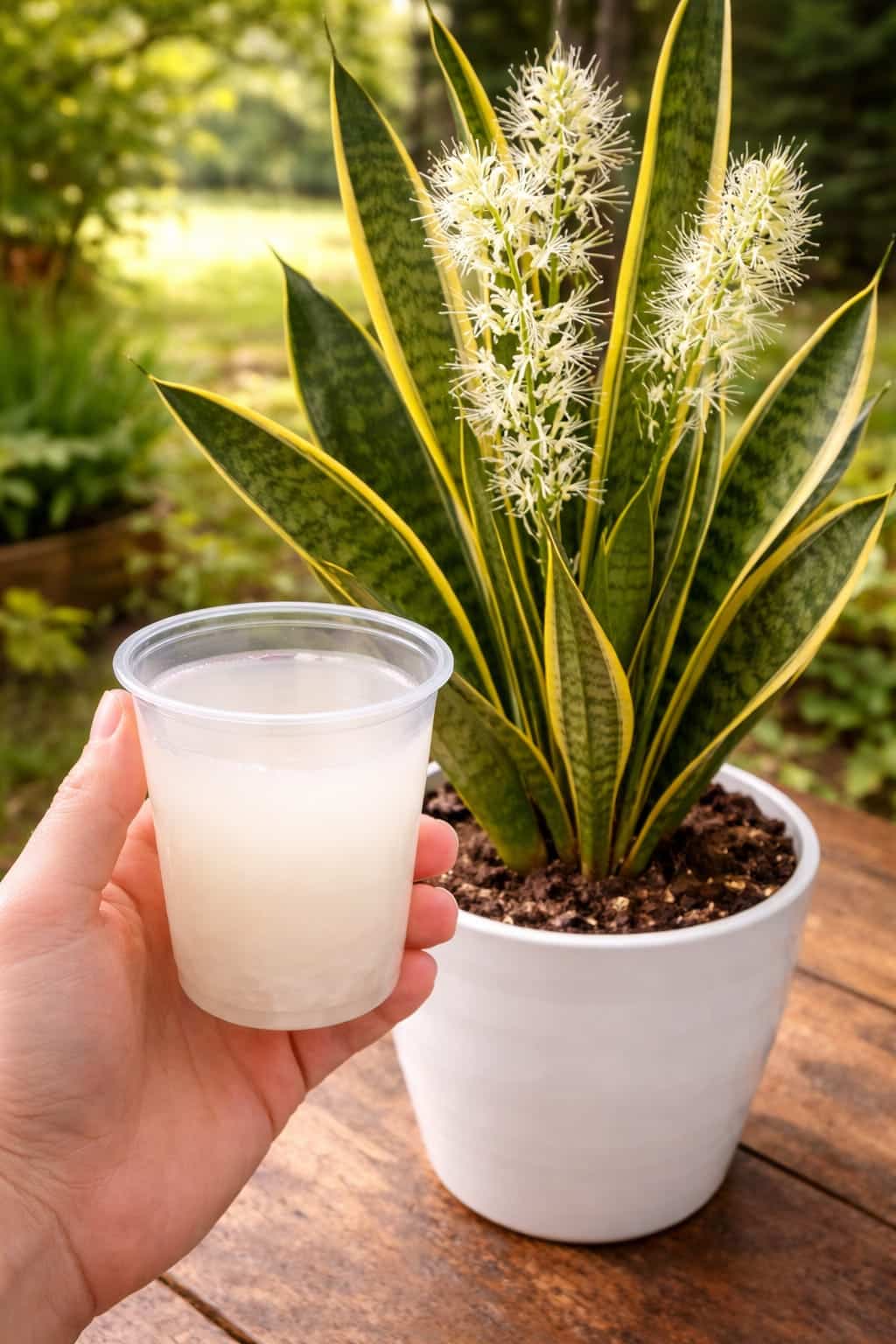
⚠️ The Truth Most People Don’t Tell You
Here’s the part viral posts skip: these ingredients alone won’t make your plant bloom.
Snake plants only flower under specific conditions – and no amount of rice water or banana peel tea can override poor light, overwatering, or a young, immature plant.
Think of these ingredients as supporting actors, not the star of the show. They can improve overall health, but they cannot force a bloom.
The Real Requirements for Snake Plant Blooms – No Shortcuts
To actually trigger flowers, your snake plant needs the right environment. Here are the non‑negotiable factors.
☀️ 1. Bright, Indirect Light – The #1 Factor
Snake plants survive in low light, but they will not bloom there. They need strong, bright, indirect light for several hours daily.
Light Level Bloom Potential
Low light (north window, dark corner) Almost zero
Medium light (few feet from east/west window) Rare, possible
Bright, indirect light (right by east/west window) Best chance
Pro tip: If your snake plant has been in a dark corner for years, move it gradually to brighter light over a few weeks. A few hours of gentle morning sun is excellent.
🌱 2. Slight Stress – The Survival Trigger
Yes, you read that right. Snake plants bloom when they feel slightly stressed – but still healthy. This mimics natural conditions where the plant reproduces before resources run out.
Stress Factor How to Apply
Root‑bound Keep the plant in a snug pot. Repot only every 2–3 years.
Limited water Let the soil dry out completely between waterings.
Stable environment Don’t move the plant often. Avoid drafts.
Caution: Stress is a fine line. Do not severely underwater or crowd roots to the point of damage. The goal is mild, not extreme.
💧 3. Proper Watering – Less Is More
Overwatering is the #1 killer of snake plants – and it also prevents blooming.
· When to water: Only when the soil is completely dry all the way through. Stick your finger 2–3 inches into the soil – if dry, water; if damp, wait.
· How often: In bright light, every 2–3 weeks. In lower light, every 4–6 weeks.
· Drought stress: Allowing the plant to experience mild thirst signals it to bloom.
🌡️ 4. Maturity – Patience Is Non‑Negotiable
A young snake plant will not bloom, no matter what you do. Most need to be 3–5 years old (or older) to have enough energy reserves.
· Young plants focus on leaf and root growth.
· Mature plants have the resources to reproduce.
If you’ve had your snake plant for less than 3 years, don’t expect blooms – even with perfect care.
🌙 5. Temperature Drop – The Seasonal Cue
In nature, snake plants often bloom after a period of cooler nights. A temperature drop of about 10°F (5–6°C) at night can signal the change of seasons.
· Daytime: 65–85°F (18–29°C)
· Nighttime (for 2–4 weeks): 55–65°F (13–18°C)
Pro tip: Placing your snake plant near a cool window in fall (but away from frost) can provide this natural trigger.
What Happens When It Finally Blooms?
If everything aligns – bright light, slight stress, proper watering, maturity, and maybe a little help from rice water or banana peels – you’ll notice:
- A tall green stalk emerging from the center of a leaf cluster.
- Small, tubular buds forming along the stalk.
- Flowers opening – usually in the evening or at night.
- A sweet, jasmine‑like fragrance that can fill a room.
The flowers last 2–4 weeks, with individual blooms opening sequentially. After flowering, the stalk will remain for a while, then dry and turn brown. Cut it off at the base once it’s completely dry.
Common Mistakes That Kill Blooming Chances
Most people accidentally prevent their snake plant from blooming by:
Mistake Why It’s Harmful Correct Approach
Overwatering Roots rot, no energy for blooms Let soil dry completely
Keeping in dark corners No light energy for flowering Move to bright, indirect light
Repotting too often Plant focuses on root growth Repot every 2–3 years only
Using heavy, wet soil Poor drainage, root suffocation Use cactus mix with perlite
Fertilizing heavily Promotes leaves, not flowers Use low‑nitrogen fertilizer sparingly
Moving the plant frequently Stress in a negative way Keep in one spot
Too much “care” – overwatering, overfeeding, over‑repotting – is the real enemy of blooms.
So… Do Rice Water and Banana Peels Really Work?
Here’s the honest answer:
Ingredient Effectiveness
Rice water Helps improve general plant health and root strength. A gentle, natural supplement – but not a bloom trigger.
Banana peels Provides potassium, which supports flowering – but only if the plant is already ready to bloom. Not a magic shortcut.
The bottom line: These ingredients can support a healthy plant, but they will not make a snake plant bloom on their own. They are supplements, not substitutes for proper light, watering, and maturity.
If your snake plant is already in the right conditions (bright light, dry soil, root‑bound pot, mature age), rice water and banana peel tea might give it a little extra boost. But if your plant is sitting in a dark corner, overwatered, and only two years old, no amount of kitchen scraps will produce flowers.
How to Use Rice Water and Banana Peels Together – A Safe Routine
If you want to try both ingredients, here’s a safe, balanced approach:
- Alternate between rice water and banana peel tea every 3–4 weeks during spring and summer.
- Dilute both with equal parts fresh water.
- Apply to the soil – not the leaves.
- Stop using in fall and winter (the plant is resting).
- Focus on the real fundamentals – light, water, pot size, and patience.
Frequently Asked Questions (FAQs)
Q: Can I use rice water and banana peels together in the same watering?
Yes, but it’s better to alternate. Mixing them can create a strong, potentially fermenting solution. Use them separately, every 2–3 weeks.
Q: How often should I use banana peel tea?
Once every 3–4 weeks during the growing season. Overuse can lead to salt buildup or attract pests.
Q: Can I use banana peels directly in the soil?
No. Raw banana peels rot, attract pests, and can cause mold. Always make tea or dried powder.
Q: Will rice water attract bugs?
Fresh, diluted rice water used immediately is usually safe. Fermented rice water (sour smell) can attract gnats – don’t use it.
Q: My snake plant is blooming – should I use rice water or banana peels?
No. While the plant is in bloom, avoid adding any fertilizer or supplements. Focus on stable conditions. Resume after flowers fade.
Q: Why isn’t my snake plant blooming even with these ingredients?
Most likely: insufficient light, overwatering, or the plant is too young. Check the fundamentals first.
Q: Can I use these ingredients on other houseplants?
Yes – both are safe for many houseplants (in moderation). Always dilute and use sparingly.
Final Verdict – No Magic Shortcuts, Just Real Care
People love quick hacks – a spoonful of this, a sprinkle of that – hoping for instant results. But snake plants don’t bloom because of one trick. They bloom when:
· Conditions are right (bright light, dry soil, root‑bound pot)
· The plant is mature (3–5+ years old)
· And yes – when it’s just a little bit stressed (in a healthy way)
Rice water and banana peels can be helpful supplements, but they are not a magic shortcut. Think of them as supporting actors – not the star of the show.
If you want those rare, fragrant flowers, focus on the fundamentals: move your snake plant to a bright window, water it only when the soil is bone dry, keep it snug in its pot, and be patient. And if you want to add a little rice water or banana peel tea along the way, go ahead – just don’t expect miracles.
And if you’re lucky… your “boring” snake plant might surprise you with one of the rarest indoor blooms.
Now it’s your turn! Have you tried rice water or banana peels on your snake plant? Did you notice any difference? Drop a comment below – I’d love to hear your experience.
And if you found this guide helpful, share it with a friend who’s been tempted by viral plant hacks. Pin it for later, and subscribe to our newsletter for more evidence‑based plant care.
Stay bright, stay patient, and let your snake plant thrive. 🌿✨