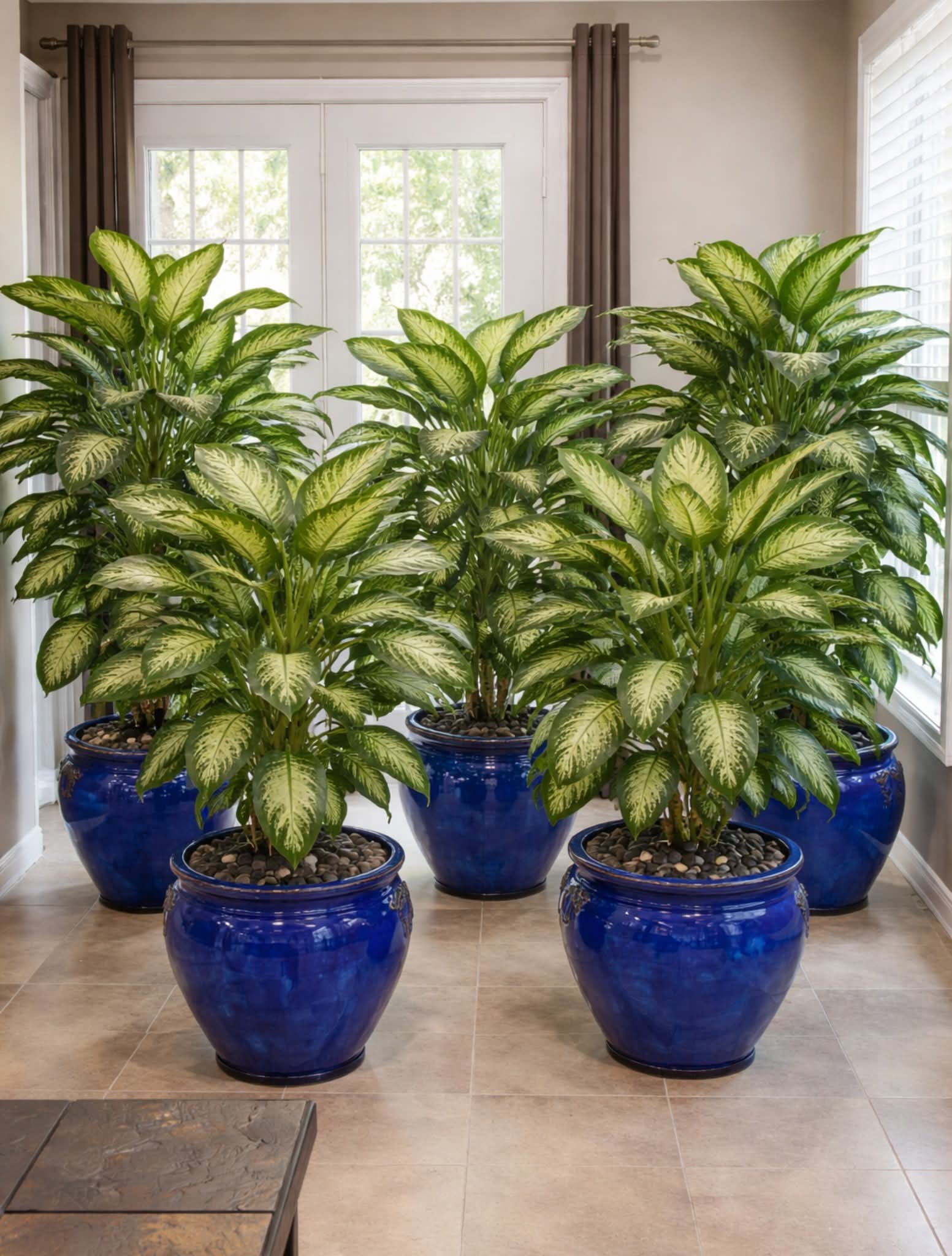
Part 3: Rare & Collector Varieties
- Dieffenbachia ‘Delilah‘
A very rare dumb cane, ‘Delilah‘ has thick, creamy‑white to snow‑white leaves with dark green margins. It‘s a slow grower due to the lack of chlorophyll in the leaves, making it highly sought after by collectors.
· Height: 4–6 feet
· Leaf Pattern: Creamy‑white with dark green edges
· Best For: Collectors, rare plant enthusiasts
- Dieffenbachia ‘Exotica‘
In this variety, green is much more dominant. ‘Exotica‘ has creamy leaves edged in green, creating a subtle yet beautiful contrast. It‘s a more understated option for those who prefer less intense variegation.
· Height: 3–5 feet
· Leaf Pattern: Creamy leaves with green edges
· Best For: Subtle variegation, collectors
- Dieffenbachia memoria corsii ‘Snow‘ (Snowy Dumb Cane)
Also known as Snowy Dumb Cane, this is a large species that grows 6 feet or taller with lush leaves up to 12 inches wide. It‘s a true statement piece for any collection.
· Height: 6+ feet
· Leaf Pattern: Large, lush green with variegation
· Best For: Massive statement plants
- Dieffenbachia ‘Rudolph Roehrs‘
This ornamental variety features deep green leaves heavily spotted with white. The spots are more pronounced on new growth. It grows to about 2–3 feet tall and wide.
· Height: 2–3 feet
· Leaf Pattern: Deep green with heavy white spotting
· Best For: Ornamental displays, collectors
- Dieffenbachia ‘White Etna‘
A rare variety with stunning white‑dominant variegation. Each leaf is a unique work of art, making it highly prized among collectors.
· Height: 2–4 feet
· Leaf Pattern: White‑dominant variegation
· Best For: Rare plant collections
- Dieffenbachia ‘Mary‘
A larger variety that grows into an impressive specimen. ‘Mary‘ is perfect for growers with plenty of space who want a bold, lush dumbcane.
· Height: 4–6 feet
· Leaf Pattern: Large, lush green leaves
· Best For: Large spaces, dramatic impact
- Dieffenbachia ‘Hilo‘
‘Hilo‘ features large, pointed, coarse dark green leaves with light green variegation and prominent white veins. It can grow to 4 feet high and 1–2 feet wide.
· Height: 3–4 feet
· Leaf Pattern: Dark green with light green variegation and white veins
· Best For: Unique veining patterns
- Dieffenbachia ‘Paradise‘
A variety known for its bright, cheerful variegation. ‘Paradise‘ brings a tropical feel to any indoor space.
· Height: 3–5 feet
· Leaf Pattern: Bright green with light variegation
· Best For: Tropical decor
- Dieffenbachia ‘Tropical Tiki‘
Dieffenbachia maculata ‘Tropical Tiki‘ features bold, eye‑catching variegation that lives up to its festive name. It‘s a great choice for adding a playful touch to your plant collection.
· Height: 3–4 feet
· Leaf Pattern: Bold, tropical variegation
· Best For: Playful, vibrant displays
- Dieffenbachia ‘Sparkle‘
‘Sparkle‘ lives up to its name with bright, eye‑catching variegation that adds a touch of glamour to any room.
· Height: 2–3 feet
· Leaf Pattern: Bright, sparkling variegation
· Best For: Adding visual interest
- Dieffenbachia ‘Tropic Rain‘
This variety features beautiful, rain‑like streaking on its leaves, creating a unique and artistic appearance.
· Height: 3–5 feet
· Leaf Pattern: Streaked variegation
· Best For: Artistic, unique foliage
Variety Comparison Table
Variety Height Leaf Pattern Best For
‘Camille‘ 2–3 ft Creamy center, green edges Beginners, small spaces
‘Compacta‘ Up to 3 ft Speckled green, lime edges Shelves, desks
‘Tropic Snow‘ 4–6+ ft Creamy streaks on green Floor plants, large spaces
‘Seguine‘ 3–6 ft Broad green with creamy yellow Versatile, beginners
‘Carina‘ 3–6 ft Pale green with creamy streaks Elegant decor
‘Star Bright‘ 2–4 ft Yellow-green centers, green edges Bright spaces
‘Panther‘ 3–4 ft Dark green with leopard markings Drama, corners
‘Marianne‘ 3–5 ft Yellow center, dark green edges Tropical decor
‘Cheetah‘ 2–3 ft Green with yellow speckles Unique collections
‘Delilah‘ 4–6 ft Creamy-white with green edges Rare plant collectors
‘Snow‘ 6+ ft Large lush leaves Massive statement plants
‘Rudolph Roehrs‘ 2–3 ft Deep green with white spots Ornamental displays
Common Problems & Solutions
Yellow Leaves
Cause: Overwatering (most common), nutrient deficiency, or insufficient light.
Solution: Allow soil to dry between waterings. Check that your pot has drainage holes. If overwatering isn‘t the issue, consider a balanced fertilizer.
Brown Leaf Tips
Cause: Low humidity or salt buildup from tap water or fertilizer.
Solution: Increase humidity with a humidifier or pebble tray. Flush the soil with clean water to remove excess salts. Use distilled or rainwater.
Droopy Leaves
Cause: Underwatering or cold temperatures.
Solution: Water thoroughly when the soil surface is dry. If drooping occurs without yellowing, move the plant to a warmer area (above 55°F).
Wilting Leaves
Cause: Underwatering or root problems.
Solution: Check soil moisture. If dry, water thoroughly. If roots are brown or mushy, trim damaged roots and repot in fresh soil.
Stunted Growth
Cause: Poor lighting, insufficient nutrients, or being root‑bound.
Solution: Move to brighter indirect light. Fertilize during the growing season. Repot if roots are circling the pot.
Pests (Spider Mites, Aphids, Mealybugs)
Cause: Dry conditions or poor air circulation.
Solution: Isolate the plant. Wipe leaves with a damp cloth. Use insecticidal soap or neem oil as needed. Increase humidity to deter spider mites.
Frequently Asked Questions (FAQs)
Q: Which Dieffenbachia variety is best for beginners?
‘Camille‘ or ‘Seguine‘ are excellent choices. They are widely available, forgiving of minor care mistakes, and adapt well to typical indoor conditions.
Q: Which Dieffenbachia varieties stay small?
‘Compacta‘ and ‘Camille‘ are compact varieties that typically stay under 3 feet tall, making them ideal for desks, shelves, and small spaces.
Q: Are there Dieffenbachia varieties that grow tall?
Yes! ‘Tropic Snow‘, ‘Amoena‘, and ‘Snow‘ can reach 6 feet or taller indoors, making them stunning floor plants.
Q: Which Dieffenbachia has the most white variegation?
‘Delilah‘ has creamy‑white to snow‑white leaves with dark green margins. ‘White Etna‘ also features stunning white‑dominant variegation. Note that these are slower growers due to reduced chlorophyll.
Q: Is Dieffenbachia safe for pets?
No. All Dieffenbachia varieties are toxic to cats and dogs. The leaves contain calcium oxalate crystals that cause mouth irritation and swelling. Keep them out of reach of pets and children.
Q: How often should I water my Dieffenbachia?
Water when the top inch of soil feels dry. In typical indoor conditions, this is usually once every 7–10 days, but always check the soil first.
Q: Why is it called “Dumb Cane”?
The name comes from the plant‘s toxic sap. If ingested, it can cause temporary swelling of the mouth and throat, making speech difficult. Hence, “dumb” (meaning unable to speak) cane.
Final Thoughts – Find Your Perfect Dieffenbachia
From the compact and classic ‘Camille‘ to the rare and coveted ‘Delilah‘, Dieffenbachia offers an incredible range of foliage patterns, sizes, and personalities. Whether you‘re a beginner looking for an easy‑care houseplant or a collector hunting for a rare gem, there‘s a dumb cane variety waiting for you.
Remember: all Dieffenbachias share the same basic care requirements — bright indirect light, well‑draining soil, and water only when the top inch of soil is dry. Choose a variety that fits your space, and you‘ll be rewarded with years of lush, tropical beauty.
Now it‘s your turn! Which Dieffenbachia variety caught your eye? Do you already own one of these beauties? Drop a comment below – I‘d love to hear which variety is your favorite.
And if you found this guide helpful, share it with a fellow plant lover who‘s looking to expand their collection. Pin it for later, and subscribe to our newsletter for more plant variety guides and care tips.
Stay leafy, stay colorful, and keep growing. 🌿✨
More Recipes You Might Like
-
The Simple Secrets to Make African Violets Bloom Abundantly All Year Long
African violets do best in a light, well‑draining, slightly acidic mix (pH 6.0–6.5). Heavy garden soil is a bad choice … Read more
-
How to Make Your Spider Plant Bushy and Full Instead of Thin and Stringy – The Complete Guide
Spider plants like lightly moist soil, but they do not like being constantly wet. One of the most common mistakes … Read more
-
How to Keep Your Christmas Cactus Blooming Longer with This Easy Trick
🌱 Bonus: Can “Kitchen Tricks” Help Extend Blooms? You’ve probably seen viral hacks like tea water, sugar water, or coffee … Read more