Discover the one kitchen ingredient that both boosts geranium blooms and prevents powdery mildew. Learn the simple recipe, application tips, and science behind this natural gardening hack.
Geraniums are the backbone of the American garden. Whether spilling from window boxes on a Charleston porch or standing tall in a Midwestern perennial border, these cheerful plants deliver reliable color from spring until the first frost. But even the toughest geraniums can face two common frustrations: lackluster blooming and the dreaded white dusting of powdery mildew.
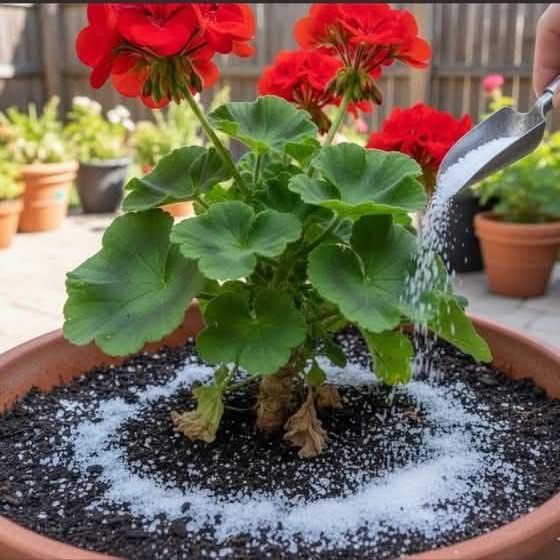
What if a single ingredient from your kitchen could tackle both problems at once? It’s not a myth—it’s baking soda. And when used correctly, this humble box of sodium bicarbonate can transform your geraniums into blooming machines while keeping fungal diseases at bay .
The Dual-Action Hero: Why Baking Soda Works
Baking soda (sodium bicarbonate) might seem too simple to be a gardening powerhouse, but its chemistry is perfectly suited to geranium care.
For Blooming: The pH Connection
Geraniums thrive in soil that is slightly alkaline. When soil pH drifts too acidic, nutrients become locked away and unavailable to plant roots. Baking soda, being alkaline, gently raises soil pH, making essential nutrients like phosphorus and potassium more accessible . These nutrients are directly responsible for flower formation and vibrant blooms.
For Mildew: The Surface Shield
Powdery mildew is a fungal disease that plagues geraniums in humid conditions or when nights are cool and days are warm. Baking soda works by creating an alkaline environment on leaf surfaces. Fungal spores struggle to germinate and grow in these conditions, effectively preventing infection before it starts . Think of it as a protective shield rather than a cure—application keeps healthy leaves healthy.
The Simple Recipe: One Ingredient, Two Benefits
Here is the exact method used by savvy gardeners to get both blooming and disease protection from one simple ingredient.
What You’ll Need
· 1 teaspoon of baking soda (ordinary household variety works perfectly)
· 1 liter of warm water (about 1 quart)
· 2-3 drops of mild liquid soap (this acts as a surfactant, helping the solution stick to leaves)
· A spray bottle
· A watering can
Method 1: The Bloom-Boosting Soil Drench
This method targets the roots and soil, improving nutrient uptake for more flowers.
- Mix 1 tablespoon of baking soda into 2 quarts of water .
- Stir thoroughly until completely dissolved.
- Water your geraniums with this solution at the base of the plant.
- Apply once every 4-6 weeks during the growing season .
- Water deeply enough that the solution reaches the root zone.
Why this works: The baking soda gently raises soil pH, unlocking nutrients that encourage budding and flowering. Geraniums respond with more vigorous bloom production .
Method 2: The Mildew-Prevention Foliar Spray
This method coats leaves with a protective alkaline layer that fungal spores cannot penetrate.
- Mix 1 teaspoon of baking soda and 2-3 drops of liquid soap into 1 liter of water .
- Pour into a spray bottle and shake well.
- Spray thoroughly onto all leaves, covering both tops and undersides.
- Apply early in the morning or late in the evening to avoid leaf scorch in direct sun.
- Repeat every 1-2 weeks as a preventative measure, especially during humid weather .
Pro tip: The soap is essential—it helps the solution spread evenly and adhere to waxy geranium leaves .
What About Other Kitchen Ingredients?
While baking soda is the star dual-purpose ingredient, other household items can support specific geranium needs. Here is how they compare:
Ingredient Primary Benefit How It Works Best Used For Frequency
Baking Soda Bloom boost + Mildew prevention Raises soil pH; creates alkaline leaf surface Both flowers and disease protection Soil: 4-6 weeks; Spray: 1-2 weeks
Milk General nutrition + Mild fungicide Calcium and nutrients feed plants; phosphates deter fungi Supplementing soil health 1:10 dilution spray weekly
Cinnamon Wound healing + Pest deterrent Natural antifungal compounds Treating cuts from pruning; deterring ants Dust on wounds or soil as needed
Onion Skins Potassium boost Rich in potassium for flower formation Encouraging blooms Steep in water; use weekly
Milk deserves special mention as a complementary treatment. A 1:10 dilution with water sprayed weekly has proven effective against powdery mildew on various plants, including geraniums . Skim milk works best—researchers believe phosphates in milk are what deter fungal growth .
Cinnamon is another valuable ally, particularly when pruning. Dusting cut stems with cinnamon promotes healing and prevents rot . It can also be sprinkled on soil to deter ants and gnats.
When and How to Apply for Best Results
Timing matters as much as the ingredient itself.
Spring (Early Season)
· Begin soil drenches with baking soda as new growth emerges. This sets the stage for vigorous summer blooming .
· Start foliar sprays before any sign of mildew appears. Prevention is far more effective than treatment.
Summer (Peak Bloom)
· Continue foliar sprays every 1-2 weeks, especially after rain .
· If blooms slow, a baking soda soil drench can reinvigorate flower production.
· Deadhead spent flowers regularly—this redirects energy into new blooms .
Late Summer/Humid Periods
· Increase vigilance with foliar sprays. High humidity is prime time for powdery mildew.
· Ensure good air circulation around plants by spacing containers appropriately .
The Science Behind the Success
Gardeners have used baking soda for generations, but modern research confirms why it works.
For mildew: Fungal spores require a specific pH range to germinate. By raising leaf surface pH to around 8.0, baking soda creates an inhospitable environment. The fungus simply cannot establish itself .
For blooms: Geraniums prefer soil pH between 6.0 and 7.5 . When soil drifts too acidic (below 6.0), phosphorus becomes less available. Phosphorus is the nutrient directly responsible for flower formation. Baking soda gently corrects acidity, making phosphorus accessible again .
This is why baking soda uniquely addresses both issues—it modifies pH in two different parts of the plant (soil vs. leaf surface) to create optimal conditions.
Important Cautions: Moderation Matters
Baking soda is safe and natural, but “natural” does not mean “use freely.” Over-application can cause problems.
· Sodium buildup: Baking soda contains sodium. Excessive use can lead to sodium accumulation in soil, which can harm plant roots .
· Leaf burn: Spraying in direct sunlight can concentrate the solution and scorch leaves. Always apply in early morning or evening .
· Soil alkalinity: Too much baking soda can push soil pH too high, locking up iron and other micronutrients. Stick to recommended frequencies.
· Test first: Before widespread application, test on a single plant or a few leaves and observe for 24-48 hours .
Signs of overuse include yellowing leaves, stunted growth, or white crust forming on soil surface . If you notice these, flush soil thoroughly with plain water and pause treatments.
A Complete Geranium Care Routine
The best results come from combining baking soda treatments with sound cultural practices.
Sunlight
Geraniums need at least 6-8 hours of direct sun daily for optimal blooming . Morning sun with light afternoon shade works well in hot climates .
Watering
Allow soil to dry slightly between waterings. Geraniums are drought-tolerant but prefer consistent moisture. Avoid overhead watering when possible to keep leaves dry .
Soil
Well-draining soil rich in organic matter is ideal. A pH of 6.0-6.5 is perfect .
Deadheading
Remove spent flowers regularly. This is the single best way to encourage continuous blooming .
Fertilizer
While baking soda helps unlock nutrients, geraniums benefit from balanced fertilizer every 2-3 weeks during active growth . Use a 15-15-15 or similar formulation.
Frequently Asked Questions
Q: Can baking soda cure existing powdery mildew?
A: Baking soda works best as a preventative. It can slow down or stop the spread of mild infections, but it won’t completely cure heavily infected leaves . Remove badly affected leaves first, then spray remaining foliage.
Q: How often should I use baking soda on geraniums?
A: For soil drenches, every 4-6 weeks during growing season. For foliar sprays, every 1-2 weeks as a preventative .
Q: Can I use baking soda on other plants?
A: Yes! Many plants benefit, especially those that prefer alkaline conditions like coneflowers, daylilies, and clematis . Always research specific plant needs first.
Q: Will baking soda change the color of my flowers?
A: It may subtly affect color intensity by improving overall plant health, but it won’t dramatically change flower color like it does for hydrangeas .
Q: What type of baking soda should I use?
A: Ordinary household baking soda from the grocery store works perfectly .
Q: Is baking soda safe for bees and pollinators?
A: When used as directed, baking soda is considered safe for beneficial insects. Avoid spraying open flowers directly to protect visiting pollinators .
Conclusion
The quest for better geranium blooms and freedom from mildew doesn’t require a cabinet full of chemicals. One simple ingredient—baking soda—addresses both challenges through gentle, natural mechanisms. By raising soil pH for better nutrient uptake and creating an alkaline shield on leaves, baking soda helps geraniums perform at their peak.
Combine this with proper sunlight, watering, and deadheading, and your geraniums will reward you with months of vibrant color. The best part? You probably already have a box in your pantry right now.
Try this method this season. Your geraniums—and your garden—will thank you.
More Ideas You Might Like
-

Why Some Homeowners Are Using Onion Water Around Orchids and What Usually Helps More for Strong Roots, Healthy Leaves, and Long-Lasting Blooms
Orchids are among the most elegant indoor flowering plants for homeowners who want graceful stems, glossy green leaves, long-lasting blooms, and a refined decorative display that fits beautifully in living rooms, bedrooms, apartments, home offices, bright kitchens, windowsills, covered patios, commercial interiors, luxury home staging, and premium indoor plant styling. A healthy orchid can turn…
-

Why Some Homeowners Are Pouring Aloe Water Around Orchids and What Usually Helps More for Strong Roots, Healthy Leaves, and Long-Lasting Blooms
Orchids are among the most elegant indoor flowering plants for homeowners who want graceful blooms, sculptural roots, glossy leaves, and a premium decorative display that fits beautifully in living rooms, bedrooms, apartments, home offices, bright kitchens, balcony gardens, covered patios, commercial interiors, luxury home staging, and refined indoor plant styling. A healthy orchid can make…
-
Why Some Homeowners Are Adding Brown Powder Around Snake Plants and What Usually Helps More for Strong Roots, Fuller Growth, and Healthy Indoor Leaves
Snake plant is one of the most dependable indoor plants for homeowners who want strong upright leaves, bold green patterning, yellow-edged variegation, easy maintenance, and a clean decorative display that fits beautifully in living rooms, bedrooms, apartments, home offices, bright kitchens, entry corners, sunny windowsills, plant shelves, commercial interiors, luxury home staging, and premium indoor…