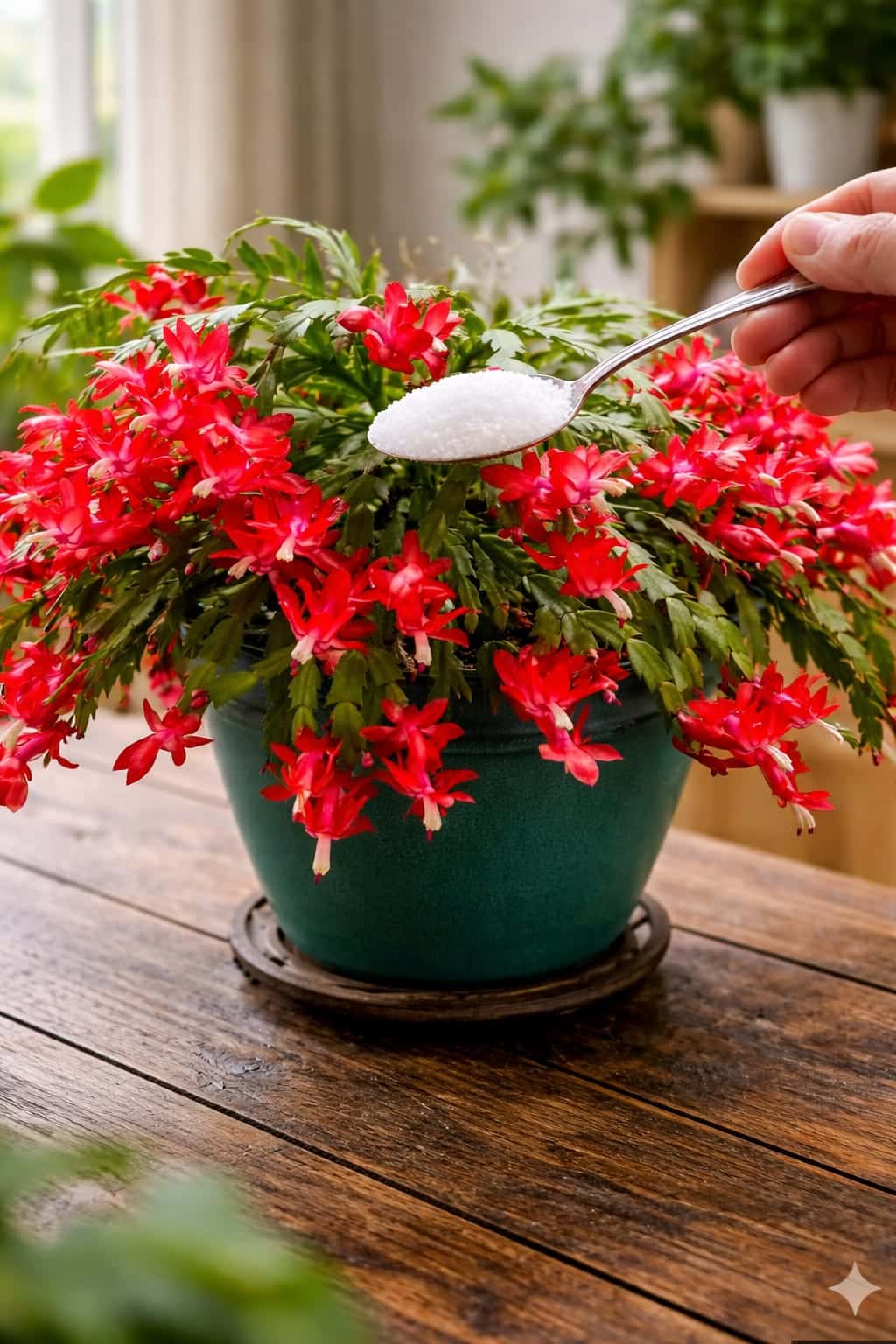
Does sugar really help Christmas cacti grow faster and bloom more? We debunk the viral myth and share the real secrets – proper light, watering, humidity, and fertilizer – for lush growth and stunning flowers.
Let’s be honest: Christmas cacti (Schlumbergera) are among the most beloved houseplants for good reason. Their flat, segmented stems cascade beautifully over pots, and when they bloom – usually around the holidays – they explode with vibrant pink, red, white, or purple flowers. But getting them to grow full, healthy, and bloom reliably can sometimes feel tricky.
You may have seen viral videos or posts showing someone adding a spoonful of white granules (sugar) to the soil, claiming it boosts growth, encourages more blooms, and makes the plant thrive overnight. The idea seems simple: sugar provides energy, right?
But here’s the truth: adding sugar to the soil does not help your Christmas cactus grow faster or bloom better. In fact, it can do more harm than good. Plants produce their own sugar through photosynthesis. Pouring sugar into the pot feeds harmful bacteria and fungi, disrupts soil balance, and can lead to root rot.
So if sugar isn’t the secret, what is? In this guide, I’ll give you an honest, science‑backed explanation of why the sugar trick is a myth, and then share the real, proven methods to make your Christmas cactus grow faster, fuller, and bloom more beautifully than ever.
Let’s separate the viral hype from the horticultural reality.
Why the “Sugar Trick” Went Viral – And Why It’s Misleading
The sugar trick is appealing because it’s simple. You see a spoonful of white granules, you pour it on the soil, and the promise is immediate results. But here’s the reality check.
What Sugar Actually Does in Soil
Effect Explanation
Feeds harmful bacteria and fungi Sugar is a carbohydrate. Soil microbes love it. Harmful pathogens multiply rapidly, leading to root rot and fungal diseases.
Disrupts soil balance Healthy soil has a complex ecosystem of bacteria, fungi, and other microorganisms. Sugar throws off this balance, favoring pathogens over beneficial microbes.
Attracts pests Fermenting sugar attracts fungus gnats, ants, and other insects.
Does not provide usable energy to plants Plants cannot absorb sugar through their roots. They make their own glucose through photosynthesis. Adding sugar to soil is like pouring gasoline into a diesel engine – useless and harmful.
Why Some People Think It Works
If someone sees improvement after using sugar, it’s usually because they also changed other care habits at the same time – better light, more appropriate watering, or repotting. The growth comes from proper care, not the sugar itself.
The bottom line: Sugar is not a fertilizer. It does not help your Christmas cactus grow or bloom. Skip the sugar and focus on real plant care.
The Real Way to Make Your Christmas Cactus Thrive – 5 Essential Factors
Christmas cacti are tropical succulents, not desert cacti. They have specific needs. Get these right, and your plant will reward you with lush growth and abundant blooms.
☀️ 1. Bright, Indirect Light – The #1 Growth Booster
Christmas cacti need bright, indirect light to fuel photosynthesis and energy production. Without enough light, they grow slowly, become leggy, and refuse to bloom.
Light Level Effect on Christmas Cactus
Low light (north window, dark corner) Slow growth, pale or dark green segments, no blooms
Bright, indirect light (east or west window) Ideal – compact growth, vibrant color, abundant blooms
Direct afternoon sun Scorched, reddish or yellow segments; leaf drop
Pro tip: If your Christmas cactus hasn’t bloomed in over a year, move it to a brighter spot. A few hours of gentle morning sun is excellent.
💧 2. Proper Watering – Not Too Much, Not Too Little
Christmas cacti are not true cacti. They come from humid, tropical rainforests where they grow on trees. They need consistent moisture – but they hate sitting in water.
Watering Guideline Details
When to water When the top 1–2 inches of soil feel dry. Stick your finger in the soil – if dry, water; if damp, wait.
How often In bright light and warm temps: every 7–10 days. In lower light or cooler temps: every 2–3 weeks.
How to water Water thoroughly until it runs out the drainage holes. Empty the saucer immediately.
Signs of overwatering Yellowing, mushy segments; root rot; foul smell.
Signs of underwatering Wrinkled, limp, or shriveled segments; leaf drop.
Seasonal adjustment: Reduce watering in fall and winter after blooming. Let the soil dry out more between waterings.
🌬️ 3. Humidity – Christmas Cacti Love Moist Air
In their native habitat, humidity is high (50–70%). Indoor air, especially with heating or AC, is often much drier.
· Ideal humidity: 50–60%. They tolerate lower, but growth and blooms suffer.
· How to increase humidity: Use a humidifier, place the pot on a pebble tray with water, or group plants together. Misting is not very effective and can lead to fungal spots on segments.
🌿 4. Use the Right Fertilizer – Not Sugar
Instead of sugar, use a balanced, water‑soluble fertilizer formulated for flowering houseplants.
Fertilizer Guideline Details
When to fertilize Spring and summer (active growing season). Stop in fall and winter.
What to use Balanced liquid fertilizer (e.g., 20-20-20 or 10-10-10) diluted to half strength. Or a cactus/succulent fertilizer.
How often Once every 2–4 weeks during spring and summer.
After blooming After flowers fade, resume feeding to support new growth.
Pro tip: For more blooms, switch to a high‑phosphorus fertilizer (like 10-30-20) for 2–3 feedings in early fall, just before the bloom‑inducing period.
🌙 5. Encourage Blooming – Cool Nights and Long Darkness
Christmas cacti are short‑day plants. They bloom when nights are long (12–14 hours of uninterrupted darkness) and temperatures are cool (55–65°F / 13–18°C). This mimics their natural fall conditions.
Step‑by‑Step Bloom Induction
- Start 6–8 weeks before desired bloom time (e.g., early October for Christmas blooms).
- Provide 12–14 hours of complete darkness each night. Cover the plant with a box or place it in a dark closet. Any light – even a hallway lamp – can disrupt bud formation.
- Keep night temperatures between 55–65°F (13–18°C). Daytime temperatures can be normal room temp (65–75°F).
- Reduce watering slightly during this period – allow the top inch of soil to dry out.
- Stop fertilizing during bud induction.
- After 6–8 weeks, you’ll see small pink buds forming at the tips of segments. Return the plant to normal light and resume regular watering. Do not move or rotate the plant once buds appear – bud drop can occur.
Pro tip: You can time blooms for Thanksgiving, Christmas, or even Easter by adjusting the start date of the dark treatment.
Common Mistakes That Slow Growth and Prevent Blooms
Mistake Why It’s Harmful Correct Approach
Using sugar on soil Feeds harmful microbes, causes root rot Never use sugar; use proper fertilizer
Overwatering Root rot, yellow segments, no blooms Water only when top inch is dry
Too little light Leggy growth, no blooms Place in bright, indirect light
Moving plant after buds form Buds drop off Keep plant stable during bud development
Skipping the dark period No flower buds Provide 12–14 hours of darkness for 6–8 weeks
Fertilizing in winter Weak, leggy growth Stop feeding after summer
Can Banana Peels Really Boost Orchid Growth? Continue to Page 2
Discover the safer method, the real risks, and the smart orchid care details that many gardeners miss on the first page.