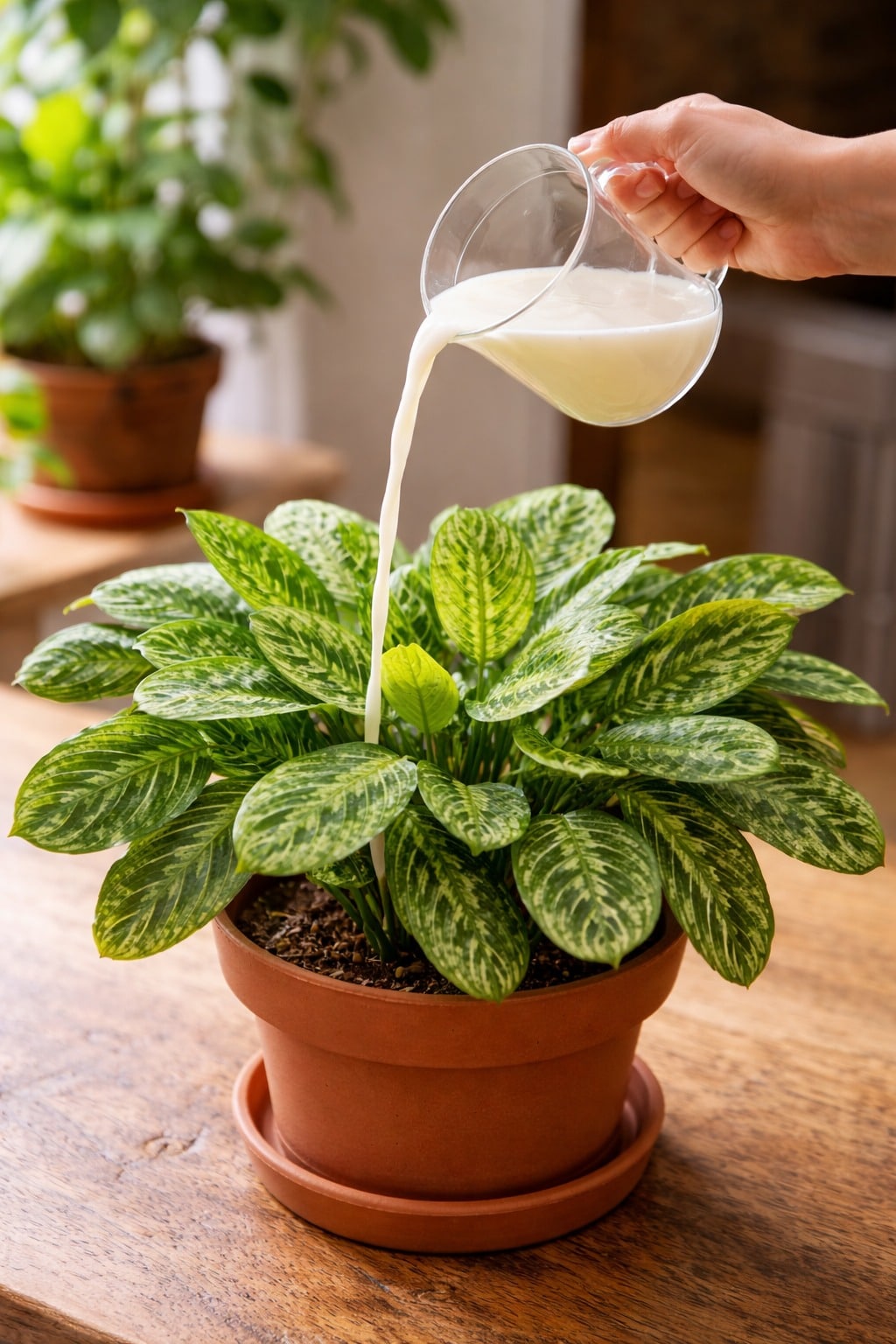
Prayer plants (Maranta) have stunning patterned leaves and move like magic – but they’re sensitive. Learn proper watering, humidity, light, and why the viral “milk watering” trick is a bad idea. Grow a lush, vibrant Maranta with this complete guide.
Let’s be honest: prayer plants (Maranta leuconeura) are some of the most beautiful and fascinating houseplants you can grow. Their leaves are works of art – with intricate patterns of green, cream, pink, and red veins. And then there’s the behavior that gives them their name: every evening, the leaves fold upward, like hands in prayer, and open again in the morning. It’s like having a plant that “goes to sleep.”
But here’s the thing: prayer plants can also be a bit dramatic. One day they’re lush and vibrant; the next, brown tips, curling leaves, or yellowing. Many people struggle with them, especially when it comes to watering and humidity. And recently, a viral trend has emerged showing people pouring milk on their plants, claiming it’s a natural “boost.”
Does it work? Absolutely not. In fact, it can harm your prayer plant.
In this complete guide, I’ll give you everything you need to know to grow a stunning, thriving Maranta. You’ll learn the right way to water, the single most important factor most people miss (humidity), how to fix common problems, and why you should avoid kitchen “hacks” like milk. No hype, just proven care.
Let’s make your prayer plant the showpiece of your indoor jungle.
Why Prayer Plants Are So Special – More Than Just Pretty Leaves
Prayer plants belong to the Marantaceae family, which includes other popular houseplants like Calathea and Stromanthe. But Marantas have a unique charm all their own.
What Makes Maranta Stand Out?
| Feature | Description |
|---|---|
| Striking leaf patterns | Each leaf is a unique canvas of green, cream, pink, or red veins. Common varieties include ‘Lemon Lime’ (bright green with lime veins), ‘Kerchoveana’ (rabbit’s foot – green with dark blotches), and ‘Erythroneura’ (red prayer plant – dark green with red veins). |
| Daily leaf movement (nyctinasty) | Leaves fold upward at night and open in the morning. This is a natural response to light changes, believed to reduce water loss and protect leaves from nighttime dew. |
| Compact, bushy growth | Unlike some trailing plants, Marantas naturally grow into a full, clumping shape, making them perfect for tabletops, shelves, or hanging baskets. |
| Non‑toxic to pets | Unlike many houseplants, prayer plants are safe for cats and dogs – a big plus for pet owners. |
👉 With proper care, they become one of the most eye‑catching indoor plants you can own. But they are not “set it and forget it” plants. They need consistency and attention to detail.
⚠️ The “Milk Watering” Trend – Why You Should Never Do This
You may have seen viral videos where someone pours a white liquid – usually milk – onto their plants, claiming it provides calcium, protein, and other nutrients. The idea is that milk “boosts growth” and “makes leaves shine.”
This is NOT recommended for prayer plants (or any houseplant).
Why Milk Is Harmful to Prayer Plants
| Problem | Explanation |
|---|---|
| Spoils in soil | Milk is an organic liquid that rots quickly in warm, moist potting mix. It creates a sour, foul smell. |
| Bacteria and mold growth | The sugars and proteins in milk feed harmful bacteria and fungi. This can lead to root rot and fungal diseases on leaves. |
| Attracts pests | Rotting milk attracts fungus gnats, fruit flies, ants, and other insects. |
| Coats roots | Milk residue can build up on roots, preventing them from absorbing water and oxygen. |
| Does not provide usable nutrients | Plants cannot absorb calcium or protein from milk in a form they can use. Milk is not a fertilizer. |
The bottom line: Never pour milk, yogurt water, or any dairy product into your prayer plant’s pot. The same goes for other kitchen liquids like rice water, pasta water, or sugar water. They cause more harm than good.
What About Milk as a Leaf Cleaner?
Some people use diluted milk to wipe leaves, claiming it adds shine. While it can temporarily make leaves glossy, the milk residue can clog leaf pores (stomata), attract dust, and promote mold. Stick to plain water or a very diluted soap solution for cleaning.
The Right Way to Care for a Prayer Plant – 5 Essential Factors
Prayer plants aren’t difficult – they just need the right environment. Focus on these five factors, and your Maranta will thrive.
💧 1. Keep Soil Slightly Moist (Not Wet) – The #1 Challenge
Prayer plants are native to the tropical rainforest floor, where the soil is consistently moist but never waterlogged. They do not like to dry out completely, but they also cannot sit in standing water.
| Watering Guideline | Details |
|---|---|
| When to water | When the top 1–2 inches of soil feel dry to the touch. Stick your finger into the soil – if it feels dry, water; if damp, wait. |
| How often | In typical indoor conditions, this may be every 5–7 days. Always check the soil, not the calendar. |
| Water quality | Prayer plants are sensitive to chlorine, fluoride, and dissolved minerals in tap water. Use filtered, distilled, or rainwater if possible. Tap water that has sat out overnight is better than fresh tap water but still contains fluoride. |
| How to water | Water thoroughly until it runs out the drainage holes. Empty the saucer immediately – never let the pot sit in water. |
| Signs of overwatering | Yellowing leaves, mushy stems, foul smell from soil. |
| Signs of underwatering | Wilting, curling leaves, brown crispy edges. |
Pro tip: If you tend to overwater, use a terracotta pot – it wicks away excess moisture. If you tend to underwater, a plastic or glazed ceramic pot retains moisture longer.
☀️ 2. Bright, Indirect Light – The Energy Source
Prayer plants need bright, indirect light to maintain their vibrant leaf patterns and support growth. They can tolerate lower light, but they will become leggy and lose color.
| Light Level | Effect on Prayer Plant |
|---|---|
| Low light (north window, dark corner) | Leaves may become darker green, patterns fade, growth slows significantly. |
| Medium light (few feet from east/west window) | Acceptable – moderate growth, decent color. |
| Bright, indirect light (right by east/west window, or filtered south window) | Ideal – vibrant patterns, compact growth, regular leaf movement. |
| Direct afternoon sun | Leaf burn – brown, crispy patches. |
Pro tip: Rotate your plant every week or two so all sides receive light. This prevents lopsided growth.
🌫️ 3. High Humidity – The Secret Most People Miss
This is the single most overlooked factor in prayer plant care. These plants need high humidity – 50–70% or more. In most homes, especially with heating or air conditioning, humidity can drop to 30% or lower, causing brown leaf tips, curling, and slow growth.
| Humidity Level | Effect |
|---|---|
| Below 40% | Brown leaf tips, curling edges, slow growth, leaf drop. |
| 40–50% | Acceptable but not ideal – may still see some browning. |
| 50–70% | Ideal – lush growth, vibrant leaves, healthy movement. |
| Above 70% | Risk of fungal issues if airflow is poor. |
How to Increase Humidity for Your Prayer Plant:
| Method | How It Works | Effectiveness |
|---|---|---|
| Humidifier | Adds moisture to the air consistently | Best – most reliable |
| Pebble tray | Place pot on a tray of water and pebbles (pot sits on pebbles, not in water) | Moderate – increases local humidity |
| Grouping plants | Plants release moisture through transpiration; grouped plants create a humid microclimate | Good |
| Misting | Spray leaves with room‑temperature water | Low – temporary effect; can promote leaf spots if done excessively |
| Bathroom or kitchen | These rooms naturally have higher humidity | Good if light is sufficient |
Pro tip: If you notice brown leaf tips, the first thing to check is humidity. Increase it, and new leaves will come in healthy.
🌡️ 4. Keep It Warm – No Cold Drafts
Prayer plants are tropical. They need consistent warmth to thrive.
| Temperature Guideline | Details |
|---|---|
| Ideal range | 65–80°F (18–27°C) |
| Minimum | Do not let temperatures drop below 55°F (13°C) – cold damage causes leaf curling and drop. |
| Avoid | Cold drafts from windows, doors, or air conditioning vents; sudden temperature swings. |
Pro tip: In winter, move your plant away from drafty windows. If your home is cool, reduce watering slightly (the plant grows slower).
🌿 5. Feed Lightly – Less Is More
Prayer plants are sensitive to over‑fertilizing. Too much fertilizer can burn roots and cause brown leaf edges.
| Fertilizer Guideline | Details |
|---|---|
| When to fertilize | Spring and summer (active growing season). |
| What to use | Balanced, water‑soluble houseplant fertilizer (e.g., 10-10-10 or 20-20-20) diluted to half strength. |
| How often | Once a month during spring and summer. |
| Do not fertilize | In fall and winter – the plant is resting. |
| Signs of over‑fertilizing | Brown leaf tips, salt crust on soil surface, leaf drop. |
Pro tip: If you use tap water that is hard, you may already have mineral buildup. Flush the soil with distilled water every 2–3 months to remove excess salts.
Can Banana Peels Really Boost Orchid Growth? Continue to Page 2
Discover the safer method, the real risks, and the smart orchid care details that many gardeners miss on the first page.