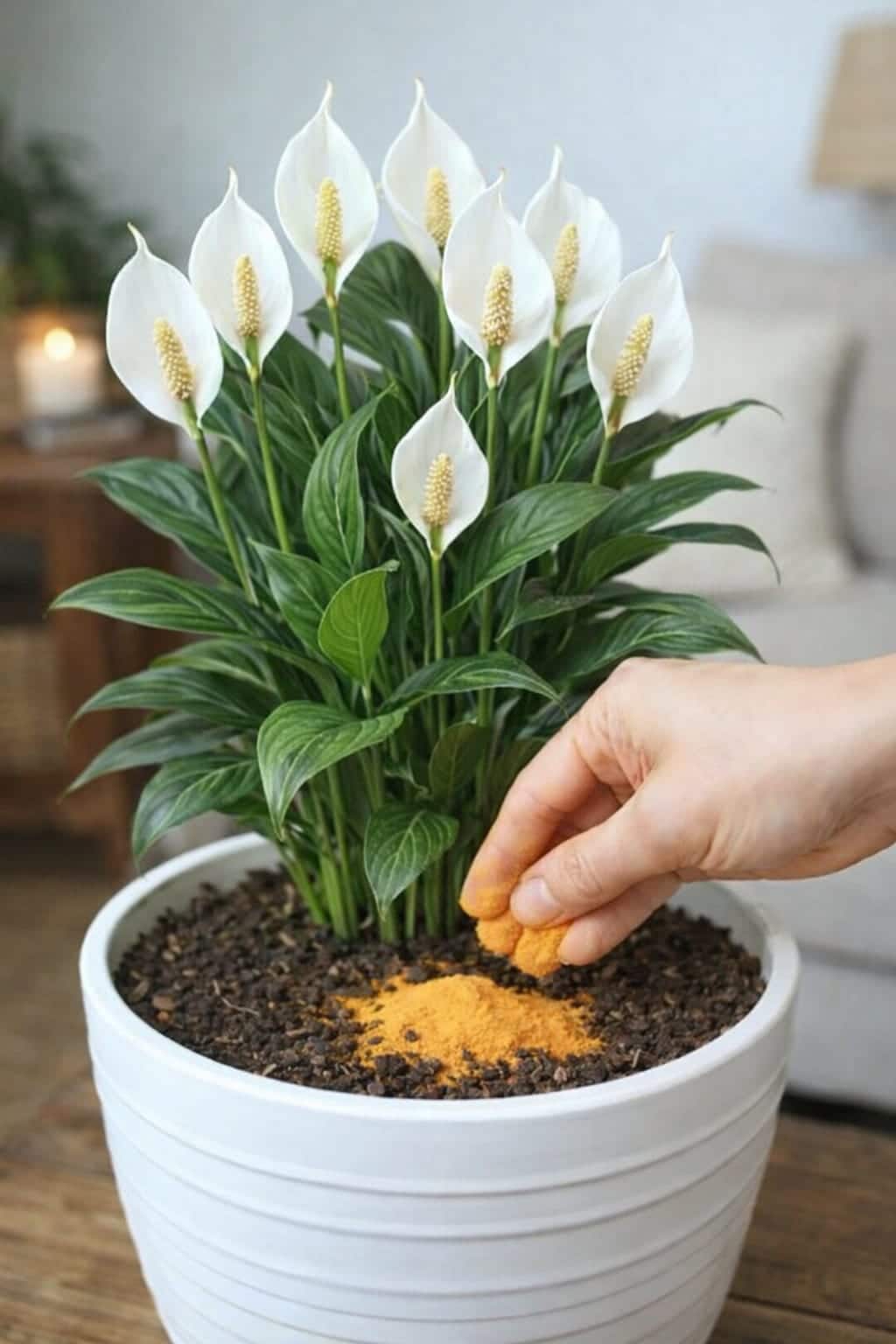
Turmeric powder is trending as a natural fix for peace lilies. But does it work? Learn the truth about using turmeric, plus the real reasons your peace lily is drooping or not flowering.
Let’s be honest: peace lilies (Spathiphyllum) are some of the most beloved indoor plants. They’re elegant, air‑purifying, and surprisingly forgiving. Their glossy green leaves and occasional white blooms can brighten any room. But when they start drooping, refusing to flower, or growing slowly, it’s easy to feel frustrated.
Recently, a viral tip has been circulating online: use a “simple kitchen powder” – turmeric – to fix these problems. The videos are convincing: a sprinkle of yellow powder, a little water, and suddenly the peace lily looks happier.
But is turmeric really the secret to a thriving peace lily? Or is it just another viral distraction?
In this guide, I’ll give you an honest, science‑backed look at what turmeric can and cannot do for your peace lily. You’ll learn the real reasons your plant is struggling, the safe way to use turmeric (if at all), and the proven care tips that actually produce lush growth and beautiful blooms.
Let’s separate the viral hype from the horticultural reality.
What Is the “Simple Powder”? Why Turmeric Is Trending
In the viral posts, the powder shown is turmeric – the golden spice from your kitchen, derived from the root of Curcuma longa. Turmeric has been used for centuries in cooking, traditional medicine, and even as a natural dye. More recently, gardeners have started experimenting with it as a natural plant aid.
Why People Believe Turmeric Helps Plants
Claimed Benefit Explanation
Natural antifungal properties Curcumin, the active compound in turmeric, has been shown in studies to inhibit the growth of certain fungi.
Mild antibacterial effects Turmeric can help suppress some soil‑borne bacteria.
Trace nutrients Turmeric contains small amounts of minerals like iron, manganese, and potassium.
Root protection Some gardeners dust turmeric on cut roots after repotting to prevent rot.
At first glance, these properties sound promising. And for certain gardening situations – like preventing damping‑off in seedlings or protecting cut surfaces – turmeric can be useful.
But here’s the important caveat: Turmeric is not a fertilizer. It does not provide the primary nutrients (nitrogen, phosphorus, potassium) that plants need to grow, produce leaves, or flower. It won’t magically fix a plant that’s struggling from improper light, water, or nutrition.
⚠️ When Turmeric Can Actually Help a Peace Lily
Let’s give credit where it’s due. Turmeric does have legitimate uses in plant care – but they are limited and specific.
✅ 1. As a Mild Antifungal for Soil Surface
If you notice a small amount of white mold on the soil surface (common in humid conditions or with overwatering), a light dusting of turmeric can help suppress it. The antifungal properties of curcumin can inhibit mold growth without harsh chemicals.
How to use: Sprinkle a tiny pinch of turmeric powder over the affected area. Do not water immediately – let it sit. Reapply once if needed.
✅ 2. To Protect Cut Roots During Repotting
When you repot a peace lily and need to trim away dead or rotten roots, the cut ends are vulnerable to infection. Dusting them with turmeric can act as a natural barrier against rot.
How to use: After trimming, dip or dust the cut root ends with a small amount of turmeric powder before placing the plant in fresh soil.
✅ 3. As a Very Mild Soil Conditioner (Over Time)
In extremely small, infrequent amounts, turmeric may add trace minerals to the soil. However, the effect is negligible compared to proper fertilizer. This is not a reason to use turmeric regularly.
❌ When Turmeric Can Cause Problems for Peace Lilies
While turmeric is generally safe in small amounts, overusing it or relying on it as a “fix” can backfire.
Problem Explanation
Soil buildup Turmeric is a fine powder. Over time, repeated applications can accumulate on the soil surface, forming a crust that repels water and blocks airflow.
No real nutrition Turmeric does not contain nitrogen, phosphorus, or potassium – the macronutrients peace lilies need to grow and bloom. Using it instead of fertilizer will lead to nutrient deficiency.
Can alter soil pH Turmeric is slightly acidic. Large amounts can lower soil pH, though this is unlikely with normal use. Still, it’s worth noting.
False sense of security The biggest risk is that you’ll think you’re “helping” your plant while ignoring the real issues – improper watering, low light, or lack of fertilizer.
The bottom line: Turmeric is not a cure‑all. It will not fix a drooping, yellowing, or non‑blooming peace lily. Those problems have other causes.
The Real Reasons Your Peace Lily Is Struggling – And How to Fix Them
Instead of reaching for kitchen spices, focus on the fundamentals. Here are the most common reasons peace lilies fail to thrive – and exactly what to do about them.
💧 1. Improper Watering – The #1 Issue
Peace lilies are famously dramatic. They droop dramatically when thirsty, but they also suffer from overwatering. Learning to read your plant is key.
Symptom Likely Cause Solution
Drooping leaves Underwatering (most common) Water thoroughly. The leaves should perk up within a few hours.
Drooping + yellow leaves Overwatering Check soil. If wet, let it dry out. Trim yellow leaves. If roots are rotten, repot.
Brown leaf tips Low humidity, or fluoride in tap water Increase humidity (pebble tray, humidifier). Use filtered or distilled water.
Yellow leaves all over Overwatering or poor drainage Ensure pot has drainage holes. Let soil dry between waterings.
Watering Guideline for Peace Lilies:
· Keep the soil lightly moist – not soggy, not bone dry.
· Water when the top 1–2 inches of soil feel dry.
· Use room‑temperature, filtered water if possible.
· Empty the saucer after watering – never let the plant sit in water.
Pro tip: Peace lilies are more forgiving of underwatering than overwatering. When in doubt, wait a day.
☀️ 2. Not Enough Light – The Bloom Killer
Peace lilies are often marketed as “low light” plants, and they will survive in dim corners. But survive is not thrive. To get those iconic white blooms, they need bright, indirect light.
Light Level Effect on Peace Lily
Low light (north window, dark corner) Leaves may stay green, but growth is slow, and flowering is rare or nonexistent.
Medium light (few feet from east/west window) Acceptable – occasional blooms, moderate growth.
Bright, indirect light (right by east/west window, or filtered south window) Ideal – regular blooms, lush growth, vibrant leaves.
Direct afternoon sun Leaf burn – brown, crispy patches.
Pro tip: If your peace lily hasn’t bloomed in over a year, move it closer to a window. You should see a flower spike within a few months.
🌿 3. Lack of Nutrients – Not Fertilizing
Peace lilies are not heavy feeders, but they do need occasional fertilizer to support growth and flowering. This is where turmeric fails completely.
Fertilizer Guideline Details
When to fertilize Spring and summer (active growing season).
What to use Balanced, water‑soluble houseplant fertilizer (e.g., 20-20-20 or 10-10-10) diluted to half strength.
How often Once every 4–6 weeks.
Do not fertilize In fall and winter – the plant rests.
Signs of over‑fertilizing Brown leaf tips, salt crust on soil, leaf drop.
Better natural alternatives to turmeric: Worm castings, compost tea, or diluted liquid seaweed. These actually provide nutrients.
🌫️ 4. Low Humidity – The Hidden Stressor
Peace lilies are tropical plants. They love humidity. In dry indoor air (especially with heating or AC), they develop brown leaf tips and edges, and growth slows.
Humidity Level Effect
Below 40% Brown tips, curling leaves, slow growth.
40–50% Acceptable but not ideal – may still see some browning.
50–70% Ideal – lush leaves, healthy growth.
How to increase humidity:
· Use a humidifier (best).
· Place the pot on a pebble tray with water (pot sits on pebbles, not in water).
· Group plants together.
· Mist occasionally (temporary effect; can promote leaf spots if overdone).
🪴 5. Root Bound – When to Repot
Peace lilies actually like to be slightly root‑bound, but there’s a limit. If roots are circling the pot densely or growing out of drainage holes, the plant may struggle to take up water and nutrients.
· When to repot: Every 1–2 years, or when roots are visibly crowded.
· Pot size: Go up only 1–2 inches in diameter.
· Soil: Use a well‑draining potting mix (regular houseplant mix with added perlite works well).
Can Banana Peels Really Boost Orchid Growth? Continue to Page 2
Discover the safer method, the real risks, and the smart orchid care details that many gardeners miss on the first page.