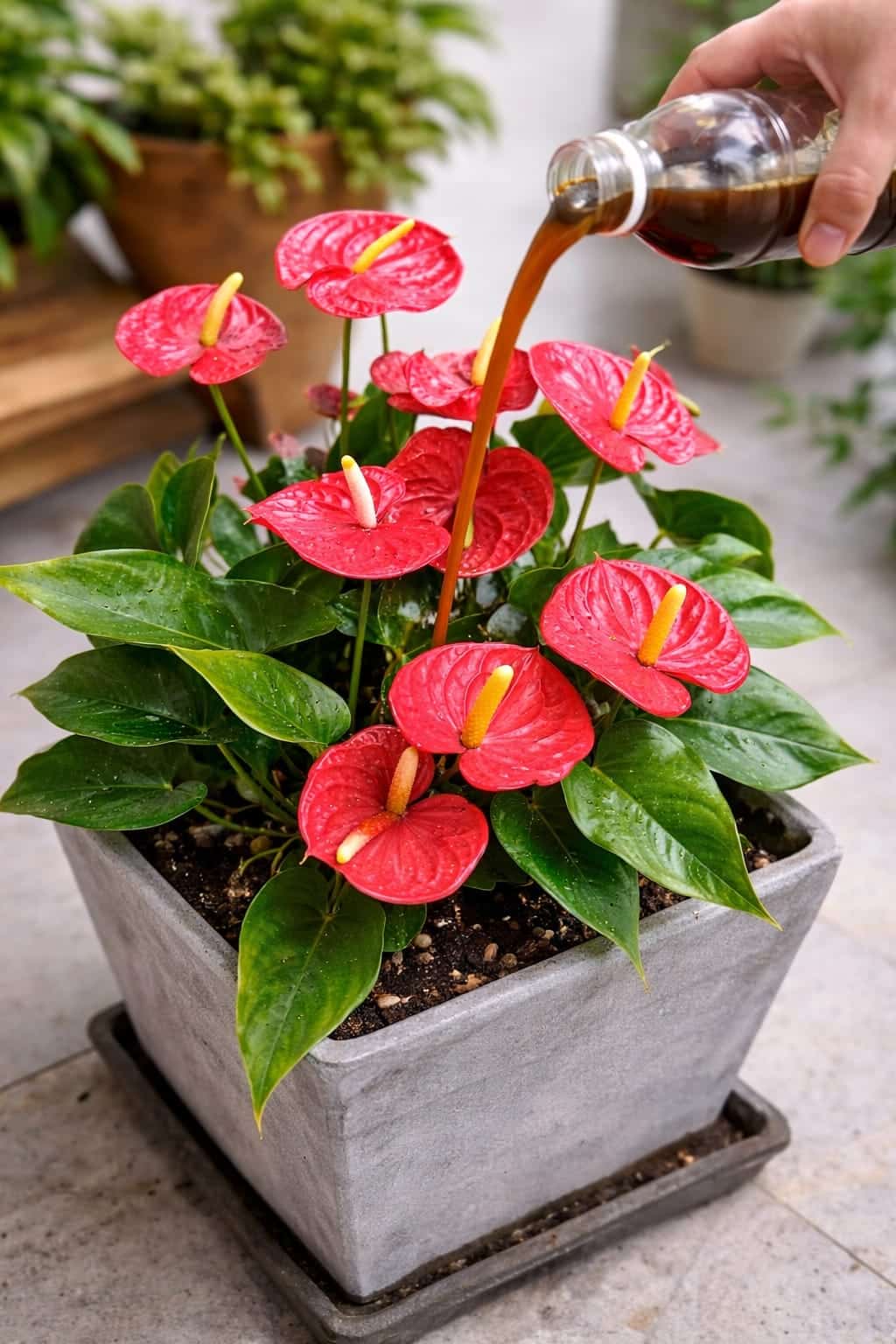
Want your anthurium to bloom again and again? Learn the secrets to healthy, flowering anthuriums – proper watering, bright indirect light, humidity, feeding, and more. No hype, just proven care.
Let’s be honest: anthuriums are showstoppers. With their glossy, heart‑shaped leaves and vibrant, waxy blooms in shades of red, pink, white, and even purple, they bring a tropical feel to any indoor space. But many people struggle to keep them flowering. The plant looks fine for a while, then the blooms fade… and never return.
The good news? Anthuriums are not difficult plants. They just need consistency. When you get the basics right – watering, light, soil, humidity, temperature, and feeding – they reward you with long‑lasting flowers again and again.
In this complete care guide, I’ll share everything you need to know to keep your anthurium happy and blooming all year round. No shortcuts, no gimmicks – just practical, proven advice.
Why Anthuriums Sometimes Stop Blooming
Before we dive into care, let’s understand the most common reasons anthuriums fail to flower:
Problem Likely Cause
No flowers, only leaves Insufficient light (most common)
Yellow leaves Overwatering or poor drainage
Brown leaf tips Low humidity or dry air
Drooping leaves Underwatering or overwatering
Flowers turn green Normal aging or too much direct sun
Slow growth Lack of nutrients or root‑bound
Most of these issues are easy to fix. Let’s go through each care factor in detail.
Give It the Right Amount of Water – Not Too Much, Not Too Little
Anthuriums like moisture, but they hate soggy roots. Overwatering is the #1 killer.
Watering Guideline Details
When to water Water only when the top inch of soil feels dry. Stick your finger into the potting mix – if dry, water; if damp, wait.
How often In typical indoor conditions, about once every 7–10 days. Always check the soil, not the calendar.
How to water Water thoroughly until it runs out the drainage holes. Empty the saucer immediately – never let the pot sit in standing water.
Signs of overwatering Yellowing leaves, mushy stems, foul smell from soil.
Signs of underwatering Drooping leaves, dry soil, brown crispy edges.
Pro tip: Use room‑temperature, filtered water if your tap water is hard. Anthuriums are sensitive to chlorine and fluoride.
- Light – The #1 Factor for More Blooms
One of the biggest reasons anthuriums stop flowering is poor lighting. They need bright, indirect light to produce those colorful spathes.
Light Level Effect on Anthurium
Low light (north window, dark corner) Leaves may stay green, but flowering is rare or nonexistent.
Medium light (few feet from east/west window) Occasional blooms, moderate growth.
Bright, indirect light (right by east/west window, or filtered south window) Ideal – regular blooms, vibrant leaves, strong growth.
Direct afternoon sun Leaf scorch – brown, crispy patches.
Pro tip: If your anthurium is producing leaves but no flowers, move it closer to a window. A north‑ or east‑facing window is often ideal indoors. Morning light is gentler than harsh afternoon sun.
- Use Airy, Well‑Draining Soil – The Foundation of Healthy Roots
Anthuriums are epiphytes (they grow on trees in nature). Their roots need air and drainage. Heavy, dense soil suffocates them.
Soil Component Purpose
Orchid bark Creates air pockets, mimics natural growing conditions.
Perlite Increases drainage and aeration.
Peat moss or coco coir Retains some moisture without becoming waterlogged.
DIY mix: 2 parts orchid bark + 1 part perlite + 1 part peat moss. You can also use a commercial aroid mix.
Repotting schedule: Every 2–3 years, or when roots are visibly crowded. A slightly snug pot is better than an oversized one – too much wet soil around the roots can lead to rot.
- Feed It, But Don’t Overdo It
Anthuriums are not heavy feeders. Too much fertilizer can burn roots and cause weak, leggy growth.
Fertilizer Guideline Details
When to fertilize Spring and summer (active growing season).
What to use Balanced liquid fertilizer (e.g., 20-20-20 or 10-10-10) diluted to half or quarter strength. For more blooms, choose a fertilizer with higher phosphorus (middle number).
How often Once every 6–8 weeks.
Do not fertilize In fall and winter – the plant rests.
Pro tip: More fertilizer does not mean more flowers. Gentle, regular feeding works better.
Can Banana Peels Really Boost Orchid Growth? Continue to Page 2
Discover the safer method, the real risks, and the smart orchid care details that many gardeners miss on the first page.