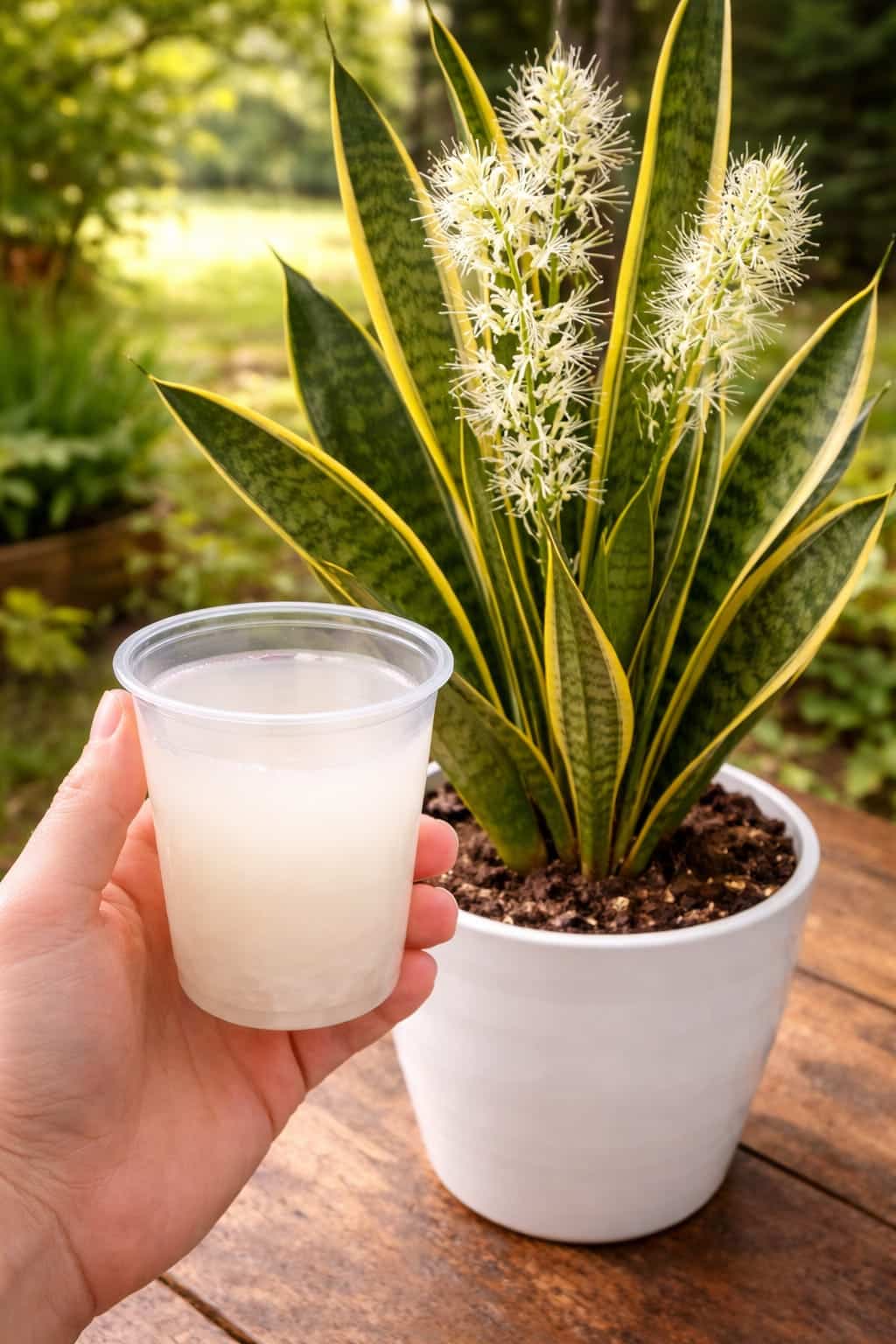
Can rice water and banana peels really make your snake plant bloom? Learn the truth about these viral ingredients, plus the real conditions needed for those rare, fragrant flowers.
Let’s be honest: snake plants (Sansevieria, now Dracaena) are famous for one thing – surviving almost anything. Low light? No problem. Forget to water it? Still alive. They’re the plant that refuses to die, even when you do your best to neglect them. But blooming? That’s a completely different story.
Most people keep a snake plant for years and never see a single flower. So when a simple claim starts going viral – “Two kitchen ingredients can make your snake plant bloom” – it’s worth asking: is it real, or just another plant myth?
In this guide, I’ll give you an honest, science‑backed look at the two trending ingredients: rice water and banana peels. You’ll learn what they can and cannot do, the real conditions that trigger snake plant blooms, and how to use these ingredients safely – without harming your plant.
Let’s separate the viral hype from the horticultural reality.
Can Snake Plants Really Bloom? Yes – But It’s Rare
Snake plants (Sansevieria trifasciata and related species) are capable of flowering. In their native habitat of West Africa, they bloom seasonally. But indoors, it’s rare. Most snake plants will go their entire lives without producing a single flower.
When they do bloom, they produce:
· Tall flower spikes – up to 2–3 feet high.
· Small, tubular flowers – greenish‑white or cream‑colored.
· A surprisingly strong, sweet fragrance – often compared to jasmine, strongest at night.
It’s beautiful – but not easy to achieve. Blooming is a sign that the plant is mature, healthy, and experiencing the right combination of environmental triggers (bright light, slight drought stress, root‑bound conditions). No single ingredient can magically force a snake plant to flower.
Ingredient #1: Rice Water – The Hidden Growth Booster
One of the most talked‑about “secret tricks” is rice water – the cloudy, starchy water left over from rinsing or cooking rice. This simple leftover liquid has gained popularity on social media as a natural plant fertilizer.
Why People Believe Rice Water Works
Rice water contains:
· Amino acids – the building blocks of proteins, which can stimulate growth.
· Beneficial microorganisms – from the surface of the rice grains, which can improve soil health.
· Minerals – small amounts of potassium, magnesium, and phosphorus.
In theory, these nutrients can strengthen roots and improve overall plant health – which helps the plant reach the blooming stage faster.
What Rice Water Can Actually Do
Benefit Realistic Effect
Gentle nutrient boost Provides trace minerals that support general health.
Beneficial microbes May improve soil biology, but effect is temporary.
Root strength Indirectly supports root development over time.
How to Use Rice Water Safely
If you want to try rice water, follow this safe method:
- Rinse raw rice (white or brown) in water, saving the cloudy liquid. Or use the water from boiling rice (cooled).
- Dilute with equal parts fresh water (1:1 ratio). Undiluted rice water can ferment and cause odors or attract pests.
- Use it every 2–3 weeks during the growing season (spring/summer). Do not use it as your only water source.
- Apply to the soil – not the leaves. Avoid over‑saturating.
⚠️ Important: Do not use rice water that has fermented (smells sour). Fermented rice water can be acidic and harm roots. Always use fresh, diluted rice water.
Ingredient #2: Banana Peel Fertilizer – The Bloom Trigger
If rice water helps general growth, banana peels are often promoted as the “bloom trigger” because of their high potassium content.
Why Banana Peels Are Believed to Work
Banana peels are rich in:
· Potassium (K) – essential for flower production, disease resistance, and overall plant health.
· Phosphorus (P) – supports root development and flowering.
· Magnesium and calcium – trace nutrients that support cell structure.
What Banana Peel Fertilizer Can Actually Do
Benefit Realistic Effect
Boosts potassium Supports flower production – but only if the plant is already ready to bloom.
Strengthens roots Indirect benefit from trace nutrients.
Slow‑release nutrients Peels decompose slowly, providing a gentle feed over time.
How to Use Banana Peels Safely
Option 1: Banana Peel Tea (Fastest)
- Chop 1–2 banana peels into small pieces.
- Soak in 1 liter of water for 24–48 hours.
- Strain out the solids.
- Dilute with equal parts fresh water (1:1).
- Use to water your snake plant once every 3–4 weeks.
Option 2: Dried Banana Peel Powder
- Dry banana peels in the sun or a low oven (200°F / 95°C) until brittle.
- Grind into a fine powder using a blender or mortar.
- Sprinkle a light dusting on the soil surface (no more than 1 teaspoon per pot).
- Water lightly to help it settle.
⚠️ Warning: Never put raw banana peels directly into the pot. They will rot, attract pests (fungus gnats, ants), and can cause mold.
Continue to Page 2
Continue to page 2 for more details about this article and the key points many readers miss on the first page.