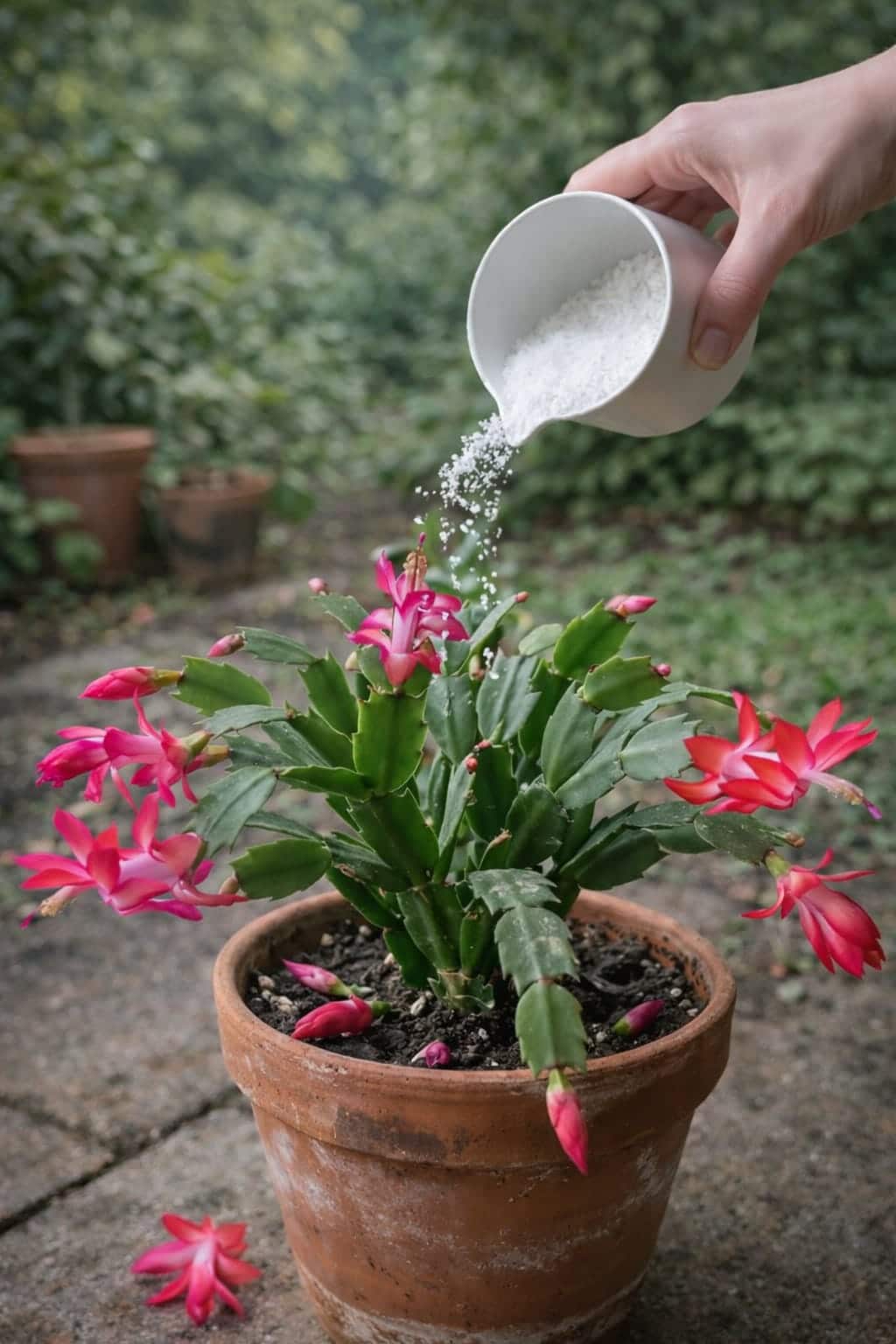
Are your Christmas cactus blooms fading too fast? Learn the simple trick to keep flowers fresh for weeks – stable temperatures, proper watering, and consistent light. No complicated care, just results.
Let’s be honest: there’s nothing more satisfying than seeing your Christmas cactus (Schlumbergera) covered in vibrant pink, red, or white blooms during the holidays. Those cascading flowers transform any room into a festive, cozy space. But here’s the frustrating part: just when you start enjoying the blooms… they fade too quickly.
If this keeps happening to you, don’t worry – you’re not alone. Many plant owners struggle with short‑lived flowers, even when the plant seemed perfectly healthy. The good news? Keeping your Christmas cactus blooming longer isn’t about complicated care or secret potions. It’s about a few simple adjustments that most people overlook.
In this guide, I’ll share the easy trick that makes blooms last longer – plus the essential factors of temperature, watering, light, and humidity. You’ll learn why flowers drop prematurely, how to avoid common mistakes, and how to enjoy weeks (or even months) of stunning color. No hype, just practical advice.
Let’s extend that bloom show.
Why Your Christmas Cactus Stops Blooming Too Soon
Before we talk about the trick, you need to understand why blooms don’t last. Christmas cacti are surprisingly sensitive plants. Their flowers depend on:
· Stable temperature – no sudden swings.
· Proper watering – consistent moisture, not too much or too little.
· Consistent light – bright but indirect.
· Low stress – no moving, no drafts, no shocks.
Even small changes can cause buds or flowers to drop early. That’s why many plants bloom beautifully… then suddenly stop. The flowers wilt, drop, or turn brown within days, leaving you with a green plant and disappointment.
But here’s the secret: once the buds have formed and flowers have opened, the plant shifts into maintenance mode. Your job is to keep everything stable. When you do that, flowers can last 4–6 weeks or even longer.
The Easy Trick That Makes Blooms Last Longer
Here’s the simple secret: keep conditions stable and slightly cool during blooming.
It sounds basic – but it’s powerful. Experts agree that avoiding sudden changes in temperature, light, and moisture helps flowers last much longer.
Why It Works
Factor Effect
Cool temperatures Slow down flower aging and respiration, keeping blooms fresh.
Stable conditions Reduce plant stress; the plant focuses on maintaining blooms instead of survival.
Consistent moisture Prevents wilting and premature drop.
Result: Flowers stay fresh and vibrant for weeks – sometimes up to two months.
🌡️ Temperature Is Everything
If you want longer‑lasting blooms, temperature control is your most powerful tool.
Ideal Range Why
60–70°F (15–21°C) Slows flower aging without harming the plant.
Below 50°F (10°C) Cold damage – buds may drop.
Above 75°F (24°C) Heat stress – flowers fade quickly.
What to avoid:
· Heat sources – radiators, heating vents, fireplaces.
· Cold drafts – drafty windows, doors, air conditioning.
· Sudden changes – moving the plant from a warm room to a cold one.
Pro tip: During the blooming period, place your Christmas cactus in a cool room at night (60–65°F) and move it back to normal room temperature during the day – but avoid drastic swings. Consistency is more important than exact numbers.
💧 Watering – The Balance Most People Miss
Watering is one of the biggest mistakes that shortens bloom life. Here’s the rule:
Phase Watering Guideline
During blooming Keep soil slightly moist – never soggy, never bone dry. Water when the top inch feels dry.
Signs of overwatering Yellowing segments, mushy roots, bud drop.
Signs of underwatering Wilted flowers, wrinkled segments, dry soil.
Why it matters: Overwatering causes root rot, which stresses the plant and causes flowers to drop. Underwatering dehydrates the flowers, causing them to wilt prematurely.
Pro tip: Use room‑temperature, filtered water. Cold water can shock the roots and cause bud drop.
☀️ Light – Bright but Gentle
Your Christmas cactus loves light – but not direct sun. During blooming, light plays a supporting role.
Light Level Effect
Bright, indirect light (east or west window) Ideal – supports photosynthesis without stress.
Direct afternoon sun Leaf burn, shorter bloom life.
Low light Weak plant, fewer flowers.
What to do: Place your blooming Christmas cactus near a bright window, but out of harsh direct sunlight. A sheer curtain can help diffuse intense rays.
Pro tip: Do not rotate or move the plant once buds and flowers have formed. Even small changes in light exposure can cause bud drop.
💨 Humidity – The Hidden Secret Most People Ignore
Christmas cacti are tropical plants, not desert cacti. They thrive in moderate humidity – around 50–60%. Dry indoor air, especially during winter heating, can cause buds to drop and flowers to fade faster.
Humidity Level Effect
Below 40% Bud drop, brown tips, short bloom life.
40–50% Acceptable, but not ideal.
50–60% Ideal – healthy blooms, long‑lasting flowers.
Easy fixes to increase humidity:
· Pebble tray – Place the pot on a tray filled with pebbles and water (pot sits on pebbles, not in water).
· Group plants – Cluster your Christmas cactus with other houseplants to create a humid microclimate.
· Humidifier – The most effective solution, especially in dry climates.
· Light misting – Mist the leaves (not flowers) in the morning. Avoid getting water on blooms.
Pro tip: If your home is very dry, a humidifier near the plant can significantly extend bloom life.
⚠️ Biggest Mistakes That Kill Blooms Fast
Avoid these common errors if you want long‑lasting flowers:
Mistake Why It’s Harmful
Moving the plant during blooming Buds and flowers are sensitive to changes in light and temperature.
Overwatering Root rot – flowers drop, plant weakens.
Keeping it near heaters Heat stress – flowers fade quickly.
Sudden temperature changes Shock – buds drop, blooms wilt.
Dry air Low humidity – bud drop, short bloom life.
Fertilizing during bloom Burns roots, stresses plant.
The golden rule: Once buds appear, put your plant in its final spot and leave it there. No rotating, no moving to another room, no repotting. Stability is everything.
Continue to Page 2
Continue to page 2 for more details about this article and the key points many readers miss on the first page.