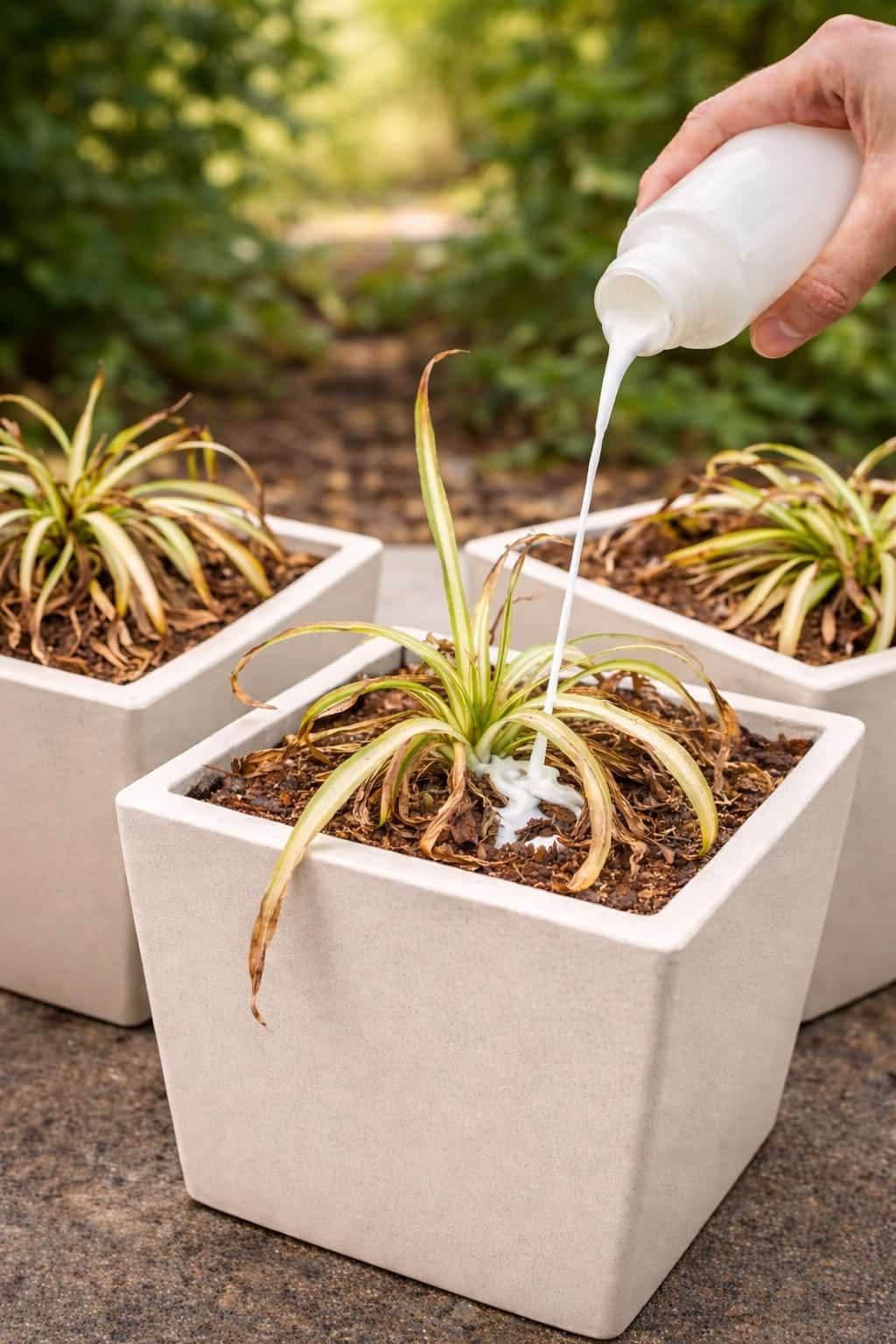
Is your spider plant looking weak with brown tips and drooping leaves? Learn why a gentle white liquid (diluted plant supplement) can help – and what to fix first. Practical recovery tips inside.
Let’s be honest: spider plants are usually known as easy, forgiving houseplants. Their arching leaves, striped foliage, and fresh green look make them perfect for shelves, side tables, hanging planters, and bright indoor corners. A healthy spider plant adds softness and movement to a room without needing the constant attention that some other houseplants demand.
But even spider plants can start looking weak indoors. Brown tips, pale leaves, drooping growth, and tired‑looking centers are all signs that something in the care routine is off. When that happens, many homeowners start looking for a simple way to help the plant recover and look attractive again.
That is why gentle white liquid plant‑care methods are getting attention. In most cases, this kind of white liquid refers to a diluted plant‑support solution (such as a mild fertilizer, seaweed extract, or even diluted milk – though the latter is controversial) used carefully as part of a broader recovery routine. The goal is not to force instant growth. The goal is to support the plant while improving the real conditions that caused the decline in the first place.
In this guide, you will learn why people use a white liquid on weak spider plants, what it may help with, when it makes sense, what mistakes to avoid, and how to make a struggling spider plant look healthy again.
Why Spider Plants Start Looking Weak Indoors
Spider plants (Chlorophytum comosum) can handle a lot, but they still respond quickly to stress. Indoors, weakness usually builds up gradually until the leaves begin showing visible damage.
Common Signs of a Weak Spider Plant
· Brown, crispy leaf tips
· Faded or pale green leaves
· Drooping or limp foliage
· Weak center growth (new leaves are small or deformed)
· Dry, curled leaf ends
· Tired‑looking, compacted soil
· Slow production of baby plantlets (spiderettes)
· Roots circling the pot or growing out of drainage holes
In many cases, the plant is not failing because of one dramatic problem. It is usually reacting to a mix of inconsistent watering, mineral buildup, compacted soil, weak light, or an exhausted potting mix.
What the White Liquid Usually Represents
When people use a white liquid on a weak spider plant, it is usually some form of diluted plant‑care solution intended to support recovery. The exact product may vary, but the purpose is usually one of these:
· Gentle nutritional support (diluted balanced fertilizer)
· Help for stressed roots (seaweed extract or humic acid)
· A more controlled feeding routine
· Support for cleaner new growth
· A simple recovery step during active growth
The color itself is not what matters. What matters is whether the plant actually needs support and whether the basics are already being corrected.
Note on milk: Some viral posts recommend pouring diluted milk on spider plants. While milk contains some nutrients, it can spoil, attract pests, and cause odors. A proper plant‑safe liquid supplement is far more reliable.
Why Smart Homeowners Use It Carefully
People are drawn to simple care methods because they want a result that feels manageable. A weak spider plant can make a room look neglected, so homeowners naturally want a routine that helps the plant recover without becoming complicated.
A gentle liquid method appeals to them because they want:
· Healthier‑looking foliage
· Fewer ugly brown tips over time
· Better support for new growth
· A simple indoor plant routine
· A more polished decorative plant
But smart plant owners do not rely on the liquid alone. They use it only after checking the real cause.
What Smart Plant Owners Check First
Before using any liquid support, experienced plant owners look at the root zone and care routine first.
The Main Things Worth Checking
Check Why It Matters
Is the soil compacted or old? Old soil holds too much moisture and lacks nutrients.
Is the pot draining properly? Stagnant water causes root rot.
Is the plant being watered too often or too little? Inconsistent watering stresses the plant.
Is there white mineral crust on the soil? Salt buildup from tap water or fertilizer.
Is the plant in bright, indirect light? Low light weakens growth.
Are the roots crowded or stressed? Root‑bound plants stall.
These questions matter more than any product bottle. A weak spider plant in bad soil will not become healthy just because something white was poured on top.
Continue to Page 2
Continue to page 2 for more details about this article and the key points many readers miss on the first page.