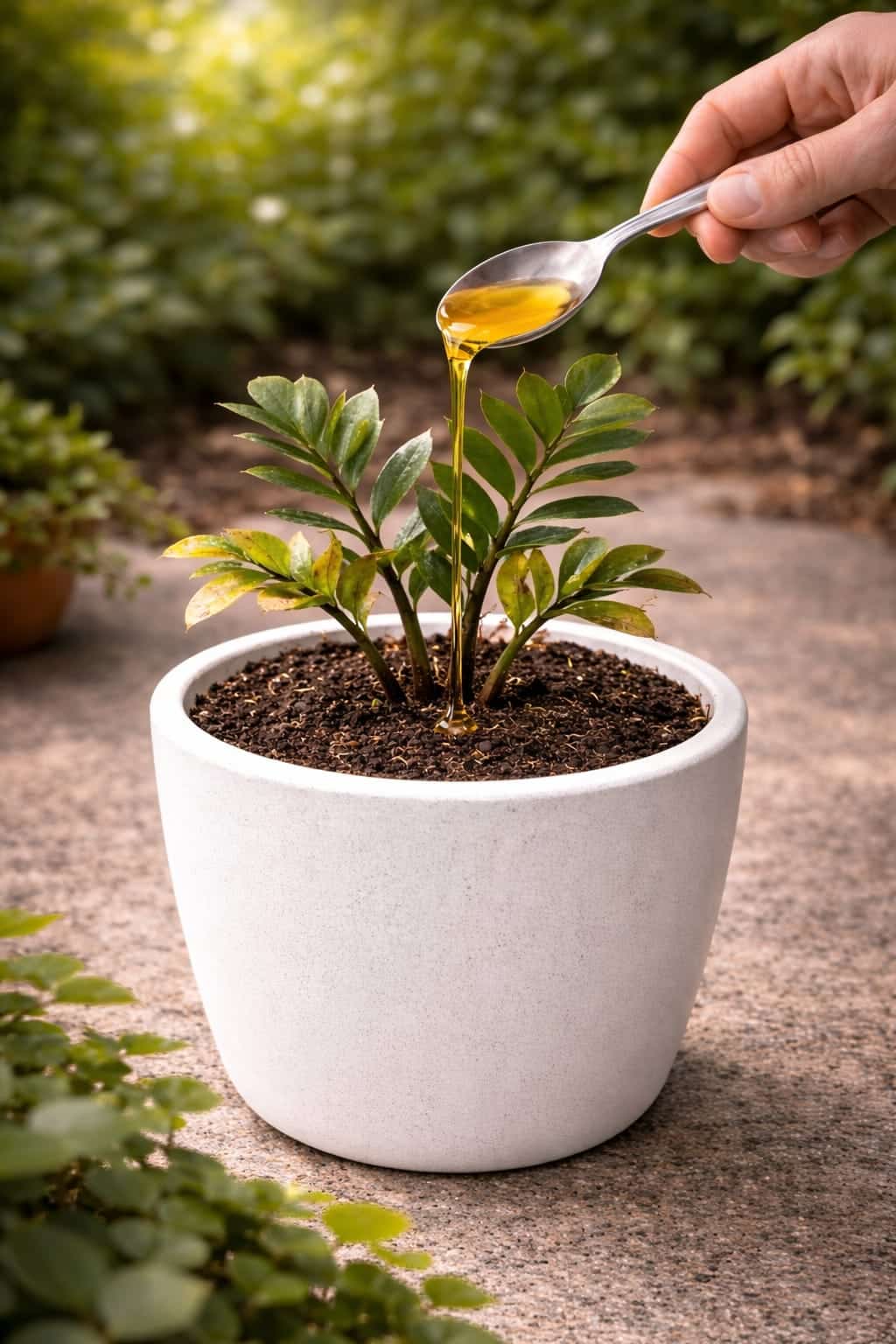
Is your ZZ plant looking tired, yellowing, or barely growing? Learn how a simple golden liquid (diluted fertilizer or seaweed extract) can help – but only when you fix light, water, and soil first. Step‑by‑step recovery guide inside.
Let’s be honest: ZZ plants (Zamioculcas zamiifolia) are famous for being nearly indestructible. They survive low light, infrequent watering, and general neglect. But even these tough plants can start looking tired, yellowing, or barely growing. When that happens, many people assume the plant is beyond saving and throw it away.
👉 Don’t throw it away.
This plant is extremely resilient — but when it weakens, it’s usually because of hidden root problems that most people don’t notice. Overwatering, poor drainage, low light, or compacted soil slowly stress the plant until it declines.
And yes… that “golden liquid” method can help. But only if you understand how it works and use it as part of a broader recovery plan.
In this complete guide, I’ll explain what the golden liquid really is, why ZZ plants become weak, how to fix the root causes, and how to use a gentle golden liquid safely to support recovery. You’ll also learn about light, watering, soil, temperature, and how to spot real signs of improvement. No magic, just practical care.
Let’s save your ZZ plant.
What Is the Golden Liquid? (Detailed Explanation)
The golden liquid is NOT a random trick. It is usually one of these plant‑safe solutions:
Type What It Does
Diluted liquid fertilizer (balanced, e.g., 10-10-10) Provides gentle nutrition for weakened roots.
Compost tea Adds beneficial microbes and organic nutrients.
Seaweed or kelp extract Natural root stimulant; contains trace minerals and growth hormones.
Very light organic feeding solution Supports recovery without burning tender roots.
👉 The golden color comes from nutrients — especially organic compounds and minerals. It is not a magic potion; it is a supportive tool that works best when the plant’s basic needs are already met.
Why ZZ Plants Become Weak in the First Place
Before fixing the plant, you need to understand the cause. ZZ plants are resilient, but they decline when conditions are consistently wrong.
Most Common Reasons ZZ Plants Struggle
Cause Effect
Overwatering (most dangerous) Roots suffocate, rhizomes rot, leaves yellow.
Poor drainage soil Water pools, roots stay wet, rot develops.
Low light exposure Slow growth, weak stems, pale leaves.
Cold indoor conditions Root activity slows, recovery stalls.
Root stress or compacted soil Roots cannot absorb water or nutrients.
👉 ZZ plants store water in their rhizomes (thick, potato‑like underground stems). When roots suffocate from overwatering or poor drainage, the entire plant declines. Fixing the root zone is the first priority.
How the Golden Liquid Helps (Real Mechanism)
This method works by:
· Refeeding weakened roots – providing trace nutrients that may be missing from old soil.
· Stimulating microbial life in soil – especially with compost tea or seaweed extract.
· Supporting chlorophyll production – greener leaves, better photosynthesis.
· Helping new shoots emerge – giving the plant energy to push out fresh growth.
👉 It does NOT act instantly — it supports gradual recovery over several weeks. Think of it as a gentle vitamin boost, not an emergency cure.
Ideal Temperature for Recovery
ZZ plants thrive in stable indoor conditions. Temperature affects how fast roots can absorb water and nutrients.
Condition Ideal Range
Best temperature 18°C to 28°C (65°F to 82°F)
Avoid Below 12°C (54°F) – roots slow down
Also avoid Sudden cold drafts from windows or AC
👉 Stability is more important than exact numbers. Keep your ZZ plant away from drafty doors, air conditioning vents, and cold windowsills during recovery.
Light Conditions That Speed Up Recovery
ZZ plants tolerate low light, but for recovery:
👉 Bright, indirect light is ideal. Place your plant near an east or west window, or a few feet back from a south window with a sheer curtain.
Light Level Effect on Recovery
Low light (north window, dark corner) Weak stems, slow recovery, pale leaves.
Medium light (few feet from window) Acceptable, but recovery takes longer.
Bright, indirect light (right by east/west window) Fastest recovery, stronger stems, darker green leaves.
Direct harsh sun Leaf scorch – avoid.
Without enough light, even the best golden liquid routine will feel slow.
Watering Strategy (Critical Section)
ZZ plants need a very specific watering pattern. Overwatering is the #1 killer.
Correct Approach
· Let soil dry completely before watering again. Stick your finger 2–3 inches into the soil – if dry, water; if damp, wait.
· Water deeply until it runs out the drainage holes, then stop. Empty the saucer immediately.
· Frequency: In bright light, every 2–3 weeks. In lower light, every 4–6 weeks.
Avoid
· Watering every few days
· Keeping soil constantly wet
· Letting the pot sit in standing water
👉 Overwatering = root rot = plant decline. If your ZZ plant is weak, check soil moisture first.
Soil Composition (Hidden Game Changer)
Even a perfect watering schedule fails if the soil is wrong. ZZ plants need airy, fast‑draining soil.
Best Soil Mix
Continue to Page 2
Continue to page 2 for more details about this article and the key points many readers miss on the first page.