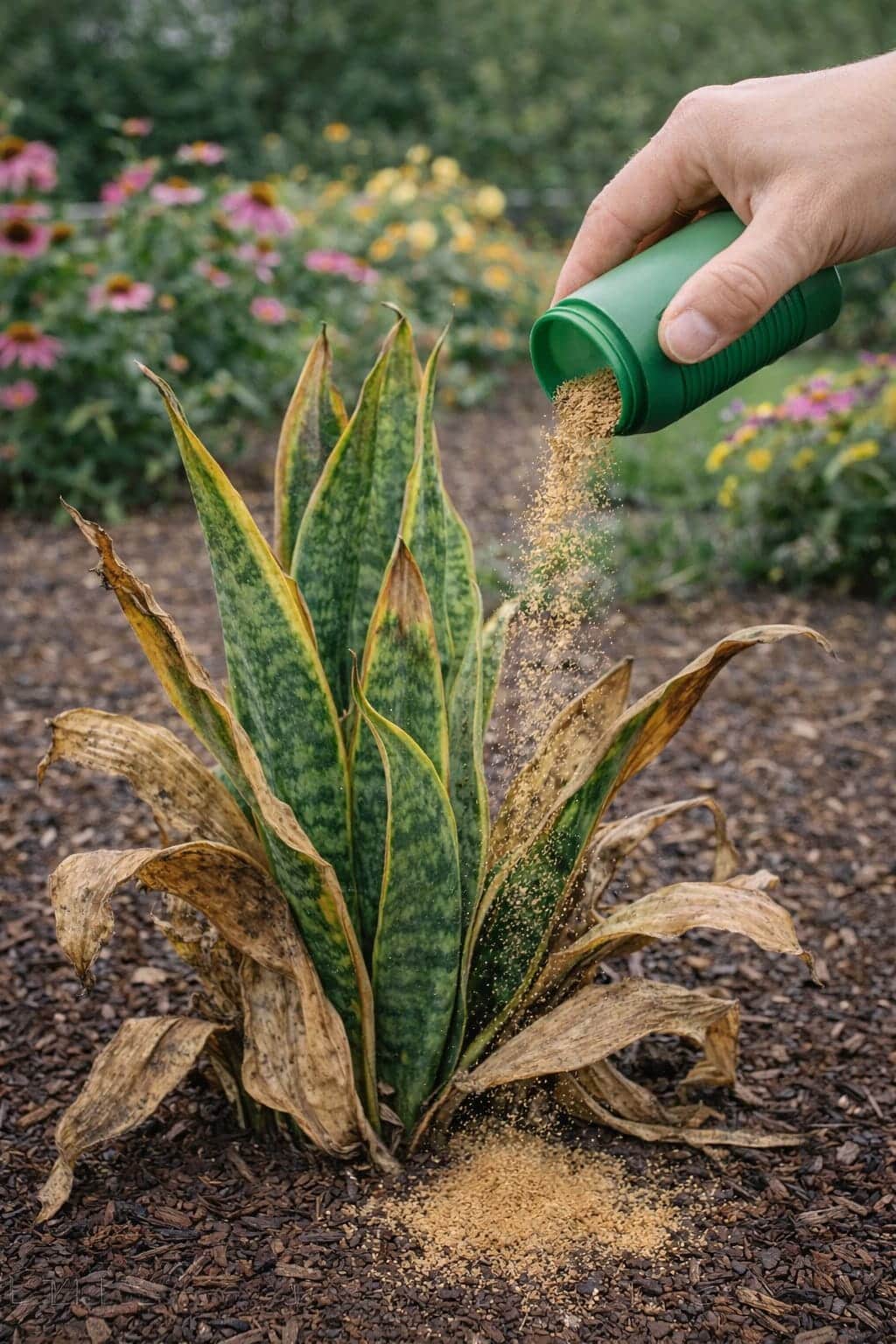
Moving your snake plant outdoors? Leaves may dry out or turn brown. Learn how a simple natural powder (mineral supplement or soil conditioner) can support recovery – when combined with proper soil, light, and watering. Practical outdoor care guide.
Let’s be honest: snake plants (Sansevieria, now Dracaena) are known for their strength, resilience, and ability to survive in almost any environment. Indoors, they’re often called “unkillable.” Outdoors, they can become even more impressive – growing taller, stronger, and more vibrant when conditions are right.
But here’s what many homeowners notice when they move snake plants outside: the plant doesn’t always adapt smoothly. Leaves can start to dry out, turn brown at the edges, curl or weaken, or lose their deep green color. Suddenly, a plant that once looked strong indoors begins to struggle outdoors.
That’s exactly where many gardeners start experimenting with simple methods – like adding a natural powder to the soil. At first glance, it looks like a quick fix. But just like most plant “hacks,” the powder is not the real solution. The real solution is understanding how snake plants behave outdoors – and what they truly need to recover and thrive.
In this guide, you’ll learn why snake plants struggle outdoors, how to fix dry leaves, the role of a natural powder (mineral supplement or soil conditioner), and the essential factors for outdoor success: soil, light, watering, and gradual adaptation. No magic – just practical care.
🌿 Understanding Snake Plants Outdoors (What Changes?)
Snake plants are naturally adapted to dry, warm environments. However, moving them outdoors introduces new variables:
· Direct sunlight – harsher than indoor filtered light.
· Temperature fluctuations – daytime heat, cooler nights.
· Soil differences – garden soil vs. potting mix.
· Wind and airflow – can dry leaves faster.
Indoors, conditions are controlled. Outdoors, conditions are dynamic. This shift is where most problems begin.
🌱 Why Snake Plants Get Dry Leaves Outdoors
Dry, damaged leaves are usually caused by environmental stress – not lack of nutrients.
Common Causes
Cause Effect
Too much direct sunlight Leaf scorch, brown patches, curling.
Sudden temperature exposure Shock; leaves weaken.
Poor soil drainage Roots suffocate; leaves dry from the bottom up.
Inconsistent watering Drought stress or overwatering damage.
Wind dehydration Leaves lose moisture faster than roots can replace it.
👉 The plant is not dying – it is adjusting. With proper care, it can recover and thrive outdoors
🪴 Soil & Outdoor Drainage — The Real Foundation
Even the best powder cannot fix heavy, waterlogged soil. Snake plants need well‑draining soil to survive outdoors.
Ideal Outdoor Soil
· Well‑draining texture – sandy or loose.
· Good airflow around roots.
· No standing water after rain or watering.
Best Soil Mix for Outdoor Snake Plants
· Garden soil + coarse sand (50/50 mix)
· Cactus mix used directly in garden beds
· Raised beds or pots with drainage holes
The Biggest Outdoor Mistake
Heavy soil or compacted ground causes:
· Water retention → root rot.
· Root suffocation → leaf decline.
· Slow death over weeks.
👉 Outdoor plants fail when roots stay wet too long. Fix drainage before adding any powder.
🌞 Light Exposure — The Hidden Stress Factor
Snake plants tolerate sun, but sudden exposure can shock them. If you move an indoor snake plant directly into full sun, the leaves will burn.
Ideal Light for Outdoor Snake Plants
· Partial sun – 4–6 hours of direct sun, then shade.
· Filtered light – under a tree or awning.
· Morning sun, afternoon shade – the gentlest transition.
Too Much Direct Sun
· Burns leaves (brown, crispy patches).
· Causes dryness and curling.
· Leads to permanent damage if not corrected.
👉 Outdoor adaptation must be gradual. Start with a shaded spot, then slowly move to brighter areas over 2–3 weeks.
💧 Watering Outdoors — A Different Strategy
Outdoors, water evaporates faster – but that doesn’t mean watering more often. Snake plants still prefer dry cycles.
Correct Outdoor Watering Method
· Water deeply but less frequently – soak the soil, then let it dry completely.
· Let the top 2–3 inches of soil dry before watering again.
· Frequency: In hot weather, every 1–2 weeks. In cool weather, every 3–4 weeks.
Wrong Method
· Daily watering.
· Keeping soil constantly wet.
· Watering on a schedule without checking soil moisture.
👉 Balance is key. Overwatering outdoors is just as dangerous as indoors.
🧪 What Is the Natural Powder? (And What It Actually Does)
The powder seen in the image is typically a:
· Organic mineral blend – crushed eggshells, bone meal, or rock dust.
· Mild nutrient supplement – provides trace minerals (calcium, magnesium).
· Soil conditioner – improves soil structure over time.
How It May Help
· Improve soil structure – especially if the soil is sandy or depleted.
· Add trace nutrients – supports overall plant health.
· Support recovery – gentle boost, not a cure.
👉 But it only works if soil and watering are already correct. The powder is a support tool, not a primary fix.
🧴 How to Use the Powder Properly
If you want to try this method, follow these guidelines for safe application.
Step‑by‑Step
- Sprinkle a light layer around the base of the plant – not a thick pile.
- Mix slightly into the top inch of soil – use your finger or a small trowel.
- Water gently after application to settle the powder.
- Use occasionally – once every 4–6 weeks during the growing season.
What to Avoid
· Overusing – too much can alter soil pH or create a crust.
· Applying to dry soil – water first to avoid concentration.
· Using on plants with root rot – fix drainage first.
👉 Overuse can harm the plant. Less is more.
⚠️ Common Outdoor Snake Plant Mistakes
Mistake Why It’s Harmful Correct Approach
Too much sun too fast Leaf burn, shock Gradual acclimation over 2–3 weeks.
Overwatering Root rot, leaf decline Let soil dry completely between waterings.
Poor soil drainage Roots suffocate Amend with sand or perlite; use raised beds.
Ignoring temperature changes Cold damage below 50°F (10°C) Bring indoors or cover during cold snaps.
Overusing fertilizers or powders Salt buildup, root stress Use sparingly; once a month at most.
Outdoor Snake Plant Care Table – Quick Reference
Factor Ideal Condition Result
Light Partial sun (morning sun, afternoon shade) Healthy leaves, no burn
Soil Fast‑draining (sandy or cactus mix) Strong roots, no rot
Water Moderate – let soil dry between waterings No overwatering damage
Temperature Warm, stable (above 50°F / 10°C) Active growth
Powder Occasional, light use (every 4–6 weeks) Gentle soil and root support
Frequently Asked Questions (FAQs)
Q: Why are my snake plant leaves dry after moving outdoors?
Most common cause: sun stress or watering imbalance. Too much direct sun burns leaves; inconsistent watering causes dryness. Adjust light gradually and water when soil is dry.
Q: Can snake plants grow outdoors year‑round?
In warm climates (USDA zones 9–11), yes. In colder zones, bring them indoors before frost. They cannot survive freezing temperatures.
Q: How often should I water my outdoor snake plant?
When the top 2–3 inches of soil are dry. In hot weather, this may be every 1–2 weeks. In cool weather, every 3–4 weeks.
Q: Is the natural powder necessary?
No. It is an optional support. The real keys are proper soil, light, and watering.
Q: Can I overuse the powder?
Yes. Too much can alter soil pH or create a crust that repels water. Use sparingly.
Q: What is the best soil for outdoor snake plants?
Sandy, well‑draining soil. Amend heavy garden soil with coarse sand or perlite.
Q: Do snake plants need shade outdoors?
Partial shade is best – especially protection from harsh afternoon sun. Morning sun is gentler.
Q: Can a sunburned snake plant recover?
Yes, if the damage is not severe. Move the plant to a shadier spot, trim badly damaged leaves, and provide consistent care. New growth will be healthy.
Q: Do snake plants grow faster outdoors?
Often, yes – with more light and warmth, they can produce new leaves faster than indoors. But they need gradual adaptation.
Q: What is the biggest mistake people make?
Overwatering or moving from indoors to full sun too quickly. Both cause stress and decline.
Printable Outdoor Snake Plant Recovery Checklist
☐ Acclimate gradually – start in shade, move to partial sun over 2–3 weeks
☐ Ensure soil drains well – amend with sand or perlite if heavy
☐ Use a pot or raised bed with drainage holes
☐ Water only when top 2–3 inches of soil are dry
☐ Provide morning sun, afternoon shade
☐ Protect from temperatures below 50°F (10°C)
☐ Sprinkle a light layer of natural powder (optional) once a month
☐ Mix gently into top soil, then water
☐ Trim badly damaged leaves to encourage new growth
☐ Be patient – recovery takes weeks
Final Thoughts – Fix the Environment First
A snake plant with dry, brown leaves outdoors is not necessarily dying – it is reacting to stress. The solution is not a magic powder. The solution is to fix the environment:
· Gradual light adaptation – no sudden full sun.
· Well‑draining soil – no waterlogged roots.
· Proper watering – let soil dry between waterings.
· Protection from cold – bring inside if temperatures drop.
A natural powder can be a helpful addition – a small boost of trace minerals or soil conditioning. But it will not fix poor drainage or sunburn. Use it as a support, not a cure.
With patience and the right care, your outdoor snake plant can recover, grow stronger, and reward you with tall, vibrant leaves.
Now it’s your turn! Have you moved a snake plant outdoors? What worked – or didn’t? Drop a comment below – I’d love to hear your experience.
And if you found this guide helpful, share it with a friend who’s struggling with outdoor snake plants. Pin it for later, and subscribe to our newsletter for more practical plant care.
Stay gradual, stay dry, and watch your snake plant thrive outdoors. 🌿✨