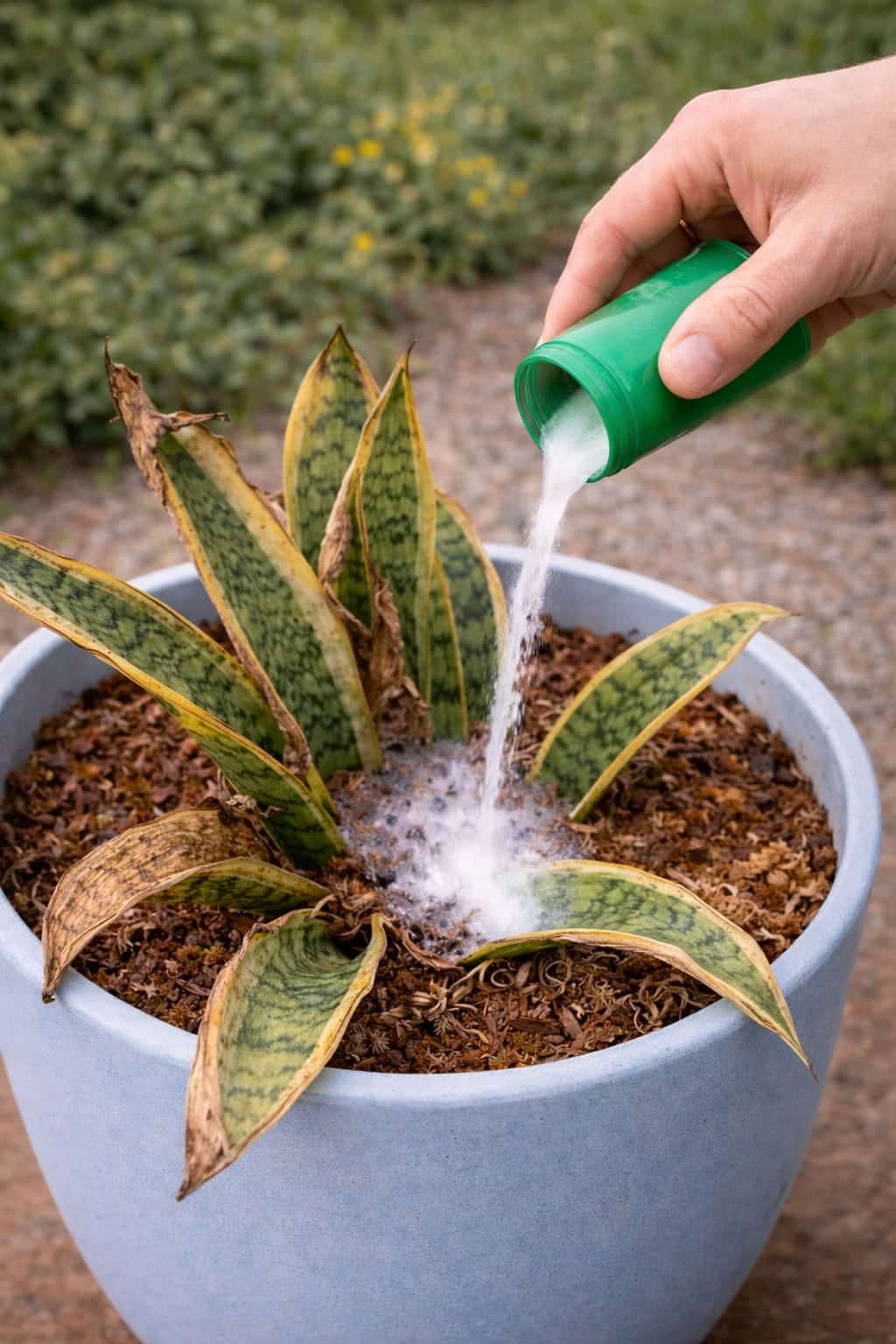
Is your snake plant losing color with yellowing edges and dry tips? Learn why a white liquid (diluted nutrient solution) can help – but only when you fix soil, watering, and light first. Complete indoor recovery guide.
Let’s be honest: snake plants (Sansevieria, now Dracaena) have become one of the most popular indoor plants in modern homes – and for good reason. They are known for their durability, their ability to survive low‑light conditions, and their clean, architectural look that fits perfectly into minimalist and luxury home decor.
But here’s what many homeowners don’t expect: even the “easiest” plant can slowly decline if the environment is not right. You might notice it gradually: leaves losing their deep green color, yellowing edges appearing, tips turning dry and brittle, or growth slowing down or stopping completely. At this stage, most people assume the plant is dying. But in reality, it’s reacting to stress.
Recently, a growing number of indoor plant lovers have started experimenting with a trending method: pouring a white liquid into the soil to “revive” snake plants. This method has gained attention because of its dramatic visual effect – especially when paired with before‑and‑after transformations.
But here’s the deeper truth that experienced growers understand: the white liquid is not the real solution. The real solution lies in understanding how snake plants naturally grow – and adjusting your care routine accordingly.
In this guide, you’ll learn why snake plants decline, what the white liquid really is, how to use it safely, and – most importantly – the essential factors for a healthy snake plant: soil, watering, light, and temperature. No magic, just practical care.
🌿 Understanding Snake Plants at a Deeper Level
Snake plants are native to dry, arid environments. Unlike tropical houseplants, they are adapted to survive in conditions where water is scarce. This means:
· They store moisture in their thick leaves – built‑in water reserves.
· They prefer dry soil over wet soil – roots need to dry out.
· They thrive with minimal watering – less is more.
· They are sensitive to excess moisture – overwatering is deadly.
👉 In simple terms: snake plants are built to survive drought – not overwatering. This is the foundation of everything you need to know.
🪴 The Hidden Root Problem (Why Most Snake Plants Decline)
When a snake plant starts to look unhealthy, the problem is almost always below the surface.
Healthy Roots Should Be
· Firm – not mushy.
· Light‑colored – white or light tan.
· Dry between watering cycles – no constant moisture.
When Conditions Are Wrong, Roots Become
· Soft – losing structure.
· Dark – brown or black.
· Rotting – foul smell, mushy texture.
👉 And this happens silently. By the time leaves begin to show yellowing or softness, root damage has often already started. This is why quick fixes like “white liquid” seem to work – because people unintentionally improve care habits at the same time.
🌱 Soil & Drainage — The Real Game Changer
Even the best white liquid cannot fix bad soil. Snake plants need fast‑draining, lightweight, well‑aerated soil.
Ideal Soil Mix
· Cactus or succulent mix – designed for fast drainage.
· Perlite or coarse sand blends – add 30% for extra airflow.
Why This Works
· Proper oxygen flow – roots breathe.
· Quick drying after watering – prevents rot.
· Strong root development – healthy plant.
The Most Common Mistake
Using regular potting soil leads to:
· Water retention → roots stay wet.
· Poor drainage → rot develops.
· Plant decline over weeks.
Continue to Page 2
Continue to page 2 for more details about this article and the key points many readers miss on the first page.