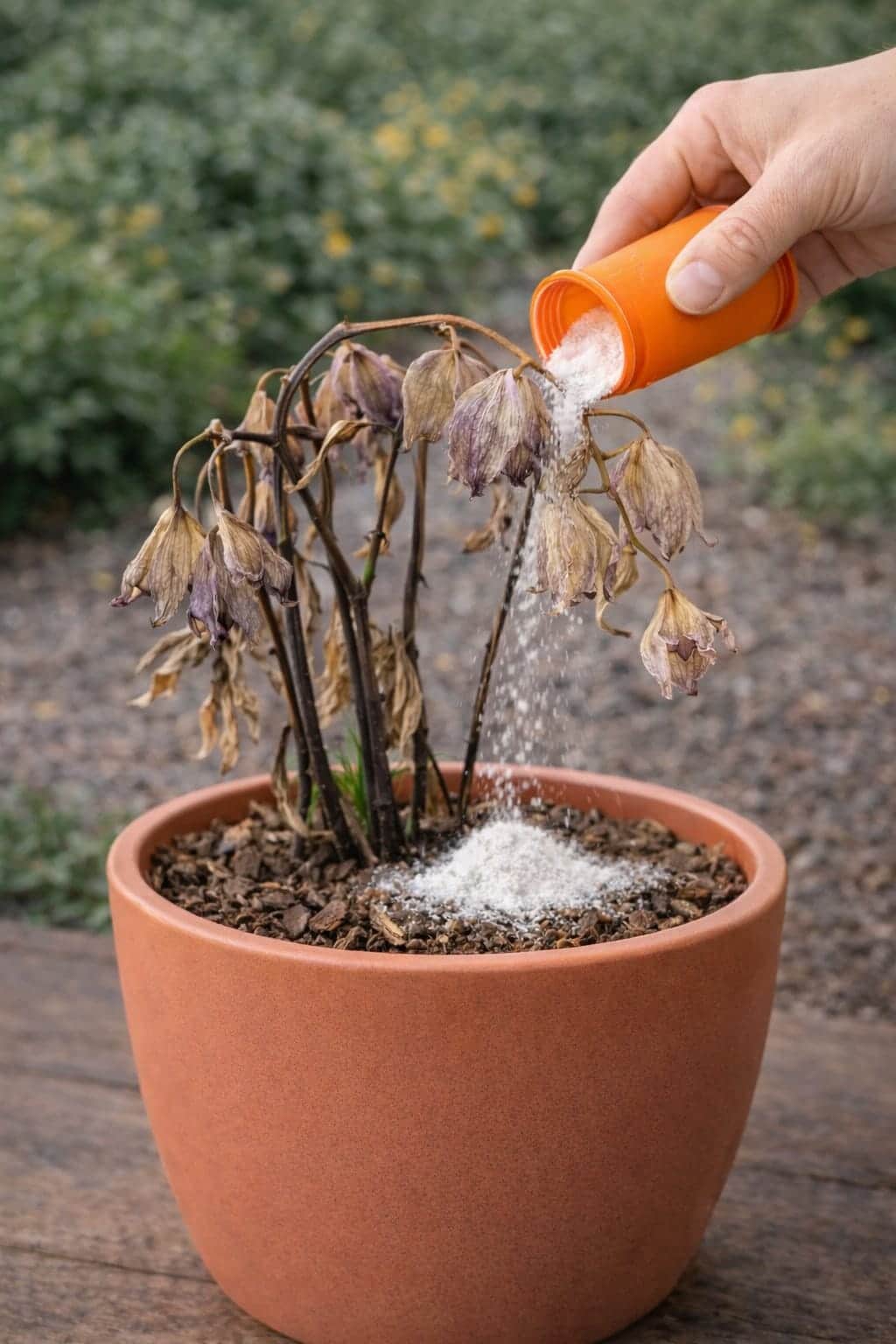
Is your orchid declining after the blooms fade? Learn why luxury homeowners use a simple white powder (mineral supplement) as part of a revival method – but only when bark, watering, and light are correct. Complete orchid care guide inside.
Let’s be honest: orchids have always carried a certain kind of prestige. They are not just plants you place anywhere – they are chosen, positioned, and displayed with intention. In modern homes, especially those influenced by luxury interior design, orchids represent calmness, balance, and refined taste.
Walk into a well‑designed living room, and you’ll often find an orchid sitting elegantly on a table, perfectly aligned with the surrounding decor. It doesn’t dominate the space – it completes it.
But behind that beauty, there is a reality many homeowners experience. They bring an orchid home, enjoy its blooms, and then – slowly – the plant begins to decline. Leaves lose firmness, flowers drop, and the once vibrant plant starts to look lifeless.
👉 Most people think the plant is dying. But in reality, the orchid is reacting – not failing.
This is where the recent trend comes in: adding a small amount of white powder to the orchid’s pot. At first glance, it seems like a quick fix. A simple sprinkle, and suddenly the plant appears to recover. But the truth is much deeper than that.
👉 The powder is not the magic.
The real transformation happens when the plant finally receives what it actually needs: proper airflow, controlled watering, stable temperature, and the correct growing medium. Once these are aligned, orchids don’t just survive – they thrive.
🌿 Understanding Orchids at Their Core (How They Truly Grow)
To understand orchids, you need to forget everything you know about regular houseplants.
Orchids do not grow in soil. In nature, they attach themselves to trees, where their roots are exposed to air, light, and fast‑drying conditions. Rainwater comes and goes quickly, and the roots never stay wet for long.
This natural behavior explains everything. Orchids need:
· Air around their roots
· Light reaching their root system
· A cycle of moisture and dryness
👉 When roots can breathe, the plant becomes strong.
👉 When roots suffocate, the plant declines.
This is why so many orchids fail indoors – because they are treated like normal plants.
🪴 Bark vs. Soil – The Decision That Changes Everything
✔️ Bark Mix (The Correct Foundation)
Bark mimics the orchid’s natural environment. It provides:
· Excellent drainage
· Continuous airflow
· A stable root environment
When you use bark, you allow the roots to function naturally.
❌ Soil (The Silent Killer)
Soil may look harmless – but for orchids, it is destructive. It causes:
· Water retention
· Lack of oxygen
· Root rot
👉 This single mistake is responsible for most orchid failures.
🏺 The Perfect Pot Setup (Used in Luxury Homes)
In high‑end interiors, orchids are never randomly placed. They are styled.
The ideal setup includes:
· A transparent inner pot – to monitor root health.
· A decorative ceramic outer pot – for aesthetics.
· Drainage holes – to prevent water buildup.
This combination is widely used in luxury homes, interior design projects, and real estate staging. It balances functionality and beauty.
🌡️ Ideal Growing Conditions (The Stability Factor)
Orchids thrive in environments that feel comfortable to humans.
Factor Ideal Range
Temperature 18–25°C (65–77°F)
Light Bright, indirect sunlight (east or north‑east window)
Humidity 40–60%
👉 Stability is more important than intensity. Sudden changes in temperature or light can stress the plant.
💧 Watering – The Most Critical Habit
If there is one factor that determines orchid success, it is watering.
Correct Approach
· Water only when the bark is completely dry.
· Allow full drainage – never let the pot sit in standing water.
Incorrect Approach
· Watering too often.
· Keeping roots constantly wet.
👉 Overwatering is the fastest way to destroy an orchid.
Continue to Page 2
Continue to page 2 for more details about this article and the key points many readers miss on the first page.