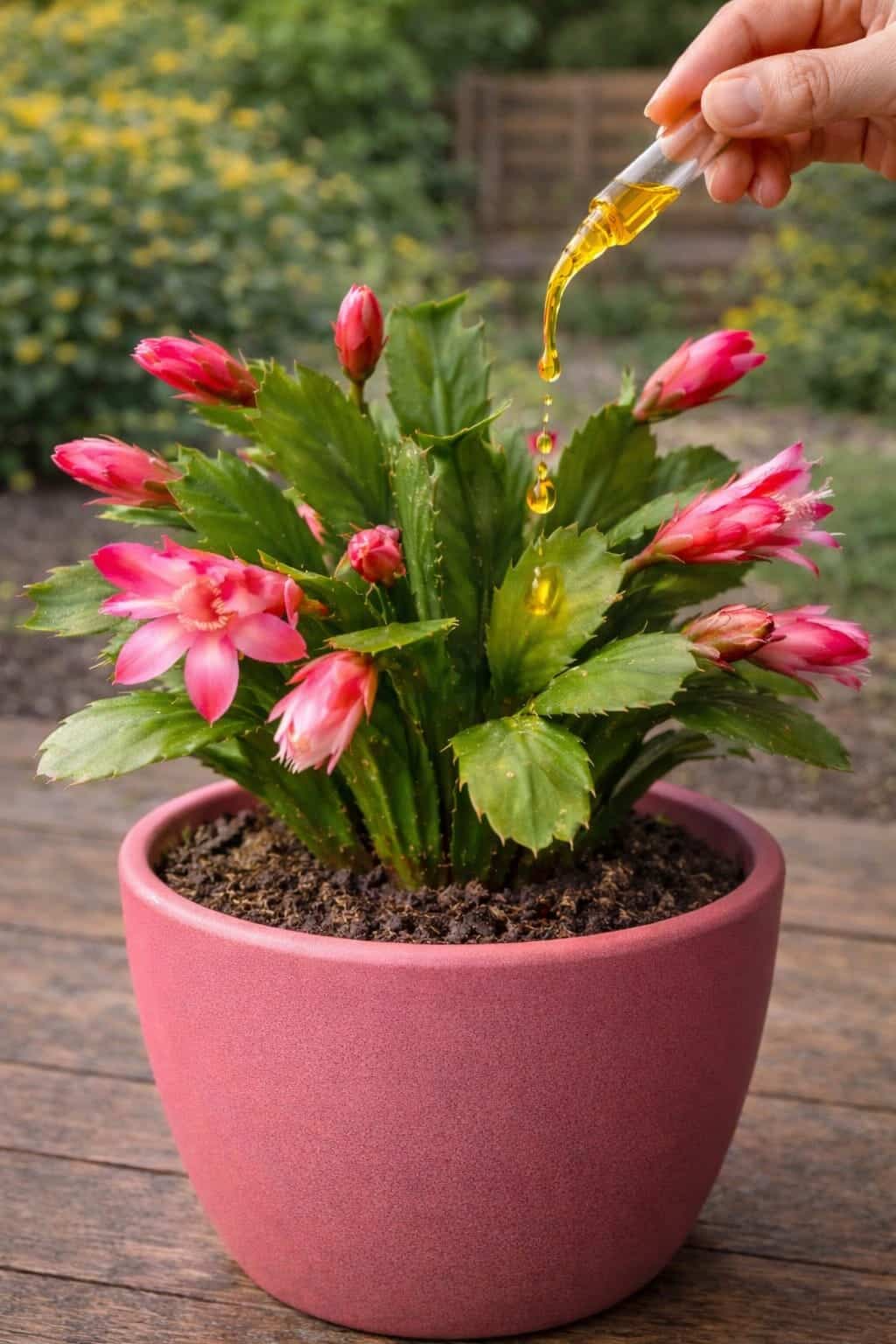
Is the golden liquid trend the secret to a blooming Christmas cactus? Learn what it really is, when to use it, and – most importantly – the real bloom triggers: cool nights, long darkness, and proper care.
Let’s be honest: Christmas cactus (Schlumbergera) is one of the most rewarding indoor plants — when it blooms, it transforms any space with vibrant color and soft, elegant flowers. But many plant owners struggle to get consistent blooms year after year. You water it, give it light, and still… no flowers.
Recently, a “golden liquid” method has been trending among gardeners. You’ve probably seen it: a warm‑toned liquid being dropped onto the soil, promising faster growth and more flowers. The videos are convincing: a dull Christmas cactus, a few drops of golden liquid, and suddenly – buds appear.
👉 But here’s the truth most people miss: it’s not the liquid that creates the blooms — it’s the conditions. The liquid only supports them.
In this guide, you’ll learn what the golden liquid really is, when to use it safely, and – most importantly – the real bloom triggers that professional growers use: cool nights, long darkness, stable conditions, and proper seasonal care. No magic, just proven horticulture.
🌿 What Is the “Golden Liquid” Really?
In most viral plant videos, the golden liquid is one of the following:
· A diluted liquid fertilizer – typically a balanced houseplant food (e.g., 10-10-10 or 5-10-5) that has a yellowish or golden tint from its ingredients.
· A mild organic nutrient solution – such as diluted seaweed extract, compost tea, or fish emulsion (which often has a golden‑brown color).
· Sometimes a natural homemade mix – like diluted molasses water or banana peel tea, which can have a warm, golden hue.
Its purpose is simple:
· Provide essential nutrients (nitrogen, phosphorus, potassium, trace minerals)
· Support root development
· Help sustain energy during growth
· Encourage stronger flowering cycles (indirectly)
⚠️ But it must always be light, diluted, and used occasionally. It is a supplement, not a magic bloom trigger.
🌱 Understanding Christmas Cactus Growth Behavior
Unlike desert cacti (which thrive in hot, dry conditions), the Christmas cactus is a tropical epiphyte. That means:
· It grows naturally in humid environments, attached to trees in Brazilian rainforests.
· It prefers filtered light, not harsh sun.
· It needs consistent (but light) moisture – not soggy, not bone dry.
· It blooms based on light cycles and temperature changes, not on a calendar.
This is why many people fail – they treat it like a desert cactus. They give it too much sun, let it dry out completely, or keep it in warm, constant conditions year‑round. Without seasonal cues, it will grow leaves but rarely flowers.
Continue to Page 2
Continue to page 2 for more details about this article and the key points many readers miss on the first page.