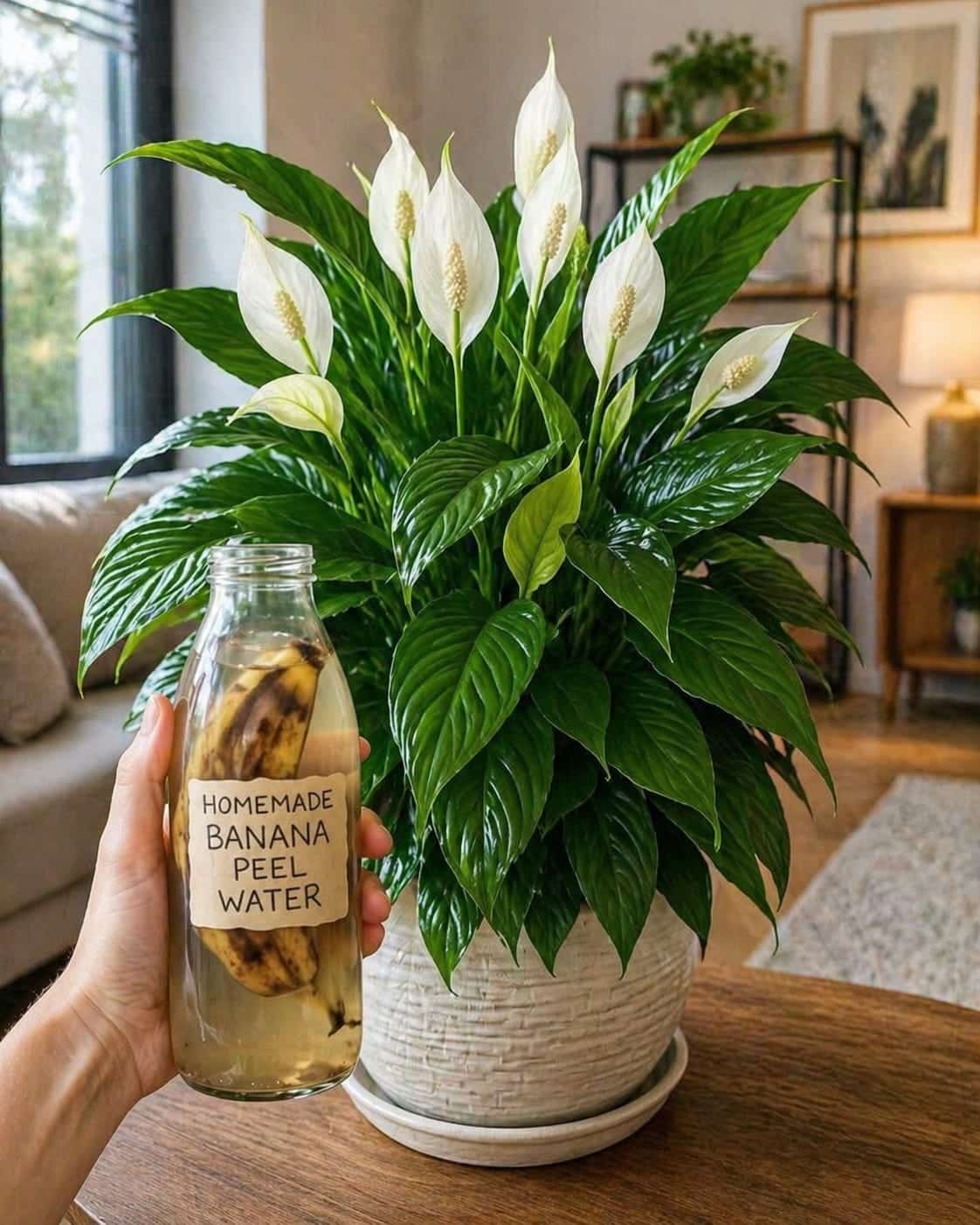
Peace lilies are among the most loved indoor plants in the world, and it is easy to understand why. With their deep green glossy leaves, elegant white blooms, and calm tropical appearance, they can instantly make a room feel fresher, softer, and more alive. A healthy peace lily can look like a living bouquet, especially when it produces several white flowers at once. But many people bring one home, enjoy the blooms for a few weeks, and then wonder why the plant never flowers again.
The good news is that peace lilies can bloom indoors again and again when their needs are understood. They do not need complicated care, expensive equipment, or a greenhouse. What they need is the right balance of light, moisture, warmth, nutrition, and patience. One popular homemade trick people use for stronger growth and better flowering is banana peel water, a simple natural plant tonic made by soaking banana peels in water. It has become especially popular for peace lilies because the plant responds well to gentle feeding and consistent care.
In this complete guide, you will learn how to grow peace lily indoors for year-round blooms, how to use homemade banana peel water safely, where to place your plant, how often to water it, how to encourage more flowers, and what mistakes to avoid. Whether your peace lily is lush but not blooming, droopy and tired, or newly purchased from a garden center, this guide will help you build a simple routine that keeps it beautiful through every season.
What Is a Peace Lily?
The peace lily, also known as Spathiphyllum, is a tropical indoor plant famous for its rich green leaves and white flower-like spathes. Many people call the white parts “flowers,” but technically the showy white piece is a modified leaf called a spathe. The real flowers are tiny and grow on the central spike, known as the spadix.
Peace lilies naturally grow in warm, humid forest environments, where they receive filtered light rather than harsh direct sun. This is why they adapt so well to indoor spaces. They do not need the same intense sunlight as many flowering plants, but they do need enough brightness to produce blooms.
One reason peace lilies are so popular is that they communicate clearly. When they are thirsty, their leaves droop dramatically. When they are happy, their leaves stand tall and shine. When they are stressed, they may develop brown tips, yellow leaves, or fewer blooms. Learning to read these signals is the secret to growing a peace lily successfully indoors.
Can Peace Lilies Bloom Year-Round Indoors?
Peace lilies can bloom indoors at different times of the year, especially when kept in stable conditions. However, “year-round blooms” does not always mean every single day of the year without pause. A healthy peace lily may bloom several times throughout the year, with short resting periods between blooming cycles. The goal is to create conditions that make blooming possible again and again.
If your peace lily only bloomed when you bought it and never again, the most likely reason is not enough light. Peace lilies are often described as low-light plants, but this can be misleading. They can survive in low light, but surviving is not the same as blooming. To flower well, they need bright, indirect light.
Other factors also matter. The plant needs steady moisture without sitting in soggy soil, mild feeding during active growth, a warm room, and enough root space. Homemade banana peel water can be used as a gentle supplement, but it works best when the basic care conditions are already correct.
The Secret Behind Indoor Peace Lily Blooms
The secret to peace lily blooms is balance. Many people try to force blooms by adding fertilizer, banana peel water, coffee grounds, or other homemade plant foods, but a peace lily will not bloom well if the environment is wrong. A plant sitting in a dark corner cannot produce flowers just because it receives extra nutrients. A plant with rotting roots cannot bloom because its foundation is damaged.
For a peace lily to bloom indoors, it needs enough energy. Energy comes from light. Nutrients support the process, but light drives it. This is why a peace lily placed near a bright window with filtered light often blooms more than one placed far from any window.
Moisture also plays a major role. Peace lilies like evenly moist soil, but not swampy soil. They enjoy humidity, but they do not like stagnant water around their roots. They appreciate feeding, but too much fertilizer can burn the roots or cause leaf damage. When all of these factors are balanced, the plant becomes strong enough to produce new white spathes repeatedly.
Best Indoor Location for a Peace Lily
The best place for a peace lily indoors is near a bright window where it receives indirect light. An east-facing window is often excellent because it gives gentle morning light without harsh afternoon heat. A north-facing window can also work if the room is bright. A south- or west-facing window may be suitable if the plant is set back from the glass or protected by a sheer curtain.
Avoid placing peace lilies in strong direct sun. Direct sun can scorch the leaves, leaving brown patches or faded areas. The leaves are designed for filtered tropical light, not hot sunbeams. If the leaves look washed out, curled, or burned, move the plant slightly farther from the window.
At the same time, avoid deep shade. A peace lily may stay alive in a dim corner, but it will usually produce fewer blooms. If your plant has healthy green leaves but no flowers for months, move it to a brighter location. Often, this one change makes the biggest difference.
How Much Light Does a Peace Lily Need to Bloom?
For strong blooming, a peace lily needs bright, indirect light for several hours a day. The light should be strong enough that you can comfortably read in the room without turning on a lamp during the day, but not so strong that sun rays burn the leaves.
A simple way to test the light is to place your hand between the plant and the window during the brightest part of the day. If your hand casts a soft shadow, the light is likely suitable. If the shadow is very sharp and hot, the light may be too direct. If there is almost no shadow, the plant may not be receiving enough light to bloom well.
If your home is dark, you can still grow a peace lily, but blooms may be less frequent. In that case, consider using a grow light for a few hours daily. Even a simple full-spectrum indoor plant light can help a peace lily maintain stronger growth during darker months.
How to Water a Peace Lily Indoors
Watering is one of the most important parts of peace lily care. These plants like moisture, but they do not like being waterlogged. The best approach is to water when the top inch of soil feels dry. Push your finger gently into the soil. If the surface feels dry but the lower soil is still slightly moist, it may be time to water. If the soil is still wet, wait.
When watering, pour slowly until water begins to drain from the bottom of the pot. This ensures the roots receive moisture evenly. After watering, empty the saucer so the plant does not sit in standing water. Standing water can cause root rot, which leads to yellow leaves, drooping, and poor blooming.
Peace lilies are dramatic when thirsty. Their leaves may droop suddenly, making the plant look as if it is dying. Usually, it perks up after watering. However, do not rely on wilting as your watering schedule. Repeated severe wilting can stress the plant and reduce flowering. It is better to check the soil regularly and water before the plant collapses.
Should You Use Tap Water?
Peace lilies can be sensitive to chemicals and minerals in tap water, especially if your water is heavily treated or very hard. Brown leaf tips are often linked to dry air, inconsistent watering, excess fertilizer, or mineral buildup. If your peace lily develops brown tips even though you are caring for it well, try using filtered water, rainwater, or water that has sat out overnight.
Room-temperature water is best. Very cold water can shock the roots, especially in winter. Warm, gentle watering is closer to the tropical conditions peace lilies prefer.
Homemade Banana Peel Water for Peace Lilies
The image of homemade banana peel water beside a lush peace lily is popular because it suggests a natural, simple way to feed the plant. Banana peels contain nutrients, especially potassium, which is associated with overall plant strength and flowering support. When banana peels are soaked in water, some soluble compounds move into the water, creating a mild homemade plant tonic.
Banana peel water is not a complete fertilizer, and it should not replace balanced plant food entirely. However, it can be used as an occasional gentle supplement for peace lilies. The key is to make it cleanly, dilute it properly, and avoid letting it ferment too long indoors.
Used carefully, banana peel water can become part of a natural care routine. It gives plant owners a simple way to reuse kitchen scraps while providing a mild boost during the growing season. It is especially appealing for people who prefer low-cost, homemade plant care methods.
How to Make Banana Peel Water for Peace Lily
Making banana peel water is very simple. You only need a banana peel, clean water, and a jar. The goal is to create a light infusion, not a rotten or foul-smelling mixture.
Ingredients
- 1 clean banana peel
- 1 jar or bottle
- 2 to 3 cups of water
- A strainer
Instructions
- Cut the banana peel into small pieces.
- Place the pieces into a clean jar.
- Add 2 to 3 cups of water.
- Let it soak for 12 to 24 hours.
- Strain out the banana peel pieces.
- Dilute the banana peel water with an equal amount of fresh water before using.
- Water the soil lightly, avoiding the leaves and crown area.
Do not let banana peels sit in water for many days inside your home. Long soaking can create unpleasant odors and attract fruit flies. A short soak is enough for a mild homemade tonic.
How Often to Use Banana Peel Water
For peace lilies, banana peel water should be used occasionally, not constantly. Once every three to four weeks during spring and summer is enough. During fall and winter, when growth naturally slows, reduce feeding or stop using banana peel water altogether.
Too much homemade plant water can create problems. Organic residues may build up in the soil, attract insects, or encourage unwanted microbial growth if the pot stays too wet. Always use banana peel water lightly and make sure the pot drains well.
A good routine is to use plain water most of the time and banana peel water only as a monthly supplement. If you also use commercial houseplant fertilizer, do not overdo both. Peace lilies prefer gentle feeding rather than heavy feeding.
Can Banana Peel Water Make Peace Lilies Bloom?
Banana peel water may support blooming, but it does not force blooms by itself. The most important bloom trigger is bright indirect light. If a peace lily is in a dark area, banana peel water will not magically produce flowers. However, if the plant already has good light, healthy roots, and proper moisture, occasional banana peel water may help support the plant’s overall strength.
Think of banana peel water as a helpful side dish, not the main meal. Your peace lily still needs balanced care. When the plant has enough light and stable conditions, gentle nutrition can help it perform better.
If your plant is healthy but bloomless, first move it to brighter indirect light. Then check whether it is rootbound, underfed, or stressed. After correcting those issues, banana peel water can be added as a mild natural boost.
Best Soil for Peace Lily Indoors
Peace lilies need soil that holds moisture but also drains well. A regular houseplant potting mix can work, but it is often better to improve it with materials that increase air flow. You can mix potting soil with perlite, orchid bark, or coco coir to create a lighter blend.
A good peace lily soil mix should feel soft and slightly airy, not dense and muddy. If water sits on the surface for a long time before soaking in, the soil may be too compacted. If the soil dries out within a day, it may be too loose or the pot may be too small.
Healthy soil supports healthy roots, and healthy roots support blooms. Many flowering problems begin below the surface. If your peace lily refuses to bloom and also dries out too quickly or stays wet too long, the soil may need attention.
Choosing the Right Pot
A peace lily pot must have drainage holes. This is non-negotiable. Decorative pots without drainage may look beautiful, but they can trap water and cause root rot. If you love a decorative pot, keep the peace lily in a plastic nursery pot with drainage and place that inside the decorative container. After watering, remove any excess water from the outer pot.
Peace lilies like to be slightly snug in their pots, but they should not be severely rootbound. A slightly rootbound peace lily may bloom well, but a severely crowded plant may struggle to absorb enough water and nutrients. If roots are circling tightly around the pot or coming out of the drainage holes, it may be time to repot.
When repotting, choose a pot only one size larger. Moving a peace lily into a pot that is too large can cause the soil to stay wet for too long, increasing the risk of root rot.
How to Repot a Peace Lily
Repotting is best done in spring or early summer, when the plant is actively growing. Water the plant a day before repotting so the roots are hydrated. Gently remove the peace lily from its pot and loosen the roots slightly. Trim away any black, mushy, or dead roots with clean scissors.
Add fresh potting mix to the new pot, place the plant at the same depth it was growing before, and fill around the roots. Water thoroughly and let the excess drain. Keep the plant in bright indirect light and avoid heavy feeding for a few weeks while it adjusts.
After repotting, the peace lily may droop temporarily. This is normal. Give it stable conditions and avoid moving it repeatedly. Once the roots settle, the plant should begin growing more strongly.
Temperature and Humidity for Year-Round Growth
Peace lilies prefer warm indoor temperatures. They generally grow best in rooms that feel comfortable to people. Avoid placing them near cold drafts, air conditioning vents, heaters, fireplaces, or exterior doors that open frequently in winter.
Humidity is also helpful. Dry indoor air can cause brown leaf tips and reduce the plant’s lush appearance. To increase humidity, place the peace lily near other houseplants, use a pebble tray, or run a small humidifier nearby. Misting can provide a temporary fresh look, but it does not raise humidity for long.
A stable environment is better than extreme changes. Peace lilies do not like sudden cold, hot blasts of air, or frequent relocation. Choose a good spot and let the plant settle.
How to Feed a Peace Lily for More Blooms
Peace lilies are not heavy feeders, but they do appreciate light nutrition during active growth. Use a balanced indoor plant fertilizer at half strength every four to six weeks in spring and summer. Too much fertilizer can cause brown tips and salt buildup in the soil.
If you use banana peel water, keep the rest of your feeding routine mild. For example, you might use diluted houseplant fertilizer one month and banana peel water the next. Another option is to use fertilizer at half strength and banana peel water only occasionally.
Always water the plant before applying fertilizer if the soil is very dry. Fertilizing dry roots can cause stress. Also, flush the soil with plain water every couple of months to remove buildup.
Continue to Page 2
Continue to page 2 for more details about this article and the key points many readers miss on the first page.