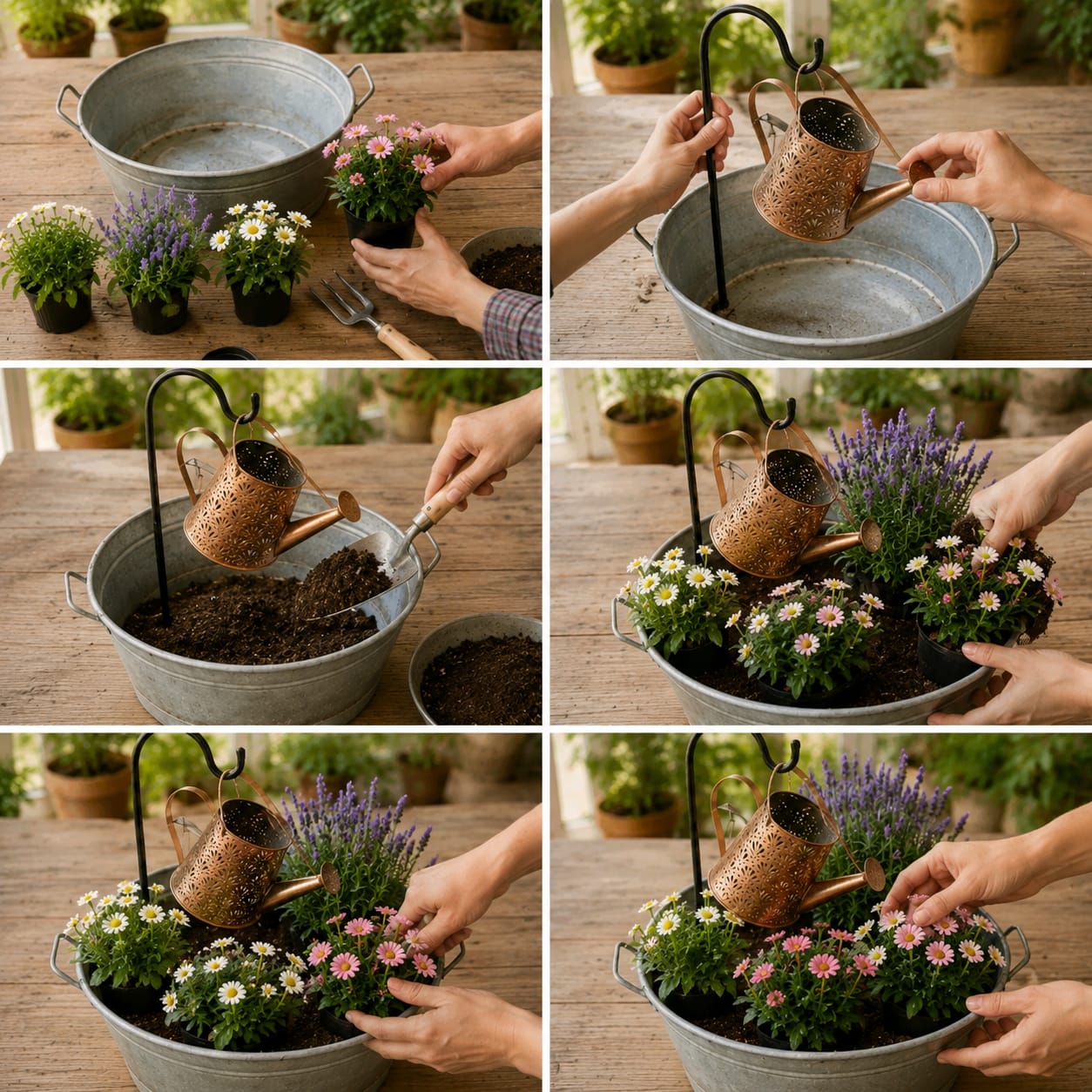
A galvanized tub flower planter is one of the most charming container garden ideas for people who want colorful blooms, rustic farmhouse style, easy seasonal planting, and a decorative garden display that can brighten a patio, balcony, porch, sunroom, courtyard, or outdoor table. Its wide metal shape, weathered silver finish, generous planting space, and vintage garden look make it a favorite for cottage garden styling, farmhouse patio decor, balcony flower arrangements, container gardening, rustic outdoor design, seasonal porch displays, premium garden styling, and polished property presentation. When arranged well, a simple metal tub can become a full blooming centerpiece that looks natural, cheerful, and carefully designed.
This type of planter works beautifully because it combines several visual elements in one container. The galvanized tub creates a rustic base, the mixed flowers bring color and softness, the soil gives the plants a shared growing space, and a small hanging watering can adds a playful decorative accent. The result can look like a miniature garden scene rather than a normal flower pot. It can be placed on a wooden table, patio floor, porch step, garden bench, balcony corner, or sunny entryway where flowers can receive enough light.
However, a galvanized tub planter should be prepared carefully. A metal tub may not have drainage holes unless they are added. Without drainage, water can collect at the bottom and cause root rot. Mixed flowers also need the right soil depth, correct spacing, balanced watering, and enough sunlight. A decorative watering can should not block airflow or drip constantly into one section of the planter. The design should look beautiful, but the plant health must come first.
This guide explains how to create a galvanized tub flower planter safely, how to choose suitable mixed blooms, how to prepare drainage, how to use rich but well-draining soil, how to place the decorative watering can, how to water correctly, what mistakes to avoid, and how to keep the display healthy, clean, and suitable for patio styling, balcony decor, cottage garden design, farmhouse outdoor living, commercial entrance displays, luxury home staging, and premium seasonal container gardening.
Quick Answer
A galvanized tub flower planter can be created by choosing a tub with drainage holes, adding a light drainage-friendly potting mix, arranging compatible flowering plants with similar sunlight and watering needs, and watering evenly without leaving the roots sitting in standing water. A decorative hanging watering can can be added as a garden accent, but it should not drip constantly into the same spot or shade the plants too much. Mixed blooms such as daisies, lavender, pink garden flowers, small bedding plants, and compact seasonal flowers can work well if they share similar care needs. The planter should be placed in bright outdoor light, watered when the top soil begins to dry, groomed regularly, and protected from extreme heat, cold, or waterlogging. Drainage is the most important safety step.
What This Garden Display Is
This garden display is a mixed flower container garden planted inside a galvanized metal tub. A galvanized tub is a wide metal basin often used in rustic garden styling because it has a vintage farmhouse look and enough room for several small plants. Instead of using one single flower type, this style combines different flowering plants and foliage textures to create a fuller, more natural arrangement.
The display can include compact daisies, lavender-style blooms, pink flowering plants, small seasonal bedding flowers, and leafy green fillers. These plants create layers of color, height, and texture. The tallest plants can sit toward the back or center, while lower spreading plants can soften the front edge. When arranged correctly, the planter looks full without becoming overcrowded.
The hanging watering can is mainly a decorative feature. It gives the display a whimsical garden theme and makes the tub look like a small story scene. It can hang from a hook or garden stake inside the tub, adding height above the flowers. This kind of detail is popular in cottage garden decor, farmhouse patio styling, and creative container gardening because it makes the planter feel handmade and personal.
Why a Galvanized Tub Works Well
A galvanized tub works well because it provides a wide planting area. Many standard pots are narrow, which limits plant combinations. A tub allows several small flowers to be arranged together in one container. This creates a mini garden effect, especially when the plants have different shapes and bloom colors. The wide shape also makes the display suitable as a centerpiece for a patio, porch, or garden table.
The metal finish gives the planter rustic charm. Galvanized steel has a soft silver-gray look that pairs beautifully with pink flowers, white daisies, purple blooms, green leaves, terracotta accents, wooden tables, and natural stone. It can fit cottage gardens, farmhouse porches, vintage patios, balcony gardens, and outdoor entertaining spaces. The container itself becomes part of the design.
The tub is also sturdy and stable. A wide metal basin can hold a generous amount of soil and several plants without tipping easily. This is helpful when adding a tall hook or decorative watering can. However, the tub must still be modified or chosen correctly for drainage. Stability is useful, but root health depends on water movement.
What This Method Should Not Be Misunderstood As
This method should not be misunderstood as simply placing flowers into any metal tub and watering heavily. A metal container without drainage can quickly become waterlogged. Flowers may look fresh at first, but roots can rot if water collects at the bottom. Drainage holes are essential for a real planted tub, especially if it will be outside where rain can fill the container.
It should not be misunderstood as a low-care display that never needs grooming. Mixed flower containers need regular attention. Spent flowers should be removed, yellowing leaves should be trimmed, and the soil should be checked often. Different plants may grow at different speeds, so the arrangement may need light shaping over time. A container garden stays beautiful when it is maintained.
It should also not be misunderstood as a place for plants with completely different needs. A lavender-style plant that prefers drier soil may not enjoy the same constant moisture as a water-loving bedding flower. The best mixed container uses plants that share similar light and watering preferences. Design matters, but compatibility matters more.
Choosing the Right Galvanized Tub
The best galvanized tub for planting should be wide, stable, and deep enough for roots. A shallow tub can work for small annual flowers, but it dries quickly and may not support larger plants. A deeper tub holds more soil and gives roots more space. The container should be strong enough to hold wet soil without bending or becoming unstable.
Drainage holes are very important. If the tub does not already have holes, they should be added to the bottom before planting. Several holes spread across the base are better than one small hole. This allows excess water to leave evenly. If the tub will sit on a wooden table or patio surface, it can be raised slightly on small feet or placed on a tray that allows drainage without trapping water.
The inside of the tub should be clean before planting. Old residue, rust flakes, chemicals, or oily material should be removed. A clean container protects the roots and keeps the display safer. If the tub is very old or was previously used for unknown materials, it may be better to use a liner or choose a cleaner container for edible herbs or delicate plants.
Drainage and Root Protection
Drainage is the foundation of this planter. Flowers need moisture, but they do not want roots sitting in stagnant water. When a tub has no drainage, water collects at the bottom and creates an oxygen-poor zone. Roots can become soft, brown, and rotten. The plants may then wilt even though the soil is wet, which can confuse beginners.
A drainage layer alone is not enough if the tub has no holes. Stones at the bottom may create a false sense of safety, but the water still remains trapped inside the container. Drainage holes are the real solution. A thin layer of coarse material can help keep soil from blocking holes, but it should not replace proper drainage.
The planter should also be positioned where drained water can escape. If it sits flat on a surface and the holes are blocked, drainage will not work well. Small pot feet, bricks, or a raised stand can improve airflow under the tub. This helps the soil dry more evenly and protects both the plants and the surface below.
Best Soil Mix for a Flower Tub
A galvanized tub flower planter needs a high-quality potting mix, not heavy garden soil. Potting mix is lighter, drains better, and supports container roots. Garden soil can compact inside a tub, especially after watering. Compacted soil reduces oxygen and makes roots struggle. A light container mix is safer for seasonal flowers.
The soil should hold moisture while still draining well. Mixed flowers usually prefer soil that stays lightly moist, but not soggy. A good potting mix can be improved with perlite, composted organic matter, or fine bark depending on the plants selected. The mix should feel loose and crumbly, not dense or muddy.
If the display includes plants that like drier conditions, such as lavender, the mix should be more open and drainage-friendly. If it includes moisture-loving annuals, the mix can hold a bit more moisture. The soil choice should match the plant combination. A beautiful planter begins below the surface with the right root environment.
Choosing Compatible Flowers
Mixed flower planters look best when the plants share similar care needs. Flowers that enjoy bright light and moderate watering are usually easier to combine. Compact daisies, small pink bedding flowers, lavender-style plants, chamomile-like blooms, alyssum, calibrachoa, dianthus, lobelia, and other small seasonal flowers can work depending on climate and light. The exact plant choice should match the local season and outdoor conditions.
Height and shape should also be considered. Taller upright flowers can go toward the back or center. Rounded flowering plants can fill the middle. Smaller trailing or spreading plants can soften the front edge. This creates a layered arrangement that looks full from the viewing angle. A tub display usually looks best when it has height, fullness, and edge softness.
The plants should not be overcrowded at planting time. Small nursery plants grow quickly once they settle. If they are packed too tightly, airflow decreases and watering becomes harder. Crowded plants may develop mildew, pests, or root competition. A little space at the beginning helps the display stay healthy longer.
Placing the Decorative Watering Can
The decorative watering can should be placed so it adds charm without harming the plants. It can hang from a black garden hook or shepherd-style stake placed securely in the soil. The hook should be stable and should not wobble every time the tub is moved. The watering can should be light enough that it does not pull the stake out of position.
The watering can should not drip constantly into one area. If it is used as a real watering feature, the water should be controlled and distributed evenly. Constant dripping in one spot can create a soggy patch and damage roots. If the can is mainly decorative, it can remain empty or hold only a small amount for styling.
The can should also not shade important plants too much. A small decorative watering can usually does not create major shade, but placement matters. It should enhance the design without blocking the flowers. The best position is slightly above and behind the main blooms, where it adds height and interest.
How to Arrange the Plants
Plant arrangement should begin with the largest or tallest plant first. This helps set the structure of the display. Taller flowers or lavender-style plants can be placed near the center or back. Medium flowering plants can be placed around them. Lower plants can fill the front and edges. The arrangement should look balanced from the main viewing side.
Plants should be removed gently from their nursery pots and placed at the same depth they were growing before. The crown should not be buried deeply. Soil should be added around the root balls and pressed lightly. It should hold the plants stable without becoming compacted. Roots need air as well as moisture.
The final look should be full but not crowded. The plants need room to grow. If the display looks slightly open at first, that is normal. Within a few weeks, healthy flowers can fill the space. Starting with room between plants is better than creating a tight arrangement that declines quickly.
Watering the Tub Planter Correctly
Watering should be even and controlled. The entire soil surface should receive moisture, not only one corner. A small watering can works well because it allows gentle watering without washing soil out of the tub. Water should continue until excess begins draining from the bottom holes. This confirms that the root zone has been moistened and that drainage works.
The next watering should happen when the top layer of soil begins to dry. The timing depends on plant type, tub size, weather, sunlight, wind, and temperature. A tub in hot sun may need water often. A tub in cooler shade may stay moist longer. The soil should be checked by touch rather than watered by a rigid schedule.
Overwatering is just as damaging as underwatering. If the soil stays soggy, roots can rot. If the soil dries completely for too long, flowers may wilt and stop blooming. The best routine keeps the soil evenly moist but not waterlogged. This balance is especially important in metal containers because they can warm up in sun and dry faster in some conditions.
Light for Stronger Blooms
Most mixed flower tub displays need bright outdoor light. Many flowering plants bloom best with several hours of sun or strong filtered light. A bright patio, porch, balcony, or garden table can be ideal. However, the exact amount of sun depends on the flowers chosen. Some daisies and lavender-style plants like more sun, while some delicate bedding plants may appreciate afternoon shade in hot climates.
If the planter receives too little light, plants may stretch, bloom less, and become weak. If it receives harsh heat all day, some flowers may wilt or scorch. The best location often provides morning sun and some protection from intense afternoon heat, especially during summer. In cooler regions, more sun may be useful.
Light also affects watering. A sunny container dries faster. A shaded container dries slower. This means the watering routine should adjust with the location. Moving the tub from one spot to another may change how often it needs water. A healthy flower display depends on matching light and moisture.
Feeding for Seasonal Flowers
Seasonal flowers in a tub planter may need gentle feeding because container soil has limited nutrients. A balanced slow-release fertilizer mixed into the potting mix or a diluted liquid flower fertilizer can support steady blooms. The product should be used according to label directions. Too much fertilizer can burn roots or create excessive leafy growth with fewer flowers.
New potting mix may already contain some nutrients. If so, feeding can be delayed or kept light at first. Once plants begin growing actively and blooming, a regular mild feeding routine can help maintain color. Flowering plants use energy quickly, especially in containers.
Fertilizer should not be applied to dry, stressed plants in strong heat. Watering first or feeding at a cooler time of day is safer. Plants that are wilting from dry soil need water before nutrients. Plants that are rotting from wet soil need drainage correction, not fertilizer.
Grooming and Deadheading
Grooming keeps the planter attractive and helps flowers continue blooming. Faded blooms should be removed when they dry or lose color. This process, often called deadheading, encourages many flowering plants to produce more buds instead of putting energy into seed production. It also keeps the display clean.
Yellow leaves, broken stems, and spent flower stalks should be trimmed with clean scissors or pinched away gently. This improves airflow and reduces places where pests or disease can hide. A mixed planter can become messy if old flowers are left to collapse over the soil surface.
Grooming also helps maintain the design shape. If one plant grows too tall or spreads too widely, it can be trimmed lightly to keep the arrangement balanced. A container garden is a living display, so small adjustments are normal. Regular care keeps it looking polished instead of overgrown.
Possible Damage If the Method Is Done Incorrectly
Damage can happen if the tub has no drainage. This is the most serious risk. Roots may rot, leaves may yellow, and flowers may collapse even though the planter looks watered. Standing water at the bottom can quickly harm a mixed container. Drainage holes should be added before planting.
Damage can also happen if incompatible plants are combined. A dry-loving plant and a moisture-loving plant may not thrive in the same watering routine. One may rot while the other wilts. Choosing plants with similar needs makes the display much easier to maintain. Beauty should not come at the cost of plant compatibility.
The decorative watering can can also cause problems if it is too heavy, unstable, or constantly dripping. A heavy can may pull the hook over. Constant water in one area can create a soggy patch. A decorative object should support the design, not interfere with plant health.
Warning Signs to Watch For
Warning signs include yellowing leaves, wilting even when soil is wet, sour soil smell, fungus gnats, mold, flower buds dropping, stems becoming soft, or water collecting at the bottom of the tub. These signs suggest that drainage or watering may need correction. Early action can save the display.
If plants wilt in hot sun but recover in the evening, they may be heat-stressed or thirsty. If they wilt while the soil is wet, roots may be struggling. The soil should be checked before adding more water. More water is not always the answer.
If one plant declines while others look healthy, it may have different needs or may have been planted too deeply. It can be removed and replaced if necessary. Mixed container gardens are flexible. Replacing one struggling plant can keep the whole display looking fresh.
Common Mistakes
One common mistake is using a galvanized tub without drainage holes. Another mistake is filling the bottom with stones but still leaving no way for water to escape. Water must leave the container. A drainage layer alone does not solve a sealed tub problem.
Another mistake is overcrowding the plants at planting time. A full look is attractive, but plants need room to grow. Overcrowding reduces airflow and increases disease risk. It also makes watering uneven. A little spacing creates a healthier long-term display.
Using the decorative watering can as the only watering point is also a mistake. The whole container needs even moisture. If water drips only in one place, some roots may stay dry while others stay too wet. Watering should be practical first and decorative second.
What to Do If the Tub Holds Water
If the tub holds water and has no drainage, the plants should not be left in that condition. The safest solution is to remove the plants temporarily and add drainage holes to the bottom of the tub. If holes cannot be added, the plants should be kept in individual nursery pots inside the tub and lifted out for watering. This creates a decorative cachepot-style arrangement rather than a direct planting.
If the soil is already soggy, some of it may need to be replaced. Plants should be checked for root damage. Rotten roots may appear brown, mushy, or smelly. Severely damaged plants may need to be replaced. Fresh potting mix and proper drainage give the arrangement a better chance.
After drainage is corrected, watering should be reduced until the plants recover. The tub should be placed in bright light with good airflow. Fertilizer should be paused if roots are stressed. Recovery begins with oxygen and balanced moisture.
Refreshing the Display Midseason
A mixed tub planter may need refreshing during the growing season. Some flowers bloom heavily and then fade. Others may outgrow their space or become leggy. Refreshing can involve trimming, replacing tired plants, adding a small amount of fresh potting mix, removing dead blooms, and adjusting the decorative watering can or hook.
If a plant has finished its season, it can be replaced with another compatible flower. This keeps the tub looking full and colorful. Seasonal containers are meant to change. A spring display may use cool-season flowers, while a summer display may need heat-tolerant plants.
Refreshing should be done gently so the roots of nearby plants are not disturbed too much. A small hand trowel can help remove one plant at a time. Fresh plants should be watered in carefully. After refreshing, the tub can look newly designed without needing to start over completely.
Indoor and Sunroom Use
A galvanized tub flower planter can be used indoors or in a sunroom if the plants receive enough light and the container drains safely. Indoor use requires extra care because drainage water can damage furniture or floors. The tub should sit on a protective tray or be managed with inner pots. Soil should not stay soggy indoors where evaporation is slower.
Bright windows are important for flowering plants. A dim room will not support strong blooms for long. If the display is indoors temporarily for styling or photography, it can look beautiful, but it should return to brighter conditions if the flowers begin weakening. Grow lights can help if the planter is meant to stay inside.
Indoor displays should stay clean. Fallen petals, spilled soil, and standing water can make the arrangement look messy. A rustic design still needs polished maintenance. The charm comes from natural materials, not neglect.
Outdoor Decor Value
A galvanized tub flower planter has strong outdoor decor value because it brings together rustic metal, colorful flowers, natural soil, and vintage garden tools. It can make a patio feel warmer, a porch feel more welcoming, or a balcony feel more like a garden. The wide container creates a generous display without needing a built-in flower bed.
The watering can accent adds personality. It gives the planter a story and makes it feel handmade. This kind of detail works especially well in cottage garden decor, farmhouse styling, garden party settings, porch displays, and outdoor dining areas. It can become a focal point for seasonal decor.
The display should stay tidy to maintain its charm. Dirty water, dead flowers, spilled soil, and rusty sharp edges can reduce the premium effect. A rustic planter can still look elegant when it is clean, balanced, and well cared for.
Continue to Page 2
Continue to page 2 for more details about this article and the key points many readers miss on the first page.