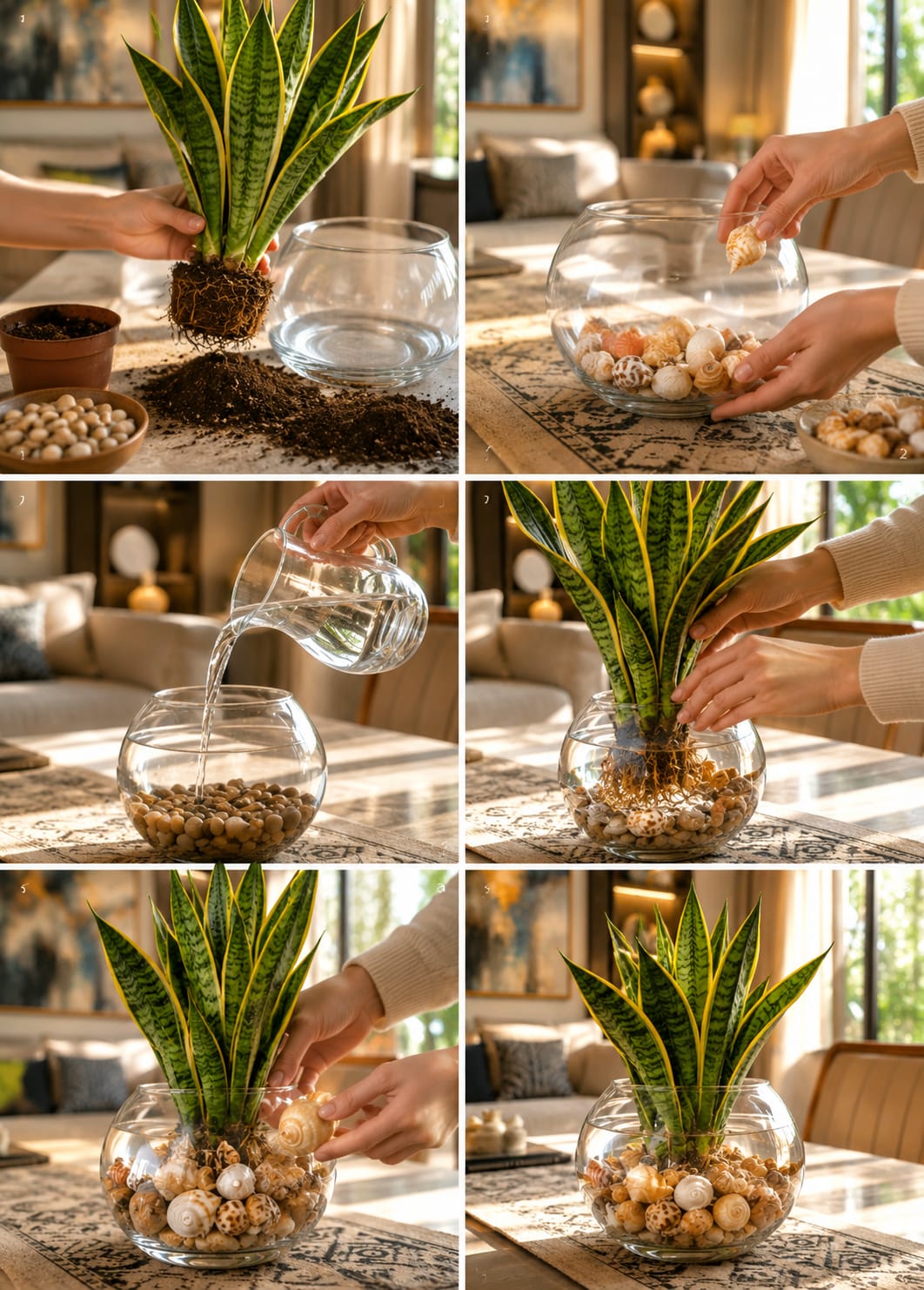
Snake plant is one of the most reliable indoor plants for people who want strong upright leaves, low-maintenance care, and a clean architectural look that works beautifully in modern homes, apartments, offices, entryways, bright living rooms, and decorative tabletop displays. Its sword-shaped foliage, green patterned surface, yellow-edged variegation, and bold vertical form make it a favorite for indoor plant styling, premium houseplant displays, modern apartment decor, living room greenery, home office plant care, luxury home staging, and polished property presentation. When styled correctly, a snake plant can look elegant in a ceramic pot, terracotta planter, modern cachepot, or even a clear glass vessel used as a decorative display.
A clear glass bowl with seashells and water can create a striking decorative effect around a snake plant. The glass shows the roots, the shells add texture and coastal charm, and the upright leaves create height above the rounded vessel. This kind of arrangement can look beautiful on a coffee table, console, bright windowsill, sunroom table, office shelf, apartment corner, or styled property display. It combines indoor plant care with coastal decor, glass bowl styling, natural shell accents, and premium tabletop plant presentation.
However, this method needs careful explanation because snake plants are not aquatic plants. They can tolerate some water-propagation conditions for rooted divisions, but they should not be treated like permanent water plants without proper care. Their roots need oxygen, the crown must stay above water, and the base of the leaves should not sit in stagnant moisture. If the plant is placed too deeply in water or if shells trap dirty water around the crown, the plant can develop root rot, crown rot, bad smell, algae, or soft leaf bases. The decorative look should never come before the plant’s health.
This guide explains how to create a snake plant glass bowl display safely, how to use seashells without harming the roots, how much water to add, how to keep the crown dry, when this method is suitable, when it should be avoided, how to clean the glass and shells, what warning signs to watch for, and how to keep the arrangement healthy, fresh, and suitable for living room styling, coastal home decor, modern apartment interiors, commercial interior landscaping, luxury home staging, and premium indoor plant presentation.
Quick Answer
A snake plant can be displayed in a clear glass bowl with seashells and water only if the crown stays above the water line and the roots are kept clean, oxygenated, and monitored. The seashells should be rinsed well before use, and they should not press tightly against the leaf bases. The water should cover only the lower roots, not the crown or lower leaves. The glass bowl should be placed in bright indirect light, away from harsh direct sun that can heat the water and encourage algae. The water should be changed regularly, and the roots should be checked for softness, bad smell, or slime. For long-term growth, a snake plant usually performs better in a draining pot with cactus and succulent mix, but a glass bowl display can be used as a decorative short-term or carefully maintained water display.
What Plant This Is
The plant is a snake plant, also known as Sansevieria or Dracaena trifasciata. It is easy to recognize because of its tall upright leaves, thick succulent-like structure, green patterned centers, and yellow margins. These leaves store water, which helps the plant survive dry indoor conditions and makes it one of the most popular low-maintenance houseplants.
Snake plant grows from rhizomes and roots below the surface. The leaves emerge from the base in strong clusters. In soil, the roots prefer a fast-draining mix and a dry-down period between watering. In water displays, the plant can sometimes survive if the roots are healthy and the water is clean, but it needs careful monitoring because its natural preference is not soggy, stagnant conditions.
This plant is valued for its architectural form. It adds structure without needing flowers or trailing vines. In a clear glass bowl, the leaves create a vertical contrast above the round vessel, while shells and water create a decorative base. The result can look modern, coastal, and artistic, but it must be managed carefully to avoid rot.
Why a Glass Bowl Display Looks Attractive
A glass bowl display looks attractive because it exposes the decorative base of the arrangement. Instead of hiding the root area inside a normal pot, the glass turns the lower part of the plant into part of the design. The seashells add warmth, pattern, and coastal texture. The water adds shine and clarity. The snake plant leaves rise above everything with a clean, upright shape.
This combination works especially well in coastal interiors, neutral living rooms, bright apartments, sunrooms, spa-style spaces, and modern tabletop arrangements. The clear glass keeps the display light and open, while the shells provide a natural decorative layer. The plant itself adds height and greenery, making the arrangement feel alive rather than purely ornamental.
The display can also work well for people who want a soil-free look on a table or shelf. Soil can sometimes spill or look messy in decorative indoor spaces. A glass bowl with clean shells and clear water can feel more polished. However, the water must stay clean. Cloudy water or rotting roots will quickly ruin the premium effect.
What This Method Should Not Be Misunderstood As
This method should not be misunderstood as a normal permanent potting method for all snake plants. Snake plants are not true water plants. They are dry-tolerant plants that usually do best in soil with drainage. A glass bowl display can work only when the roots are watched carefully and the water level is controlled. It is not a method to ignore for months.
It should not be misunderstood as a reason to submerge the plant deeply. The crown and leaf bases should not sit under water. Only the roots should touch water. If the crown remains wet, it can soften and rot. Crown rot can quickly damage the entire plant because the leaves grow from that central base.
It should also not be misunderstood as a replacement for proper light and care. A beautiful bowl, shells, and clear water will not keep the plant healthy if it sits in a dark corner with stagnant water. The plant still needs bright indirect light, clean roots, and regular maintenance. Decoration should support care, not hide neglect.
Choosing the Right Snake Plant Section
The best snake plant section for a glass bowl display is a healthy rooted division. A rooted division includes leaves, rhizome tissue, and roots. This is usually more reliable than a single leaf cutting because it already has a stronger plant structure. The leaves should be firm, upright, and free from soft spots or rot.
The roots should be cleaned gently before placing the plant in water. Old soil can be rinsed away carefully. Soil left among the roots can cloud the water, feed bacteria, and make the display look dirty. The roots do not need to be scrubbed harshly, but loose soil should be removed as much as possible.
A plant with rotten roots should not be used for a decorative water display. Rotten roots can spread decay quickly in a closed glass bowl. Healthy roots are usually firm and pale to tan. Rotten roots are mushy, dark, slimy, or smelly. The display should begin with the healthiest plant material possible.
Preparing the Seashells Safely
Seashells should be cleaned before being placed in the glass bowl. Dust, sand, salt residue, or organic material can cloud the water and affect the root environment. The shells should be rinsed thoroughly with clean water. If they were collected from a beach, they should be cleaned especially well because salt can harm plant roots.
The shells should be smooth enough that they do not scrape or crush the roots. Sharp shells can damage tender root tissue when the plant is adjusted. A mix of rounded shells and smooth decorative stones is usually safer than jagged pieces. The shells should support the plant gently, not press tightly into the crown.
Seashells can slowly influence water chemistry because they contain calcium carbonate. In small decorative amounts, this may not cause immediate issues, but it is something to consider. If water becomes cloudy, develops residue, or the plant reacts poorly, the shells may need to be reduced or replaced with inert decorative stones. Clean water quality matters more than the shell effect.
Choosing the Right Glass Bowl
The glass bowl should be wide enough to hold the roots without squeezing them. A round fishbowl-style vessel can look attractive because it provides a full view of the shells, roots, and water. The opening should be large enough to place and remove the plant easily. If the opening is too narrow, the plant may be difficult to clean or rescue if problems appear.
The bowl should be stable. Snake plant leaves are tall and can make the arrangement top-heavy. A wide base helps prevent tipping. The shells can also add weight at the bottom, improving stability. The bowl should sit on a flat surface where it will not be bumped often.
Clear glass is best for monitoring root health. It allows you to see whether the water is clean, whether roots are growing, and whether algae or slime is forming. This visibility is one of the advantages of a glass display. It also means problems are visible, so the bowl must be kept clean to maintain the decorative look.
How Much Water to Add
The water level should be low enough to protect the crown. Only the roots should be in water. The base of the leaves should remain above the water line. If the water touches the crown, some water should be poured out. It is safer to keep the water level slightly lower and top it up when needed than to fill the bowl too high.
The water should be room-temperature. Very cold water can stress roots, while warm stagnant water can encourage bacteria and algae. Clean tap water may be fine in many homes, but filtered water can help if tap water is very mineral-heavy. The water should be clear and odor-free.
Because the bowl has no drainage, water management is very important. In a pot with soil, extra water drains away. In a glass bowl, all water stays until it is changed or evaporates. This makes regular cleaning and water changes essential. A beautiful clear bowl display depends on fresh water.
Keeping the Crown Above Water
The crown is the most important area to protect. It is the base where leaves emerge and connect to the rhizome. If water sits around this area, the plant can rot. Snake plant leaves may look tough, but the base can soften when kept wet for too long. Once the crown begins to rot, the damage can spread quickly.
Shells can help lift the plant slightly, but they should not bury the crown. The roots can be tucked among the shells while the crown remains above the water line. The plant should sit securely without being forced deep into the bowl. If it leans, more shells can be arranged around the roots for gentle support, but the leaf bases should remain clear.
After every water change, the crown should be checked again. The water level can shift when shells move or when the plant is repositioned. A quick side view through the glass helps confirm that the crown is safe. This one detail can prevent many serious problems.
Light for a Healthy Display
Bright indirect light is best for a snake plant glass bowl display. Good light helps the plant maintain strong color and steady growth. It also supports healthier root function. A bright room near a window is usually ideal. The plant should not be placed in a dark corner simply because the bowl looks decorative there.
Harsh direct sun should be avoided, especially because glass can magnify heat and warm the water quickly. Hot water can stress roots and encourage algae. A glass bowl sitting in strong afternoon sun may become too warm for the plant. Filtered light or morning light is safer.
If natural light is weak, a grow light can help. Snake plants can tolerate lower light, but water displays are safer when the plant has enough energy and the roots do not stay cold and inactive. Good light, clean water, and crown protection work together.
Water Changes and Cleaning Routine
The water should be changed regularly to prevent stagnation. Clear water is essential for both plant health and appearance. If the water becomes cloudy, smells bad, or develops slime, it should be changed immediately. The roots should be rinsed gently, and the bowl should be cleaned before fresh water is added.
The shells should also be cleaned occasionally. Algae, mineral residue, and root debris can collect between shells. A quick rinse may be enough for normal maintenance, but deeper cleaning may be needed if the bowl becomes cloudy or slimy. Any cleaning product must be rinsed away completely before the plant returns.
Cleaning should be gentle. The roots should not be pulled or broken unnecessarily. The plant can be lifted carefully, the bowl cleaned, and the roots repositioned among the shells. A stable routine keeps the display looking clear and fresh. The beauty of this arrangement depends on transparency.
Can Snake Plants Live in Water Long Term?
Snake plants can survive in water for a period of time, especially if they were rooted or adapted to water gradually. However, long-term water culture requires careful maintenance. The roots need oxygen, the water must stay clean, and the plant may eventually need mild nutrients. A snake plant grown in water is not the same as a plant grown in draining soil.
Some snake plant roots grown in soil may not adapt perfectly to water. Soil roots can rot if suddenly kept submerged. New water-adapted roots may grow over time, but the transition must be watched closely. If old roots become mushy, they should be removed. If the plant remains firm and produces healthy roots, the display may continue.
For most plant owners, a glass bowl display is safest as a decorative short-term arrangement or a carefully monitored water display. For long-term low-risk growth, a pot with drainage holes and a fast-draining cactus and succulent mix is usually better. The choice depends on how much maintenance the owner is willing to provide.
When to Move the Plant Back Into Soil
The plant should be moved back into soil if roots become mushy, water clouds quickly, the crown softens, leaves yellow, or the display becomes difficult to maintain. Soil may also be better if the plant stops growing for a long time or if the owner wants a more stable long-term setup. A draining pot with succulent mix is usually safer than a closed glass bowl.
When moving from water to soil, the roots should be handled carefully. Water roots can be delicate. The potting mix should be fast-draining and slightly moist at planting time, but not soggy. The crown should remain above the soil line. The plant should be placed in bright indirect light and watered conservatively while it adjusts.
The transition should not be rushed with fertilizer or heavy watering. The plant needs time to adapt. If roots are healthy, it can settle into soil gradually. If roots were damaged in water, the plant may need extra patience. Stable care is the best recovery method.
Best Soil Mix After a Water Display
If the snake plant is moved into soil, the mix should be dry-friendly and breathable. A cactus and succulent mix is a good base. Perlite, pumice, coarse grit, or orchid bark can be added to improve drainage. The soil should allow water to pass through easily and should not stay wet for many days.
A pot with drainage holes is essential. After a water display, it may be tempting to place the plant directly into a decorative pot, but drainage matters more than appearance. A decorative outer pot can still be used if the plant sits inside a draining inner pot. Extra water should always be removed.
The soil should not be rich, heavy, or dense. Snake plants do not need wet compost-heavy conditions. They need oxygen around the rhizomes and roots. A clean, dry-friendly mix gives the plant a safer long-term home than a closed wet container.
Feeding a Snake Plant in Water
A snake plant kept in water may eventually need very mild nutrients, but feeding should be done carefully. Plain water contains limited nutrition. However, strong fertilizer in a glass bowl can burn roots, encourage algae, and create residue. If fertilizer is used, it should be extremely diluted and used only when the plant is stable.
Fertilizer should never be added to dirty or cloudy water. The bowl should be cleaned first. Nutrients should not sit in stagnant water for long periods. A clean water routine is more important than feeding. Too much fertilizer is worse than none for a slow-growing snake plant.
Homemade liquids such as milk water, juice, sugar water, or thick organic teas should not be added to this display. They can spoil, smell bad, attract insects, and cloud the water. A glass bowl display should remain clean and odor-free. If nutrients are needed, a measured houseplant fertilizer used very weakly is safer.
Possible Damage If This Display Is Done Incorrectly
Damage can happen if the crown is submerged. This is the biggest risk. The leaf bases may soften, the plant may smell bad, and rot may spread through the base. A snake plant can look strong above the water while damage begins below. Crown protection is essential.
Damage can also happen if shells are dirty, salty, sharp, or packed too tightly. Salt residue can stress roots. Sharp edges can injure them. Tight shells can reduce water movement and trap decaying material. The decorative base should remain clean and airy enough for roots to sit safely.
Another risk is algae growth. Clear glass in bright sun can quickly develop green film. Algae makes the bowl look dirty and can reduce water quality. Bright indirect light is better than direct sun. Regular cleaning keeps the display healthy and polished.
Warning Signs to Watch For
Warning signs include cloudy water, green algae, bad smell, slimy roots, brown mushy roots, soft leaf bases, yellowing leaves, water touching the crown, or shells developing a dirty film. These signs mean the display needs immediate attention. Waiting too long can allow rot to spread.
If roots become slimy, the plant should be removed and rinsed gently. Mushy roots should be trimmed with clean scissors. The bowl and shells should be cleaned thoroughly. Fresh water should be added at a lower level. The crown should be checked carefully before returning the plant.
If the crown is soft, the problem is more serious. The plant may need to be removed from water and placed into a dry, breathable recovery setup after damaged tissue is addressed. Severe crown rot can be difficult to fix. Prevention is much easier than rescue.
Common Mistakes
One common mistake is filling the glass bowl too high. The water should not cover the crown or lower leaves. Another mistake is using beach shells without removing salt. Salt residue can harm roots and cloud the water. Shells should always be cleaned thoroughly before use.
Another mistake is placing the bowl in direct sun because it looks beautiful in bright light. Direct sun can heat the glass and water, stressing roots and encouraging algae. Bright indirect light gives the plant energy without overheating the display.
Leaving the same water for too long is also common. A water display still needs maintenance. Clear water can become stale even if it looks acceptable at first. Regular water changes prevent odor, slime, and root problems.
What to Do If the Water Turns Cloudy
If the water turns cloudy, the bowl should be cleaned right away. The plant should be lifted gently, and the roots should be rinsed with room-temperature water. The shells should be removed and rinsed thoroughly. The glass should be washed and rinsed completely before the display is rebuilt.
Cloudy water may come from leftover soil, dirty shells, algae, root decay, fertilizer residue, or organic debris. The cause should be corrected before the plant is returned. If old soil remains tangled in the roots, more gentle rinsing may be needed. If roots are rotting, damaged sections should be trimmed.
After cleaning, the water level should be kept lower and the bowl should be moved to bright indirect light. If cloudiness returns quickly, the shell material may be contributing to the issue, or the plant may not be adapting well to water. Moving the plant into soil may be safer.
Continue to Page 2
Continue to page 2 for more details about this article and the key points many readers miss on the first page.