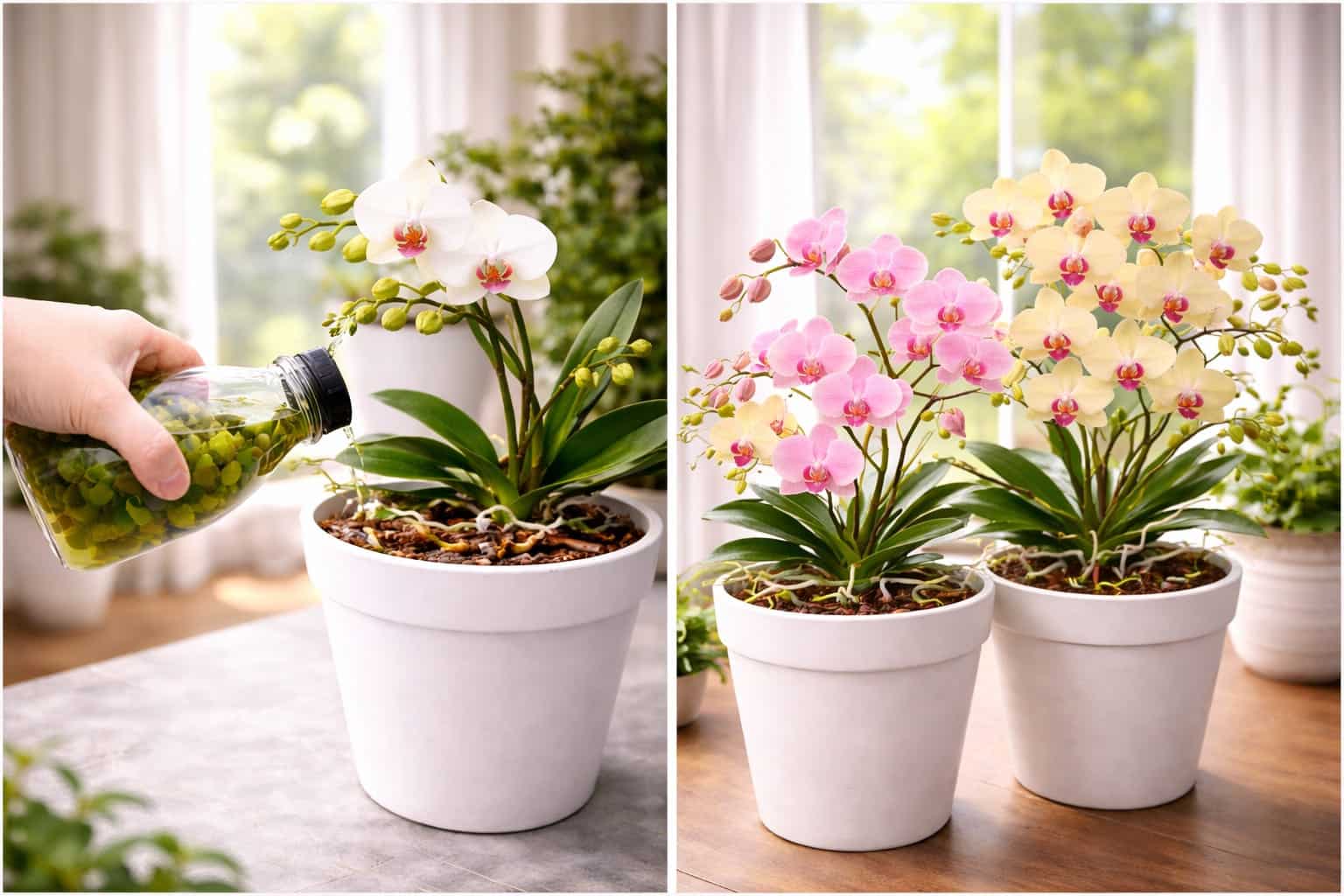
The Safe Way to Use Aloe Vera Water on Orchids
If you want to try aloe vera water, follow these guidelines to avoid harming your orchid.
Step‑by‑Step Aloe Water Recipe
Step Instructions
1 Cut a fresh aloe leaf from a mature plant.
2 Let the leaf sit upright for 10–15 minutes to drain yellow sap (aloine, which can irritate).
3 Slice open the leaf and scoop out the clear gel.
4 Blend 1 part gel with 3 parts distilled or filtered water.
5 Strain through a fine‑mesh sieve or cheesecloth to remove fibers.
6 Use immediately – do not store for more than 24 hours.
How to Apply
Method Instructions Best For
Root soak Dilute further (1:5) and soak roots for 10–15 minutes. Use only at repotting or when roots are stressed. Root recovery
Foliar mist Pour into a spray bottle, mist leaves lightly (avoid flowers). Do not let water pool in the crown. Leaf shine, mild antifungal
Light watering Use diluted solution in place of one regular watering (once every 2–3 weeks). General support
Frequency: Once every 2–3 weeks at most. Overuse can lead to fungal issues or root rot.
Important: Always test on one leaf first. Wait 24 hours to check for adverse reactions.
What Actually Makes Orchids Bloom – The Real Secrets
If your goal is flowers, aloe water is not the real trigger. Blooming in orchids depends much more on conditions than on a homemade additive.
☀️ 1. Light – The #1 Factor
Most indoor orchids (especially Phalaenopsis) need bright, indirect light to bloom. Too little light = leaves only, no flowers.
Light Level Bloom Potential
Low light (north window, dark corner) Very low – few or no blooms.
Medium light (few feet from east/west window) Occasional blooms.
Bright, indirect (right by east/west window) Regular, abundant blooms.
Direct sun Leaf burn – no blooms.
Pro tip: If your orchid has dark green leaves and hasn’t bloomed in over a year, it needs more light.
🌡️ 2. Temperature Drop – The Bloom Trigger
Phalaenopsis orchids bloom when they experience cooler nights (55–65°F / 13–18°C) for 2–4 weeks. This mimics the change of season in nature.
💧 3. Proper Watering and Airy Roots
Orchids need their roots to dry out between waterings. Constantly wet medium leads to root rot, and no amount of aloe water will fix that.
🌿 4. Balanced Fertilizer
Use a balanced orchid fertilizer (e.g., 20-20-20 or a high‑phosphorus bloom booster) during the growing season. Aloe water is not a substitute.
⏳ 5. Maturity and Patience
Young orchids may not bloom until they are 2–3 years old. Blooming takes energy; the plant needs time to mature.
When Aloe Vera Water Might Be Helpful (And When It Can Backfire)
✅ Situations Where Aloe May Help
· After repotting – a mild aloe soak may reduce transplant shock.
· For orchids with dull, tired‑looking leaves – a light mist can improve appearance.
· As part of a broader healthy routine – if light, water, and fertilizer are already correct, aloe may give a small boost.
❌ When It Can Backfire
Aloe vera water can become a problem when:
· It is too concentrated (use 1:3 dilution or weaker).
· It is used too often (more than once every 2–3 weeks).
· It is poured into already wet bark – increases rot risk.
· The orchid is in low light and drying slowly – extra moisture is dangerous.
· The grower mistakes it for a fertilizer replacement – leading to nutrient deficiency.
The source article itself says overuse can lead to fungal growth or root rot. That is especially believable because orchid roots already struggle when the medium stays wet too long, and expert orchid sources repeatedly warn that poor watering practices are one of the fastest ways to lose a plant.
Common Myths About Aloe Vera Water – Debunked
Myth Truth
“Aloe water makes orchids bloom year‑round” Blooming depends on light, temperature, and maturity.
“You can replace fertilizer with aloe” No – aloe lacks NPK.
“More aloe = more flowers” Overuse causes rot, not blooms.
“Aloe cures root rot” No – it may worsen it.
“Any aloe gel works” Fresh, pure aloe is best; store‑bought gels often contain preservatives that can harm plants.
Frequently Asked Questions (FAQs)
Q: Can I use store‑bought aloe vera gel?
Most store‑bought aloe gels contain preservatives, thickeners, and sometimes alcohol. These can harm orchids. Use fresh aloe from a plant for best results.
Q: How often should I apply aloe water?
Once every 2–3 weeks maximum. Less is more.
Q: Can I use aloe water on other orchids (Cattleya, Dendrobium, etc.)?
Yes, but always test first. Different orchids have different sensitivities.
Q: Will aloe water help my orchid grow new roots?
It may provide mild support, but the real keys are humidity, warmth, and proper potting medium. For rootless orchids, focus on humidity domes and sphagnum moss.
Q: My orchid has yellow leaves – will aloe help?
No – yellow leaves usually indicate overwatering, root rot, or insufficient light. Fix the underlying problem first.
Q: Can I mix aloe water with orchid fertilizer?
It’s better to use them separately. Apply aloe water in place of a regular watering, not mixed with fertilizer.
Q: Why do people claim aloe water is a “miracle”?
Because it’s natural, cheap, and the idea is appealing. But correlation is not causation – if an orchid blooms after aloe use, it was likely already in good conditions.
Printable Aloe Vera Water Usage Checklist
☐ Use fresh aloe leaf (not store‑bought gel)
☐ Drain yellow sap for 10 minutes
☐ Mix 1 part gel with 3 parts water
☐ Strain well
☐ Test on one leaf first
☐ Apply as foliar mist or light watering
☐ Use once every 2–3 weeks at most
☐ Do not use on wet medium
☐ Stop if you see yellowing or mold
☐ Continue proper orchid care (light, water, fertilizer)
Final Verdict – Aloe Water Is a Supplement, Not a Miracle
Aloe vera water is not a miracle bloom hack, and it will not make an orchid flower “for four seasons” all by itself. That part is marketing language.
But the idea is not completely useless either.
Used in a diluted form, sparingly, and alongside good orchid care, aloe vera water may help support root health, leaf appearance, and overall vigor. The real secret, though, is still the same old formula: bright indirect light, airy roots, proper watering, stable humidity, and patience.
If you get those right first, then small extras like aloe vera water can make sense. If you do not, no glass of “miracle water” will save the plant.
Now it’s your turn! Have you tried aloe vera water on your orchids? What results did you see? Drop a comment below – I’d love to hear your experience.
And if you found this guide helpful, share it with a friend who’s been tempted by viral orchid hacks. Pin it for later, and subscribe to our newsletter for more evidence‑based plant care.
Stay bright, stay consistent, and let your orchids thrive. 🌸✨