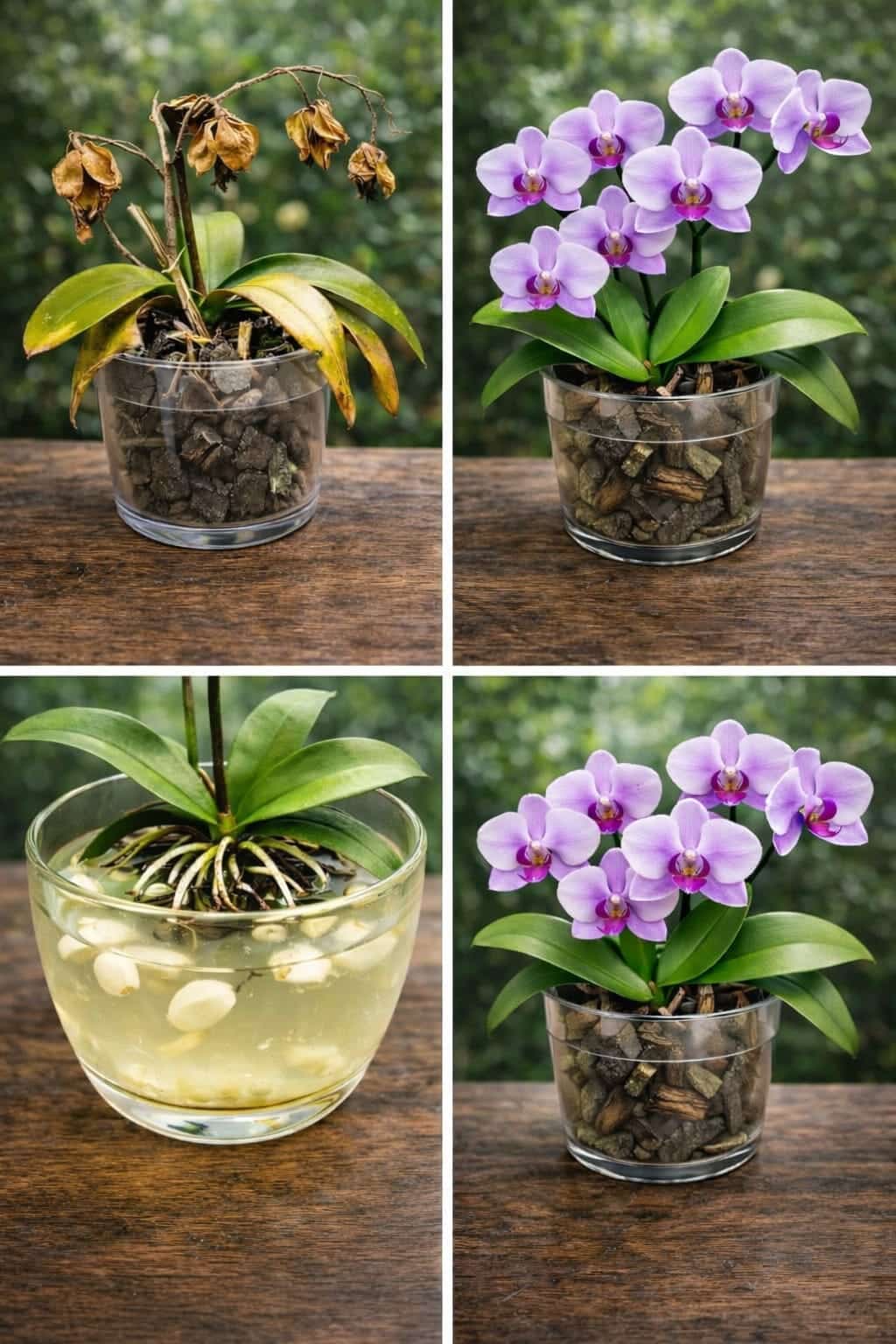
What Garlic Water Can and Cannot Do – Realistic Expectations
This is the most important part of the whole article.
✅ Garlic Water May:
· Support a cleanup routine as a one‑time gentle rinse.
· Help reduce surface pathogens on roots.
· Make growers feel more proactive during rescue.
❌ Garlic Water Cannot:
· Instantly regrow roots.
· Force blooms overnight.
· Save an orchid that still sits in bad medium.
· Replace light, airflow, and proper watering.
· Cure advanced root rot without pruning.
So if you are expecting a dramatic overnight transformation, you will probably be disappointed.
Orchid recovery is usually slow. New roots can take weeks to appear. New leaves can take longer. Blooming may take months, depending on the plant’s condition.
But that does not mean rescue is impossible. It just means recovery is a process.
What to Expect – A Realistic Recovery Timeline
Timeframe What to Look For
1–2 weeks No visible change – the plant is adjusting. Do not disturb.
3–4 weeks New root tips may appear (small green or silver bumps).
6–8 weeks New leaves may begin to emerge.
3–6 months Roots establish; the plant looks stable.
6–12 months With good care, the orchid may bloom again.
Pro tip: Do not fertilize a recovering orchid until it has several new roots at least 2–3 inches long. Fertilizer can burn tender new growth.
Signs Your Orchid Is Improving (Be Patient)
Once your rescue routine is working, you may notice:
· New root tips – small green or silver bumps emerging from the base.
· Firmer leaves – leaves that were wrinkled become plump.
· Brighter green color – leaves regain healthy color.
· Slow but steady leaf growth – a new leaf appears.
· Healthier root color after watering – roots turn green when wet.
These small signs matter much more than quick visual tricks. They show the orchid is rebuilding from the inside out.
Common Mistakes That Ruin Orchid Rescue
Many struggling orchids fail not because the rescue method was wrong, but because the aftercare was poor.
Here are the biggest mistakes to avoid:
Mistake Why It’s Harmful
Watering too soon after repotting Cut roots rot instead of healing. Wait 3–5 days.
Using heavy or compact soil Orchids need bark or special mix – soil suffocates roots.
Keeping the orchid in a dark corner Low light = slow recovery, no new growth.
Reusing old bark Old bark breaks down and holds too much moisture.
Letting water sit in the crown Causes crown rot – fatal if not caught.
Repeating strong garlic treatments too often Overuse can burn roots and stress the plant.
Moving the plant frequently Stress slows recovery.
More is not better here. Orchids recover best in a stable, airy environment with gentle care.
How to Create the Ideal Recovery Environment
After repotting, place your orchid in a spot with:
Factor Ideal Condition
Light Bright, indirect light (east or north‑east window). No direct sun.
Temperature 65–75°F (18–24°C) – stable, no drafts.
Humidity 50–70% – use a pebble tray or humidifier if needed.
Airflow Good ventilation – a gentle fan helps prevent fungal issues.
Watering When the medium is almost dry – stick a finger in to check.
For rootless orchids: Use a humidity dome (clear plastic bottle with holes) to maintain moisture around the plant.
Frequently Asked Questions (FAQs)
Q: Can I use store‑bought garlic powder instead of fresh garlic?
No – fresh garlic contains active compounds (allicin) that degrade quickly in powder form. Fresh is essential.
Q: How often should I use garlic water on a recovering orchid?
Once at the beginning of the recovery process, and then only if you see signs of fungal infection. Do not use it weekly – overuse can stress the plant.
Q: My orchid has no roots at all – can it still be saved?
Yes – but it will take longer. Focus on humidity (use a dome) and warmth. You can also place the orchid’s base over a glass of water (not touching) to encourage root growth. This is called “water therapy” or “sphag and bag” method.
Q: Should I cut off all the leaves if they are yellow?
Only cut leaves that are completely yellow or brown. Partially green leaves can still photosynthesize and help the plant recover.
Q: Can I use hydrogen peroxide instead of garlic water?
Diluted hydrogen peroxide (3% mixed with 2 parts water) can be used to disinfect roots, but it can also kill beneficial tissue. Garlic water is gentler for ongoing support.
Q: How do I know if my orchid is too far gone?
If the entire stem (rhizome) is black, soft, and foul‑smelling, the plant is likely dead. If there is any firm, green tissue, there is hope.
Q: Can I use this method on other orchids (like Dendrobium or Cattleya)?
Yes – the same principles apply. However, always test any treatment on a small area first.
Q: Will a rescued orchid ever bloom again?
Yes – but only after it rebuilds strength. If roots return and leaves recover, flowering can follow later. That is why the goal at first should not be flowers.
· First goal: Survival.
· Second goal: New roots.
· Third goal: Steady growth.
· Only then: Expect blooms.
This is where a lot of people give up too early.
Printable Orchid Rescue Checklist
Copy and paste this into a document or note:
☐ Remove orchid from pot
☐ Trim all brown/mushy roots
☐ Rinse remaining roots
☐ (Optional) Make garlic water (3 cloves + 1 liter water, steep 24 hours, strain)
☐ Soak roots in garlic water for 10–15 minutes (optional)
☐ Let roots air dry for 10–15 minutes
☐ Dust cut ends with cinnamon (optional)
☐ Repot in fresh orchid bark or moss
☐ Do not water for 3–5 days
☐ Place in bright, indirect light
☐ Maintain 65–75°F, 50–70% humidity
☐ Use humidity dome if rootless
☐ Be patient – new roots take 4–8 weeks
☐ Do not fertilize until roots are 2–3 inches long
Final Thoughts – Garlic Water Is Not Magic, But Recovery Is Real
Garlic water is not a miracle cure, but it can be part of a thoughtful orchid rescue routine when used properly. The real recovery happens when you remove rot, improve drainage, repot into fresh bark, and stop the watering habits that caused the damage in the first place.
So yes, a rotten orchid can come back.
Not instantly. Not magically. But with patience, clean roots, fresh medium, and the right care, it absolutely can recover.
And sometimes, the most satisfying blooms are the ones that come after you thought the plant was finished forever.
Now it’s your turn! Have you tried garlic water on a rotten orchid? What worked – or didn’t? Drop a comment below – I’d love to hear your experience.
And if you found this guide helpful, share it with a friend who’s about to throw away their orchid. Pin it for later, and subscribe to our newsletter for more honest, evidence‑based plant care.
Stay patient, stay consistent, and watch your orchid come back. 🌸✨
Liked this article? Check out our other orchid rescue guides: “How to Revive a Struggling Orchid,” “The Truth About Ice Cubes for Orchids,” and “Why Your Orchid Leaves Are Turning Yellow.”
Let me know if you’d like a printable PDF version, a troubleshooting flowchart, or any adjustments to the tone or keyword density. Ready for your next request!