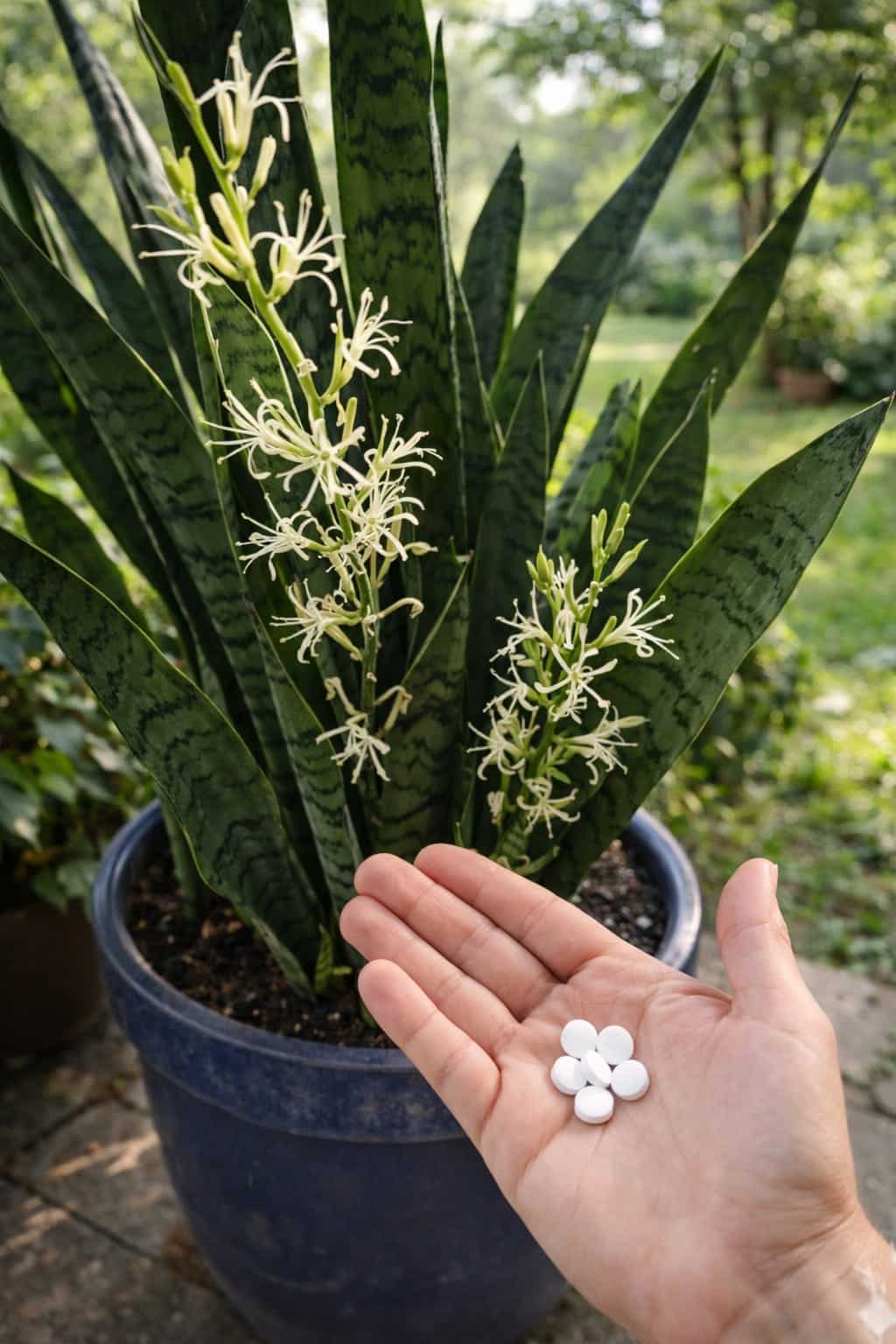
- Stable Environment – Avoid Constant Changes
Snake plants bloom when they feel secure. Frequent moves, temperature swings, or drafts can stress the plant in a negative way, inhibiting flowering.
· Keep the plant in one spot for months at a time.
· Avoid cold drafts (below 50°F / 10°C) and sudden temperature changes.
· Ideal temperature: 65–85°F (18–29°C) during the day; slightly cooler at night (55–65°F) can actually help trigger blooms – but not too cold.
Pro tip: If you move your snake plant to a brighter spot for blooming, leave it there. Don’t rotate or relocate it frequently.
- Patience Is Key – Maturity Matters
Even with perfect conditions, a young snake plant will not bloom. Most need to be 3–5 years old (or older) to have enough energy reserves to produce flowers.
· Young plants focus on leaf and root growth.
· Mature plants have the resources to reproduce.
If you’ve had your snake plant for less than 3 years, don’t expect blooms – even with perfect care. Just keep it healthy, and be patient.
What Do Snake Plant Flowers Look and Smell Like?
If you’re lucky enough to get blooms, here’s what to expect:
Feature Description
Stalk Tall, slender, green, up to 2–3 feet high
Flowers Small, tubular, clustered along the upper part of the stalk
Color Greenish‑white, cream, or pale yellow
Fragrance Sweet, jasmine‑like, strongest at night
Timing Typically late fall to early spring
Duration Flowers last 2–4 weeks; individual blooms open gradually
Note: After flowering, the stalk will remain for a while, then dry and turn brown. You can cut it off at the base once it’s completely dry.
What to Do After Your Snake Plant Blooms
Once the flowers fade, the plant returns to its normal growth pattern. Here’s how to care for it:
· Cut the stalk at the base with clean scissors once it’s brown and dry.
· Resume normal watering – let soil dry completely between waterings.
· Do not fertilize immediately – wait 2–3 months.
· Enjoy the memory – it may be years before it blooms again, or it might bloom next season if conditions remain ideal.
Common Mistakes That Prevent Blooms
Mistake Why It’s Harmful Correct Approach
Overwatering Roots rot, no blooms Let soil dry completely
Low light No energy for flowers Move to bright, indirect light
Repotting too often Plant focuses on root growth Repot every 2–3 years only
Too large a pot Excess soil holds moisture Use a snug pot
Frequent moving Plant stressed in negative way Keep in one spot
Fertilizing heavily Promotes leaf growth, not blooms Use low‑nitrogen fertilizer or none
Impatience Young plant not ready Wait 3–5 years
What Actually Triggers Blooms – A Deeper Look
The science behind snake plant flowering involves a combination of factors:
· Photoperiod: Shorter days and longer nights (fall/winter) can trigger bloom initiation.
· Temperature drop: Cool nights (55–65°F) signal seasonal change.
· Drought stress: Dry soil signals the plant to reproduce before conditions worsen.
· Root crowding: Limited space triggers survival reproduction.
The perfect bloom recipe: Bright light + dry soil + cool nights + root‑bound pot + mature plant + patience.
Frequently Asked Questions (FAQs)
Q: Does flowering mean my snake plant is dying?
No – it means it’s mature and responding to environmental stress. The plant is not dying; it’s reproducing. Continue normal care.
Q: How long do snake plant flowers last?
Individual flowers last 1–2 days, but the stalk produces new blooms over 2–4 weeks, so the overall display can last a month.
Q: Can I cut the flower stalk and put it in water?
No – the stalk will not root or produce more flowers. Cut it off after blooming and discard.
Q: Will my snake plant bloom again next year?
Maybe, if conditions remain ideal. Some snake plants bloom annually; others go years between blooms. Don’t be disappointed if it doesn’t.
Q: Should I fertilize my snake plant to encourage blooms?
A low‑nitrogen, high‑phosphorus fertilizer (like 5-10-5) applied very lightly in spring may help, but it’s not necessary. Over‑fertilizing can actually prevent blooms by promoting leaf growth.
Q: Why are my snake plant’s leaves turning yellow during the bloom period?
Yellow leaves can indicate overwatering, underwatering, or natural aging. Check your watering routine. If only older leaves are yellowing and the plant is otherwise healthy, it may be normal.
Q: Can I propagate my snake plant from the flower stalk?
No – the flower stalk will not produce new plants. Propagate from leaf cuttings or division of offsets.
Quick Summary – How to Encourage Snake Plant Blooms
Factor Ideal Condition
Light Bright, indirect light (east/west window)
Water Let soil dry completely between waterings
Pot size Slightly root‑bound; repot every 2–3 years
Temperature 65–85°F day; 55–65°F night (cool drop helps)
Stability Keep in one spot; avoid drafts
Age Plant must be mature (3–5+ years)
Patience Blooming is rare – enjoy the foliage regardless
Final Thoughts – Enjoy the Plant, Not Just the Flowers
Snake plants are among the most rewarding houseplants – with or without blooms. Their architectural leaves, air‑purifying abilities, and incredible resilience make them a joy to own. If you’re lucky enough to see those rare, fragrant flowers, consider it a bonus – a sign that you’ve provided the perfect balance of care and gentle stress.
Most people try to “help” their snake plant too much. They water on a schedule, repot every year, and keep them in dark corners. The secret to blooms is actually less care: less water, less repotting, more light, and more patience.
So if your snake plant has never bloomed, don’t worry. You’re not doing anything wrong. But if you want to try, give it bright light, let it get crowded and thirsty, and wait. And if it finally rewards you with those sweet‑scented flowers? Enjoy every moment – they’re rare and special.
Now it’s your turn! Have you ever had a snake plant bloom? What conditions seemed to trigger it? Drop a comment below – I’d love to hear your story.
And if you found this guide helpful, share it with a fellow snake plant owner who’s hoping for flowers. Pin it for later, and subscribe to our newsletter for more honest, evidence‑based plant care.
Stay patient, stay consistent, and let nature do its work. 🌿✨