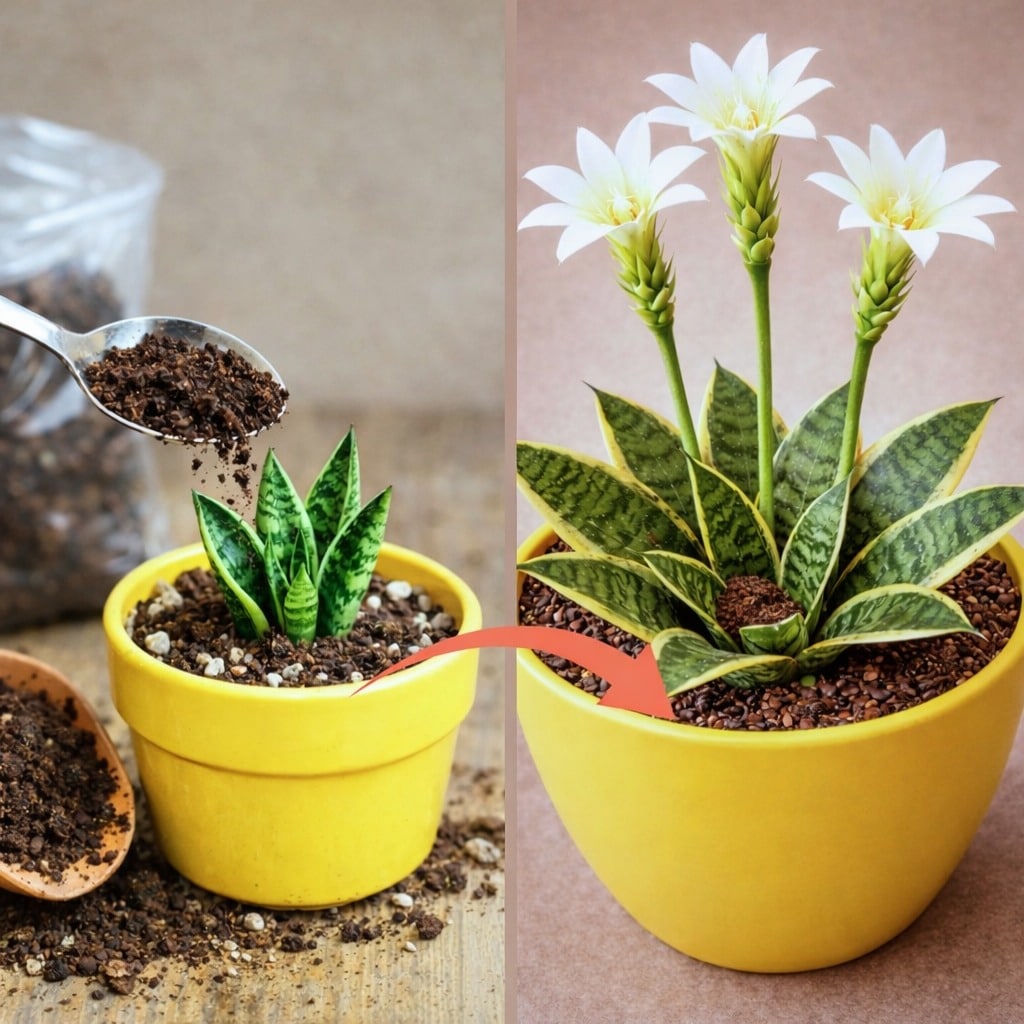
Can coffee grounds help snake plants grow – or slowly kill them? Learn the truth about using coffee on Sansevieria, including risks of root rot, soil acidity, and safe alternatives for faster growth.
Let’s be honest: coffee is a miracle worker for many of us in the morning. So it’s not surprising that gardeners have started using coffee – especially used coffee grounds – on their plants. The idea is simple: coffee contains nitrogen, organic matter, and minerals that can enrich soil and boost growth.
And for some plants, this works. Acid‑loving plants like azaleas, roses, and blueberries can benefit from a sprinkle of coffee grounds.
But when it comes to snake plants (Sansevieria, now Dracaena), things aren’t so simple. Snake plants are succulents. They evolved in dry, rocky environments with poor soil. They hate wet feet, compacted soil, and excess nutrients. Coffee grounds, while beneficial for some plants, can actually harm snake plants if used incorrectly.
So is coffee good for your snake plant – or secretly damaging it? Let’s break down the science, the risks, and the safe way to use coffee (if at all). Plus, I’ll share what snake plants really need to thrive.
Why People Use Coffee on Plants – The Potential Benefits
Coffee grounds (especially used ones) contain several components that can be beneficial for some plants:
| Component | Potential Benefit |
|---|---|
| Nitrogen | Supports leaf growth and green color. Nitrogen is a primary macronutrient. |
| Organic matter | Improves soil texture and water retention (for plants that like moisture). |
| Potassium and phosphorus | Small amounts support root development and flowering. |
| Magnesium and copper | Trace minerals that plants need in tiny amounts. |
| Acidity | Used coffee grounds are slightly acidic (pH 6.2–6.8), which some plants prefer. |
In outdoor gardens or for acid‑loving plants, coffee grounds can be a useful soil amendment. But snake plants are not typical houseplants – they have very different needs.
⚠️ The Problem with Coffee for Snake Plants – 3 Major Risks
Snake plants are succulents. They store water in their thick, fibrous leaves and have shallow root systems that need oxygen. They prefer:
- Dry conditions – soil must dry out completely between waterings.
- Fast‑draining soil – heavy, moisture‑retentive soil leads to root rot.
- Minimal nutrients – they are light feeders; too much fertilizer causes stress.
Here’s where coffee grounds become problematic.
❌ 1. Coffee Holds Too Much Moisture – Leading to Root Rot
This is the biggest danger. Coffee grounds are fine particles that absorb and retain water. When mixed into snake plant soil, they:
- Slow drainage significantly.
- Keep the root zone wet for longer periods.
- Increase the risk of root rot – the #1 killer of snake plants.
| Soil Type | Drainage | Risk to Snake Plant |
|---|---|---|
| Cactus mix (no coffee) | Fast | Low – ideal |
| Regular potting soil | Medium | Moderate |
| Soil with coffee grounds | Slow | High – root rot risk |
Signs of root rot: Yellowing, mushy leaves; foul smell from soil; black, soft roots.
❌ 2. Coffee Can Make Soil Too Acidic
Snake plants prefer neutral to slightly acidic soil – pH between 6.0 and 7.0. Fresh coffee grounds are acidic (pH around 5.0–5.5). Used coffee grounds are less acidic (pH around 6.2–6.8), but they can still lower soil pH over time, especially if applied frequently.
| Soil pH | Effect on Snake Plant |
|---|---|
| Below 5.5 (too acidic) | Nutrient lockout – roots cannot absorb nitrogen, phosphorus, potassium. Leaves may yellow, growth stalls. |
| 6.0–7.0 (ideal) | Healthy growth, nutrient availability. |
| Above 7.5 (too alkaline) | Iron deficiency – yellowing between leaf veins. |
Pro tip: If you’ve been adding coffee grounds and your snake plant’s leaves are turning yellow despite proper watering, check the soil pH.
❌ 3. Coffee Grounds Compact, Blocking Airflow to Roots
Snake plant roots need oxygen. Coffee grounds are small particles that, over time, can settle and compact, especially when mixed with potting soil. Compacted soil:
- Reduces air pockets.
- Prevents roots from breathing.
- Slows water drainage, compounding the rot risk.
Result: Weak, stunted growth – or plant death.
✅ When Coffee Can Be Helpful (If Used Correctly)
Coffee isn’t completely bad – it just needs to be used very sparingly and correctly. If you want to experiment, follow these strict guidelines.
✔ Use Only Small Amounts
- A light sprinkle (1–2 teaspoons) mixed into the top inch of soil, no more than once a month.
- Do not pile coffee grounds on the surface – they will form a crust that repels water.
✔ Use Used (Not Fresh) Grounds
Fresh coffee grounds are more acidic and contain higher concentrations of caffeine and other compounds that can inhibit plant growth. Used grounds have been rinsed and are milder.
How to prepare used grounds:
- Brew coffee as usual.
- Rinse the used grounds thoroughly with water to remove residual acids and caffeine.
- Spread them on a paper towel to dry before using (wet grounds can mold).
✔ Use Occasionally – Not Weekly
- Maximum once a month during the growing season (spring and summer).
- Do not use in fall and winter – the plant is resting and needs less nutrients.
✔ Consider Composting First
The safest way to use coffee grounds on snake plants is to compost them first. When coffee grounds are composted with other materials (leaves, vegetable scraps), the composting process breaks down the compounds that can harm plants. The resulting compost is mild and balanced.
🌱 Better, Safer Alternatives for Faster Snake Plant Growth
If your goal is faster growth, more pups, and a healthier plant, focus on these proven methods instead of coffee grounds.
🌿 1. Use Well‑Draining Soil Mix – The Foundation
Snake plants need soil that dries out quickly.
| Soil Component | Purpose |
|---|---|
| Cactus/succulent mix (50–70%) | Provides structure and some nutrients. |
| Perlite (20–30%) | Increases drainage and aeration. |
| Coarse sand (10–20%) | Adds weight and improves drainage. |
DIY mix: 2 parts cactus mix + 1 part perlite + 1 part coarse sand.
Pro tip: Do not use garden soil or regular potting mix alone – they hold too much moisture.
💧 2. Water Properly – The #1 Most Important Factor
| Watering Guideline | Details |
|---|---|
| When to water | Only when the soil is completely dry all the way through. Stick your finger 2–3 inches into the soil – if dry, water; if damp, wait. |
| How often | In bright light: every 2–3 weeks. In low light: every 4–6 weeks. |
| How to water | Water thoroughly until it runs out the drainage holes. Empty the saucer immediately. |
| Signs of overwatering | Yellow, mushy leaves; foul smell; root rot. |
| Signs of underwatering | Wrinkled, curling leaves; brown, crispy tips. |
Can Banana Peels Really Boost Orchid Growth? Continue to Page 2
Discover the safer method, the real risks, and the smart orchid care details that many gardeners miss on the first page.