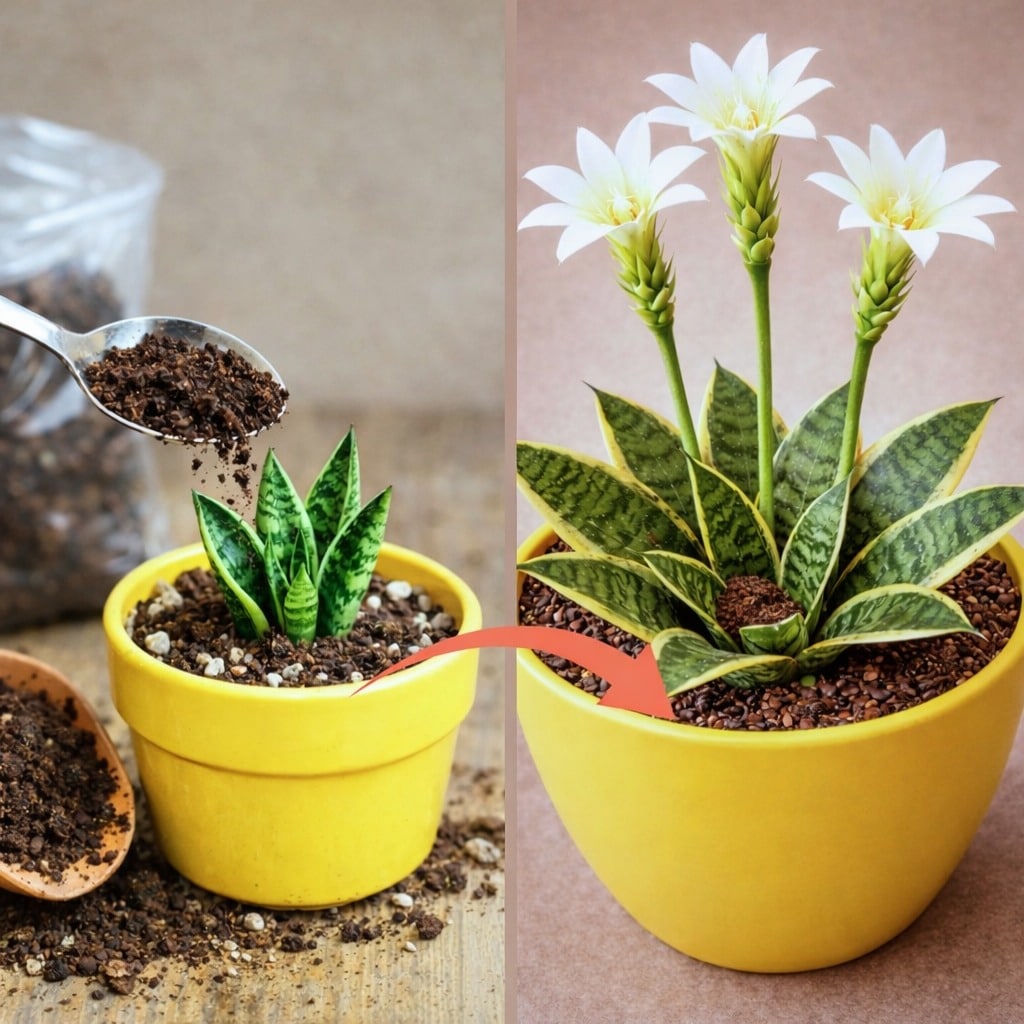
☀️ 3. Provide Bright, Indirect Light – More Light = Faster Growth
Snake plants tolerate low light, but they grow much faster in brighter conditions.
| Light Level | Growth Rate |
|---|---|
| Low light (north window, dark corner) | Very slow – 1–2 new leaves per year. |
| Medium light (few feet from east/west window) | Moderate – 3–4 new leaves per year. |
| Bright, indirect light (right by east/west window) | Fast – 5–8 new leaves per year, plus pups. |
Pro tip: If your snake plant has been in a dark corner for years, move it gradually to brighter light over a few weeks to avoid shock.
🌿 4. Use a Balanced Fertilizer – Lightly
Instead of coffee grounds, use a real fertilizer designed for houseplants.
| Fertilizer Guideline | Details |
|---|---|
| When to fertilize | Spring and summer (active growing season). |
| What to use | Balanced, water‑soluble houseplant fertilizer (e.g., 10-10-10) diluted to half strength. |
| How often | Once every 4–6 weeks. |
| Do not fertilize | In fall and winter – the plant is resting. |
Worm castings are another excellent, gentle fertilizer for snake plants. Mix 1–2 tablespoons into the top inch of soil every 2–3 months.
🌡️ 5. Keep It Warm and Slightly Root‑Bound
- Temperature: 65–85°F (18–29°C). Avoid cold drafts below 50°F (10°C).
- Pot size: Snake plants like to be slightly root‑bound. Repot only every 2–3 years, and go up only 1–2 inches in pot size.
Pro tip: Slight stress – from being root‑bound or having dry soil – actually triggers snake plants to produce more pups (baby plants). This is a natural survival mechanism.
Common Mistakes – Even When Trying to Help
| Mistake | Why It’s Harmful | Correct Approach |
|---|---|---|
| Adding too much coffee | Holds moisture, lowers pH, compacts soil | Use a light sprinkle once a month at most |
| Using fresh (not used) grounds | More acidic, higher caffeine | Use used, rinsed grounds |
| Keeping soil constantly wet | Root rot | Let soil dry completely between waterings |
| Using heavy soil (regular potting mix alone) | Poor drainage | Use cactus mix with perlite and sand |
| Over‑fertilizing | Burns roots, causes salt buildup | Fertilize lightly once a month in spring/summer |
| Low light | Slow growth, leggy leaves | Move to brighter indirect light |
Pro Tip – What Snake Plants REALLY Respond To
Snake plants grow faster when they experience mild, healthy stress. This mimics their natural environment, where resources are scarce.
- Slightly root‑bound – don’t repot too often.
- Dry soil between watering – let the soil dry out completely.
- Bright light – more energy for growth.
These conditions naturally trigger:
- Stronger root development.
- Faster pup production (baby plants).
- Upright, firm leaves.
Coffee grounds do not provide any of these benefits. They are, at best, a minor soil amendment – and at worst, a danger to your plant.
Frequently Asked Questions (FAQs)
Q: Can I water my snake plant with leftover coffee?
No. Liquid coffee is acidic and contains caffeine, which can inhibit root growth. Never pour coffee into the pot.
Q: Can I mix coffee grounds into the soil when repotting?
It’s not recommended. If you want to try, use a very small amount (1 teaspoon per pot) and mix it thoroughly with cactus mix and perlite. Monitor your plant closely for signs of stress.
Q: My snake plant has brown tips – is coffee the cause?
Brown tips are usually caused by overwatering, fluoride in tap water, or low humidity. Coffee grounds could contribute if they’ve made the soil too acidic or compacted.
Q: Can I use coffee grounds on other succulents?
Generally, no. Most succulents prefer dry, low‑nutrient conditions. Coffee grounds pose the same risks: moisture retention, acidity, and compaction.
Q: How do I know if my soil is too acidic from coffee?
Signs include: yellowing leaves (especially between veins), stunted growth, and leaf drop. You can test soil pH with a home kit or meter.
Q: Are there any plants that benefit from coffee grounds?
Yes – acid‑loving plants like azaleas, rhododendrons, roses, blueberries, and camellias can benefit from coffee grounds when used sparingly. Always compost first if possible.
Final Verdict – Should You Put Coffee on Your Snake Plant?
| Aspect | Verdict |
|---|---|
| Can coffee help snake plants? | Only in very small amounts, used correctly (rinsed, dried, light sprinkle, once a month). |
| Is coffee necessary for snake plant health? | No – they thrive without it. |
| What are the risks? | Root rot (from moisture retention), soil acidity, compaction, nutrient lockout. |
| What works better? | Well‑draining soil, proper watering, bright indirect light, and a balanced fertilizer. |
The bottom line: Coffee can help in very small, careful amounts – but too much can slowly damage your snake plant. The risks (root rot, acidity, compaction) often outweigh the minor benefits. For most snake plant owners, it’s best to skip the coffee altogether and focus on the fundamentals: light, water, and soil.
If you do choose to use coffee, remember: moderation is key. A light sprinkle of used, rinsed, dried grounds once a month is the absolute limit. And always watch your plant for signs of stress.
Some people swear coffee is the secret – others ruin their plants with it. The difference is how it’s used and understanding your plant’s needs.
Now it’s your turn! Have you tried coffee on your snake plant? What happened – did it help or harm? Drop a comment below – I’d love to hear your experience.
And if you found this guide helpful, share it with a friend who’s been tempted to dump their morning grounds into their plant pot. Pin it for later, and subscribe to our newsletter for more evidence‑based plant care.
Stay dry, stay bright, and let your snake plant thrive. 🌿✨