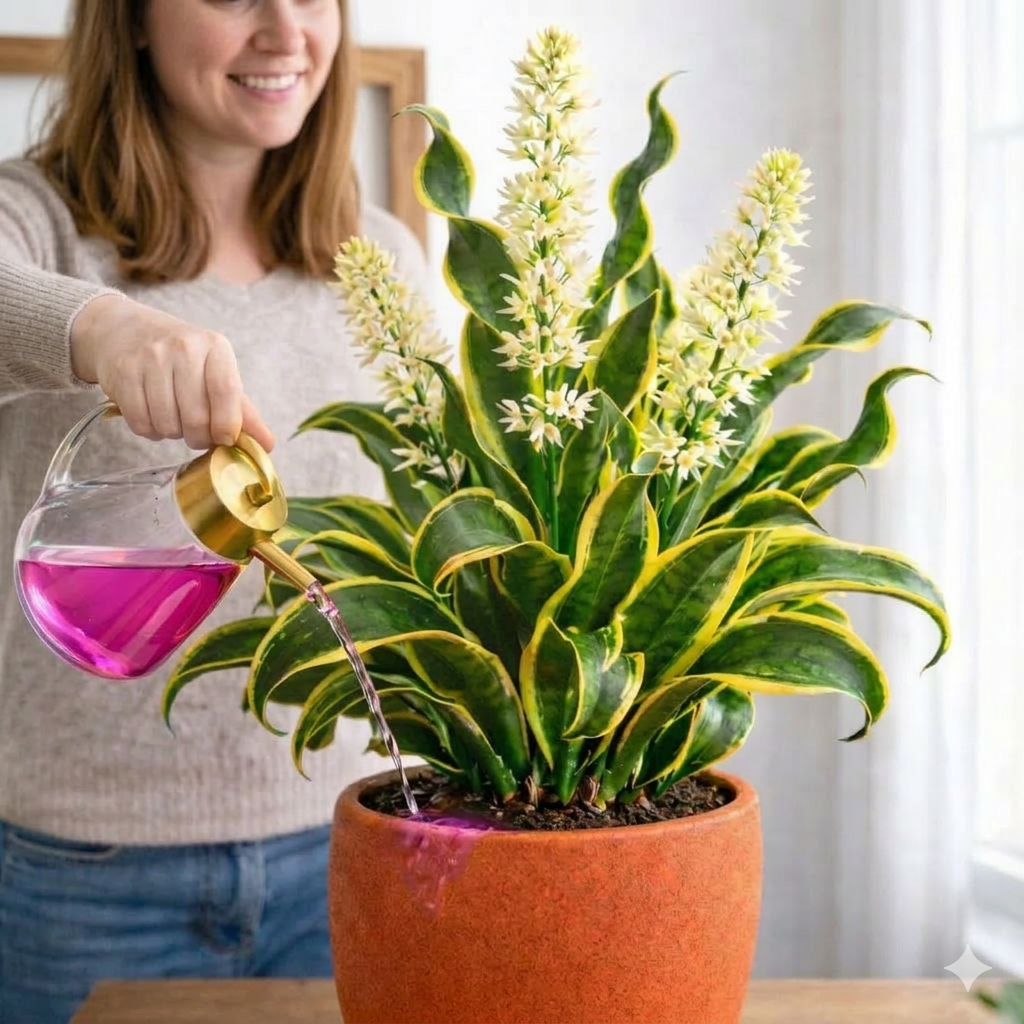
Want to turn your snake plant into a living sculpture? Some gardeners are styling their snake plant leaves in a creative way to make them grow in a completely different, eye-catching form. The results look surprisingly beautiful.
Let’s be honest: the snake plant is the undisputed champion of low-maintenance houseplants. It tolerates neglect, purifies the air, and looks sharp with its upright, sword-like leaves . But after a while, that familiar vertical form can start to feel… predictable.
What if I told you that you could transform that predictable plant into a stunning, one-of-a-kind living sculpture? A plant that sparks conversation and looks like it belongs in a modern art gallery?
Some creative gardeners have discovered a way to style their snake plant leaves, coaxing them to grow in completely unexpected shapes—gentle spirals, elegant circles, even intricate braids. When I first saw the results, I honestly thought they were fake. But it turns out, with the right technique and a little patience, you can guide your snake plant into these eye-catching forms yourself.
This isn’t about forcing the plant or using magic. It’s about understanding how snake plants grow and giving them a gentle nudge in a new direction. Think of it as plant training, not plant torture.
In this article, I’ll share the unique leaf-shaping tricks that gardeners are using to create spiral, circular, and even braided snake plants. Get ready to see your trusty Sansevieria in a whole new light.
Why Shape a Snake Plant? The Art of Living Sculpture
Before we dive into the “how,” let’s talk about the “why.” Why would anyone want to mess with a perfectly happy, healthy snake plant?
· Unique Aesthetic: A shaped snake plant becomes a statement piece. It adds a sculptural, artistic element to your decor that a standard plant can’t match .
· Conversation Starter: Trust me, when guests see a spiraled snake plant, they’ll have questions. It’s a guaranteed conversation starter.
· Creative Outlet: For plant lovers, it’s a new and rewarding challenge. It blends plant care with artistry .
· Space Management: In some cases, shaping can help you manage the plant’s form to better fit a specific space, though this requires patience .
The goal is to create a “living piece of art” that reflects your creativity and patience .
Method 1: How to Create a Spiral or Circular Snake Plant
This is the most popular and dramatic shaping technique. By guiding the leaves around a support, you can create a beautiful, twisting form .
Step 1: Start with the Right Plant
This is the most critical step for success. You cannot start with an old, established plant with stiff leaves .
· Choose a Young Plant: Young snake plants have pliable leaves that are much easier to train than mature, rigid ones .
· Select a Suitable Variety:
· Sansevieria cylindrica (African Spear Plant): This is the best choice for shaping because of its long, round, flexible leaves .
· Sansevieria trifasciata ‘Laurentii’ or ‘Zeylanica’: These can work, but they have flatter leaves that may be slightly more challenging .
· Sansevieria ‘Hahnii’: This compact, rosette-forming variety is naturally easier to guide into a gentle curve .
Look for a plant with compact, symmetrical growth to give you a head start .
Step 2: Get a Support Frame
Think of this as a “plant gym” that will guide the leaves as they grow . You can buy a pre-made spiral plant frame or make your own using sturdy wire or a reshaped tomato cage .
Gently insert the central stake of the frame into the soil, close to the plant’s base. Be careful not to damage the roots .
Step 3: Shape and Train the Leaves
Now for the fun part. This is where patience and a gentle touch are essential .
- Start with the longest, most flexible leaves first .
- Gently bend them in the direction of your desired spiral or circle, following the frame’s shape . Do not force them!
- Use soft plant ties (like velcro strips, foam-covered wire, or soft garden twine) to loosely secure the leaves to the frame at multiple points . The goal is to guide, not to strangle. Leave room for the leaves to expand .
- Work your way around the plant, leaf by leaf, attaching them to the frame to create a gradual, even spiral .
Step 4: Encourage Even Growth and Be Patient
· Rotate the pot regularly so all sides of the plant get equal light. This helps the spiral stay symmetrical and prevents it from leaning too much in one direction .
· Be patient! This is a slow process. It can take several months for a noticeable spiral shape to develop . Keep adjusting the ties as new growth appears .
Method 2: The “Gradual Twist” Method (No Frame)
If you prefer a more hands-on, frame-free approach, you can try the gradual twist method .
Instead of using a support, you gently rotate the leaves by hand a few degrees at a time, on a weekly basis . The key is to be incredibly gentle and consistent, always twisting in the same direction . Over many months, these small adjustments will accumulate into a gentle spiral . This method requires immense patience but can yield a very natural-looking curve .
Method 3: Use Light Positioning to Encourage a Curve
You can also use the plant’s natural tendency to grow towards light (phototropism) to help create a curve .
- Place your light source slightly to one side of the plant. The leaves will begin to lean in that direction.
- After a few weeks, rotate the pot so the plant leans the other way.
- By repeating this pattern, you can encourage the plant to grow in a gentle, swaying motion that can be guided into a curve .
This method works best in conjunction with other shaping techniques .
Method 4: The “Multi-Plant Illusion” for a Spiral Effect
This is a creative “cheat” that creates the look of a spiraled plant without any bending or training .
- Plant 3 to 5 young snake plants (cylindrical varieties work best) in a circular pattern in the same pot .
- As they grow, angle them slightly inward in the direction you want the spiral to go .
- Their clustered, upright leaves will naturally create the illusion of one large, spiraled plant .
- To maintain the look, prune off any offshoots that break the spiral pattern .
Method 5: Creating a Braided Snake Plant
This technique is specifically for the Sansevieria cylindrica variety, which has long, cylindrical leaves perfect for braiding .
- Choose three or more young, flexible Sansevieria cylindrica plants of similar height .
- Position them tightly together in a triangle formation in a pot filled with well-draining soil .
- Begin braiding: Gently cross the leaves over each other in a simple over-under pattern, just as you would with hair or rope. Work your way up the leaves .
- Secure the braid at the top with a soft plant tie. Do not tie it too tightly .
- Follow the standard snake plant care guide (see below) to keep your braided masterpiece healthy .
Essential Care for a Shaped Snake Plant
Shaping puts a little extra stress on the plant, so providing optimal care is crucial for success .
· Light: Provide bright, indirect sunlight. Good light helps the plant produce strong, flexible leaves needed for shaping. Low light can lead to weak, floppy growth .
· Watering: This is critical. Do not overwater! Snake plants are succulents and need their soil to dry out completely between waterings . Overwatering leads to root rot and weak, mushy leaves that won’t hold a shape .
· Soil: Use a well-draining potting mix, ideally a cactus or succulent mix. This prevents waterlogging and root rot .
· Fertilizer: Feed your plant once a month during the spring and summer with a balanced fertilizer diluted to half strength. This supports healthy, strong growth .
· Humidity: If your air is very dry, lightly misting the leaves in the morning can help keep them flexible .
Troubleshooting: Common Shaping Problems
· Leaves snapping or cracking: You’re bending them too much, too fast. Slow down and be gentler. Always work with young, pliable leaves.
· The spiral is uneven: You’re likely not rotating the pot enough, causing the plant to lean toward its primary light source .
· The plant is floppy and weak: This is a classic sign of overwatering. Let the soil dry out completely before watering again .
· Brown, crispy leaf tips: This can be caused by underwatering, low humidity, or fertilizer burn. Check the soil and your watering/fertilizing routine .
· The braid is coming loose: This is normal as the plant grows and settles. Simply re-secure the top with a new, soft tie .
Frequently Asked Questions (FAQs)
Q: How long does it take to shape a snake plant into a spiral?
A: It’s a slow process. Expect to see a noticeable shape developing over several months to a year. Patience is key .
Q: Can I use this method on any snake plant?
A: While possible with some flat-leaf varieties, it’s much easier with those that have flexible leaves, like Sansevieria cylindrica. Starting with a young plant of any variety is essential .
Q: Will new leaves (pups) also be spiraled?
A: Possibly! If the pups grow from the shaped mother plant, they may sometimes follow the same growth pattern, but it’s not guaranteed .
Q: Can I remove the support frame eventually?
A: Yes, but very gradually. Once the plant has held its shape for a long time, you can start removing ties one by one. If the leaves spring back, re-tie them and wait longer .
Conclusion
Transforming your snake plant from a simple green fixture into a stunning, spiraled sculpture is one of the most rewarding projects a plant lover can undertake. It’s a beautiful blend of patience, creativity, and horticultural knowledge.
Whether you choose to use a support frame, the gradual twist method, or the clever multi-plant illusion, the result is a living work of art that adds a unique and personal touch to your home .
So, the next time you look at your snake plant, don’t just see another houseplant. See the potential for something extraordinary. Give one of these unique leaf-shaping tricks a try, and you might just surprise yourself with what you can create.
Have you ever tried shaping a plant? Share your experiences or questions in the comments below! And if you’re looking for more creative plant care ideas, check out our guides on How to Make a Snake Plant Multiply and The Secret to Lush Peace Lilies.
More Ideas You Might Like
-

How to Make African Violets Bloom Abundantly All Year Long – The Complete Care Guide
Are your African violets all leaves and no flowers? Learn the secrets to abundant blooms – bright indirect light, proper … Read more
-
How to Make Your Spider Plant Bushy and Full Instead of Thin and Sparse – The Complete Guide
Is your spider plant looking thin, stretched, or uneven? Learn how to make it bushy and full with better light, … Read more
-

How to Make African Violets Bloom Abundantly All Year Long
Are your African violets all leaves and no flowers? Learn the secrets to abundant blooms – bright indirect light, proper … Read more