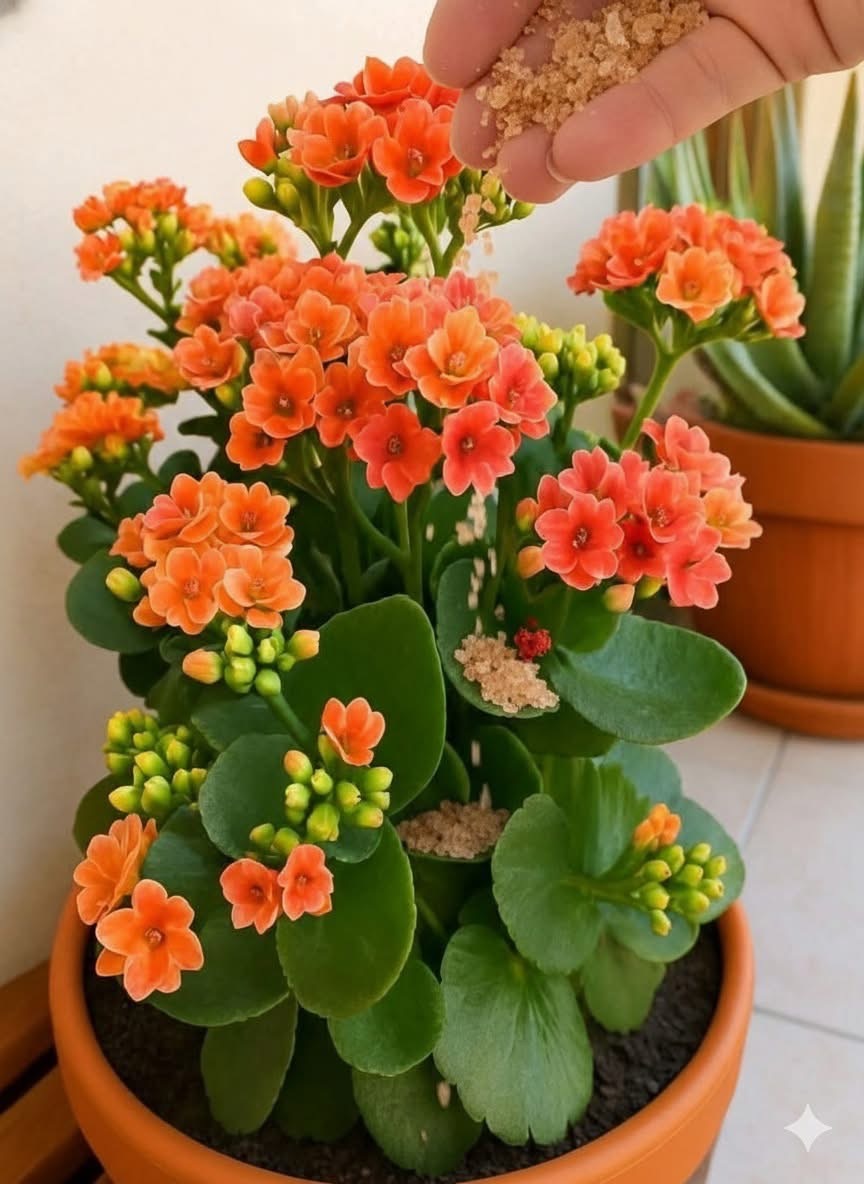
Kalanchoe is loved for its thick leaves and bright, long-lasting flowers—but many people struggle with one common problem: lots of leaves, no blooms.
If your plant looks healthy yet refuses to flower, a gentle sugar feeding method, used correctly, can help trigger blooming by giving the plant a small, natural energy boost.
This method is simple, inexpensive, and works best when combined with proper light and watering.
🌱 Why Sugar Can Help Kalanchoe Bloom
Plants naturally produce sugars through photosynthesis. These sugars are used as energy for growth and flowering.
When a kalanchoe is close to blooming but lacks energy—often due to low light or stress—a tiny amount of sugar can support:
Bud formation
Flower development
Stronger, longer-lasting blooms
⚠️ Important: Sugar is a support, not a fertilizer. Too much can harm the plant.
🌸 When to Use the Sugar Method
Use this method only when:
The plant is mature and healthy
Leaves are firm and green
You see early signs of bud formation or the plant hasn’t bloomed for months
Best seasons:
Late winter to early spring
Early fall
Avoid using sugar during extreme heat or cold.
🥄 Gentle Sugar Feeding Recipe
You will need:
1 cup (250 ml) of lukewarm water
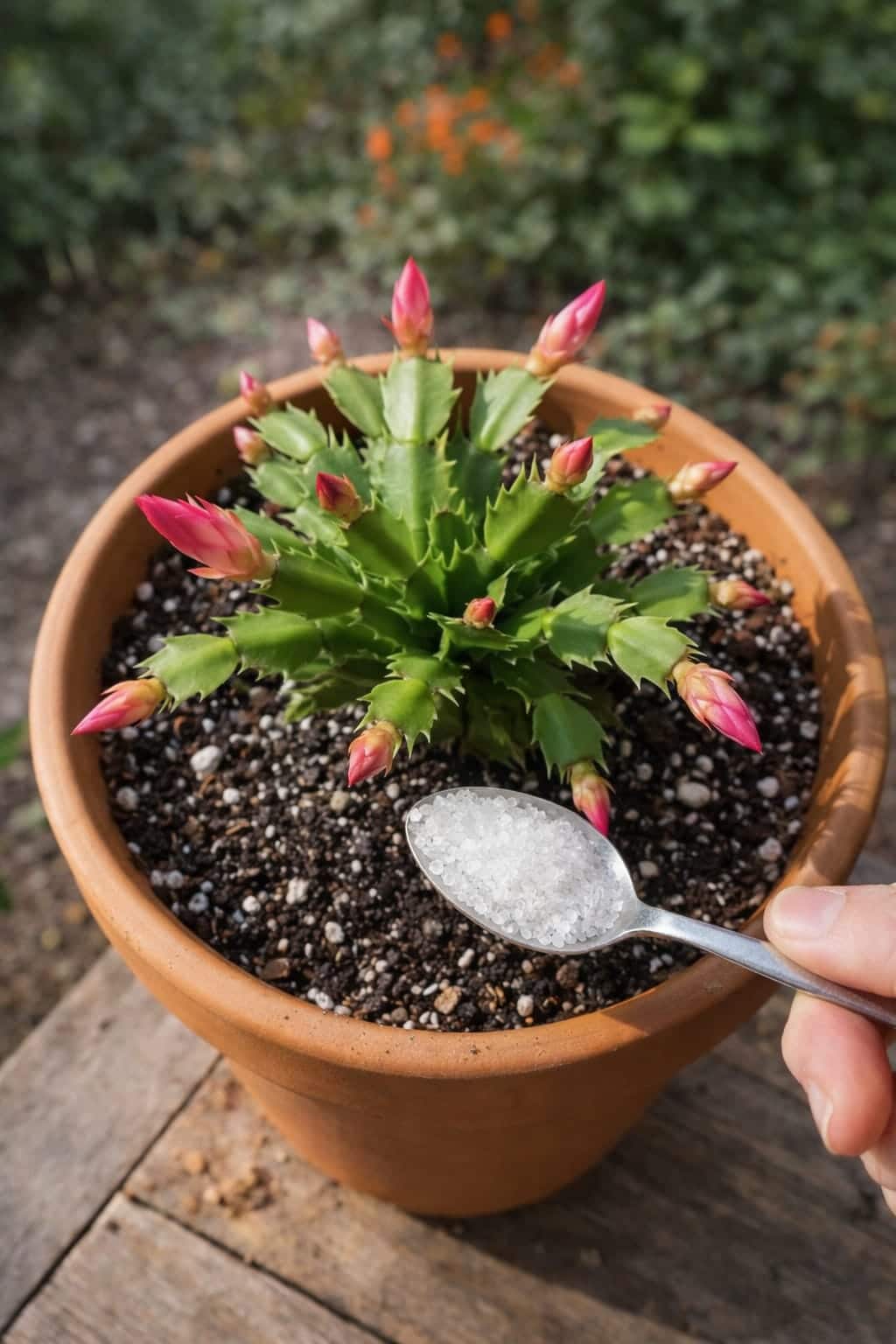
¼ teaspoon white sugar
Mix until the sugar is fully dissolved.
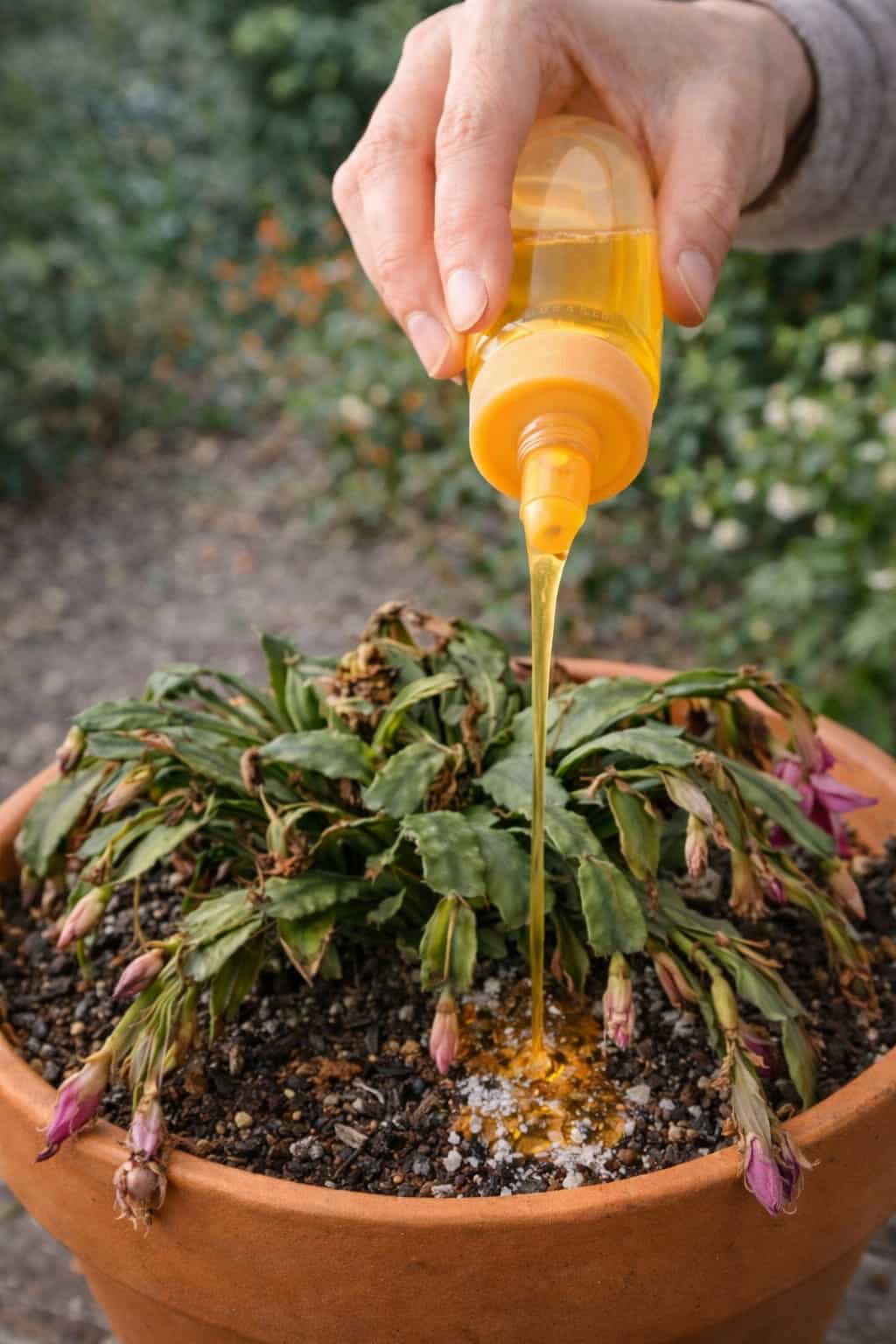
✔️ Do not use honey, brown sugar, or syrups
✔️ Do not increase the amount
💧 How to Apply Correctly
1️⃣ Water the soil lightly with plain water first (this protects the roots).
2️⃣ Pour a small amount of the sugar water onto the soil—not on the leaves.
3️⃣ Use only enough to slightly moisten the soil.
4️⃣ Apply once every 3–4 weeks only.
Overuse can attract pests or cause root problems.
☀️ Light: The Secret Partner to Sugar
Sugar alone will not create flowers. Kalanchoe needs:
Bright, indirect light
4–6 hours of sunlight daily
A clear day/night cycle
For best results:
Place near a sunny window
Avoid harsh midday sun
🌿 Extra Tips to Maximize Blooms
Let soil dry between waterings
Use a well-draining cactus or succulent mix
Remove faded flowers to redirect energy
Keep temperatures between 15–24°C (60–75°F)
For reblooming, kalanchoe also benefits from shorter daylight hours (about 12–14 hours of darkness daily for a few weeks).
❌ Common Mistakes to Avoid
Using sugar too often
Applying sugar to dry, stressed plants
Overwatering after feeding
Expecting instant flowers
Blooms take time—patience is part of the process.
🌼 What Results to Expect
2–3 weeks: stronger bud development
4–6 weeks: more flowers opening
Longer bloom duration with proper care
🌟 Final Thoughts
The gentle sugar feeding method works best as a small boost, not a shortcut. When paired with good light, proper watering, and patience, it can help wake up a stubborn kalanchoe and encourage beautiful, healthy blooms.
Simple. Natural. Effective 🌸
If you want, I can also share a natural bloom-boosting schedule using household items—just tell me 😊
-

How to Grow a Snake Plant in a Spiral or Circular Shape – The Complete Guide
Want a stunning spiral or circular snake plant? Learn how to train your Sansevieria into a sculptural shape with gentle … Read more
-
How to Make African Violets Bloom Abundantly All Year Long – The Complete Care Guide
Are your African violets all leaves and no flowers? Learn the secrets to abundant blooms – bright indirect light, proper … Read more
-
How to Make Your Spider Plant Bushy and Full Instead of Thin and Sparse – The Complete Guide
Is your spider plant looking thin, stretched, or uneven? Learn how to make it bushy and full with better light, … Read more