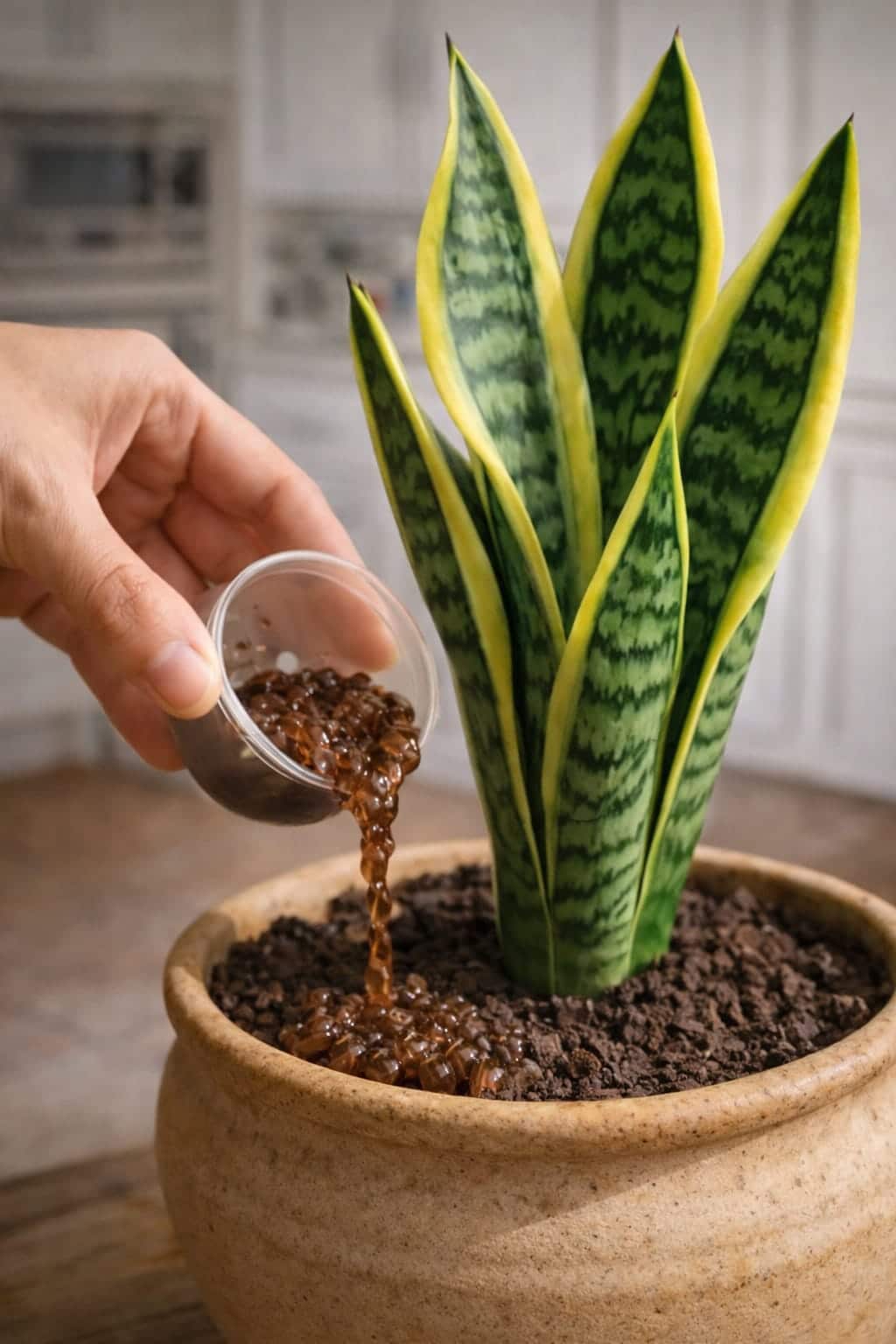
Want a stunning spiral or circular snake plant? Learn how to train your Sansevieria into a sculptural shape with gentle guidance, bright light, and patience. No special variety needed – just the right technique.
Let’s be honest: snake plants (Sansevieria, now Dracaena) are already one of the most striking houseplants you can own. Their upright, sword‑like leaves bring a bold, modern look to any space, and they are famous for being low‑maintenance. But every now and then, you’ll see a snake plant with a dramatic spiral or circular shape and wonder how it was created.
It looks almost too perfect to be natural.
The truth is, snake plants do not usually grow in spirals on their own. That sculpted look is the result of careful shaping, patience, and the right growing conditions. If you’ve ever wanted to turn an ordinary snake plant into a decorative showpiece, it is possible – but it takes a little strategy. The good news is that the process is simpler than it looks once you understand how the plant behaves.
In this complete guide, I’ll walk you through everything you need to know to train your snake plant into a spiral or circular shape. You’ll learn why snake plants are ideal candidates, how to start with the right plant, the gradual training process, and common mistakes to avoid. No special variety required – just a little time and care.
Let’s turn your snake plant into living art.
Why Snake Plants Are Good Candidates for Shaping
Snake plants are ideal for shaping because their leaves are sturdy, upright, and slow‑growing. Once the plant is guided into a certain direction, it tends to hold that form much longer than softer, more flexible houseplants would. Their architectural shape also makes the final result look especially clean and dramatic. That is why shaped snake plants have become popular in modern indoor decor.
The spiral or circular effect is more about training than natural genetics. You are not looking for a rare cultivar – you are gently guiding an ordinary snake plant over time.
Start with the Right Type of Plant
If you want to train a snake plant into a spiral, it helps to start with a young and healthy plant. Younger leaves are easier to guide before they fully harden into their upright position. Very old, stiff leaves are much harder to shape without causing damage.
Plant Age Suitability
Young (pups or small plants, under 1 year) Ideal – leaves are flexible and easy to train.
Medium (1–2 years, active growth) Good – still manageable with gentle care.
Mature (3+ years, thick rigid leaves) Difficult – leaves may snap. Start with a new plant.
A medium‑sized plant with active growth is usually the easiest to work with because it still has flexibility, but it is established enough to recover from gentle handling. This is one reason shaped snake plants are often started early rather than attempted on very mature specimens.
The Secret Is Gradual Training
The main technique behind a spiral snake plant is gradual training around a support. Growers typically use a central form such as a stake, tube, or cylindrical guide, then gently position the leaves around it.
What You’ll Need
Item Purpose
Young snake plant Flexible leaves that can be trained.
Cylindrical support (bottle, PVC pipe, sturdy tube) Central form to wrap leaves around.
Soft plant ties (velcro tape, garden twist ties, or soft cotton string) Secure leaves without cutting or damaging them.
Well‑draining potting mix Keeps roots healthy during training.
Pot with drainage holes Prevents waterlogging.
Bright, indirect light Promotes steady, healthy growth.
Step‑by‑Step Training Process
- Insert the central support into the pot, close to the base of the plant. It should be tall enough to accommodate the leaves as they grow (6–12 inches is usually sufficient).
- Gently wrap the most flexible leaves around the support. Work with one leaf at a time. Do not force them – if you feel resistance or see the leaf starting to crease, stop.
- Use soft ties to loosely secure the leaves against the support. The ties should be snug enough to hold the shape but loose enough to allow the leaf to expand as it grows.
- Provide bright, indirect light – this keeps the plant healthy and encourages steady growth.
- Rotate the pot occasionally so the plant doesn’t lean too strongly toward one side. Light direction affects how snake plants grow, and without rotation, the shape may become uneven.
- Check ties every week – loosen them if they become tight. Tight bindings can cut into the leaf tissue.
- Be patient – the plant must be guided slowly and carefully, not forced into shape all at once. If bent too aggressively, the leaves can crease, snap, or become permanently scarred.
The linked article notes: the plant must be guided slowly and carefully, not forced into shape all at once.
Patience Matters More Than Force
This is the part most people underestimate. A spiral shape doesn’t happen overnight. It can take weeks or even months for the leaves to settle into their new direction. During that time, the plant continues growing, and the new growth follows the path you’ve created. If you rush the process, the plant will either resist the shape or become damaged.
That slow shaping process is exactly why many spiral snake plants look so polished. They were not twisted in one day. They were trained little by little until the effect became natural‑looking. Time and consistency are what make the final shape hold.
Light Plays a Big Role in the Result
Bright, indirect light is one of the most important conditions for a successful shaped snake plant. In low light, the plant may stay alive, but the growth will be slower and weaker, which makes training less effective. Strong filtered light helps the leaves stay firm and healthy while new growth continues to emerge.
Light Level Effect on Training
Low light Weak, slow growth – training takes much longer.
Bright, indirect light Ideal – steady growth, flexible leaves.
Direct sun Can scorch leaves; avoid.
If you are trying to encourage a balanced spiral, rotate the pot occasionally so the plant doesn’t lean too strongly toward one side. Light direction affects how snake plants grow, and without rotation, the shape may become uneven over time. Healthy, even light is one of the factors that helps the final design look intentional instead of accidental.
Continue to Page 2
Continue to page 2 for more details about this article and the key points many readers miss on the first page.