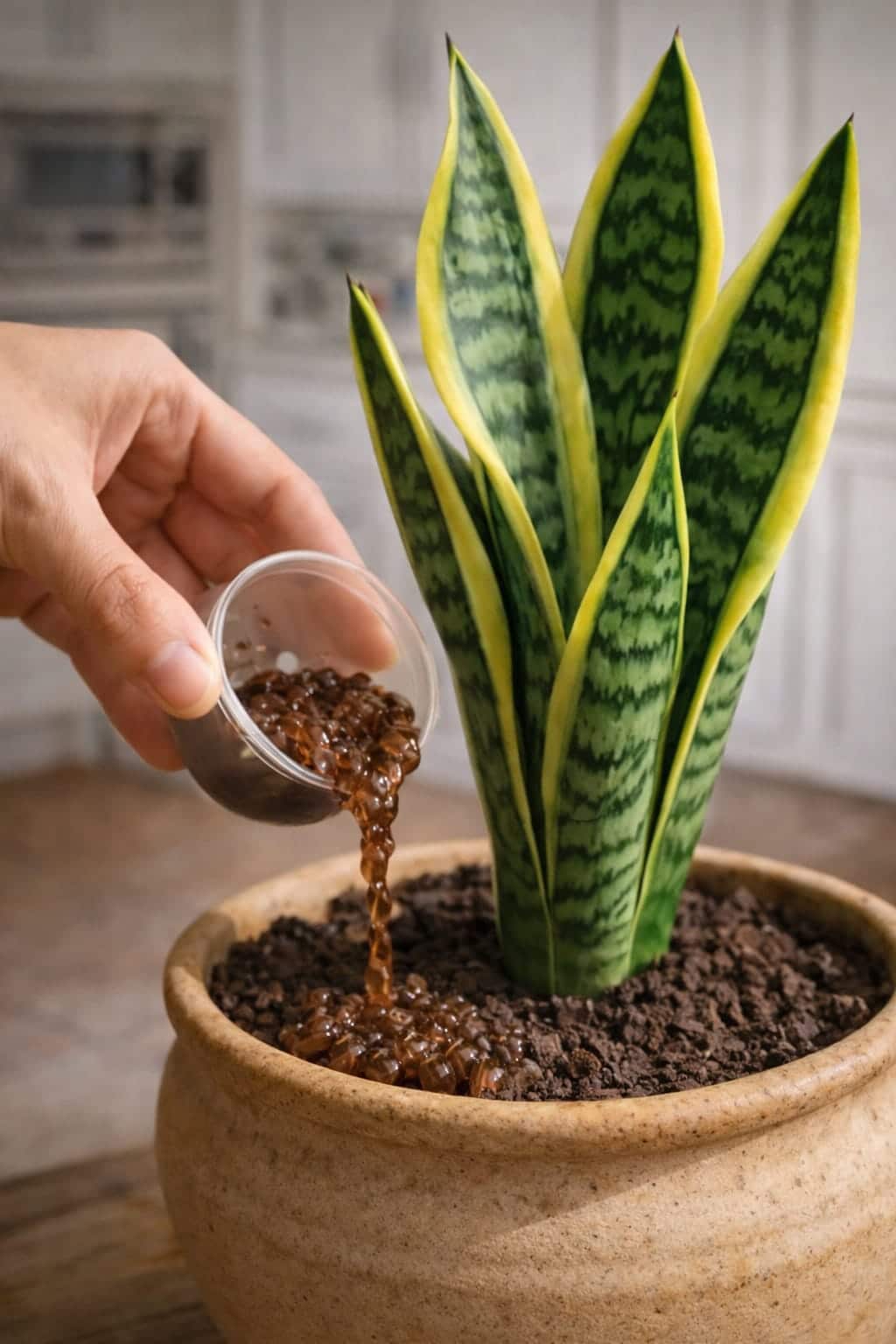
Watering and Soil Still Matter
Even though the focus is on shaping, basic care cannot be ignored. Snake plants still need:
· Well‑draining soil – a cactus or succulent mix with perlite works best.
· A pot with drainage holes – non‑negotiable for healthy roots.
· A careful watering routine – let the soil dry out completely between waterings.
Overwatering remains the fastest way to ruin a snake plant, shaped or not. If the roots stay wet, the plant can weaken before the shaping process has a chance to succeed.
A Circular Look Uses the Same Idea
A circular snake plant display works much like a spiral, except the shaping is broader and more rounded. Instead of wrapping tightly upward, the leaves are trained outward or around a curved form to create a looping, sculptural effect. The principle is the same: guide the same plant gradually, support the leaves gently, and let new growth continue the pattern.
Like the spiral, this look is achieved through controlled training, not through a special rare variety.
Common Mistakes to Avoid
Mistake Why It’s Harmful Correct Approach
Forcing the leaves too hard, too fast Leaves crease, snap, or become scarred Bend slowly, in small increments.
Trying to shape a plant that is too mature Stiff leaves are brittle and prone to breaking Start with a young, flexible plant.
Using tight ties Cuts into leaves, leaves permanent marks Use soft ties; check weekly.
Poor lighting Weak growth, slow training Provide bright, indirect light.
Overwatering Root rot, plant weakens Let soil dry completely between waterings.
Inconsistent care Plant stressed, shape uneven Keep conditions stable.
In other words, shaping only works well when the plant is already healthy.
How Long Does It Take? A Realistic Timeline
Timeframe Progress
1–2 weeks Leaves begin to show slight curve.
1–3 months Noticeable spiral forming; ties may need adjustment.
3–6 months Shape holds after ties removed for short periods.
6–12 months Permanent spiral; plant can be displayed without support.
Note: If you stop training, the plant will slowly straighten over time. To maintain the shape, occasional re‑training or permanent support may be needed.
Frequently Asked Questions (FAQs)
Q: Can I turn an existing large snake plant into a spiral?
It is very difficult and risky. Large, mature leaves are stiff and likely to snap. You can try training only the new growth (pups) while leaving the older leaves upright, but the result will be uneven. Starting with a young plant is strongly recommended.
Q: Will the spiral damage my snake plant?
If done gently and gradually, no. The plant remains healthy. However, aggressive bending or using tight ties can cause permanent damage. Always prioritize plant health over shape.
Q: Can I use this method on other succulents?
Some succulents with flexible leaves (like certain aloes or haworthias) can be trained, but snake plants are among the most forgiving. Research each plant’s flexibility before trying.
Q: My leaves are cracking – what should I do?
Stop training immediately. Remove all ties and let the plant rest for several weeks. The cracks will not heal, but the leaf may survive. In the future, bend more slowly and only train very young, flexible leaves.
Q: Can I buy a pre‑trained spiral snake plant?
Yes – many nurseries and online shops sell pre‑shaped spiral snake plants. They are often labeled as “twisted snake plant” or “spiral Sansevieria.” Prices can be higher, but they save you months of training.
Q: How do I care for a spiral snake plant after shaping?
Care is the same as any snake plant: bright indirect light, water when soil is dry, well‑draining soil, and occasional fertilizer in spring/summer. The shape may relax over time; you can re‑apply ties for a few weeks to reinforce it.
Printable Spiral Training Checklist
☐ Choose a young, healthy snake plant (pups or small plants)
☐ Prepare a cylindrical support (bottle, tube, or stake)
☐ Insert support in the center of the pot
☐ Gently wrap the most flexible leaves around the support
☐ Secure leaves with soft plant ties (loose, not tight)
☐ Place in bright, indirect light
☐ Water only when soil is completely dry
☐ Rotate pot weekly
☐ Check ties every week – loosen if needed
☐ Be patient – shape takes 3–6 months
☐ Remove ties gradually once shape holds
Final Thoughts – Patience, Gentle Training, and Good Care
A spiral or circular snake plant is not magic – it is patience, gentle training, and good care working together. Once you understand that the same plant can be guided over time into a sculptural form, the process becomes much less intimidating.
If you want that designer look, start with a healthy young snake plant, give it bright indirect light, use gentle supports, and let the shape develop slowly. The result can turn one of the easiest houseplants in the world into one of the most eye‑catching.
Now it’s your turn! Have you tried shaping a snake plant? Would you attempt a spiral or a circular cluster? Drop a comment below – I’d love to hear your experience.
And if you found this guide helpful, share it with a fellow plant lover who wants a unique statement piece. Pin it for later, and subscribe to our newsletter for more creative plant projects.
Stay patient, stay gentle, and let your snake plant become art. 🌿✨