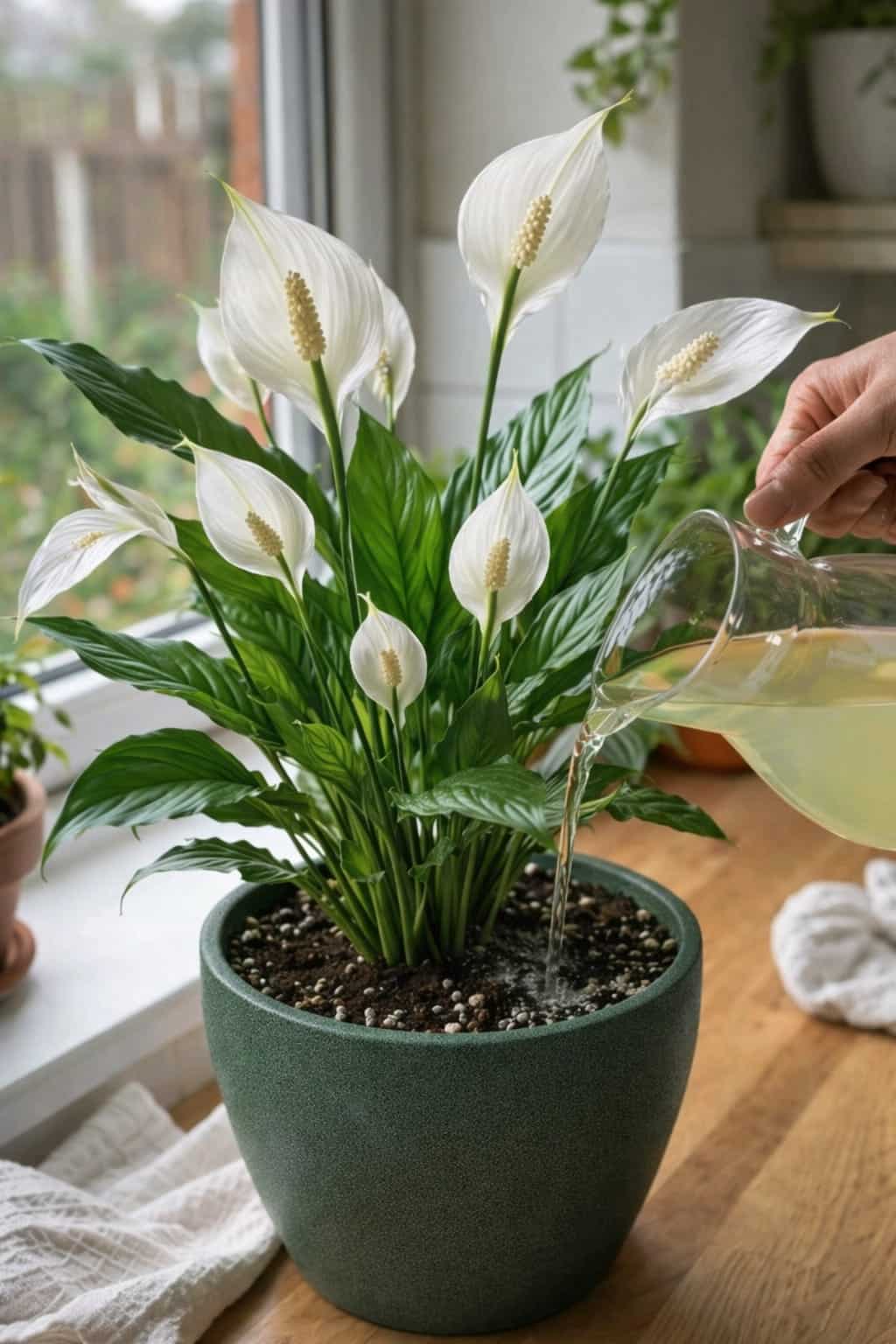
The Real Secret to Growing African Violets Well
Before any homemade ingredient can help, these basics need to be in place.
- Bright, Indirect Light
African violets need good light to bloom. A bright windowsill with filtered light works best. Too little light means lots of leaves and very few flowers.
- Careful Watering
This is the biggest one. African violets hate soggy soil and also dislike water sitting on their leaves or in the crown. Water the soil gently and let the surface dry slightly before watering again.
- Light, Airy Soil
These plants need a loose mix that drains well. Heavy soil is one of the fastest ways to create rot problems
- Small Pots
African violets actually bloom better when they are slightly snug in their pots. Oversized containers often hold too much moisture.
- Consistency
They love stable care. Sudden changes in temperature, watering, or location can slow growth quickly.
How to Use a Homemade Liquid Safely – Step by Step
This is where many people go wrong.
If you want to try a homemade ingredient on African violets, the safest rule is: use very little.
A Simple Method
- Use a weak, diluted homemade liquid – weak tea, banana water, or rice water at half strength.
- Pour a small amount onto the soil only – about 1–2 tablespoons for a standard pot.
- Do not soak the whole pot – the soil should already be slightly dry.
- Avoid splashing the leaves or crown – water on leaves causes spots and rot.
- Use it occasionally, not constantly – once a month during spring and summer is plenty.
African violets are delicate. Too much liquid, especially organic liquid, can quickly create sour soil, root stress, or crown issues. Less is definitely better.
What Results You Might Notice
If the plant responds well, you may start seeing:
· Richer green leaves.
· Stronger compact growth.
· A fuller crown.
· More active bud production.
· Longer‑lasting blooms.
These are the signs that matter most. Not unrealistic overnight size changes. Not instant flower explosions. Just steady, healthier growth
Common Mistakes to Avoid
If you want this trick to help instead of hurt, avoid these pitfalls.
Mistake Why It’s Harmful
Pouring too much African violets do not like heavy soaking, especially with homemade mixtures.
Wetting the leaves Leaves and crown should stay as dry as possible to avoid spotting and rot.
Using a strong mixture A concentrated liquid can easily overwhelm such a small plant.
Ignoring light Without enough light, the plant still will not bloom well.
Treating the tonic like a cure‑all It is only one small part of the care routine.
The Honest Truth
Homemade plant liquids can help African violets grow better – but the ingredient itself is not the magic.
The real magic comes from combining:
· Bright indirect light.
· Proper soil.
· Gentle watering.
· A small pot.
· Light feeding.
· Stable conditions.
When those things are right, even a simple homemade liquid can become a helpful boost.
Frequently Asked Questions (FAQs)
Q: Can weak tea really help African violets bloom?
A: It can provide trace nutrients and mild organic compounds, but it will not force blooms if light, water, or pot size are wrong. Use it as a gentle supplement.
Q: How often should I use homemade liquid on African violets?
A: Once a month during spring and summer. Do not use in fall and winter.
Q: Can I use banana peel water instead of tea?
A: Yes – dilute banana water with equal parts plain water. Use sparingly.
Q: Why are my African violet leaves turning yellow?
A: Most common causes: overwatering, water on leaves, or old age. Check your watering routine.
Q: What’s the biggest mistake people make with African violets?
A: Overwatering or letting water sit in the crown. Always water the soil, not the leaves.
Printable African Violet Care Checklist
☐ Place in bright, indirect light (east or north window).
☐ Use a small pot with drainage holes (⅓ of leaf spread).
☐ Fill with light, well‑draining African violet mix (peat + perlite + vermiculite).
☐ Water from the bottom or carefully around the soil – avoid leaves and crown.
☐ Water when top inch of soil is dry.
☐ Use room‑temperature, filtered water.
☐ Maintain humidity 50–60% (pebble tray).
☐ Keep temperature 65–75°F (18–24°C), avoid drafts.
☐ Fertilize with diluted African violet fertilizer every 2–4 weeks in spring/summer.
☐ Optional: use weak homemade liquid (tea or banana water) once a month – not necessary.
☐ Remove spent blooms and yellow leaves.
☐ Repot every 6–12 months with fresh mix.
Final Thoughts – The Liquid Helps, but the Basics Matter Most
So, can you grow African violets better with this ingredient?
Yes – if it is used lightly and intelligently.
A mild homemade liquid may help support stronger leaves, better overall vigor, and improved blooming. But it works best on a plant that is already getting the right basics.
That is the real lesson.
African violets do not need dramatic tricks. They need gentle, consistent care – and sometimes just a small extra push.
And when they get that, they can reward you with the kind of healthy growth and non‑stop flowers that make them one of the most beautiful houseplants to keep indoors.
Now it’s your turn! Have you tried a homemade liquid on your African violets? What results did you see? Drop a comment below – I’d love to hear your experience.
And if you found this guide helpful, share it with a friend who loves African violets. Pin it for later, and subscribe to our newsletter for more practical plant care.
Stay bright, stay gentle, and watch your African violets bloom. 🌸✨