How Long Does Ginger Take to Grow? – Ginger Growing Timeline
Ginger is not a fast crop. It takes patience. You can harvest young ginger earlier, but mature ginger usually takes several months. This how long to harvest homegrown ginger timeline helps you plan.
| Growth Stage | Approximate Time |
|---|---|
| Rooting in water | 1–4 weeks |
| Early shoots | 2–6 weeks |
| Strong leafy plant | 2–4 months |
| Baby ginger harvest | 4–5 months |
| Mature ginger harvest | 8–10 months |
If you want tender baby ginger, harvest earlier. If you want larger, stronger-flavored rhizomes, wait longer.
When Is Ginger Ready to Harvest? – Harvesting Signs
Ginger is ready to harvest when the plant has grown for several months and the leaves begin to yellow naturally. This usually happens near the end of the growing season. This how to know when ginger is ready to harvest guide helps you decide.
Signs ginger is ready:
- Leaves begin yellowing
- Stems start drying back
- The plant is 8 months or older
- Rhizomes feel firm under the soil
- The growing season is ending
You can also harvest small pieces earlier by gently digging around the edge of the pot and cutting off a small rhizome section while leaving the main plant growing.
How to Harvest Ginger from a Pot – Easy Harvest Method
Harvesting container ginger is easy. This how to harvest homegrown ginger step-by-step method works every time.
- Stop watering a few days before harvest.
- Tip the pot or grow bag gently.
- Remove the soil around the rhizomes.
- Lift the ginger carefully.
- Break or cut off the amount you need.
- Save healthy pieces with buds for replanting.
- Wash harvested ginger before using.
If you want to keep growing ginger, replant a few fresh pieces with visible buds.
Can Ginger Leaves Be Used? – Edible Uses
Ginger leaves are aromatic, but the rhizome is the main edible part. Some gardeners use ginger leaves lightly for flavoring teas, broths, or steaming foods, but they are tougher than many herbs. Always make sure the plant has not been treated with chemicals before using any part in the kitchen.
Common Problems When Growing Ginger – Troubleshooting Guide
Ginger Is Not Sprouting
The rhizome may be too old, too cold, too dry, or treated to prevent sprouting. Try a fresh organic piece with visible buds and keep it warm.
Ginger Is Rotting in Water
The rhizome may be fully submerged too long, the water may be stale, or the ginger may already have soft spots. Keep only part of the rhizome in water and change water often.
Leaves Are Turning Yellow Early
Yellow leaves can come from overwatering, poor drainage, cold temperatures, or nutrient stress. Check soil moisture and root health.
Leaves Are Browning at the Tips
Brown tips can be caused by dry air, underwatering, too much direct sun, or salt buildup from fertilizer.
Plant Is Growing Slowly
Ginger grows slowly in cool conditions. Give it warmth, time, bright filtered light, and steady moisture.
How to Prevent Ginger Rhizome Rot – Key Prevention Tips
Rot is the biggest risk when starting ginger. Prevent it by keeping conditions moist but not soggy. This how to prevent ginger root rot guide is essential.
- Use firm fresh ginger
- Let cut pieces callus before planting
- Do not fully submerge rhizomes for too long
- Change water often during rooting
- Use loose well-draining soil
- Choose pots with drainage
- Avoid cold wet soil
- Do not overwater newly planted rhizomes
Healthy ginger should smell fresh and spicy, not sour or rotten.
Direct Soil Planting vs Water Rooting – Comparison Table
Both methods can work. Water rooting is useful for watching roots form, while direct soil planting is closer to natural growth. This ginger water rooting vs soil planting comparison helps you decide.
| Method | Best For | Main Benefit | Main Risk |
|---|---|---|---|
| Water rooting | Beginners | Easy to see roots | Rot if water is not changed |
| Direct soil planting | Warm climates | Less transplant shock | Harder to monitor roots |
| Grow bag planting | Patios and containers | Great drainage | Dries faster |
If your ginger already has shoots and roots, planting directly into soil is often the best next step.
Can You Grow Many Ginger Plants from One Rhizome? – Multiplying Ginger
Yes. A single large ginger rhizome can be divided into several pieces, and each piece can grow into a separate plant if it has a healthy bud. This how to multiply ginger plants from one root method is cost-effective.
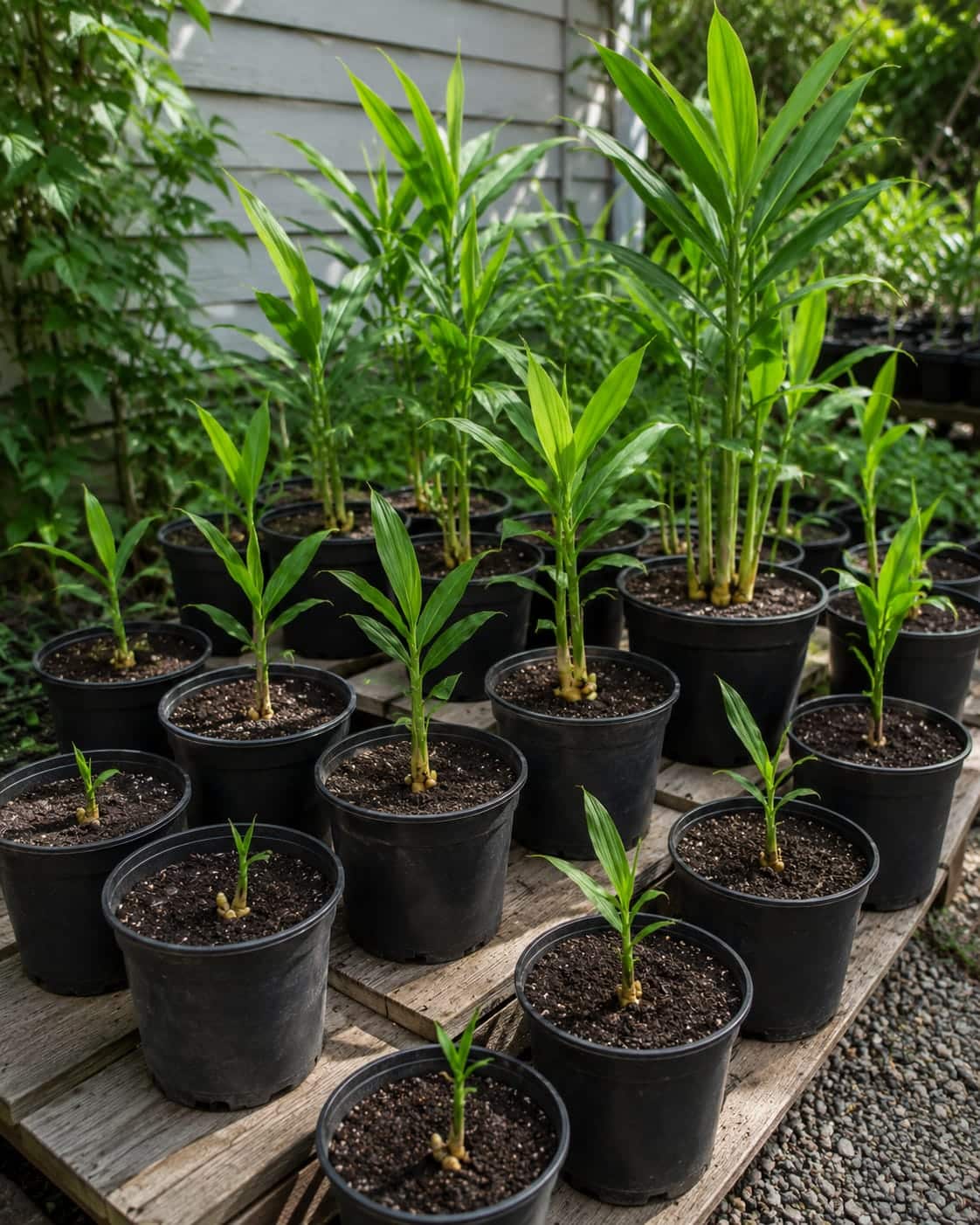
This is how you can turn one grocery store ginger root into multiple potted ginger plants like the final image shows.
For best results:
- Cut pieces with at least one bud each
- Let cuts dry before planting
- Plant in warm soil
- Space pieces apart
- Keep soil lightly moist
Best Companion Plants for Ginger – What to Grow Together
Ginger grows well with other plants that enjoy rich soil and partial shade. In warm gardens, it can be grown near tropical plants, herbs, or leafy greens. This ginger companion planting guide maximizes your garden space.
Good companion ideas include:
- Turmeric
- Basil
- Cilantro
- Lemongrass
- Leafy greens in partial shade
- Peppers in warm climates
Keep enough spacing so ginger rhizomes can expand underground.
Complete Ginger Growing Care Table – Quick Reference
| Care Factor | Best Method | Why It Matters |
|---|---|---|
| Starting piece | Fresh ginger with buds | Produces shoots and roots |
| Water rooting | Partial contact with clean water | Encourages roots safely |
| Soil | Loose, rich, well-draining | Prevents rot and supports rhizomes |
| Pot | Wide container or grow bag | Allows horizontal growth |
| Light | Bright indirect or partial shade | Supports leafy growth |
| Water | Lightly moist soil | Keeps rhizomes growing |
| Temperature | Warm conditions | Speeds sprouting and growth |
| Harvest | After 8–10 months for mature ginger | Allows rhizomes to size up |
Step-by-Step Quick Guide – How to Grow Ginger at Home
- Choose fresh ginger with visible buds.
- Cut into pieces if needed, leaving at least one bud per piece.
- Let cut pieces dry for 24 hours.
- Place ginger partially in clean water with buds facing up.
- Change water every 1 to 2 days.
- Wait for roots and shoots to appear.
- Prepare a wide pot or fabric grow bag with loose compost-rich soil.
- Plant ginger shallowly with shoots above soil.
- Water gently and keep soil lightly moist.
- Grow in warm bright indirect light or partial shade.
- Feed lightly during active growth.
- Harvest baby ginger after 4 to 5 months or mature ginger after 8 to 10 months.
Short Caption for This Trick
“To grow ginger from store-bought ginger, choose a fresh rhizome with visible buds, root it in clean water until white roots and green shoots appear, then plant it shallowly in loose compost-rich soil. Keep it warm, lightly moist, and in bright indirect light for strong container-grown ginger – this easy kitchen garden method turns one root into a harvest.”
Frequently Asked Questions – Growing Ginger at Home Q&A
Can you grow ginger from grocery store ginger?
Yes. Fresh store-bought ginger can grow if it has healthy buds and is not dried out or rotten.
Should I root ginger in water before planting?
You can. Water rooting helps you see whether the ginger is alive and encourages root growth before planting.
How long does ginger take to sprout?
Ginger can sprout in 1 to 4 weeks, but it may take longer if temperatures are cool.
Does ginger need full sun?
Ginger prefers bright indirect light or partial shade. Harsh afternoon sun can burn leaves in hot climates.
What kind of pot is best for ginger?
A wide pot or fabric grow bag is best because ginger rhizomes spread horizontally.
How deep should ginger be planted?
Plant ginger shallowly, covering the rhizome with about 1 to 2 inches of soil while keeping shoots above the surface.
How often should I water ginger?
Water when the top inch of soil begins to dry. Keep soil lightly moist but never soggy.
How long before I can harvest ginger?
Baby ginger can be harvested after about 4 to 5 months. Mature ginger usually takes 8 to 10 months.
Can ginger grow indoors?
Yes. Ginger can grow indoors in a warm, bright spot or under grow lights.
Why is my ginger rotting?
Rot usually comes from too much water, cold conditions, poor drainage, or a damaged rhizome. Use fresh ginger, warm conditions, and loose soil.
Final Thoughts – The Best Way to Grow Fresh Ginger at Home
Growing ginger from store-bought ginger is an easy and rewarding way to turn a kitchen ingredient into a productive home garden plant. The process begins with a healthy rhizome, clean water, and patience. Once roots and shoots appear, the ginger can be planted into a wide pot, grow bag, or garden bed filled with loose fertile soil. This best ginger growing method for home gardeners will give you a continuous supply of fresh, organic ginger.
The most important secrets are warmth, drainage, and steady moisture. Ginger does not want to dry out completely while growing, but it also cannot sit in soggy soil. Give it bright indirect light, compost-rich potting mix, and enough space to spread, and it will reward you with lush green stems and fresh aromatic rhizomes. Following this complete home ginger growing guide will ensure success.
Whether you grow it on a balcony, patio, kitchen windowsill, greenhouse shelf, or backyard garden, this simple ginger propagation method is a practical way to grow your own natural harvest at home. Start your ginger growing journey today and enjoy the satisfaction of harvesting your own spice.