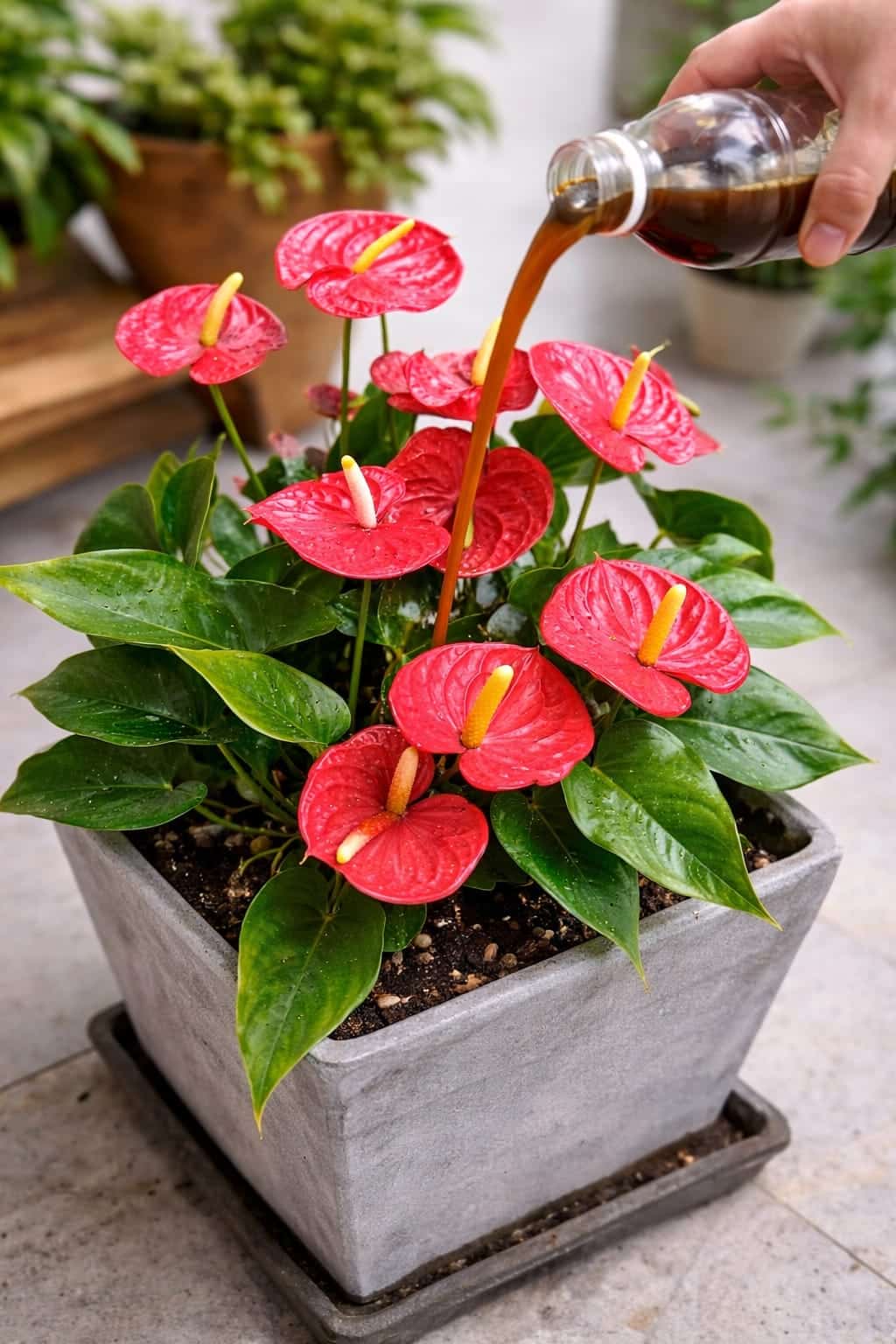
- Warmth and Humidity – Tropical Comfort
Anthuriums are tropical plants. They need consistent warmth and higher humidity than many houseplants.
Factor Ideal Range
Temperature 65–80°F (18–27°C). Do not let it drop below 50°F (10°C).
Humidity 60–80% is ideal. Below 40%, leaf tips may brown and flowering may slow.
How to increase humidity:
· Use a humidifier (best).
· Place the pot on a pebble tray with water.
· Group plants together.
· Mist occasionally (temporary effect; can promote leaf spots if overdone).
Avoid: Cold drafts from windows, doors, or air conditioning vents.
- Help It Bloom More Often – Pro Tips
Even with good care, you can encourage more flowers with these simple techniques.
Remove Spent Blooms Promptly
Once a flower (spathe) fades and turns brown, cut the entire flower stalk at the base. This redirects the plant’s energy into producing new blooms instead of seeds.
Clean the Leaves
Dust buildup reduces light absorption. Wipe leaves with a soft, damp cloth every few weeks. Clean leaves = more photosynthesis = more energy for flowers.
Light Pruning
Trim away any dead, damaged, or yellowing leaves. This improves airflow and encourages new growth. Avoid cutting healthy leaves unnecessarily – they support the plant’s strength.
A Slightly Root‑Bound Pot
Anthuriums often bloom more when they are slightly crowded. Repot only when necessary, and don’t go up too large in pot size.
- Watch for Pests and Stress Signals
Like many houseplants, anthuriums can be affected by pests – especially in dry conditions.
Pest Signs Treatment
Aphids Small green or black insects on new growth Insecticidal soap or neem oil
Spider mites Fine webbing, stippled leaves Increase humidity; neem oil
Mealybugs White cottony clusters Wipe with alcohol on a cotton swab
Stress signals:
· Drooping leaves → check watering (could be too wet or too dry)
· Yellowing leaves → often overwatering or nutrient issue
· Brown leaf tips → low humidity or fluoride in tap water
Address issues early – they’re much easier to fix before the plant declines.
Common Mistakes That Keep Anthuriums from Flowering
Mistake Why It’s Harmful Correct Approach
Overwatering Root rot, yellow leaves Let top inch of soil dry before watering
Too little light No blooms, weak growth Move to bright, indirect light
Using regular potting soil alone Poor drainage, suffocated roots Use orchid bark + perlite mix
Over‑fertilizing Burned roots, salt buildup Fertilize lightly every 6–8 weeks
Low humidity Brown tips, slow growth Increase humidity with pebble tray or humidifier
Cold drafts Stunted growth, leaf drop Keep away from windows and vents
Frequently Asked Questions (FAQs)
Q: Why are my anthurium’s flowers turning green?
This is normal aging. As flowers mature, the spathe often fades from bright red/pink to green. It’s not a problem – simply cut the stalk at the base when it becomes unsightly.
Q: How often should I repot my anthurium?
Every 2–3 years, or when roots are growing out of the drainage holes. Repot in spring using fresh, well‑draining mix.
Q: Can I grow anthurium in water (hydroponically)?
Yes – anthuriums can grow in water with proper care. Use a clean glass jar, keep the roots submerged, change water weekly, and add a few drops of hydroponic fertilizer. However, they bloom better in soil.
Q: Why are my anthurium leaves turning yellow?
Most common cause: overwatering. Check soil moisture. If the soil is wet, let it dry out. If the soil is dry and leaves are yellow, it may be underwatering or nutrient deficiency.
Q: Can I propagate anthurium from cuttings?
Yes – the easiest method is division. When repotting, separate the root ball into two or more sections, each with leaves and roots. Plant in fresh soil.
Q: How do I get my anthurium to bloom more than once a year?
Provide bright indirect light year‑round, maintain consistent watering, feed lightly in spring/summer, and remove spent blooms promptly. With good care, anthuriums can bloom several times a year.
Q: Are anthuriums toxic to pets?
Yes – anthuriums contain calcium oxalate crystals, which can cause mouth irritation, drooling, and vomiting if ingested. Keep them out of reach of cats and dogs.
Quick Care Summary – Anthurium at a Glance
Care Factor Recommendation
Light Bright, indirect light (east or west window)
Water When top inch of soil is dry; never let sit in water
Soil Well‑draining orchid bark + perlite + peat mix
Humidity 60–80% (use pebble tray or humidifier)
Temperature 65–80°F (18–27°C); avoid cold drafts
Fertilizer Balanced liquid at half strength, every 6–8 weeks (spring/summer)
Repotting Every 2–3 years, or when root‑bound
Propagation Division or stem cuttings in water/soil
Toxicity Toxic to pets and humans if ingested
Final Thoughts – Consistency Is Key
Keeping an anthurium happy and flowering all year round isn’t about secret tricks or expensive products. It’s about getting the basics right – and staying consistent.
· Water when the top inch of soil is dry.
· Provide bright, indirect light – more light = more blooms.
· Use airy, well‑draining soil – never regular potting mix alone.
· Feed lightly during spring and summer.
· Keep humidity up and avoid cold drafts.
· Remove spent blooms to encourage new flowers.
Anthuriums do not respond well to constant change or random shortcuts. They thrive when their environment feels steady. Give them the right conditions, and they reward you with long‑lasting blooms and glossy foliage that can brighten a room for months.
Now it’s your turn! Do you have an anthurium that’s stopped blooming? What’s your experience – yellow leaves, no flowers, or something else? Drop a comment below – I’d love to help.
And if you found this guide helpful, share it with a friend who loves tropical plants. Pin it for later, and subscribe to our newsletter for more complete plant care guides.
Stay bright, stay consistent, and watch your anthurium thrive. 🌺✨