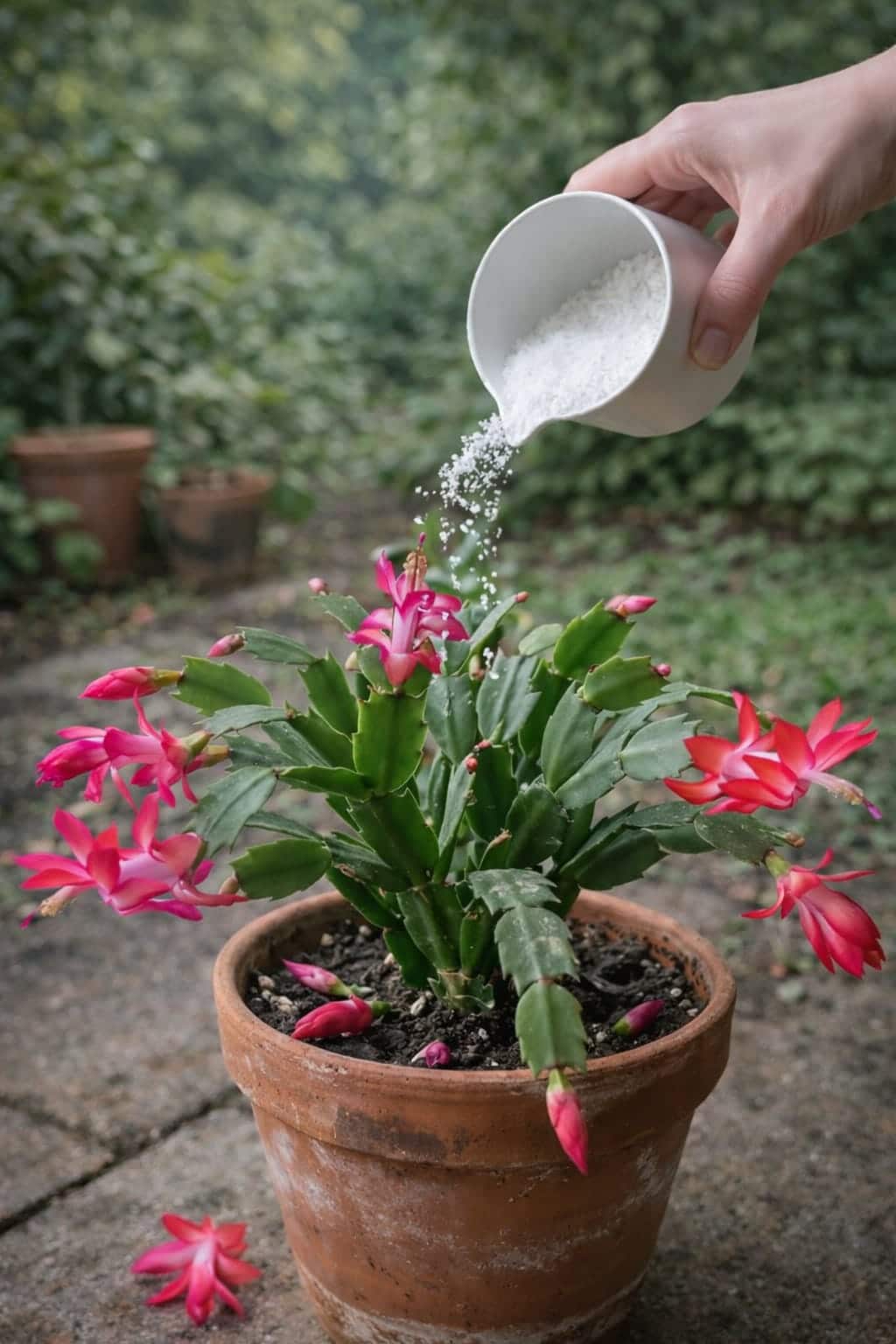
🌱 Bonus: Can “Kitchen Tricks” Help Extend Blooms?
You’ve probably seen viral hacks like tea water, sugar water, or coffee grounds. Some people claim these can boost blooms or make flowers last longer.
Hack Claim Reality
Tea water Adds mild nutrients Might slightly improve plant health, but doesn’t replace proper care.
Sugar water Provides energy Not absorbed by roots; can feed harmful bacteria.
Coffee grounds Acidifies soil Can harm Christmas cactus (they prefer neutral pH).
Epsom salt Boosts magnesium Only if deficient; not a bloom extender.
The truth: These are temporary boosters at best. Without the right environment – cool temperatures, stable conditions, proper watering – no hack will make your blooms last longer. Focus on the fundamentals first.
How Long Can a Christmas Cactus Bloom?
With proper care, a Christmas cactus can bloom for 4–6 weeks – sometimes even longer. Individual flowers last about 5–7 days, but because buds open sequentially, the overall show can stretch for over a month.
Care Level Typical Bloom Duration
Poor conditions (warm, dry, unstable) 1–2 weeks
Average care 3–4 weeks
Optimal care (cool, stable, humid) 5–8 weeks
Pro tip: If you want the longest possible bloom period, keep your plant in a cool room (60–65°F) with bright indirect light, consistent moisture, and moderate humidity. Avoid all stress factors.
Can a Christmas Cactus Bloom Twice a Year?
Yes – it’s possible. After the first bloom cycle ends (winter), let the plant rest for 4–6 weeks. Reduce watering and stop fertilizing. Then, in early spring, resume normal care. In late spring, repeat the dark/cool cycle (12–14 hours of darkness, 50–60°F nights) for 6–8 weeks. You may get a second bloom in mid‑summer.
Note: Not all plants will bloom twice. Mature, healthy plants are more likely to produce a second round. Younger or weaker plants may need a full year to recover.
What to Do After Blooming – Post‑Bloom Care
Once the flowers fade, your Christmas cactus needs a rest period before the next growing season.
- Remove spent blooms – Gently twist off faded flowers to prevent rot.
- Reduce watering – Allow the soil to dry out more between waterings for 4–6 weeks.
- Stop fertilizing – Do not feed during the rest period.
- Prune lightly – After the rest period, you can pinch off 1–2 segments from each branch to encourage branching and more blooms next year.
- Resume normal care – After 4–6 weeks, increase watering and begin light feeding in spring.
Frequently Asked Questions (FAQs)
Q: Why are my Christmas cactus buds falling off before opening?
Bud drop is usually caused by environmental stress: moving the plant, temperature swings, drafts, overwatering, or underwatering during bud development. Keep conditions stable once buds appear.
Q: Can I use a grow light during the blooming period?
Yes – but ensure the light is not too intense. Use a grow light for daytime brightness, but keep the plant out of direct, harsh light. Do not use the grow light at night – the plant needs darkness to maintain its cycle.
Q: Should I fertilize my Christmas cactus while it’s blooming?
No. Fertilizing during bloom can burn roots and cause bud drop. Stop fertilizing when buds appear and resume only after flowers fade.
Q: How do I know if my Christmas cactus is getting too much light?
Signs include reddish or yellow segments, leaf scorch (brown patches), and flowers fading quickly. Move to a spot with bright, indirect light.
Q: Can I put my Christmas cactus outside during the summer?
Yes – place it in a shady spot (no direct sun). Bring inside before temperatures drop below 50°F (10°C). Outdoor light and humidity can boost growth for next year’s blooms.
Q: Is the Christmas cactus toxic to pets?
No – it’s non‑toxic to cats and dogs according to the ASPCA. However, ingestion may cause mild stomach upset.
Q: How do I get my Christmas cactus to bloom again next year?
After the post‑bloom rest period, resume normal care. In the fall, begin the dark/cool treatment (12–14 hours of darkness, 50–60°F nights) for 6–8 weeks. This will trigger a new bloom cycle.
Troubleshooting – Common Bloom Problems
Problem Likely Cause Solution
Flowers wilt within days Too warm (above 75°F) or dry air Move to cooler spot; increase humidity.
Buds drop before opening Stress – moved plant, temperature swing, draft Keep stable; avoid changes.
Flowers turn brown quickly Overwatering or water on blooms Water soil only; keep flowers dry.
No blooms at all Insufficient dark period or too warm Follow 6–8 week dark/cool treatment.
Short bloom period Unstable conditions or low humidity Stabilize temperature; use pebble tray.
Final Verdict – Do Less, Let Your Plant Be Comfortable
The secret to keeping your Christmas cactus blooming longer isn’t a miracle ingredient or a complicated routine. It’s consistency.
· Keep it cool – 60–70°F (15–21°C) during blooming.
· Water carefully – slightly moist, never soggy or bone dry.
· Provide bright, indirect light – no direct sun.
· Maintain moderate humidity – 50–60% is ideal.
· Avoid stress – no moving, no drafts, no sudden changes.
Most people keep changing things – moving the plant, watering on a schedule, opening windows – and they wonder why flowers drop. The real trick is to do less… and let your plant stay comfortable.
When you give your Christmas cactus stable, cool conditions, it rewards you with weeks of vibrant, long‑lasting blooms. Enjoy the show.
Now it’s your turn! Have you tried keeping your Christmas cactus blooms longer? What worked for you? Drop a comment below – I’d love to hear your tips.
And if you found this guide helpful, share it with a friend who struggles with short‑lived flowers. Pin it for later, and subscribe to our newsletter for more practical plant care advice.
Stay cool, stay stable, and enjoy those beautiful blooms. 🌸✨