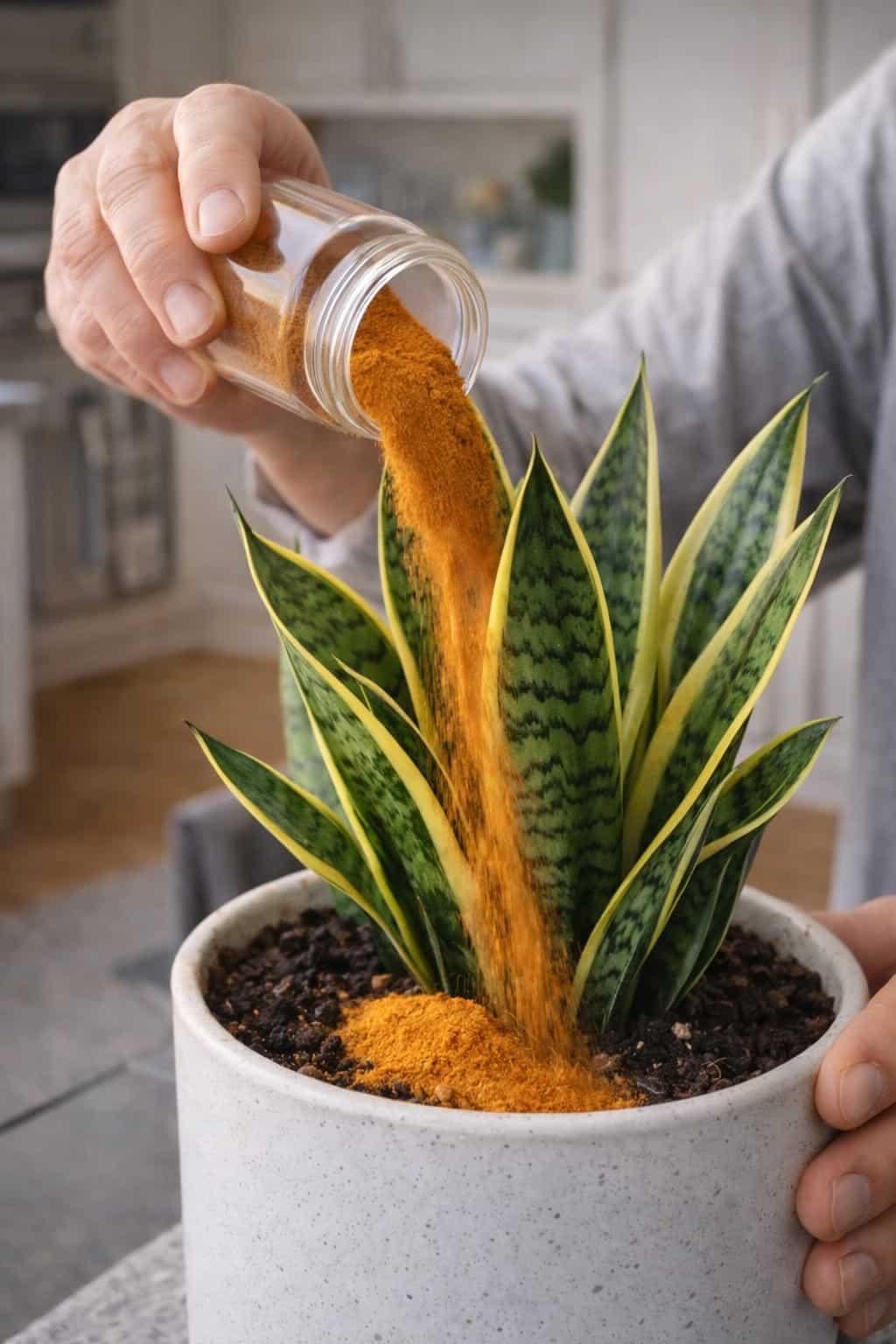
Step‑by‑Step Guide to Training a Spiral Snake Plant
Step 1: Choose the Right Time
Start in spring or early summer, when the plant is actively growing. Growth slows in fall and winter, so training will take much longer.
Step 2: Prepare the Plant
Make sure your snake plant is healthy. Repot if necessary into fresh, well‑draining soil. Water lightly a few days before training – leaves should be hydrated but not overly turgid.
Step 3: Insert the Central Support
Place your cylindrical support in the center of the pot, close to the base of the plant. The support should be tall enough to accommodate the leaves as they grow (6–12 inches is usually sufficient). For very young plants, you can also place the support outside the pot, leaning against the edge.
Pro tip: If using a clear plastic bottle, you can wrap the leaves around the outside instead of inserting it into the soil – this allows you to see the shape more easily.
Step 4: Gently Wrap the Leaves
Starting with the most flexible leaves, slowly and gently guide them around the central support. Do not force them – if you feel resistance or see the leaf starting to crease, stop.
· Wrap leaves in the direction you want the spiral (clockwise or counter‑clockwise).
· Work with one leaf at a time.
· Do not try to wrap all leaves at once; build the shape gradually.
Step 5: Secure Loosely
Use soft plant ties to hold the leaves against the support. The ties should be snug enough to hold the shape but loose enough to allow the leaf to expand as it grows. Check the ties every week and loosen them if they become tight.
Never use: Wire, zip ties, or anything that can cut into the leaf.
Step 6: Provide Optimal Growing Conditions
· Light: Bright, indirect light. A snake plant in low light grows too slowly to train effectively.
· Water: Only when the soil is completely dry. Overwatering weakens leaves and makes them less flexible.
· Temperature: 65–85°F (18–29°C). Avoid cold drafts.
Step 7: Rotate the Pot Regularly
Light only hits one side, the plant may lean awkwardly. Rotate the pot a quarter turn every week to encourage even growth and prevent the plant from leaning toward the window.
Step 8: Be Patient – Training Takes Months
Snake plants are slow growers. A noticeable spiral can take 3–6 months to develop. A tight, permanent shape may take a year or more. Do not rush – forcing the leaves can cause permanent damage.
Step 9: Gradually Remove Supports
Once the spiral looks stable (the leaves hold their shape without springing back), start removing ties one at a time. Watch how the plant responds. If a leaf straightens out, reapply the tie and continue training for a few more weeks.
Pro tip: Remove supports gradually over 2–3 weeks, not all at once.
Alternative: Circular Cluster Method (Multiple Plants)
If you prefer a circular arrangement without training a single plant into a spiral, try this easier method:
- Choose 3–5 small snake plants (pups or small nursery plants).
- Arrange them in a circle in a wide, shallow pot, with their leaves pointing outward.
- Plant them close together so they appear as a single cluster.
- As they grow, the leaves will fan outward in a circular pattern.
This method creates a beautiful, symmetrical look with no training required. It is also much faster and works well for beginners.
Common Mistakes to Avoid
Mistake Why It’s Harmful Correct Approach
Starting with a mature plant Leaves are stiff and snap easily Use young, flexible plants only.
Bending leaves too sharply Causes creases, cracks, or breakage Bend slowly, in small increments.
Using tight ties Cuts into leaves, leaves scars Use soft ties, check weekly.
Training in low light Growth is too slow, leaves become weak Provide bright indirect light.
Forgetting to rotate the pot Plant leans unevenly, shape becomes lopsided Rotate weekly.
Overwatering during training Roots rot, leaves lose turgor Let soil dry completely between waterings.
Removing supports too soon Shape loosens, plant springs back Remove ties gradually over weeks.
How Long Does It Take? A Realistic Timeline
Timeframe Progress
1–2 weeks Leaves begin to show slight curve.
1–3 months Noticeable spiral forming; ties may need adjustment.
3–6 months Shape holds after ties removed for short periods.
6–12 months Permanent spiral; plant can be displayed without support.
Note: If you stop training, the plant will slowly straighten over time. To maintain the shape, occasional re‑training or permanent support may be needed.
Frequently Asked Questions (FAQs)
Q: Can I turn an existing large snake plant into a spiral?
It is very difficult and risky. Large, mature leaves are stiff and likely to snap. You can try training only the new growth (pups) while leaving the older leaves upright, but the result will be uneven. Starting with a young plant is strongly recommended.
Q: Will the spiral damage my snake plant?
If done gently and gradually, no. The plant remains healthy. However, aggressive bending or using tight ties can cause permanent damage. Always prioritize plant health over shape.
Q: Can I use this method on other succulents?
Some succulents with flexible leaves (like certain aloes or haworthias) can be trained, but snake plants are among the most forgiving. Research each plant’s flexibility before trying.
Q: My leaves are cracking – what should I do?
Stop training immediately. Remove all ties and let the plant rest for several weeks. The cracks will not heal, but the leaf may survive. In the future, bend more slowly and only train very young, flexible leaves.
Q: Can I buy a pre‑trained spiral snake plant?
Yes – many nurseries and online shops sell pre‑shaped spiral snake plants. They are often labeled as “twisted snake plant” or “spiral Sansevieria.” Prices can be higher, but they save you months of training.
Q: How do I care for a spiral snake plant after shaping?
Care is the same as any snake plant: bright indirect light, water when soil is dry, well‑draining soil, and occasional fertilizer in spring/summer. The shape may relax over time; you can re‑apply ties for a few weeks to reinforce it.
Q: Can I create a spiral without a central support?
Yes – you can wrap the leaves around a wire frame or even weave them together. However, a central support is the simplest and most reliable method for beginners.
Printable Spiral Training Checklist
Copy and paste this into a document or note:
☐ Choose a young, flexible snake plant (pups or small plants)
☐ Prepare a cylindrical support (bottle, tube, or stake)
☐ Insert support in the center of the pot
☐ Gently wrap the most flexible leaves around the support
☐ Secure leaves with soft plant ties (loose, not tight)
☐ Place in bright, indirect light
☐ Water only when soil is completely dry
☐ Rotate pot weekly
☐ Check ties every week – loosen if needed
☐ Be patient – shape takes 3–6 months
☐ Remove ties gradually once shape holds
Final Thoughts – A Living Sculpture You Create Yourself
A spiral or circular snake plant is not a miracle product. It is the result of gentle training, consistent care, and a lot of patience. Start with a young plant, guide it slowly, use soft support, keep the roots healthy, and rotate it for even growth. The process takes time, but that is also what makes the final result so impressive.
When it works, you do not just get a plant. You get a living sculpture that still keeps all the easy‑care benefits snake plants are known for. And the best part is that every shaped snake plant ends up a little different, which makes the final look feel even more special.
Now it’s your turn! Have you tried shaping a snake plant? Would you attempt a spiral or a circular cluster? Drop a comment below – I’d love to hear your experience.
And if you found this guide helpful, share it with a fellow plant lover who wants a unique statement piece. Pin it for later, and subscribe to our newsletter for more creative plant projects.
Stay patient, stay gentle, and let your snake plant become art. 🌿✨