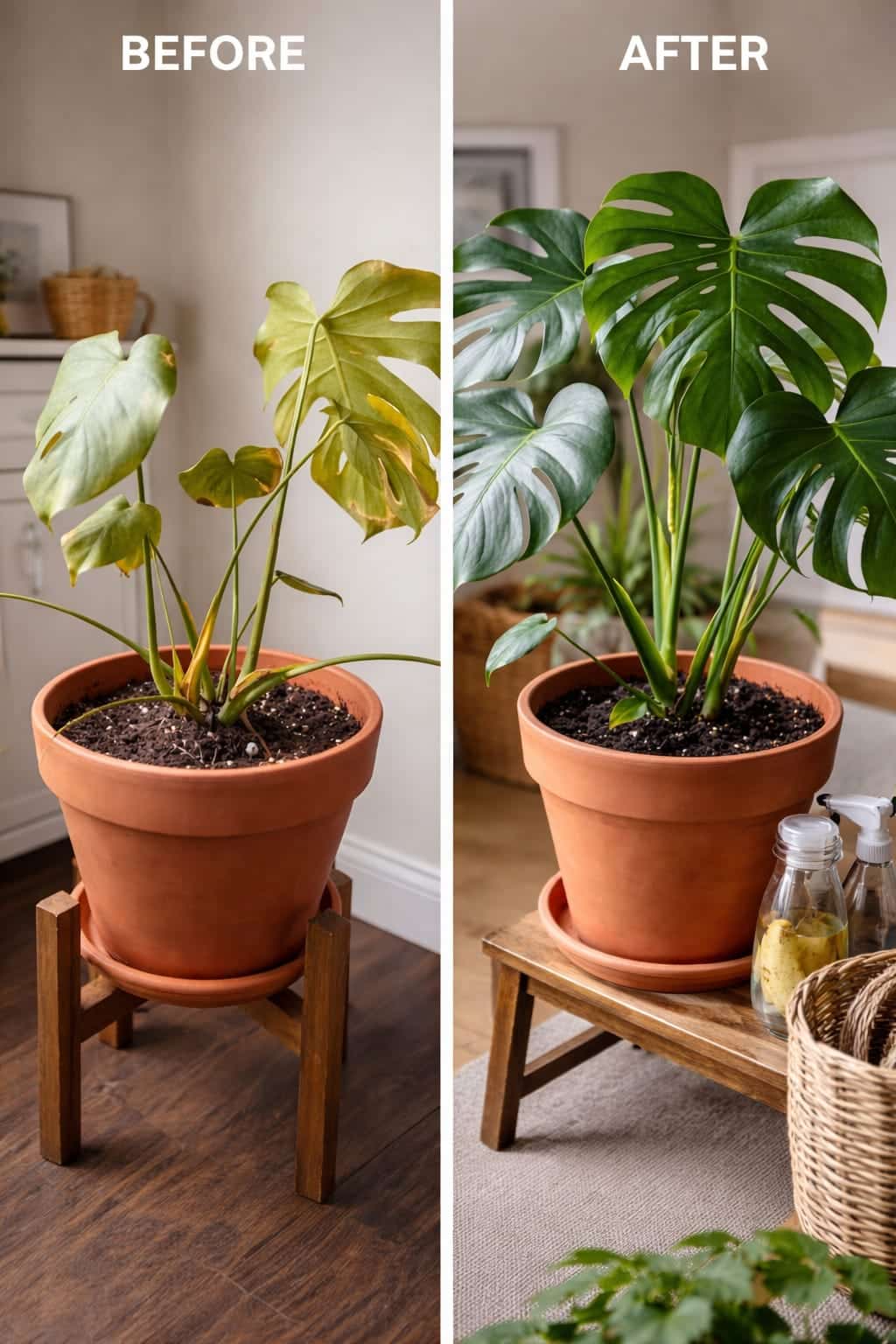
Does your Monstera have large leaves but weak stems? Learn how to build a stronger, healthier plant – from light and roots to support and feeding. No gimmicks, just proven care.
Let’s be honest: Monsteras (Monstera deliciosa) are some of the most loved houseplants for a reason. Their bold tropical leaves, dramatic splits (fenestrations), and fast growth make them feel like a living statement piece in any room. But a lot of plant owners eventually run into the same problem: their Monstera is growing… just not well.
Maybe the leaves are getting bigger, but the stems feel weak. Maybe the plant is stretching, leaning, or pushing out pale leaves that never fully mature. Maybe it looks alive, but not strong.
The truth is simple: a healthy Monstera is not just about bigger leaves. It is about stronger roots, sturdier stems, better leaf color, and balanced growth from top to bottom.
If you want your Monstera to look lush, strong, and truly healthy, these are the care changes that matter most. No shortcuts, no viral hacks – just practical, proven advice.
Bigger Does Not Always Mean Healthier
A lot of people judge Monsteras by leaf size alone. But large leaves can sometimes hide deeper problems. A plant can produce oversized leaves while still having:
· Weak stems – unable to support their own weight.
· Poor root health – leading to yellowing or stunted growth.
· Low energy – from insufficient light or poor nutrition.
· Nutrient imbalance – from over‑fertilizing or bad soil.
· Stretched growth – from chasing light, making the plant look leggy.
That is why the goal should not be “make it bigger at any cost.” The goal should be to build a stronger plant overall. When that happens, bigger leaves come naturally.
- Start with Light – Everything Depends on It
If your Monstera is not getting enough light, it will often grow long, thin stems and smaller, weaker leaves. It may lean hard toward the nearest window, and new growth can look soft or pale.
Monsteras do best in bright, indirect light.
Light Level Effect on Monstera
Low light (north window, dark corner) Leggy growth, small pale leaves, few or no fenestrations (splits).
Bright, indirect light (east or west window, a few feet back) Ideal – compact growth, rich green color, regular splits.
Filtered south light (with sheer curtain) Good – but avoid harsh afternoon rays.
Direct afternoon sun Leaf scorch – brown, crispy patches.
What to do:
· Place your Monstera close to a bright window – an east or west exposure is often perfect.
· If you only have a south window, use a sheer curtain to diffuse the light.
· Rotate the pot every week or two so all sides receive light evenly. This prevents the plant from leaning.
· If your home is dark, use a grow light for 10–12 hours per day.
When light is right, the plant has more energy to build thicker stems, richer green leaves, and stronger roots. If your Monstera looks stretched or floppy, lighting is the first thing to improve.
- Healthy Roots Create Healthy Leaves
A strong Monstera always starts below the soil. If roots are struggling, the rest of the plant will show it. Leaves may yellow, growth slows down, and stems become less sturdy.
One of the biggest mistakes people make is using heavy soil that stays wet too long.
The Right Soil Mix
Monsteras prefer an airy, chunky mix that drains well while still holding some moisture.
Component Purpose
Potting soil (regular houseplant mix) Base for nutrients and moisture.
Orchid bark Creates air pockets, mimics natural tree bark.
Perlite Increases drainage and aeration.
Coco coir or peat moss Retains moisture without becoming waterlogged.
DIY mix: 2 parts potting soil + 1 part orchid bark + 1 part perlite + ½ part coco coir.
Drainage is non‑negotiable: Your pot must have drainage holes. A Monstera sitting in trapped water will not stay healthy for long. If your pot has no holes, repot immediately.
Check Roots Regularly
Healthy Monstera roots are firm, white or light tan. Unhealthy roots are brown, mushy, or black and may smell foul.
· Signs of root rot: Yellowing leaves, wilting despite wet soil, foul odor.
· Fix: Remove the plant, trim rotten roots, repot in fresh, dry mix. Do not water for a few days.
- Water Deeply, Then Let the Plant Breathe
Overwatering is one of the fastest ways to weaken a Monstera. Many people think watering more equals faster growth. In reality, constantly wet soil suffocates roots and causes rot. On the other hand, letting the plant stay dry for too long can also stress it and slow leaf development.
Watering Guideline Details
When to water When the top 1–2 inches of soil feel dry. Stick your finger into the soil – if dry, water; if damp, wait.
How often In bright light, about once every 7–10 days. In lower light, every 10–14 days.
How to water Water thoroughly until it runs out the drainage holes. Empty the saucer immediately.
Signs of overwatering Yellowing leaves, soft stems, foul smell, root rot.
Signs of underwatering Wilting, brown crispy edges, dry soil.
Pro tip: The best approach is simple: water thoroughly, let excess drain, then wait until the top part of the soil dries before watering again. This gives the roots a healthy cycle of moisture and air. Strong roots lead to stronger stems, healthier leaves, and better overall growth.
- Feed for Strength, Not Just Speed
If you want a Monstera to grow strong, it needs nutrients. But this is where many people either do too little or way too much.
Fertilizer Guideline Details
When to fertilize Spring and summer (active growing season).
What to use Balanced, water‑soluble houseplant fertilizer (e.g., 20-20-20 or 10-10-10) diluted to half strength.
How often Once every 4–6 weeks.
Do not fertilize In fall and winter – the plant rests.
Signs of over‑fertilizing Brown leaf tips, white crust on soil, weak, overly soft growth.
Why balanced feeding matters: A balanced fertilizer supports root development, stem strength, healthy green leaves, and steady new growth. Too much fertilizer can burn roots and create weak, overly soft growth. Light, regular feeding works better than heavy feeding.
Pro tip: Use a fertilizer with a slightly higher nitrogen (N) number for lush leaves, but don’t overdo it – too much nitrogen can cause weak, leggy growth.
Continue to Page 2
Continue to page 2 for more details about this article and the key points many readers miss on the first page.