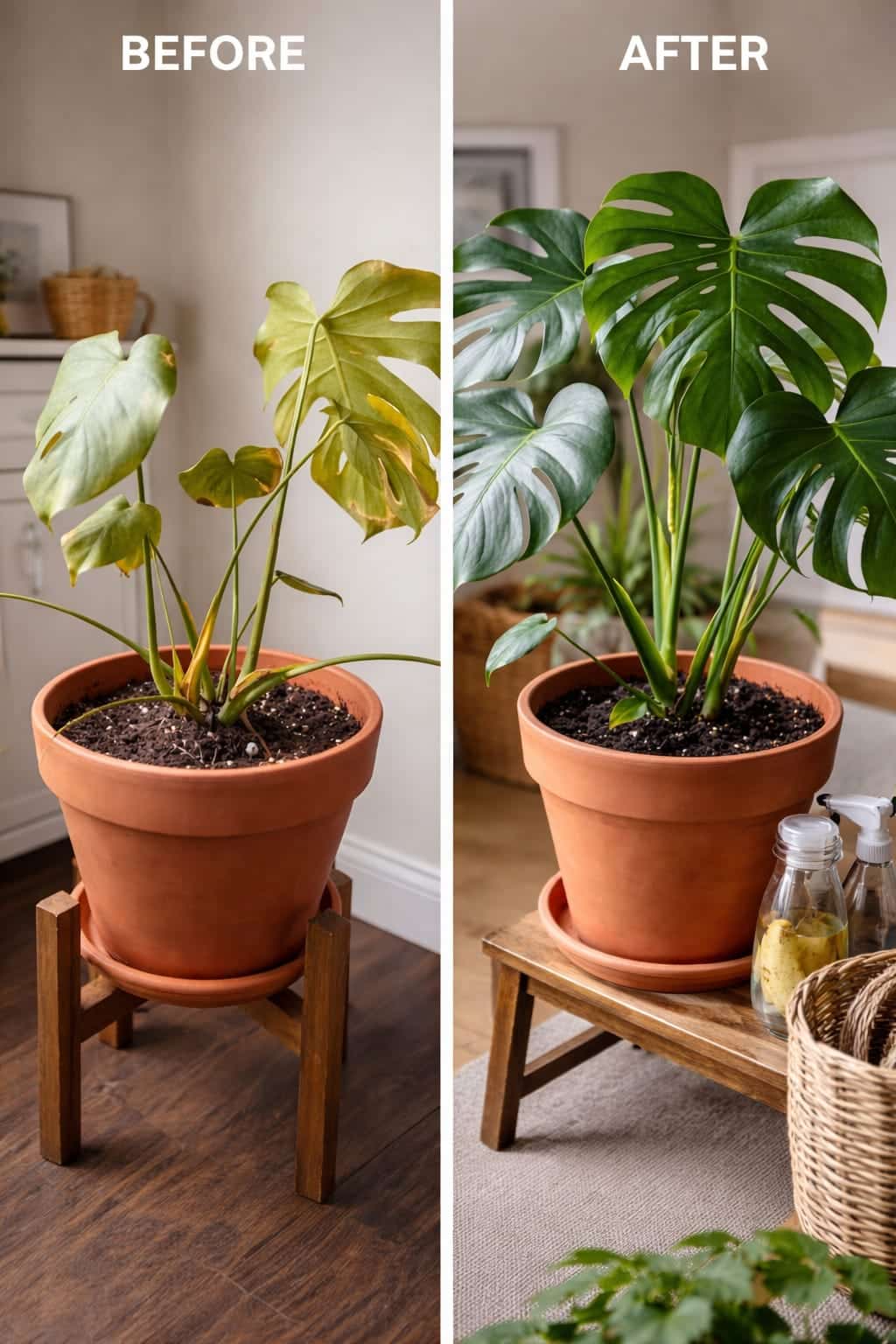
- Give Your Monstera Support – Moss Pole or Stake
Monsteras are natural climbers. In the wild, they grow upward by attaching themselves to trees. Indoors, if they have no support, they often become floppy, uneven, and messy.
This is why a moss pole, plank, or stake can make such a big difference.
Support Type Benefits
Moss pole Encourages aerial roots to attach; promotes larger leaves and fenestrations.
Wooden plank Sturdy; natural look.
Bamboo or metal stake Simple; good for smaller plants.
How to use a support:
· Insert the support into the pot (be careful not to damage roots).
· Gently tie the main stem to the support using soft plant ties or velcro.
· Do not tie the leaf stalks (petioles) – they need to move toward light.
· Mist the moss pole if using one – aerial roots will grow into it.
Why it works: Support helps the plant grow more upright, produce stronger stems, size up leaves more naturally, and look fuller and more structured. If you want your Monstera to grow stronger and not just wider, giving it something to climb is one of the smartest things you can do.
- Humidity Helps More Than Most People Realize
Monsteras can tolerate average household humidity (40–50%), but they do better with a little more moisture in the air. When humidity is too low, you may notice:
· Crispy leaf edges
· Slower unfurling of new leaves
· Dull‑looking foliage
· Damaged new growth
Humidity Level Effect
Below 40% Brown tips, slow growth, leaf damage.
40–50% Acceptable, but not ideal for lush growth.
50–70% Ideal – vibrant leaves, healthy new growth.
How to increase humidity:
· Use a humidifier (best).
· Place the pot on a pebble tray with water (pot sits on pebbles, not in water).
· Group plants together to create a humid microclimate.
· Mist lightly in the morning (temporary effect; avoid wetting leaves excessively).
Pro tip: You do not need to turn your home into a greenhouse, but keeping the plant away from heating vents and dry drafts makes a noticeable difference.
- Clean Leaves, Stronger Plant
Dusty leaves cannot absorb light as efficiently. Over time, that affects the plant’s energy.
Cleaning Method How Often Benefit
Wipe with a soft, damp cloth Every 2–4 weeks Removes dust; allows better light absorption.
Gentle shower Every 1–2 months Rinses off dust and pests; let leaves dry.
Pro tip: Wiping the leaves gently also helps you inspect for pests or damaged spots before they become bigger problems. Clean leaves photosynthesize more effectively, which supports stronger growth.
What to avoid: Leaf shine products – they can clog leaf pores (stomata) and attract dust. Plain water is best.
- Prune with Purpose
If your Monstera has weak, damaged, or very leggy growth, a little pruning can help redirect energy.
What to Prune Why How
Yellow or brown leaves No longer photosynthesizing Cut at the base.
Leggy, stretched stems Plant is reaching for light Cut back to a node; new growth will be bushier.
Damaged or broken leaves Can attract pests Remove completely.
Old, small lower leaves Plant may outgrow them Remove to improve airflow.
Pro tip: Pruning is not about making the plant smaller. It is about helping it grow better. After pruning, ensure the plant has adequate light so new growth comes in strong.
Troubleshooting – Common Monstera Problems
Problem Likely Cause Solution
Leaves have no splits (fenestrations) Not enough light, or plant is young Move to brighter light; be patient (mature leaves split).
Yellow leaves Overwatering, or nutrient deficiency Let soil dry; check roots; fertilize lightly.
Brown, crispy edges Low humidity, or underwatering Increase humidity; water consistently.
Leggy, stretched growth Not enough light Move closer to a window or add grow light.
Drooping leaves Underwatering, or overwatering with root rot Check soil moisture; adjust watering.
Leaves curling Underwatering, or low humidity Water thoroughly; increase humidity.
Small new leaves Low light, or lack of nutrients Increase light; fertilize lightly in growing season.
Black spots on leaves Too much direct sun, or cold damage Move out of harsh sun; protect from drafts.
Quick Care Summary – Monstera at a Glance
Care Factor Recommendation
Light Bright, indirect (east/west window or grow light)
Water When top 1–2 inches of soil are dry; water thoroughly
Soil Airy, chunky mix (potting soil + orchid bark + perlite)
Pot Must have drainage holes
Humidity 50–70% (use pebble tray or humidifier)
Temperature 65–85°F (18–29°C); avoid cold drafts
Fertilizer Balanced, half strength, every 4–6 weeks (spring/summer)
Support Moss pole or stake for climbing
Cleaning Wipe leaves every 2–4 weeks
Pruning Remove yellow or damaged leaves as needed
Frequently Asked Questions (FAQs)
Q: Why are my Monstera’s leaves not splitting (no fenestrations)?
Most common cause: insufficient light. Move your Monstera closer to a bright window. Young plants also take time – fenestrations usually appear when the plant is mature (2–3 years old) and getting enough light.
Q: Should I cut off aerial roots?
No – aerial roots are natural. They help the plant climb and absorb moisture from the air. You can guide them into the soil or a moss pole. If they become unruly, you can trim them, but it’s not necessary.
Q: Can I propagate Monstera from a cutting without a node?
No – you need a node (the small bump where a leaf and root grow). Without a node, the cutting will not root.
Q: How do I make my Monstera grow faster?
Provide bright indirect light, consistent watering, a well‑draining soil mix, and light feeding during the growing season. A moss pole also encourages larger, faster growth.
Q: Why are my Monstera’s leaves turning yellow after repotting?
Some yellowing is normal due to transplant shock. However, if it’s excessive, you may have overwatered or used soil that is too heavy. Ensure the pot has drainage and let the soil dry slightly.
Q: Can Monstera live in low light?
It will survive, but it will not thrive. Growth will be very slow, leaves will be small, and fenestrations will be absent. For a healthy, strong plant, bright indirect light is essential.
Q: Is Monstera deliciosa toxic to pets?
Yes – Monstera deliciosa is toxic to cats and dogs. It contains calcium oxalate crystals, which cause mouth irritation, drooling, and vomiting. Keep it out of reach.
Printable Monstera Care Checklist
Copy and paste this into a document or note:
☐ Place in bright, indirect light (east/west window or grow light)
☐ Rotate pot weekly
☐ Water when top 1–2 inches of soil are dry
☐ Use a pot with drainage holes
☐ Use airy, chunky soil mix (potting soil + orchid bark + perlite)
☐ Fertilize with balanced, half‑strength fertilizer every 4–6 weeks in spring/summer
☐ Provide a moss pole or stake for support
☐ Maintain humidity 50–70% (pebble tray or humidifier)
☐ Keep temperature 65–85°F, away from drafts
☐ Wipe leaves with a damp cloth every 2–4 weeks
☐ Prune yellow or damaged leaves as needed
☐ Check for pests monthly
Final Thoughts – Strength Before Size
If you want a Monstera that looks truly impressive, stop focusing only on bigger leaves. A strong Monstera comes from:
· Better light – bright, indirect, consistent.
· Healthier roots – airy soil, proper drainage, no waterlogging.
· Proper watering – deep, then let dry.
· Balanced feeding – light, regular fertilizer during growing season.
· Support for climbing – moss pole or stake.
· Good humidity – 50–70% for lush leaves.
· Clean leaves – dust‑free for maximum light absorption.
· Purposeful pruning – remove weak growth to redirect energy.
When those pieces come together, the plant does more than grow. It thrives. And that is when you start seeing the difference: not just larger leaves, but richer color, thicker stems, stronger structure, and a healthier plant from the soil up.
Now it’s your turn! Have you struggled with a weak or leggy Monstera? What changes helped you build a stronger plant? Drop a comment below – I’d love to hear your experience.
And if you found this guide helpful, share it with a fellow Monstera owner. Pin it for later, and subscribe to our newsletter for more honest, practical plant care.
Stay bright, stay strong, and watch your Monstera thrive. 🌿✨