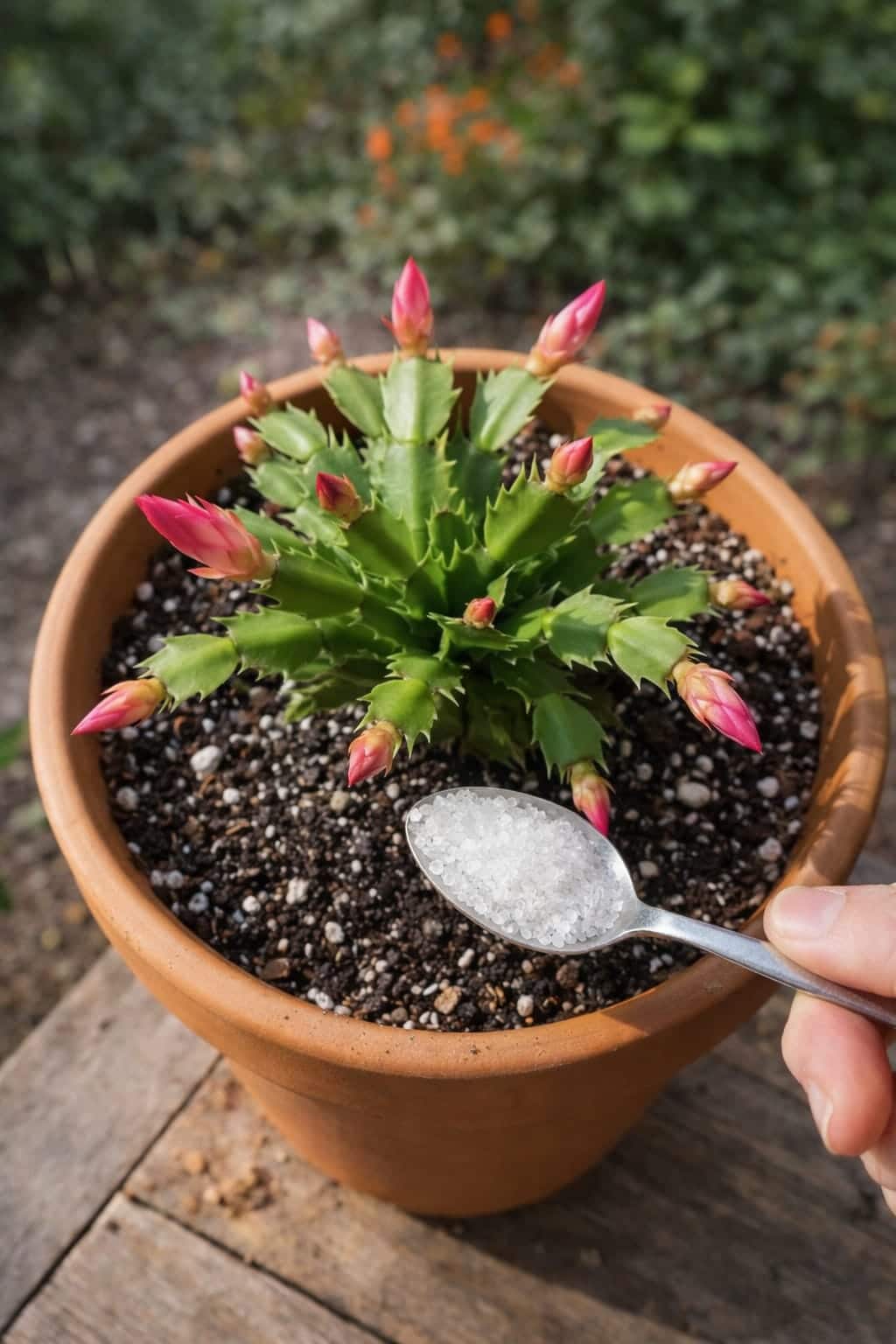
- Water More Carefully, Not More Often
A lot of people assume a struggling spider plant needs more water. Often, the opposite is true. Spider plants prefer lightly moist soil, but they store water in their fleshy roots, so they can handle short dry spells better than constant moisture.
Watering Guideline Details
When to water Let the top inch of soil dry before watering again. Stick your finger into the soil – if dry, water; if damp, wait.
How often In bright light, about once every 7–10 days. In lower light, every 10–14 days.
How to water Water thoroughly until it runs out the drainage holes. Empty the saucer immediately.
Signs of overwatering Yellowing leaves, mushy roots, foul smell.
Signs of underwatering Brown leaf tips, wilting, dry soil.
Pro tip: When the soil stays wet for too long, the roots become stressed and growth slows down. When the plant is watered correctly, leaves come in stronger, cleaner, and more upright. That healthy, steady growth is what builds volume over time.
- Feed It Lightly During Active Growth
Spider plants do not need heavy feeding, but they do respond well to occasional fertilizer. A balanced fertilizer during the growing season can support stronger leaf production and healthier color, but too much fertilizer can create weak, overly soft growth.
Fertilizer Guideline Details
When to fertilize Spring and summer (active growing season).
What to use Balanced, water‑soluble houseplant fertilizer (e.g., 10-10-10) diluted to half strength.
How often Once every 4–6 weeks.
Do not fertilize In fall and winter – the plant rests.
Signs of over‑fertilizing Brown leaf tips, salt crust on soil, leaf drop.
Pro tip: This is one of those plants where gentle consistency works better than strong treatments. A little support during spring and summer is usually enough.
- Prune Regularly – It Makes a Bigger Difference Than Most People Think
Many people skip pruning because they are afraid of cutting too much. But regular trimming is one of the fastest ways to improve how a spider plant looks. Removing damaged, yellowing, or tired leaves helps the plant redirect energy into fresh growth. It also immediately makes the plant look cleaner and more compact.
What to Prune Why How
Yellow or brown leaves They are no longer photosynthesizing; they drain energy. Cut at the base with clean scissors.
Long, leggy leaves They make the plant look sparse. Trim back to encourage new, compact growth.
Damaged or broken leaves They can attract pests or disease. Remove completely.
Old flower stalks After blooms fade, they add no value. Cut at the base.
Pro tip: If your plant has lots of brown tips or older leaves dragging the shape down, a small cleanup can make it look better the same day. Over time, new growth fills in from the center and the plant takes on a denser appearance.
- Repot When the Plant Clearly Asks for It
Spider plants grow quickly, and when they stay cramped too long, growth can stall. Repotting every one to two years, or when roots start crowding the pot too heavily, is recommended.
Repotting Guideline Details
How often Every 1–2 years, or when roots are visibly crowded or growing out of drainage holes.
Best time Spring or early summer.
Pot size Move up only 1–2 inches in diameter. A pot that is too large can hold excess moisture.
Soil Fresh, well‑draining potting mix (houseplant mix + perlite).
Pro tip: A healthy root system creates a healthier crown, and that usually means more leaves and a fuller shape. Moving up only slightly is important – too large a pot can lead to soggy conditions.
- Let the Babies (Spiderettes) Work in Your Favor
One of the best parts of growing spider plants is the babies. Those dangling offshoots, often called spiderettes, help create the overflowing look so many people want. If you leave them attached for a while, they make the plant feel bigger and fuller even before you propagate them.
How to use spiderettes for fullness:
· Leave them attached – they will cascade over the sides, adding volume instantly.
· Root them in the same pot – once they have small root nubs, you can place them in the soil next to the mother plant. They will grow into mature plants, creating an even fuller cluster.
· Propagate for new plants – cut them off and root in water or soil to start new plants for gifts or other pots.
Pro tip: That is one of the easiest ways to turn one decent spider plant into a truly full one. Plant 2–3 rooted spiderettes around the edge of the same pot, and within months, they will fill in the gaps.
Troubleshooting – Common Spider Plant Problems
Problem Likely Cause Solution
Brown leaf tips Low humidity, fluoride in tap water, or over‑fertilizing Increase humidity; use filtered water; reduce fertilizer.
Yellow leaves Overwatering Let soil dry out; check for root rot.
No spiderettes (babies) Not enough light, or plant is too young Move to brighter light; be patient – plants need maturity (1–2 years).
Leaves bending or breaking Physical damage or weak growth Provide support; prune damaged leaves; improve light.
Pale, washed‑out color Too much direct sun Move to bright indirect light.
Slow growth Root‑bound or lack of nutrients Repot if crowded; fertilize lightly in spring/summer.
Frequently Asked Questions (FAQs)
Q: How often should I water my spider plant in winter?
In winter, spider plants go semi‑dormant. Water only when the top 2 inches of soil are dry – often every 2–3 weeks. Overwatering in winter is a common cause of root rot.
Q: Can I put my spider plant outside in summer?
Yes – they love being outdoors in warm weather. Place in a shady spot (no direct sun). Bring inside before temperatures drop below 50°F (10°C). Outdoor light and humidity can boost growth.
Q: Why are my spider plant’s leaves turning yellow and mushy?
Overwatering. Stop watering immediately, let the soil dry out completely, and check for root rot. If roots are black and mushy, repot in fresh soil and trim away rotten roots.
Q: How do I make my spider plant produce more babies (spiderettes)?
Provide bright, indirect light and let the plant become slightly root‑bound. A little stress (not too much) triggers reproduction. Also, ensure the plant is mature (at least 1–2 years old).
Q: Is it safe to put coffee grounds on my spider plant?
Small amounts of used coffee grounds can add nitrogen, but don’t overdo it. Coffee grounds can compact soil and alter pH. A balanced fertilizer is safer and more reliable.
Q: Can I cut off all the leaves of my spider plant and start over?
Yes – if the plant is severely damaged, you can cut all leaves back to 1–2 inches above the soil. With proper care, new leaves will emerge from the center within a few weeks. This is a drastic but sometimes effective revival method.
Printable Spider Plant Care Checklist
Copy and paste this into a document or note:
☐ Place in bright, indirect light (east or west window)
☐ Rotate pot every 1–2 weeks
☐ Water when top inch of soil is dry
☐ Use well‑draining potting mix with perlite
☐ Fertilize lightly every 4–6 weeks in spring/summer
☐ Prune yellow or brown leaves as needed
☐ Repot every 1–2 years, only 1–2 inches larger
☐ Leave spiderettes attached for a fuller look
☐ Increase humidity if leaf tips turn brown
☐ Be patient – growth takes time
Final Thoughts – A Bushy Spider Plant Is Within Reach
A bushy spider plant is not about a single miracle trick. It comes from stacking the basics in your favor: brighter indirect light, looser soil, smarter watering, light feeding, regular pruning, and repotting when needed. Those small changes work together, and once they do, the plant usually starts filling out much faster.
If your spider plant looks thin right now, do not assume that is just its personality. In many cases, it is simply waiting for better conditions. Give it a little more light, a little less water, and a little time, and you may be surprised how quickly it transforms into the lush, full plant you wanted in the first place.
Now it’s your turn! Have you struggled with a thin spider plant? What worked for you – pruning, repotting, or more light? Drop a comment below – I’d love to hear your experience.
And if you found this guide helpful, share it with a friend who wants a bushier spider plant. Pin it for later, and subscribe to our newsletter for more practical plant care advice.
Stay bright, stay consistent, and watch your spider plant thrive. 🌿✨