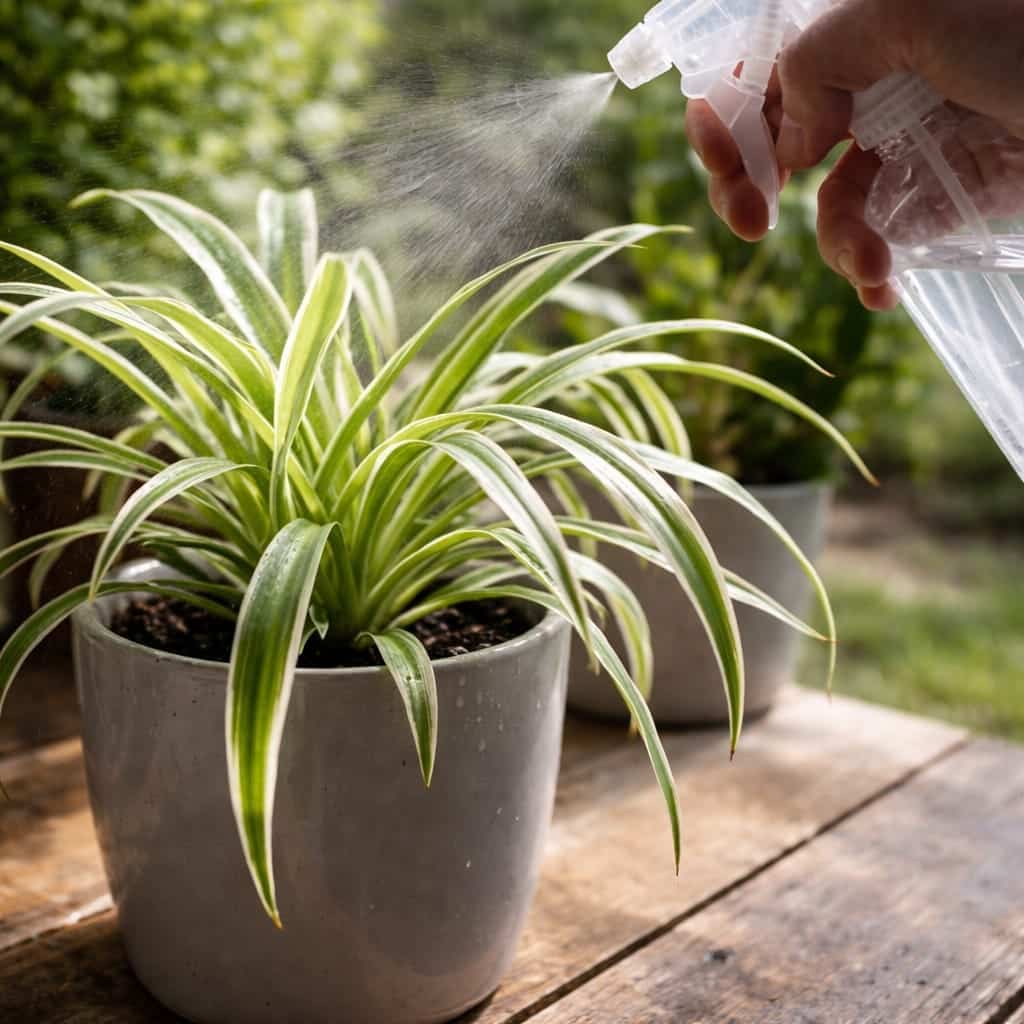
Is your spider plant looking thin, leggy, or sparse? Learn the proven secrets to make it bushy and full – bright light, proper watering, pruning, repotting, and more. Transform your plant in weeks.
Let’s be honest: spider plants (Chlorophytum comosum) are one of the easiest houseplants to grow. They’re forgiving, fast‑growing, and instantly brighten a room with their arching green‑and‑cream leaves. But there’s one common problem almost every spider plant owner faces at some point: the plant survives… but it does not look full.
Instead of becoming lush and overflowing, it starts looking thin, stretched, or uneven. The leaves are long and sparse, and there are no cascading baby plants (spiderettes) to give it that iconic “spider” look. You water it, you give it light, but something is off.
The good news is that a bushy spider plant is not about luck. It usually comes down to a few simple care adjustments. With the right light, watering, soil, feeding, and pruning habits, you can turn a sparse spider plant into a thick, healthy showpiece.
In this complete guide, I’ll walk you through every factor that affects spider plant fullness – from light and watering to pruning and repotting. You’ll learn the science behind why spider plants get thin, and exactly how to fix it. Plus, you’ll get troubleshooting tips, FAQs, and a printable care checklist.
Let’s make your spider plant the envy of every houseplant lover.
Why Spider Plants Lose Their Full Shape
Before we fix the problem, let’s understand the causes. A spider plant becomes thin when its basic needs are only partly met. It may still look alive, but not vigorous. Here are the most common culprits:
Problem Effect on Spider Plant
Low light Weak, slow growth; leaves become pale and stretched (etiolated).
Poor soil Holds too much water or not enough air around roots; roots suffocate.
Inconsistent watering Stresses the plant; leaves become thin and may brown at tips.
No pruning Tired, damaged foliage stays in place, blocking energy for new growth.
Root‑bound for too long Growth stalls; the plant can’t take up enough water or nutrients.
Lack of feeding Nutrient deficiency – leaves stay small and pale.
The goal is not just to “keep it alive.” The goal is to create the conditions that encourage steady, dense leaf production. Let’s tackle each factor one by one.
- Give It Bright, Indirect Light – The #1 Factor
If you want a fuller spider plant, light is the first thing to fix. Spider plants grow best in bright, indirect light. They can tolerate lower light, but they won’t thrive or become bushy there.
Light Level Effect
Low light (north window, dark corner) Survives, but grows very slowly; leaves become thin, pale, and leggy.
Medium light (few feet from east/west window) Acceptable growth, but may not produce many spiderettes.
Bright, indirect light (right by east/west window, or filtered south window) Ideal – compact, lush growth; abundant spiderettes; vibrant color.
Direct afternoon sun Leaf scorch – brown, crispy patches.
Pro tips for light:
· An east‑facing window is ideal – gentle morning sun, bright indirect light the rest of the day.
· If you only have a south window, use a sheer curtain to filter harsh rays.
· Rotate the pot every week or two. Spider plants naturally lean toward the light source, so turning the pot helps the plant grow evenly on all sides instead of becoming lopsided.
· If natural light is limited, use a full‑spectrum LED grow light for 10–12 hours per day.
- Use the Right Soil and Pot – Healthy Roots = Bushy Plant
A bushy plant starts with a healthy root system. Spider plants have thick, fleshy roots that store water – they need soil that drains well but retains some moisture.
Soil Requirement Why
Well‑draining potting mix Prevents root rot. Use a standard houseplant mix with added perlite (2 parts potting soil + 1 part perlite).
Near‑neutral pH (6.0–7.0) Most nutrients are available in this range.
Drainage holes Essential – without them, water pools at the bottom and roots rot.
Pot size matters:
· Spider plants like to be slightly root‑bound to produce spiderettes, but if the pot is too small for too long, growth stalls.
· When repotting, go up only 1–2 inches in diameter. A pot that’s too large holds excess moisture and encourages root rot.
Pro tip: Terracotta pots are excellent for spider plants – they wick away excess moisture and allow roots to breathe.
Continue to Page 2
Continue to page 2 for more details about this article and the key points many readers miss on the first page.