How Long Does Rosemary Take to Root in Water? – Realistic Timeline
Rosemary usually takes longer to root than many soft herbs. Some cuttings root in 2 weeks, while others may take 4 to 8 weeks. This rosemary rooting timeline sets realistic expectations.
Typical timeline:
| Time | What You May See |
|---|---|
| Week 1 | Cutting stays fresh and adjusts to water |
| Weeks 2–3 | Small root bumps may appear |
| Weeks 3–6 | White roots begin to grow |
| Weeks 6–8 | Roots may become long enough for soil |
Patience is important. As long as the stem stays green and firm, it may still root.
When Are Rosemary Cuttings Ready to Plant? – Signs of Readiness
Move rosemary cuttings into soil when the roots are about 1 to 2 inches long. Do not wait until the water roots become extremely long and tangled. This when to transplant rosemary cuttings guide helps you decide.
Water roots are delicate. If they grow too long in water, they can break during planting or struggle to adapt to soil.
Ready-to-plant signs:
- Several white roots are visible
- Roots are at least 1 inch long
- The cutting still looks green and firm
- No black or mushy stem base
- New top growth may appear
Once roots are ready, transplant carefully.
Step 6: Prepare the Pot – Choosing the Right Container
Use a small pot with drainage holes. A pot that is too large holds too much wet soil, which can cause rosemary roots to rot. This best pot size for rosemary cuttings advice is essential.
A 3 to 4-inch starter pot is usually enough for one cutting. You can move the plant to a larger pot later once it grows stronger.
Rosemary hates sitting in soggy soil, so drainage is non-negotiable.
Best Soil for Rosemary Cuttings – Well-Draining Mix Recipe
Rosemary is a Mediterranean herb that prefers airy, well-draining soil. Heavy potting soil stays too wet and can damage young roots. Using the best potting mix for rosemary propagation is critical for success.
Simple Rosemary Potting Mix
- 2 parts potting mix
- 1 part perlite
- 1 part coarse sand or pumice
This mix holds enough moisture for new roots but drains quickly.
You can also use cactus mix with added compost, but avoid dense moisture-retaining soil.
Step 7: Plant the Rooted Cutting – Gentle Transplanting
Make a small hole in the potting mix with your finger or a pencil. Place the rooted cutting gently into the hole. Cover the roots with soil and firm it lightly around the stem. This how to plant rooted rosemary cuttings step prevents damage.
Do not push the cutting hard into soil because the delicate roots can break.
Plant only the bare lower stem. The leaves should remain above the soil surface.
Step 8: Water Carefully After Planting – First Moisture
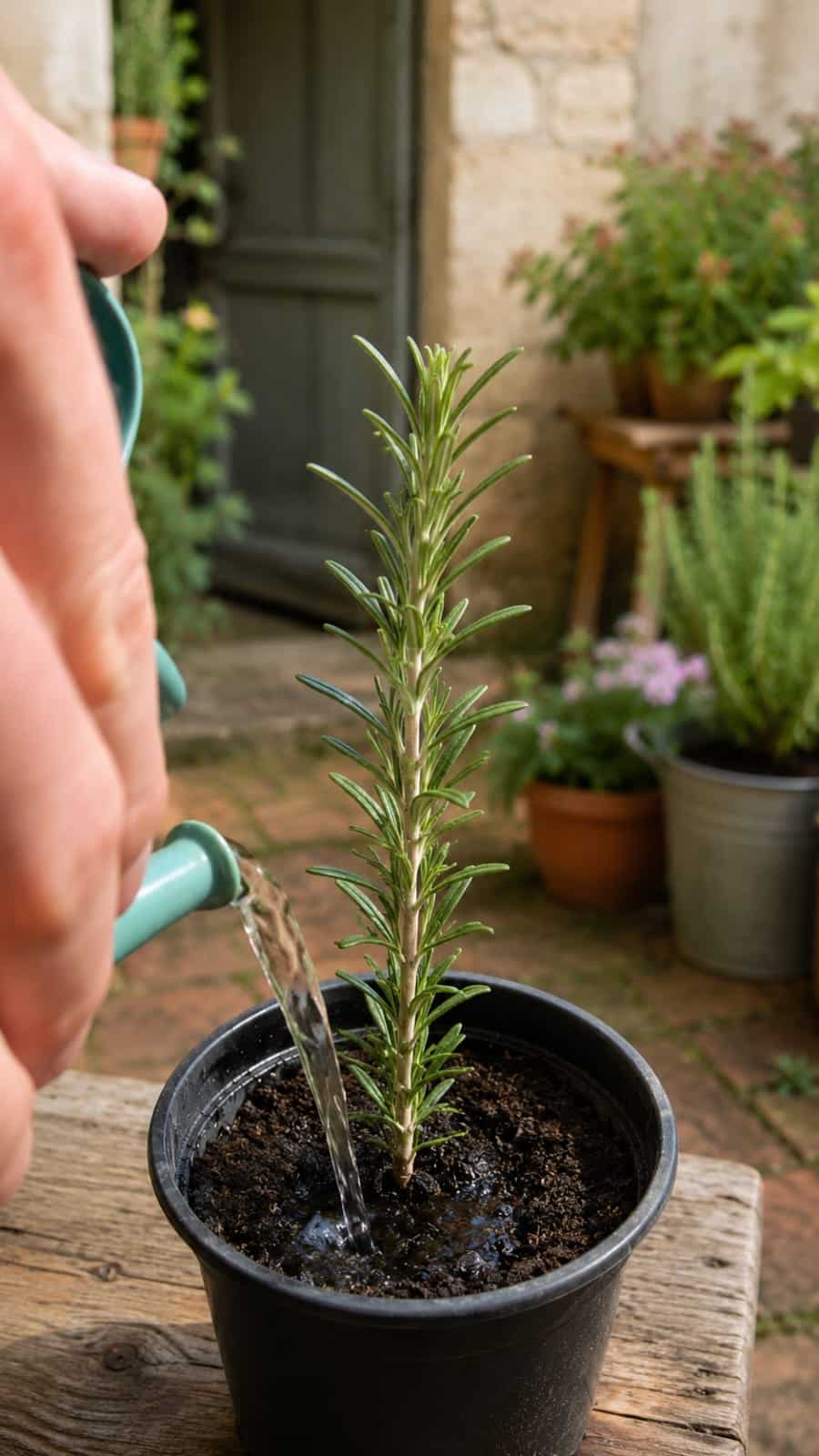
After planting, water the pot gently until the soil is evenly moist. Let excess water drain out completely. This how to water newly planted rosemary cuttings tip prevents overwatering.
The image shows the newly planted rosemary cutting being watered. This first watering helps settle the soil around the roots.
After that, do not keep the soil constantly wet. Rosemary prefers the top layer to dry slightly between waterings.
How to Water Young Rosemary Plants – Moisture Management
Young rosemary cuttings need more consistent moisture than mature rosemary, but they still dislike soggy roots. This rosemary watering guide for beginners will help you find the right balance.
Water when the top inch of soil feels dry. In hot weather, this may be more frequent. Indoors or in cool weather, it may be less frequent.
Watering rules:
- Water deeply but not constantly
- Let excess water drain away
- Do not leave the pot sitting in water
- Allow the top inch of soil to dry slightly
- Reduce watering in cool weather
Overwatering is one of the biggest reasons rosemary cuttings fail after transplanting.
How to Help Rosemary Adjust from Water to Soil – Preventing Transplant Shock
Water-rooted cuttings can experience transplant shock because water roots are different from soil roots. To help the cutting adjust, keep conditions stable for the first 1 to 2 weeks after planting. This how to transition rosemary from water to soil guide is essential.
After transplanting:
- Keep in bright indirect light for a few days
- Avoid intense hot sun immediately
- Keep soil lightly moist, not soaked
- Protect from strong wind
- Do not fertilize right away
- Do not keep moving the pot
Once the cutting begins producing new growth, gradually increase light.
Best Light for Rosemary After Planting – Sun Exposure Tips
Rosemary loves sun. Once established, it grows best with at least 6 hours of bright light per day. Providing optimal light for rosemary plants is key to healthy growth.
However, a newly rooted cutting should be introduced to stronger sunlight gradually.
Best light schedule:
- First week after planting: bright indirect light
- Second week: morning sun
- After establishment: full sun or very bright light
If growing indoors, place rosemary near the brightest window possible. A south-facing window is often best.
Can You Propagate Rosemary Directly in Soil? – Alternative Method
Yes. Many gardeners prefer rooting rosemary directly in soil because the roots develop in the medium where they will continue growing. Soil-rooted cuttings may transplant more easily than water-rooted cuttings. This soil propagation for rosemary method is also effective.
Soil Propagation Method
- Take a 4 to 6-inch rosemary cutting.
- Remove lower leaves.
- Dip the cut end in rooting hormone, optional.
- Place into moist well-draining propagation mix.
- Keep in bright indirect light.
- Cover loosely with a clear bag if air is very dry.
- Keep soil slightly moist.
- Check for roots after 4 to 6 weeks.
Both water and soil methods can work. Water is easier to watch; soil often produces sturdier roots.
Water Propagation vs Soil Propagation – Comparison Table
| Method | Best For | Main Benefit | Main Risk |
|---|---|---|---|
| Water propagation | Beginners and visual rooting | Easy to see roots | Water roots may shock in soil |
| Soil propagation | Stronger long-term roots | Less transplant adjustment | Harder to see progress |
| Perlite propagation | Controlled rooting | Good oxygen and moisture balance | Needs careful moisture control |
How to Prevent Rosemary Cutting Failure – Success Tips
Rosemary cuttings fail most often because of rot, drying out, poor light, or transplant shock. The good news is that these problems are easy to reduce. This rosemary propagation troubleshooting guide will help you succeed.
Success tips:
- Use fresh healthy cuttings
- Remove leaves below water or soil level
- Change water often
- Use bright indirect light
- Plant when roots are 1 to 2 inches long
- Use well-draining soil
- Choose a pot with drainage holes
- Avoid overwatering after planting
- Do not fertilize too soon
- Start several cuttings at once
Starting multiple cuttings is smart because even experienced gardeners do not get 100% success every time.
Should You Use Rooting Hormone? – Optional Booster
Rooting hormone can help rosemary root faster, especially when rooting in soil. However, it is not required for water propagation. This best rooting hormone for rosemary cuttings tip is optional.
If you want to use rooting hormone, use it on cuttings that will go directly into soil or perlite. Rooting hormone often washes off quickly in water.
For a natural approach, many gardeners skip rooting hormone and simply rely on fresh cuttings, clean water, and patience.
How to Care for a New Rosemary Plant – Long-Term Maintenance
Once your rosemary cutting is established, treat it like a young herb plant. It needs sun, airflow, and careful watering. This how to care for propagated rosemary guide will keep it thriving.
Rosemary care basics:
- Give 6 or more hours of bright light
- Use fast-draining soil
- Water when the top inch dries
- Avoid wet saucers
- Provide good airflow
- Do not overfeed
- Pinch tips to encourage branching
- Protect from hard frost if grown in pots
Rosemary prefers slightly dry conditions once established. It is much easier to kill rosemary with too much water than with slight dryness.
When to Repot Rosemary – Pot Size Guide
After the cutting grows stronger, it may need a larger pot. Repot when roots fill the starter pot or when the plant dries out too quickly. This when to repot rosemary cuttings guide helps you know when.
Move up only one pot size at a time. A huge pot can hold too much moisture around the roots.
For a mature rosemary plant, terracotta pots are excellent because they allow moisture to evaporate faster.
Can Rosemary Grow Indoors? – Indoor Herb Gardening Tips
Yes, rosemary can grow indoors, but it needs strong light. Many indoor rosemary plants fail because they do not get enough sun or they are overwatered. This how to grow rosemary indoors from cuttings guide will help you succeed.
Indoor rosemary tips:
- Place near a sunny south-facing window
- Use a grow light if needed
- Keep away from cold drafts
- Do not overwater
- Use a clay pot if possible
- Rotate the plant weekly
- Improve airflow around the leaves
If rosemary becomes weak, pale, or leggy indoors, it likely needs more light.
Can Rosemary Grow Outside? – Outdoor Herb Garden Setup
Yes. Rosemary grows beautifully outdoors in warm, sunny locations. It is drought-tolerant once established and works well in herb gardens, patio containers, raised beds, Mediterranean gardens, and edible landscaping. This best outdoor conditions for rosemary guide will help.
Outdoor rosemary prefers:
- Full sun
- Well-draining soil
- Good airflow
- Moderate watering
- Protection from extreme cold
In cold climates, grow rosemary in a pot so it can be moved indoors during winter.
When Can You Harvest Rosemary from a New Plant? – Harvesting Guide
Do not harvest too soon. Let the cutting establish first and produce new growth. Once the plant is growing actively and has several strong stems, you can begin light harvesting. This when to harvest rosemary from cuttings guide is essential.
Harvesting tips:
- Wait until the plant is well-rooted
- Cut small sprigs from the tips
- Never remove more than one-third of the plant at once
- Use clean scissors
- Harvest in the morning for best aroma
Regular light trimming encourages rosemary to branch and become fuller.
Common Rosemary Propagation Problems – Troubleshooting Guide
The Cutting Turns Black in Water
This usually means rot. The water may be dirty, leaves may be submerged, or the cutting may have been too woody or damaged. Start again with a fresh cutting and change water more often.
The Cutting Wilts
Wilting can happen from too much heat, too much direct sun, or a cutting that cannot absorb enough water. Move it to bright indirect light and remove extra lower leaves.
No Roots After Several Weeks
Rosemary can be slow. If the stem is still green and firm, wait longer. If it is brown or mushy, start over.
The Cutting Dies After Planting
This is often transplant shock or overwatering. Plant when roots are not too long, use airy soil, and keep moisture balanced.
Leaves Turn Yellow
Yellow leaves usually mean too much water, poor drainage, or not enough light. Let the soil dry slightly and move the plant to brighter conditions.
Rosemary Propagation Care Table – Quick Reference
| Step | Best Method | Why It Matters |
|---|---|---|
| Cutting length | 4 to 6 inches | Enough stem for rooting |
| Stem type | Semi-soft, healthy growth | Roots more easily |
| Water level | Bare stem only | Prevents leaf rot |
| Water changes | Every 2 to 3 days | Keeps roots clean |
| Light | Bright indirect while rooting | Supports growth without stress |
| Root length before planting | 1 to 2 inches | Reduces transplant shock |
| Soil | Fast-draining mix | Prevents root rot |
| Aftercare | Gradually increase sun | Helps plant adjust |
Step-by-Step Quick Guide – Propagating Rosemary in Water
- Choose a healthy rosemary stem from a strong plant.
- Cut a 4 to 6-inch piece just below a leaf node.
- Remove leaves from the bottom 1 to 2 inches.
- Place the bare stem in a jar of clean water.
- Keep leaves above the waterline.
- Place in bright indirect light.
- Change water every 2 to 3 days.
- Wait until roots are 1 to 2 inches long.
- Prepare a small pot with well-draining soil.
- Plant the rooted cutting gently.
- Water lightly and let excess drain.
- Keep in bright indirect light for a few days.
- Gradually move into more sun.
- Harvest lightly once the plant is established.
Short Caption for This Trick
“To propagate rosemary from cuttings, cut a healthy 4 to 6-inch stem, remove the lower leaves, place the bare stem in clean water, and keep it in bright indirect light. Change the water every few days. Once roots reach 1 to 2 inches, plant the cutting in well-draining soil and water gently – this easy herb propagation method gives you free new plants.”
Frequently Asked Questions – Rosemary Propagation Q&A
Can rosemary root in water?
Yes. Rosemary cuttings can root in water, although they may take several weeks. Keep the water clean and leaves above the waterline.
How long does rosemary take to root in water?
Rosemary usually takes 3 to 6 weeks to root, but some cuttings may take up to 8 weeks.
Should rosemary cuttings be in sun or shade?
While rooting, keep rosemary cuttings in bright indirect light. After planting and establishment, gradually move them into full sun.
Can I plant rosemary roots directly from water into soil?
Yes. Plant when the roots are about 1 to 2 inches long. Handle them gently because water roots are delicate.
Why are my rosemary cuttings turning black?
Black stems usually mean rot. Remove leaves below water, change water often, and use fresh healthy cuttings.
What soil is best for rosemary cuttings?
Use well-draining soil with perlite, sand, or pumice. Rosemary does not like heavy wet soil.
Do rosemary cuttings need rooting hormone?
Rooting hormone can help soil propagation, but it is not required for water propagation.
Can I grow rosemary indoors?
Yes, but it needs very bright light and careful watering. A sunny window or grow light works best.
How often should I water newly planted rosemary cuttings?
Water when the top inch of soil begins to dry. Keep the soil lightly moist at first, but never soggy.
When can I harvest rosemary from a cutting?
Harvest only after the cutting is established and producing new growth. Start with small tip cuttings.
Final Thoughts – The Best Way to Multiply Your Rosemary Plants
Propagating rosemary from cuttings is a simple way to grow more herb plants without buying new ones. The water-rooting method shown in the images is especially useful for beginners because you can clearly see when roots appear and when the cutting is ready for soil. This best rosemary propagation method for home gardeners will save you money and give you a beautiful herb garden.
The secret is choosing a healthy stem, removing the lower leaves, keeping the water fresh, and waiting patiently for roots. Once the roots are long enough, plant the cutting into a small pot with fast-draining soil and water gently. Give it bright light, airflow, and time to adjust. Following this complete rosemary care guide will keep your plants thriving for years.
With proper care, one rosemary sprig can become a strong potted herb plant. Over time, you can grow enough rosemary for cooking, herbal teas, patio containers, raised beds, and a fragrant home herb garden that keeps producing season after season. Start your herb garden from cuttings today and enjoy fresh rosemary whenever you need it.