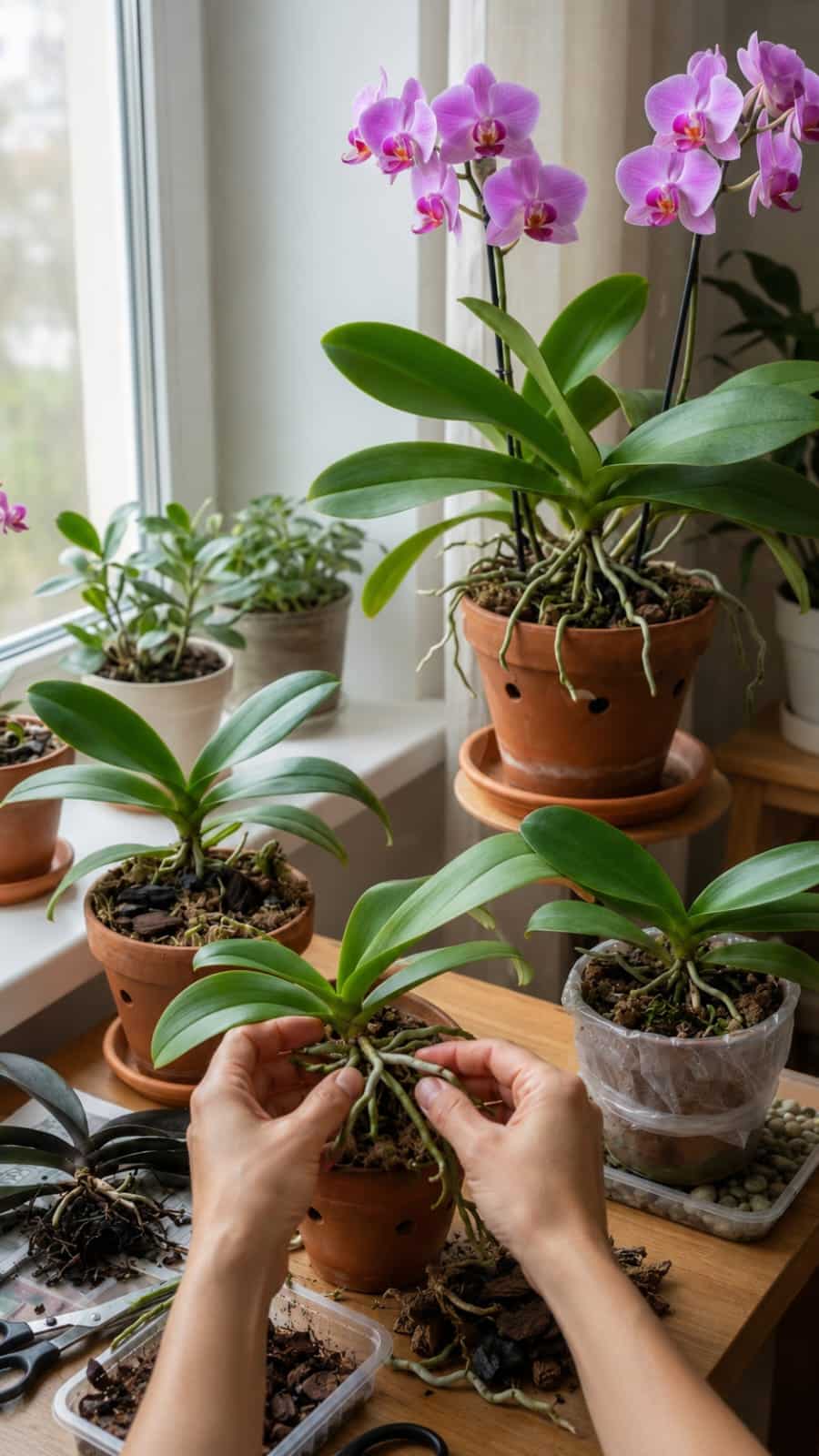
Step 6: Soak the Orchid Roots Briefly – Safe Soaking Time
Place only the roots into the garlic water. Keep the orchid crown and leaves above the liquid. This how long to soak orchid roots in garlic water guide prevents overexposure.
The crown is the center area where the leaves join. Water sitting in the crown can cause crown rot, one of the most dangerous orchid problems.
Safe Soaking Time
- Healthy roots: 5 to 10 minutes
- Recently trimmed roots: 3 to 5 minutes
- Weak orchid: skip or use plain water instead
A short soak is enough. Longer is not better.
Step 7: Let the Roots Drain – Preventing Crown Rot
After soaking, lift the orchid from the bowl and let the roots drain. You can place the plant on a clean towel for a few minutes.
Do not leave water sitting in leaf joints or the crown. If water gets into the crown, gently blot it with a paper towel.
Step 8: Choose the Right Orchid Pot – Drainage and Airflow Matter
Orchid pots need excellent drainage and airflow. Many orchid pots have holes on the sides as well as the bottom. Using the best pot for orchids is essential for root health.
Clear plastic orchid pots are useful because they let you monitor root health and moisture. Terracotta orchid pots can also work well because they breathe, but roots may attach to them.
Good Orchid Pot Features
- Drainage holes
- Air holes, if possible
- Only slightly larger than the root ball
- Stable base
- No standing water in the saucer
Do not use a pot that is much larger than the root system. Oversized pots hold too much moisture.
Step 9: Use Fresh Orchid Bark Mix – The Best Potting Medium
Fresh orchid mix is one of the most important parts of this process. A good orchid mix keeps roots moist but airy. This best orchid potting mix for healthy roots guide will help you choose.
Best Orchid Potting Mix
- Medium orchid bark
- Perlite
- Charcoal
- Coconut husk chips
- A little sphagnum moss, optional
If your home is very dry, a small amount of sphagnum moss can help hold moisture. If you often overwater, use mostly bark and perlite.
Step 10: Repot the Orchid – Correct Planting Depth
Place a small layer of orchid bark in the bottom of the pot. Hold the orchid in the center and spread the roots gently. Add bark around the roots, tapping the pot lightly to settle the pieces. This how to repot orchids correctly step prevents common mistakes.
Do not pack the bark too tightly. Orchid roots need air.
The base of the leaves should sit above the potting mix. Do not bury the crown.
Correct Planting Position
- Roots inside the pot
- Crown above the bark
- Leaves above the pot rim
- Plant stable but not buried deeply
- Bark loose enough for airflow
If the orchid wobbles, use a plant clip, bamboo stake, or orchid support until new roots anchor it.
Should You Water Immediately After Repotting? – Post-Repotting Care
This depends on the root condition. If you trimmed many rotten roots, wait 1 to 2 days before watering heavily. This gives cut areas time to dry slightly. This orchid watering after repotting guide prevents root rot.
If roots were mostly healthy and the bark is dry, you can water lightly after repotting.
After watering, let all excess water drain away completely. Never let an orchid sit in water.
How to Care for the Orchid After Repotting – Recovery Tips
After repotting, the orchid needs stable conditions. Do not move it constantly or fertilize heavily right away. This orchid aftercare for repotted plants guide is essential.
Aftercare Tips
Place in bright indirect light
Avoid harsh direct sun
Keep the crown dry
Water only when the bark begins to dry
Do not fertilize for 2 to 4 weeks
Maintain gentle humidity
Avoid cold drafts
Watch roots and leaves for stress
The orchid may pause growth for a short time after repotting. This is normal.
How Often Should You Water After Repotting? – Moisture Management
There is no single schedule that works for every home. Watering depends on pot size, bark type, temperature, humidity, and light. This orchid watering schedule after repotting helps you find the right rhythm.
A common indoor orchid routine is watering every 7 to 10 days, but always check the potting mix first.
Water When:
- Bark feels almost dry
- Roots inside the pot look silvery
- The pot feels lighter
- No moisture is trapped at the bottom
Do Not Water When:
- Bark is still wet
- Roots look dark green and soaked
- The pot feels heavy
- Condensation is visible inside the pot
Overwatering after repotting is one of the fastest ways to lose roots.
Can Garlic Water Make Orchids Bloom? – Realistic Expectations
Garlic water does not directly force orchid blooms. It may be used as a mild root rinse, but blooming depends on overall plant health. For guaranteed orchid reblooming tips, focus on the basics.
Orchids bloom best when they have:
- Healthy roots
- Bright indirect light
- Proper watering
- Fresh orchid bark
- Good airflow
- Moderate feeding
- A slight temperature drop at the right season
If your orchid has weak roots, it will focus on survival before flowering. Root recovery comes first.
When to Fertilize After Repotting – Gentle Feeding Schedule
Wait 2 to 4 weeks before fertilizing a freshly repotted orchid. The roots need time to settle. This best fertilizer schedule for repotted orchids prevents overfeeding.
When feeding starts again, use a weak orchid fertilizer. Many orchid growers use the phrase “weakly, weekly,” but for home growers, feeding every 2 to 4 weeks at diluted strength is often safer.
Safe Fertilizer Tips
- Use orchid fertilizer at ¼ to ½ strength
- Apply only to moist roots
- Flush with plain water occasionally
- Do not fertilize sick roots heavily
- Reduce feeding in winter
Best Light for Orchid Recovery – Bright Indirect Light
After repotting, place the orchid in bright indirect light. Good light supports photosynthesis and root growth, but harsh sun can burn leaves. Providing optimal light for orchids after repotting accelerates recovery.
Ideal spots include:
East-facing window
Bright filtered window
A few feet from a south-facing window
Greenhouse with filtered light
Grow light setup indoors
Leaves should look medium green. Very dark green leaves may mean too little light. Yellow or scorched patches may mean too much direct sun.
Best Humidity for Orchids – Creating a Healthy Environment
Orchids enjoy moderate humidity, but humidity should not mean wet leaves all day. Air movement matters. This orchid humidity guide for indoor growers will help.
To increase humidity safely:
- Use a humidity tray with pebbles
- Group plants together
- Use a room humidifier
- Keep airflow gentle
- Avoid misting the crown heavily
Do not let the pot sit directly in water on a humidity tray.
What to Do With Aerial Roots – Leave Them Alone
Orchids often grow roots outside the pot. These are called aerial roots. They are normal and should not be cut unless they are dead. This how to care for orchid aerial roots tip is essential.
Healthy aerial roots help the orchid absorb moisture from the air. If they are firm, leave them alone.
You can gently guide some roots into the pot during repotting, but do not force or break them.
Should You Cut the Flower Spike? – Post-Bloom Orchid Care
If the orchid has finished blooming, you can trim the flower spike. If the spike is green, some Phalaenopsis orchids may rebloom from a node. If the spike is brown and dry, cut it near the base. This orchid flower spike pruning after repotting guide helps you decide.
If the orchid is weak or root-damaged, it is often better to cut the spike so the plant can focus on root and leaf recovery.
Common Orchid Repotting Mistakes – What to Avoid
Using regular potting soil
Burying the crown
Cutting healthy roots unnecessarily
Leaving rotten roots attached
Using a pot that is too large
Packing bark too tightly
Watering too much after repotting
Letting water sit in the crown
Using strong garlic water
Fertilizing immediately after root trimming
Avoid these common orchid repotting errors for a healthier plant.
Signs Your Orchid Is Recovering – Positive Indicators
Recovery is gradual. Do not expect instant blooms after repotting. These are signs of successful orchid repotting.
Good signs include:
- Leaves stay firm
- New root tips appear
- Roots turn green when watered
- No sour smell from the pot
- New leaf growth begins
- The plant becomes stable in the pot
- No spreading yellowing or mushiness
New root tips are one of the best signs that your orchid likes its new setup.
Signs Something Is Wrong – Troubleshooting Repotted Orchids
Watch closely for stress after repotting. This orchid repotting problems and solutions guide will help you act fast.
- Leaves become limp and wrinkled
- Crown becomes soft
- Roots turn black and mushy
- Pot smells rotten
- Bark stays wet for too long
- Leaves yellow rapidly
- Plant wobbles badly after several weeks
If the pot smells bad or the roots are rotting again, remove the orchid and inspect the root system immediately.
Orchid Root Soak Care Table – Quick Reference
| Step | Best Method | Why It Matters |
|---|---|---|
| Remove old medium | Clear away old bark and moss | Improves airflow |
| Trim roots | Cut only mushy or hollow roots | Stops rot from spreading |
| Garlic water | Weak, fresh, short soak | Avoids root irritation |
| Soak time | 3–10 minutes | Protects sensitive roots |
| Potting mix | Chunky orchid bark | Prevents suffocation |
| Pot | Drainage and airflow holes | Reduces root rot |
| Aftercare | Bright indirect light | Supports recovery |
Simple Garlic Water Orchid Recipe – Homemade Root Rinse
Ingredients
- 1 small garlic clove
- 2 cups room-temperature water
Instructions
- Slice the garlic clove thinly.
- Add slices to clean water.
- Let sit for 30 to 60 minutes.
- Remove the garlic pieces.
- Place orchid roots in the water for 3 to 10 minutes.
- Keep leaves and crown dry.
- Drain roots briefly.
- Repot into fresh orchid bark.
Use this only during repotting or occasional root maintenance. Do not use strong garlic water as a regular watering routine.
Step-by-Step Orchid Repotting Summary – Quick Guide
- Remove the orchid from its old pot.
- Clean away old bark or moss.
- Inspect the roots carefully.
- Trim mushy, black, or hollow roots.
- Prepare weak garlic water if desired.
- Soak roots briefly, keeping the crown dry.
- Let roots drain.
- Place orchid in a clean pot with fresh orchid bark.
- Keep the crown above the bark.
- Water carefully after repotting.
- Place in bright indirect light.
- Wait before fertilizing.
Short Caption for This Trick
“To refresh an orchid before repotting, remove old bark, trim only mushy or dead roots, then soak the healthy roots for a few minutes in weak fresh garlic water made from 1 sliced garlic clove and 2 cups water. Keep the crown dry, drain well, and repot into fresh airy orchid bark – this natural root rinse is a gentle way to support orchid recovery.”
Frequently Asked Questions – Orchid Repotting and Garlic Water Q&A
Is garlic water good for orchid roots?
A very weak, fresh garlic water soak can be used occasionally as a root rinse during repotting, but it should not be strong, fermented, or used too often.
How long should I soak orchid roots in garlic water?
Soak for 3 to 10 minutes only. Weak or freshly trimmed roots should be soaked for a shorter time.
Can garlic water make orchids bloom?
Garlic water does not directly force blooms. Healthy roots, bright indirect light, correct watering, and proper feeding are what support flowering.
Should I cut orchid roots when repotting?
Cut only roots that are mushy, black, hollow, or dead. Keep firm roots, even if they are silver, tan, or growing outside the pot.
Can orchids grow in regular soil?
No. Most common indoor orchids need a chunky orchid mix, not regular potting soil. Dense soil can suffocate the roots.
When is the best time to repot an orchid?
The best time is after flowering, especially when new roots are beginning. Repot immediately if the roots are rotting.
Should I water after repotting an orchid?
If roots were heavily trimmed, wait 1 to 2 days before watering deeply. If roots were healthy, water lightly and let the pot drain fully.
Why are my orchid roots silver?
Silver roots are often dry but healthy. They usually turn green when watered.
Why are my orchid leaves wrinkled after repotting?
Wrinkled leaves can mean root stress, dehydration, or root loss. Keep care stable and avoid overwatering while new roots grow.
Can I reuse old orchid bark?
It is better not to reuse old broken-down bark. Fresh orchid mix gives better airflow and reduces disease risk.
Final Thoughts – The Best Way to Repot Orchids for Healthier Roots
Repotting an orchid is one of the best ways to restore plant health when roots are crowded, old bark has broken down, or flowering has slowed. The method shown in the images focuses on the most important part of orchid care: the roots. This natural orchid root treatment guide will help you succeed.
Remove the orchid gently, clean away old potting medium, trim only dead or mushy roots, and use a short weak garlic water soak only if desired. Then place the plant into fresh chunky orchid bark with the crown above the surface and plenty of airflow around the roots. Following this complete orchid repotting guide will keep your plant thriving.
The garlic water is only a small part of the process. The real secret is fresh orchid mix, careful watering, bright indirect light, and patience. With healthy roots and proper care, your orchid can recover, grow new leaves, and prepare for future blooms that last for weeks. These professional orchid care secrets will help you succeed with all your orchids.