· Cactus or succulent mix (available at garden centers)
· DIY mix: 2 parts potting soil + 1 part perlite + 1 part coarse sand
· Slightly sandy texture, airy, fast‑draining
Signs of Bad Soil
· Water sits on top for more than 10 seconds
· Soil stays wet for over a week after watering
· Heavy, compacted, or smells of rot
👉 If soil is wrong, no liquid will fix the plant. Repot into fresh, well‑draining mix first.
How to Apply the Golden Liquid (Advanced Method)
Follow this optimized process to use the golden liquid safely and effectively.
What You’ll Need
· A plant‑safe golden liquid (diluted balanced fertilizer, seaweed extract, or compost tea)
· Watering can
· Measuring spoons
Step‑by‑Step Application
- Dilute heavily – use a very weak solution (half or quarter of the recommended strength). Less is more.
- Water with plain water first – moisten the soil slightly. This prevents the solution from concentrating around dry roots.
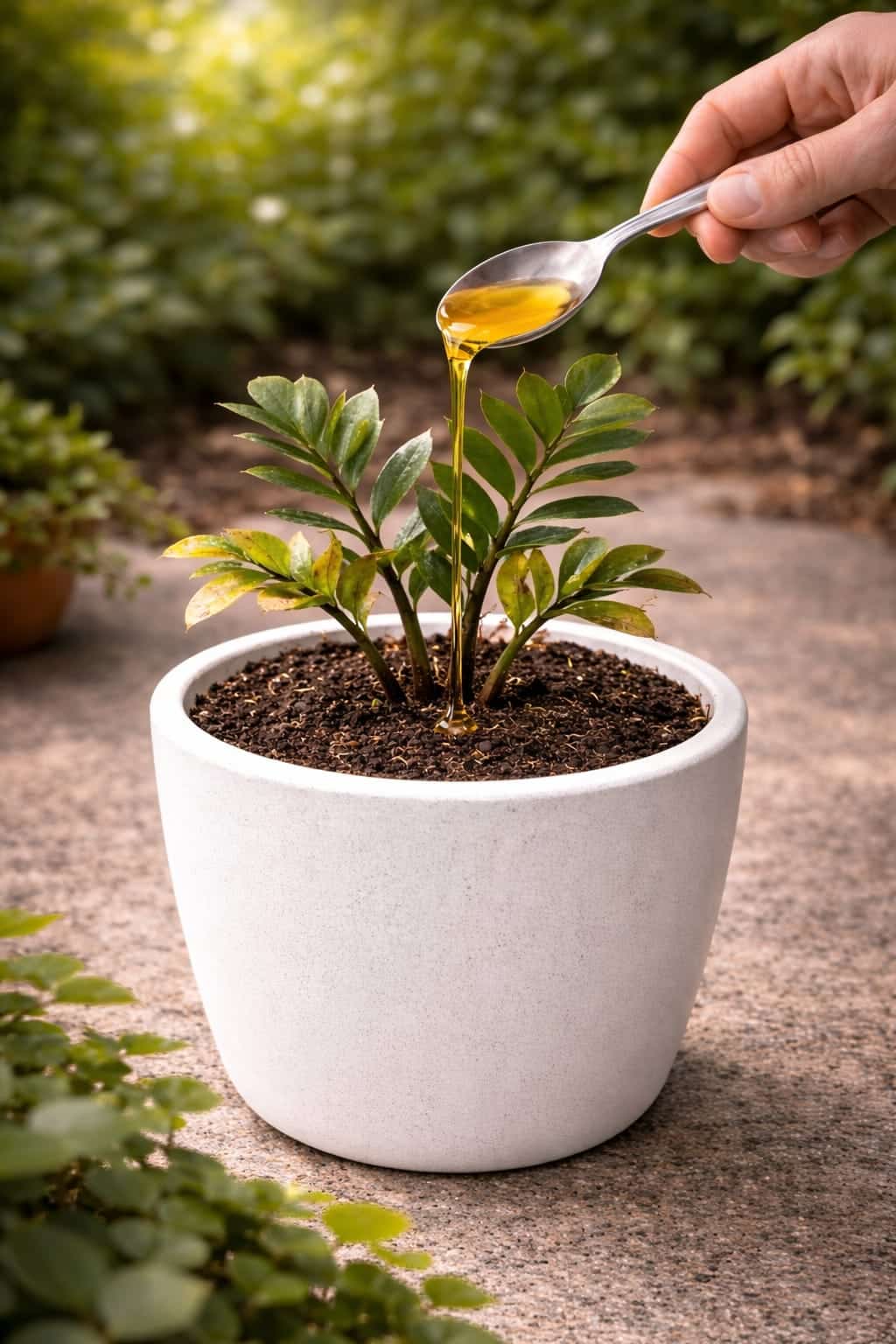
- Apply the diluted golden liquid – pour onto the soil, not the leaves. Avoid the crown.
- Use only during active growth – spring and summer. Do not feed in fall or winter.
- Frequency: Once every 2–3 weeks, not weekly.
Advanced Tip
👉 Water with plain water first, then apply the diluted solution. This ensures even distribution and reduces the risk of root burn.
Avoid
· Pouring directly concentrated
· Using weekly (over‑feeding stresses roots)
· Applying to dry soil (can burn roots)
Signs of Real Recovery
Your ZZ plant will slowly show improvement. Do not expect overnight results.
Timeframe Signs to Look For
2–4 weeks Leaves become slightly glossier, feel firmer.
4–6 weeks New shoots may emerge from the soil.
6–8 weeks Upright stems, darker green color, increased leaf thickness.
👉 Recovery is slow but steady (2–8 weeks). Be patient.
ZZ Plant Recovery Table (Quick Reference)
Factor Ideal Condition Why It Matters
Light Bright, indirect Faster recovery, stronger growth
Water Dry cycles – let soil dry completely Prevents root rot
Temperature 18–28°C (65–82°F) Stable root function
Golden liquid Light feeding every 2–3 weeks (spring/summer) Gentle nutrient boost
Soil Well‑draining (cactus mix + perlite) Prevents rot, supports roots
Common Mistakes to Avoid
Many people fail to revive their ZZ plant because of these errors:
Mistake Why It’s Harmful
Using too much fertilizer Burns roots, causes leaf tip burn.
Watering too often Leads to root rot – the #1 killer.
Keeping plant in a dark corner Recovery stalls, new growth is weak.
Using decorative pots without drainage Water pools, roots rot.
Ignoring root condition Rotten roots cannot absorb nutrients.
👉 Fix mistakes first, then apply methods. The golden liquid is a support, not a substitute for good care.
Advanced Growth Boost Tips
To take results further, add these simple steps:
· Rotate the plant every 2 weeks – ensures even growth on all sides.
· Clean leaves – dust blocks light. Wipe with a soft, damp cloth every few weeks.
· Use breathable pots – terracotta or clay pots wick away excess moisture.
· Avoid AC drafts – cold air slows root activity.
Root Health Check (Very Important)
If your ZZ plant is very weak, you must check the roots. This is the most critical diagnostic step.
How to Check Roots
- Gently remove the plant from its pot.
- Shake off excess soil.
- Inspect the roots and rhizomes (thick, potato‑like structures).
Healthy vs. Unhealthy
Healthy Unhealthy
Firm to the touch Mushy or soft
Light brown or white Dark brown or black
No foul smell Rotten odor
Rhizomes plump Rhizomes shriveled or soft
What to Do If Roots Are Rotten
· Trim damaged roots – cut away all mushy, black, or smelly parts with sterilized scissors.
· Repot in fresh, dry soil – do not water for 5–7 days.
· Place in bright, indirect light – and be patient. New roots can regrow.
👉 If more than half the roots are rotten, recovery will take longer – but it is still possible.
Frequently Asked Questions (FAQs)
Q: What is the golden liquid?
It is a diluted plant‑safe solution – usually balanced liquid fertilizer, seaweed extract, or compost tea. The golden color comes from organic nutrients.
Q: Can it revive a dying ZZ plant?
Yes, if the roots are still alive (firm, not completely rotted). But you must also fix light, water, and soil.
Q: How often should I use it?
Once every 2–3 weeks during spring and summer. Do not use in fall and winter.
Q: Can I use it year‑round?
Better during active growth (spring/summer). In winter, the plant rests and does not need feeding.
Q: Why are my ZZ plant’s leaves yellow?
Most common cause: overwatering. Check soil moisture and root health.
Q: Is sunlight required for recovery?
Bright, indirect light is strongly recommended. It speeds up recovery and prevents weak growth.
Q: Should I repot my weak ZZ plant?
If the soil is old, heavy, or waterlogged, or if roots are rotting – yes, repot into fresh, well‑draining mix.
Q: How fast will it recover?
Typically 2–8 weeks. New shoots may appear first, followed by healthier leaves.
Q: Is ZZ plant beginner‑friendly?
Yes – it is very forgiving, but beginners often overwater. Learn to let the soil dry completely.
Q: Can I grow it in water?
Not ideal long‑term. ZZ plants are adapted to soil and can rot in standing water. Water propagation is possible for cuttings but not for mature plants.
Printable ZZ Plant Recovery Checklist
☐ Check soil moisture – is it soggy or dry?
☐ Inspect roots – trim any black/mushy roots
☐ Repot in fresh, well‑draining cactus/succulent mix
☐ Use a pot with drainage holes (terracotta preferred)
☐ Place in bright, indirect light (east/west window)
☐ Water only when soil is completely dry (2–3 inches deep)
☐ Maintain temperature 18–28°C (65–82°F)
☐ Dilute golden liquid to half or quarter strength
☐ Apply once every 2–3 weeks (spring/summer only)
☐ Wipe leaves with damp cloth monthly
☐ Rotate pot every 2 weeks for even growth
☐ Be patient – recovery takes 2–8 weeks
Final Thoughts – Support, Not Magic
A weak ZZ plant does not need a miracle. It needs correct conditions – bright indirect light, dry soil cycles, well‑draining potting mix, and stable warmth. The golden liquid can be a helpful part of that routine, but only when the basics are already right.
Smart plant owners don’t rely on shortcuts. They check the roots, improve the environment, and use gentle feeding as a small boost, not a cure‑all. With patience and the right routine, even a tired ZZ plant can become glossy, upright, and beautiful again.
Now it’s your turn! Have you tried a golden liquid on a weak ZZ plant? What worked – or didn’t? Drop a comment below – I’d love to hear your experience.
And if you found this guide helpful, share it with a friend who’s struggling with a ZZ plant. Pin it for later, and subscribe to our newsletter for more practical plant care.
Stay patient, stay consistent, and watch your ZZ plant thrive. 🌿✨