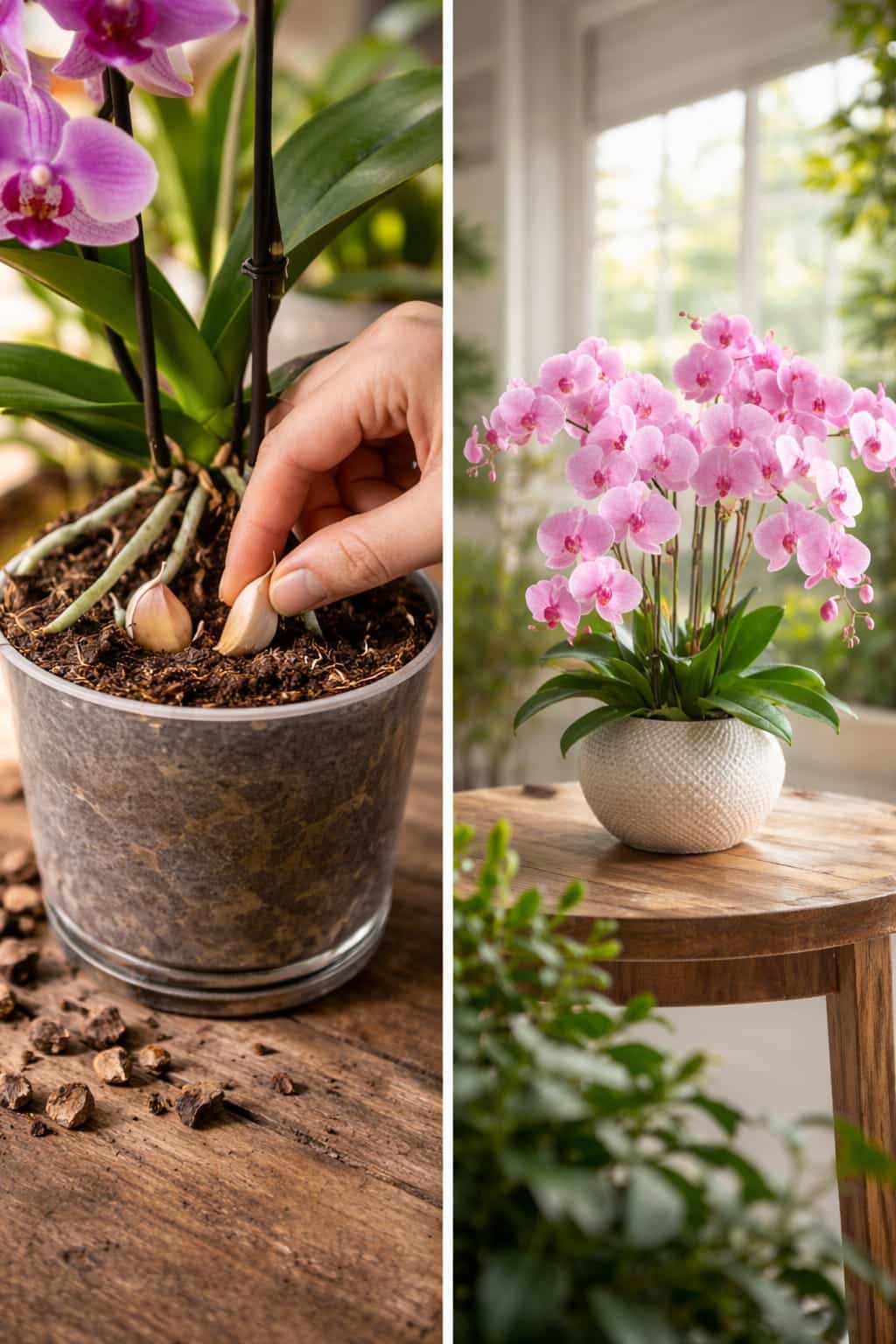
Repotting into the Right Medium – The Foundation of Recovery
Once the orchid is cleaned up (and optionally treated with garlic water), it needs to go back into an airy, well‑draining medium. The source article suggests orchid bark or sphagnum moss, which is consistent with extension and orchid society guidance.
Choosing the Right Potting Mix
Medium Best For Pros Cons
Orchid bark mix (pine bark, charcoal, perlite) Most orchids (Phalaenopsis, Cattleya, Dendrobium) Excellent drainage, airy, long‑lasting Holds less moisture; needs more frequent watering
Sphagnum moss Rootless orchids, moisture‑loving varieties Holds moisture well, promotes root growth Can stay too wet; risks rot if overwatered
Mixed (bark + moss) Balanced approach Combines drainage and moisture retention Requires careful monitoring
Fresh medium matters because old bark breaks down over time and restricts airflow around the roots. Most bark media need replacement about every two years.
Pot Selection
· Use a pot with drainage holes – this is non‑negotiable. Orchids should never sit in standing water.
· Clear plastic pots are ideal because they allow you to monitor root health.
· Choose a pot size that is just large enough to hold the root ball. Too large = too much moisture.
Step‑by‑Step Repotting
- Place a layer of bark or moss at the bottom of the pot.
- Position the orchid so the base of the leaves (the crown) sits just above the medium – never buried.
- Gently fill in around the roots with fresh medium. Do not pack tightly.
- Do not water for 3–5 days to allow cut roots to heal.
Provide Stable Recovery Conditions – Light, Warmth, and Patience
After repotting, an orchid needs stable recovery conditions. The article recommends a temperature around 20°C (68°F), protection from direct sun, and even temporary humidity support with a cover to help the plant re‑establish.
Ideal Recovery Environment
Factor Ideal Condition
Light Bright, indirect light (east or north‑east window). No direct sun.
Temperature 65–75°F (18–24°C) – stable, no drafts.
Humidity 50–70% – use a humidity dome or pebble tray if needed.
Airflow Good ventilation – a gentle fan helps prevent fungal issues.
Watering Do not water for 3–5 days after repotting. Then water lightly when the medium is almost dry.
Using a Humidity Dome (For Rootless Orchids)
If your orchid has very few or no roots, a humidity dome can be a lifesaver.
How to make it:
· Cut the bottom off a clear plastic bottle.
· Poke several small holes in the sides for airflow.
· Place the bottle over the orchid (do not let it touch the leaves).
· Remove the cover for 1 hour daily to prevent mold.
This creates a mini‑greenhouse effect, keeping moisture around the plant while it develops new roots.
What to Expect – A Realistic Timeline
This is where many people become impatient. Orchids do not recover overnight. The linked article says new leaves may begin appearing after about two weeks under good conditions, but blooming usually takes longer and depends on how strong the root system becomes.
Timeframe What to Look For
1–2 weeks No visible change – the plant is adjusting. Do not disturb.
3–4 weeks New root tips may appear (small green or silver bumps).
6–8 weeks New leaves may begin to emerge.
3–6 months Roots establish; the plant looks stable.
6–12 months With good care, the orchid may bloom again.
Pro tip: Do not fertilize a recovering orchid until it has several new roots at least 2–3 inches long. Fertilizer can burn tender new growth.
Common Mistakes That Slow Recovery
Mistake Why It’s Harmful Correct Approach
Watering immediately after repotting Cut roots need time to callus; wet soil promotes rot. Wait 3–5 days before first watering.
Using old, broken‑down bark Holds too much moisture, suffocates roots. Repot with fresh bark every 1–2 years.
Placing in direct sun Sunburn, leaf damage. Use bright, indirect light.
Over‑watering Root rot, yellow leaves. Let medium almost dry out before watering.
Fertilizing too soon Burns new root tips. Wait until roots are 2–3 inches long.
Moving the plant frequently Stress, slower recovery. Keep in one stable location.
Frequently Asked Questions (FAQs)
Q: Can I save an orchid with no roots at all?
Yes – but it will take longer. Focus on humidity (use a dome) and warmth. You can also place the orchid’s base over a glass of water (not touching) to encourage root growth. This method is called “sphag and bag” or water therapy.
Q: How do I know if my orchid is too far gone?
If the entire stem (rhizome) is black, soft, and foul‑smelling, the plant is likely dead. If there is any firm, green tissue, there is hope.
Q: Can I use hydrogen peroxide instead of garlic water?
Diluted hydrogen peroxide (3% mixed with 2 parts water) can be used to disinfect roots, but it can also kill beneficial tissue. Garlic water is gentler for ongoing support.
Q: How long should I wait before fertilizing a recovering orchid?
Wait until you see new roots at least 2–3 inches long. This can take 2–4 months. Use a balanced orchid fertilizer at half strength.
Q: Should I cut off all the leaves if they are yellow?
Only cut leaves that are completely yellow or brown. Partially green leaves can still photosynthesize and help the plant recover.
Q: Can I use this method on other orchids (like Dendrobium or Cattleya)?
Yes – the same principles apply. However, always test any treatment on a small area first.
Q: Why are my orchid’s new roots growing above the potting medium?
Orchid roots naturally grow in all directions. Aerial roots are normal – they absorb moisture from the air. Do not bury them.
Printable Orchid Recovery Checklist
Copy and paste this into a document or note:
☐ Trim yellow/brown leaves
☐ Remove orchid from pot, rinse roots
☐ Cut off black/mushy roots
☐ Cut away blackened stem sections
☐ Dry roots with paper towel
☐ Dust cut ends with cinnamon (optional)
☐ (Optional) Soak roots in garlic water for 15–20 minutes
☐ Let plant rest 24 hours
☐ Repot in fresh orchid bark or moss
☐ Do not water for 3–5 days
☐ Place in bright, indirect light
☐ Maintain 65–75°F, 50–70% humidity
☐ Use humidity dome if needed
☐ Be patient – new roots take 4–8 weeks
☐ Do not fertilize until roots are 2–3 inches long
The Real Secret to Bringing an Orchid Back
The biggest lesson from the article is simple: orchids do not need random fixes as much as they need correct conditions. If your orchid is struggling, start by trimming damaged roots, replacing broken‑down media, and giving it bright indirect light, proper drainage, and careful watering. A homemade tonic like garlic water may be part of your routine if you want to experiment, but the foundation of recovery is always the same – healthy roots, fresh medium, and stable care.
A weak orchid can look hopeless, but many are far more recoverable than they seem. Once the roots are healthy again, the rest of the plant often follows. And when that first new root tip or leaf finally appears, you know the comeback has started.
Now it’s your turn! Have you revived an orchid using garlic water or other methods? What worked for you? Drop a comment below – I’d love to hear your story.
And if you found this guide helpful, share it with a friend who’s about to throw away their orchid. Pin it for later, and subscribe to our newsletter for more honest, evidence‑based plant care.
Stay patient, stay consistent, and watch your orchid come back to life. 🌸✨