💧 Watering – The Biggest Mistake
Most people overwater their snake plants. This is the #1 reason they stay small or die.
Watering Approach Result
Correct: Let soil dry completely, then water deeply Healthy roots, steady growth.
Overwatering: Watering on a schedule, keeping soil wet Root rot, yellow leaves, no growth.
Underwatering: Letting soil stay bone dry for weeks Slow growth, brown tips, but plant survives.
👉 Snake plants prefer dry cycles. They store water in their thick leaves and roots. Water only when the top 2–3 inches of soil are completely dry. In bright light, this is every 2–3 weeks. In lower light, every 4–6 weeks.
🧴 How to Use the White Liquid Properly
If you want to try the white liquid method, follow these guidelines to avoid harming your plant.
Safe Method
- Dilute heavily – use a very weak solution. For milk: 1 part milk to 4–5 parts water. For rice water: dilute with equal plain water. For fertilizer: quarter strength.
- Apply only during active growth – spring and summer. Do not use in fall or winter.
- Use once every 2–3 weeks – not weekly, not daily.
- Apply to soil – pour around the base, not on leaves. Avoid the crown.
- Water with plain water first – moisten the soil slightly before applying the white liquid to prevent root burn.
What to Avoid
· Pouring undiluted milk or rice water directly.
· Using large amounts (1–2 tablespoons of diluted solution per small pot is plenty).
· Using daily or weekly.
· Applying to dry soil.
👉 Too much = root damage, mold, or pest attraction (especially with milk).
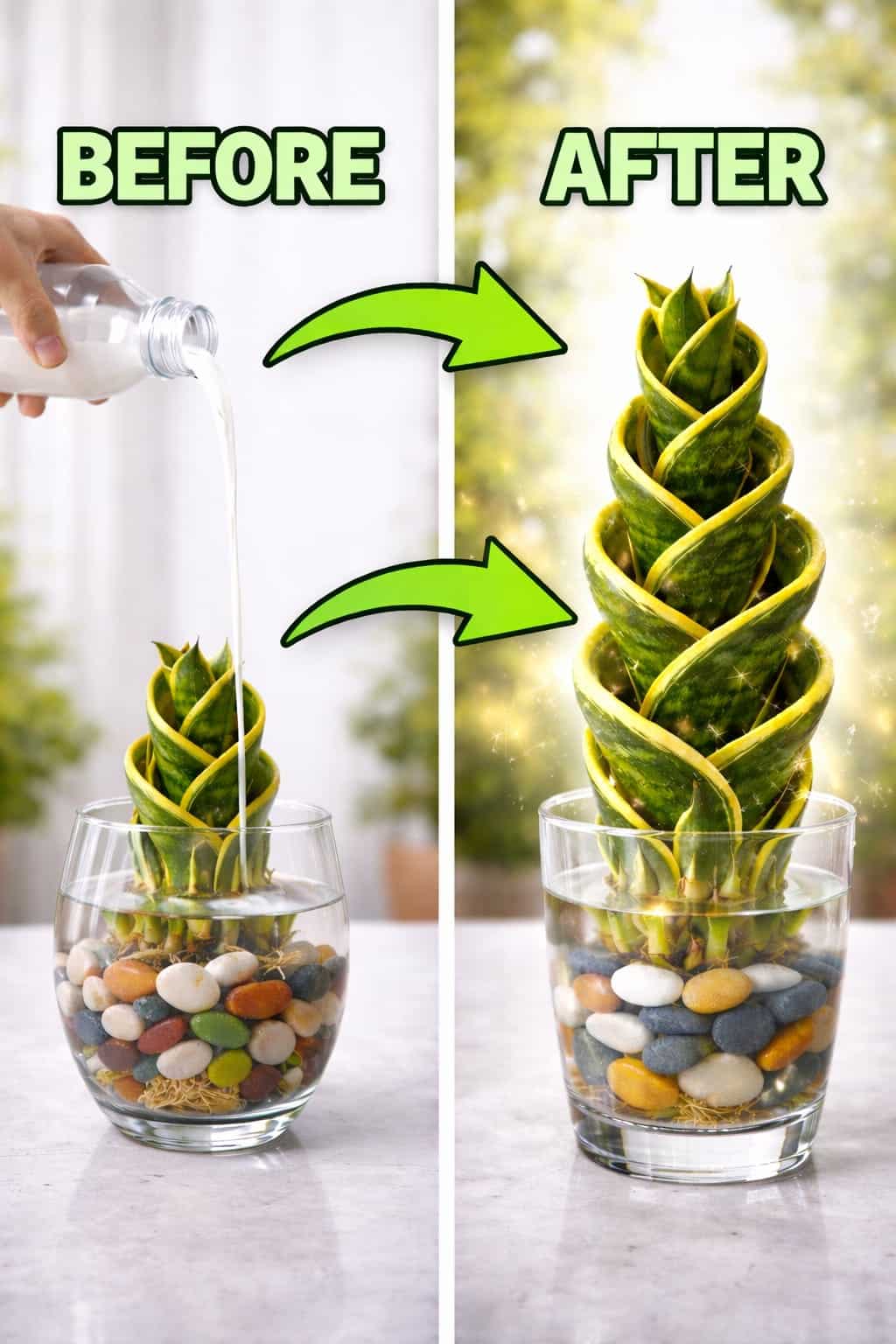
🌱 Water Propagation (Like in the Image)
The setup you see in viral posts – a snake plant cutting in a glass of water – is a propagation method, not a long‑term growing solution.
How It Works
· Roots grow faster in water because of oxygen and moisture balance.
· It’s decorative and functional for starting new plants.
Tips for Water Propagation
· Keep only the roots submerged – not the base of the leaves.
· Change water every 7–10 days to prevent stagnation.
· Use a clean glass or jar.
· Once roots are 1–2 inches long, plant in soil for best long‑term growth.
👉 Water propagation is great for making new plants, but mature snake plants grow better in well‑draining soil.
Snake Plant Growth Table – Quick Reference
Factor Ideal Condition Result
Light Bright, indirect Faster growth, sturdy leaves
Water Dry cycles – let soil dry completely Strong roots, no rot
Temperature 18–30°C (65–86°F) Healthy, active plant
White liquid Light use every 2–3 weeks (spring/summer) Gentle growth boost
Soil Well‑draining cactus/succulent mix Stability, prevents rot
Common Mistakes That Keep Snake Plants Small
Mistake Why It’s Harmful Correct Approach
Keeping in low light No energy for growth Move to bright, indirect light.
Overwatering Root rot – plant declines Let soil dry completely.
Using too much white liquid Burns roots, attracts pests Dilute heavily; use sparingly.
Never repotting Roots crowded, soil exhausted Repot every 2–3 years.
Cold temperatures Growth stops Keep above 18°C (65°F).
Frequently Asked Questions (FAQs)
Q: What is the white liquid?
It is usually diluted milk, rice water, a calcium solution, or very diluted liquid fertilizer.
Q: Does it really work?
Yes, when used correctly and combined with good light, proper watering, and warm temperatures. It is a small boost, not a miracle.
Q: How often should I use it?
Once every 2–3 weeks during spring and summer only.
Q: Can I overuse it?
Yes. Too much can cause root rot, mold, or pest problems (especially with milk).
Q: What is the best temperature for snake plant growth?
18–30°C (65–86°F). Avoid cold below 10°C.
Q: Can I grow snake plants in water?
Yes, for propagation. For long‑term growth, well‑draining soil is better.
Q: Why is my snake plant growing so slowly?
Most common reasons: low light, overwatering, or cold temperatures. Check these first.
Q: Is overwatering really that dangerous?
Yes. Overwatering is the #1 killer of snake plants. They prefer dry soil.
Q: Is this method beginner‑friendly?
Yes – but beginners often overdo it. Start with a very weak solution and use sparingly.
Q: Is it worth trying?
Yes – if your plant already has good light, proper watering, and warm conditions, a little white liquid can give it a gentle nudge.
Printable Snake Plant Growth Checklist
☐ Move plant to bright, indirect light (east/west window)
☐ Check soil – let it dry completely before watering
☐ Ensure temperature is 18–30°C (65–86°F)
☐ Use a well‑draining cactus/succulent soil mix
☐ Dilute white liquid heavily (1:4 for milk, 1:1 for rice water)
☐ Apply once every 2–3 weeks (spring/summer only)
☐ Water with plain water first, then apply solution
☐ Do not use in fall/winter
☐ Repot every 2–3 years if root‑bound
☐ Be patient – growth takes weeks to months
Final Thoughts – Small Boost, Big Difference
That viral “white liquid” trick can help your snake plant grow faster – but only if you understand what it really does. It provides a tiny nutrient boost, calcium, or microbial support. It does not replace good light, correct watering, or warm temperatures.
If your snake plant has been tiny and slow for months, first check the basics: Is it getting enough light? Are you overwatering? Is the temperature warm enough? Once those are right, a little white liquid every 2–3 weeks can give it the gentle nudge it needs.
Don’t expect overnight miracles. Snake plants are naturally slow growers. But with consistent care and a small boost, you can turn a tiny, stuck plant into a lush, tall beauty.
Now it’s your turn! Have you tried a white liquid on your snake plant? What worked – or didn’t? Drop a comment below – I’d love to hear your experience.
And if you found this guide helpful, share it with a friend who has a tiny snake plant. Pin it for later, and subscribe to our newsletter for more practical plant care.
Stay bright, stay consistent, and watch your snake plant grow. 🌿✨