Common Problems & Fixes – Troubleshooting Your Prayer Plant
Even with good care, issues can arise. Here’s how to identify and fix the most common problems.
| Problem | Likely Cause | Solution |
|---|---|---|
| Yellow leaves | Overwatering (most common), or insufficient light | Check soil moisture. If wet, reduce watering. If soil is dry and plant is yellow, it may be too much direct sun or nutrient deficiency. |
| Brown leaf tips | Low humidity, or chemicals in tap water (chlorine, fluoride) | Increase humidity (humidifier, pebble tray). Switch to filtered or distilled water. Trim brown tips with clean scissors. |
| Curling leaves | Underwatering, or low humidity | Water thoroughly. Increase humidity. Check that the plant is not in a draft. |
| Leaves not folding at night | Light cycle disruption, or plant is stressed | Ensure the plant gets a natural day/night cycle (no bright lights at night). Check for other stress factors (water, humidity, temperature). |
| Leggy, sparse growth | Too little light | Move to brighter, indirect light. Prune back leggy stems to encourage bushier growth. |
| Leaf spots (brown or yellow) | Fungal or bacterial infection, often from water on leaves | Avoid wetting leaves when watering. Improve air circulation. Remove affected leaves. Use a fungicide if severe. |
| Pale or faded leaf patterns | Too much light (direct sun) or nutrient deficiency | Move out of direct sun. Fertilize lightly during growing season. |
| Wilting despite wet soil | Root rot (overwatering) | Remove plant from pot, trim rotten roots, repot in fresh, well‑draining soil. Reduce watering. |
🌟 Pro Tip for Bushy, Full Growth – Pinching
Prayer plants naturally grow in a clumping habit, but they can become leggy if not encouraged to branch.
How to pinch: Use your fingernails or clean scissors to cut off the very tip of a stem, just above a leaf node (where a leaf attaches). This removes the dominant growing tip and signals the plant to produce two new branches from the node below.
- When to pinch: When stems become long and sparse, or anytime you want a fuller shape.
- How often: Every few months during the growing season.
- Result: A bushier, more compact plant with more leaves.
Pro tip: You can root the pinched cuttings in water or moist soil to propagate new plants.
Propagation – How to Make More Prayer Plants
Prayer plants are easy to propagate from stem cuttings. Here’s how:
- Take a cutting: Cut a stem that has at least 2–3 leaves and a node (a small bump where roots will grow). Cut just below the node.
- Place in water: Put the cutting in a glass of room‑temperature water, ensuring the node is submerged but the leaves are above water.
- Wait for roots: Change the water every few days. Roots should appear in 2–4 weeks.
- Pot up: Once roots are 1–2 inches long, plant the cutting in a small pot with well‑draining soil. Keep the soil moist (not wet) for the first few weeks.
Pro tip: You can also divide mature plants when repotting. Gently separate the root ball into two or more sections, each with several stems and healthy roots. Repot each section.
Frequently Asked Questions (FAQs)
Q: Can I use tap water for my prayer plant?
Tap water contains chlorine, fluoride, and dissolved minerals. Prayer plants are sensitive to these, especially fluoride, which causes brown leaf tips. Use filtered, distilled, or rainwater for best results. If you must use tap water, let it sit out overnight to allow chlorine to evaporate – but fluoride will remain.
Q: Should I mist my prayer plant?
Misting provides a temporary humidity boost, but it’s not very effective and can lead to fungal leaf spots if water sits on leaves. A humidifier or pebble tray is better.
Q: Why are my prayer plant’s leaves curling inward?
Curling leaves are usually a sign of underwatering or low humidity. Water thoroughly and increase humidity. If the soil is wet and leaves are curling, check for root rot.
Q: How often should I repot my prayer plant?
Every 1–2 years, or when roots are growing out of the drainage holes. Spring is the best time. Use fresh, well‑draining potting mix (a standard houseplant mix with added perlite works well).
Q: Is the prayer plant toxic to pets?
No – prayer plants (Maranta) are non‑toxic to cats and dogs, according to the ASPCA. However, it’s still best to discourage pets from chewing on leaves.
Q: Why isn’t my prayer plant moving (folding leaves at night)?
If the plant is young or recently moved, it may take time to adjust. Ensure it gets a natural day/night cycle (no bright artificial lights at night). Stress from improper watering, low humidity, or temperature swings can also stop the movement.
Q: Can I grow a prayer plant in low light?
It will survive, but it won’t thrive. Leaf patterns will fade, growth will slow, and the plant may become leggy. For the best appearance, provide bright, indirect light.
Final Thoughts – The Secret to a Stunning Prayer Plant
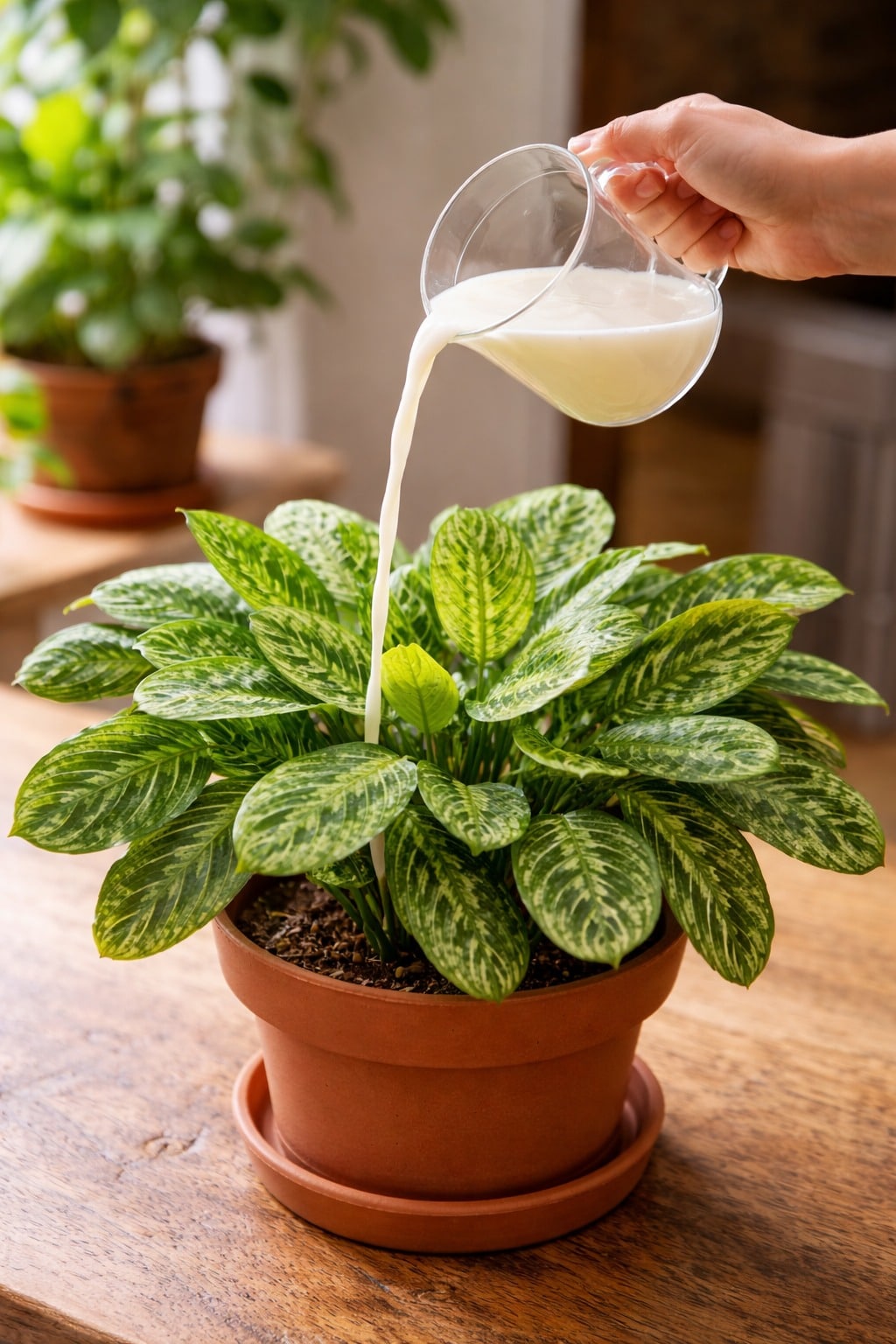
Prayer plants aren’t difficult – they just need the right environment. Skip the viral hacks like milk, sugar water, or random kitchen liquids. Those will only harm your plant.
Instead, focus on the essentials:
- Keep soil slightly moist – not wet, not bone dry.
- Provide bright, indirect light – no direct sun.
- Boost humidity – this is the secret most people miss. Use a humidifier or pebble tray.
- Use soft water – filtered or distilled to prevent brown tips.
- Feed lightly – once a month in spring and summer.
- Pinch back leggy stems – encourages bushy growth.
Do this, and your Maranta will stay lush, vibrant, and absolutely stunning. Those beautiful leaves will open and close each day like clockwork, and you’ll understand why prayer plants are among the most rewarding houseplants you can grow.
Now it’s your turn! Have you struggled with prayer plant care? What’s your experience with humidity and watering? Drop a comment below – I’d love to hear your tips and questions.
And if you found this guide helpful, share it with a friend who’s thinking of buying a prayer plant – or who’s been tempted by the milk watering trend. Pin it for later, and subscribe to our newsletter for more in‑depth plant care guides.
Stay humid, stay consistent, and watch your prayer plant thrive. 🌿✨