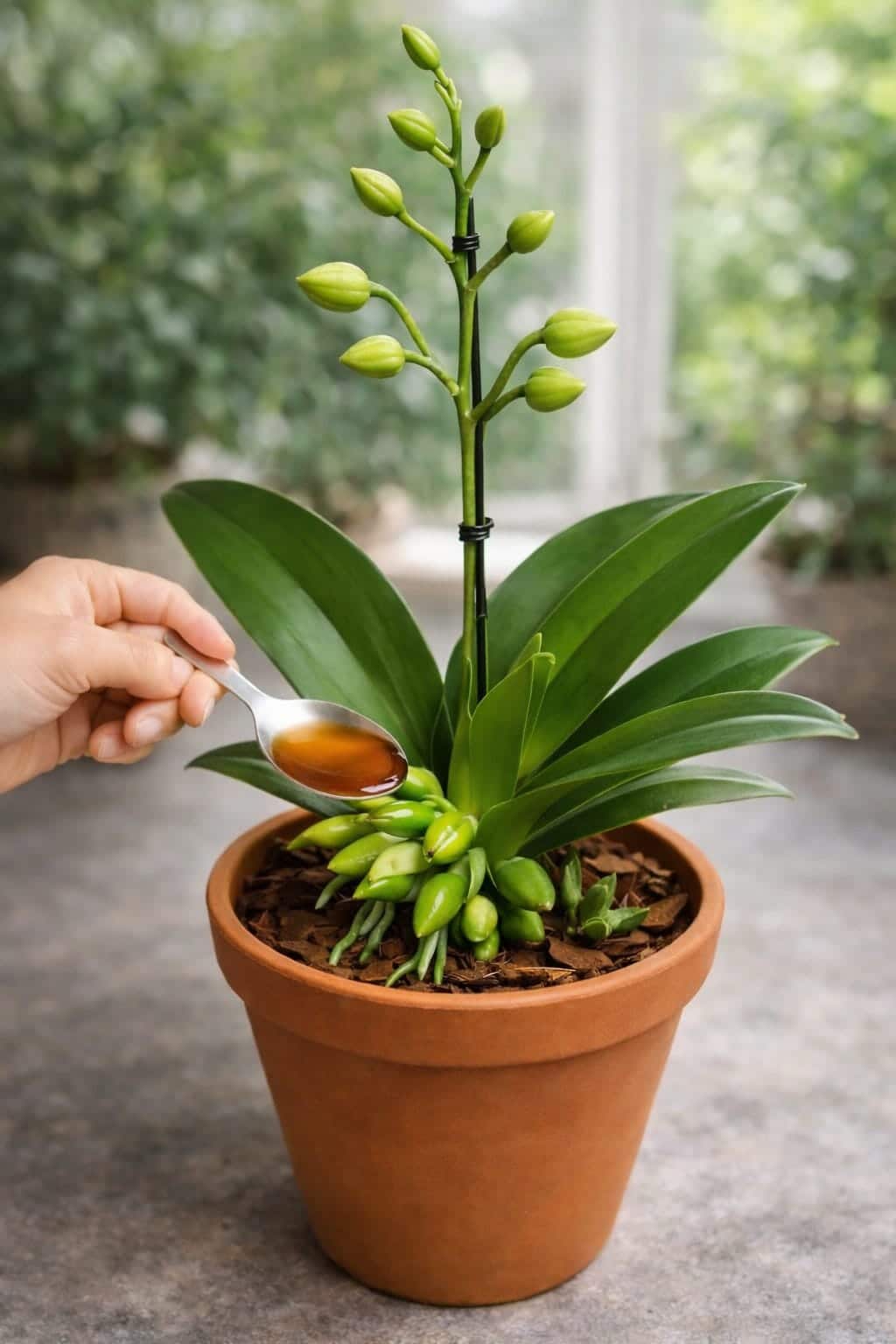
The Only “Spoon Trick” That Actually Works (And It’s Not a Hack)
If you want a simple, measurable “spoon” method for orchids, use a spoon to measure diluted fertilizer – not sugar or honey.
· Measure ¼ teaspoon of balanced orchid fertilizer per gallon of water.
· Apply weekly during the growing season.
· Use a spoon to mix the fertilizer into the water.
That’s the closest real version of this viral idea. It’s not magic – it’s science.
Common Orchid Mistakes That Prevent Blooming
Mistake Why It’s Harmful Correct Approach
Adding sugar or honey Feeds bacteria, rots roots Use orchid fertilizer
Overwatering Root rot, no blooms Let medium dry between waterings
Too little light Dark green leaves, no flower spikes Move to brighter indirect light
No temperature drop Orchids need cool nights to spike Provide 55–65°F nights for 2–4 weeks
Fertilizing while in bloom Shortens flower life Stop fertilizing during bloom
Cutting flower spikes too soon Misses potential secondary blooms Cut spike above a node if still green
Frequently Asked Questions (FAQs)
Q: Can I use honey to propagate orchid cuttings?
No. Honey has mild antibacterial properties, but it also introduces sugar. Use a commercial rooting hormone or simply place cuttings in damp sphagnum moss.
Q: Will cinnamon water help my orchid bloom?
No. Cinnamon has antifungal properties, but it does not promote blooming. Use it only if you have a fungal issue on cut surfaces.
Q: How often should I water my orchid?
In bark medium, about once every 7–10 days. In sphagnum moss, less often – every 10–14 days. Always check the medium first.
Q: Why did my orchid drop its buds before opening?
Bud blast is usually caused by environmental stress: sudden temperature change, drafts, low humidity, or over/underwatering. Keep conditions stable once buds appear.
Q: Can I use eggshells or coffee grounds on orchids?
No. Orchids are epiphytes; they do not need soil amendments. Eggshells take too long to break down; coffee grounds are too acidic and can compact around roots.
Q: How do I get my orchid to bloom again after the flowers fall?
Cut the flower spike back to a node (if still green) or remove it entirely (if brown). Then focus on light, proper watering, fertilizing, and a temperature drop to trigger a new spike.
Q: Is it true that orchids need ice cubes to water?
No. Ice cubes can shock the roots. Use room‑temperature water.
Final Thoughts – No Magic Spoon, Just Real Care
There’s no magic spoon that will make your orchid bloom like crazy. The viral “one spoon a week” tricks – honey, sugar, milk, rice water – are not only ineffective, but they can harm your orchid. They feed bacteria, rot roots, and attract pests.
But the good news is that the real secrets are simple, free, and proven:
· Bright, indirect light – more light = more blooms.
· Proper watering – let the medium dry between waterings.
· Orchid fertilizer – use it diluted, weekly during growing season.
· Temperature drop – cool nights for 2–4 weeks trigger flower spikes.
· Healthy roots – repot when needed, monitor for rot.
Follow these guidelines, and your orchid will reward you with those stunning, long‑lasting blooms – no kitchen hacks required.
Now it’s your turn! Have you tried any viral orchid tricks? What worked – or didn’t? Drop a comment below – I’d love to hear your experience.
And if you found this guide helpful, share it with a friend who’s been tempted by “one spoon” videos. Pin it for later, and subscribe to our newsletter for more evidence‑based plant care.
Stay bright, stay patient, and let your orchid bloom. 🌸✨