Should You Water After Repotting?
If you cut away rot or damaged rhizomes, it is often best to wait a few days before watering. This gives cut areas time to callus and reduces the risk of rot returning.
If the plant was severely underwatered and the roots are firm, you can water lightly after repotting, but do not soak a damaged plant too heavily. Let the pot drain completely.
After watering, do not water again until the soil is dry. Snake plants recover best when they are not kept wet.
This is where many people make a mistake. They rescue a plant, repot it, sprinkle powder, water it deeply, and then water again too soon. The plant declines again because the roots never get air.
For snake plants, recovery often requires patience and dryness.
How Much Powder Should You Use?
Use a very small amount. For a medium pot, a light dusting is enough. For a large pot, one teaspoon spread thinly across the surface is usually plenty if using eggshell powder or diatomaceous earth. If using cinnamon on cut rhizomes, use just enough to dust the cut areas.
A thick white layer is not better. It can form crust, hold moisture, or create residue. If the powder is visible everywhere, you may have used too much.
The powder should not cover the leaves heavily. It should not pile around the base. It should not be mixed with water into paste.
Think of it as seasoning, not frosting.
Why You Should Not Sprinkle Powder Over Wet Leaves
If leaves are wet and powder lands on them, it can stick and form residue. This may make leaves look messy and can trap moisture on damaged areas. Snake plant leaves should stay mostly dry, especially near the base.
If powder lands on the leaves, wipe it off gently with a dry soft cloth or a slightly damp cloth. Do not scrub damaged leaves. If a leaf is already brown and dead, remove it instead.
The powder should be aimed at the soil or cut areas, not used as a leaf coating.
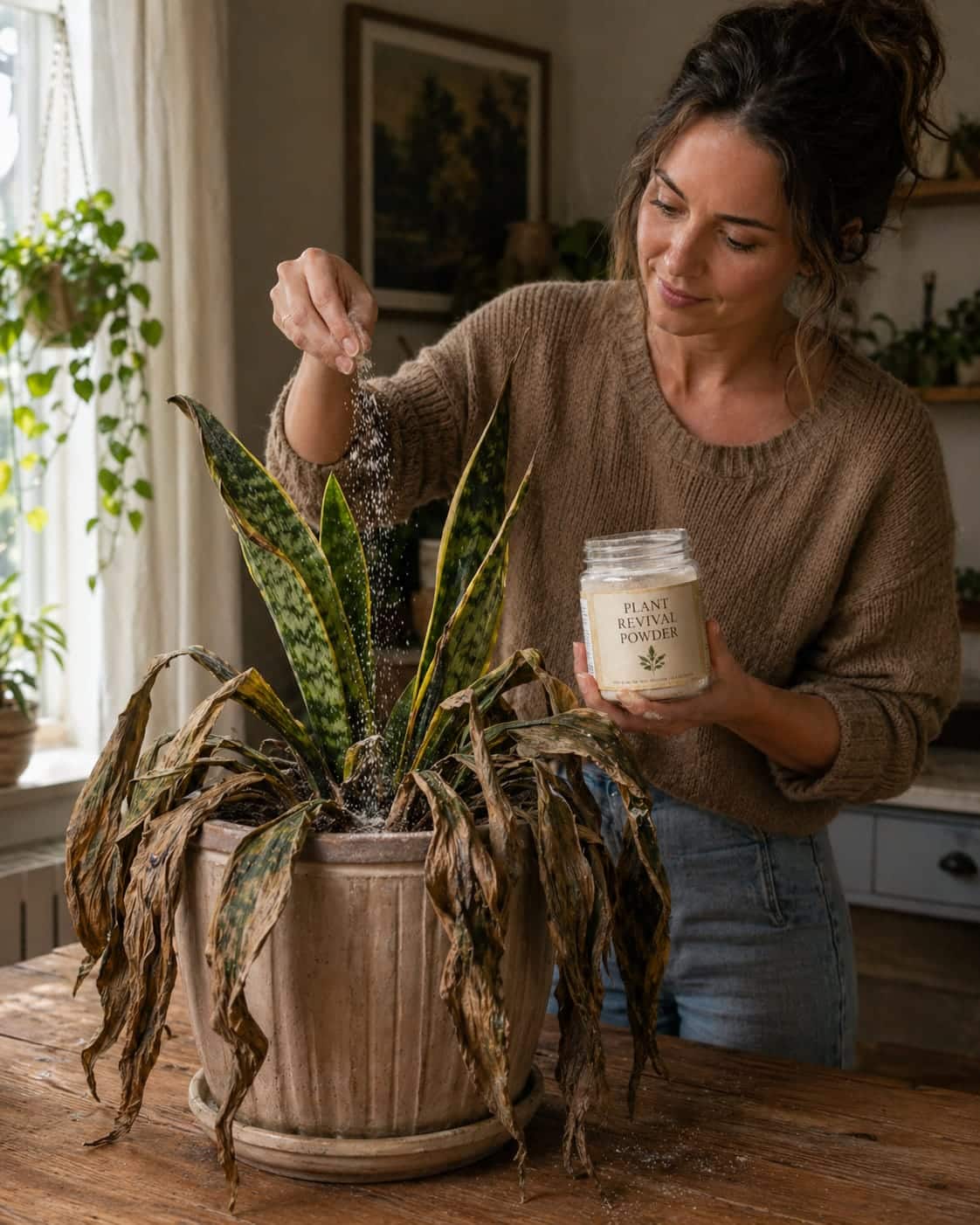
In a photo, powder falling through the air looks dramatic. In real plant care, precise application is safer.
Can Baking Soda Revive a Snake Plant?
Baking soda is not a snake plant fertilizer and should not be used as a regular revival powder. It contains sodium, and sodium can build up in soil and stress roots. While baking soda has some household uses, it is not the best choice for a weak snake plant.
If a plant is already stressed, adding unnecessary sodium can make things worse. Baking soda also does not repair roots, replace nutrients, or fix poor drainage.
If the “white powder” in a trick is baking soda, use extreme caution. It is better to skip it and focus on root inspection, fresh soil, and proper watering.
For snake plant revival, baking soda is not the hero. Dryness, drainage, and healthy rhizomes are.
Can Cinnamon Save a Snake Plant?
Cinnamon can be useful in a limited way. It can be dusted lightly on cut surfaces after trimming rotten rhizomes or leaves. It helps dry the surface and may reduce problems on the wound. But cinnamon does not travel through the plant and heal rot from the inside.
Do not dump cinnamon all over the soil. Do not use it as a fertilizer. Do not expect it to revive dead leaves.
Use cinnamon like a wound-drying dust, not like plant food.
If the plant has root rot, the rotten parts must still be removed. Cinnamon can help after cutting, but it cannot replace cutting.
Can Eggshell Powder Save a Snake Plant?
Eggshell powder is gentle, but it is not an emergency rescue treatment. It breaks down slowly and may add a small amount of calcium over time. It will not fix rotten roots, brown leaves, or collapsed foliage.
Use eggshell powder only as a mild soil amendment for healthy or recovering plants. Clean and grind the shells finely. Apply sparingly.
If your snake plant is weak because of poor light or overwatering, eggshell powder will not solve the problem. Correct the growing conditions first.
Eggshell powder is a small support, not a revival miracle.
Can Diatomaceous Earth Help a Weak Snake Plant?
Diatomaceous earth can help if surface pests are part of the problem. It works best when dry and lightly dusted over the soil. It can be useful against some crawling insects and may help with fungus gnat larvae at the soil surface when combined with drying the soil properly.
However, fungus gnats are usually a moisture problem. If the soil is wet, simply adding diatomaceous earth will not solve everything. The pot still needs to dry, and the watering routine must change.
Do not inhale diatomaceous earth dust. Use food-grade only. Apply lightly.
It is a pest tool, not a root-healing fertilizer.
Can Commercial Plant Revival Powder Work?
Some commercial plant revival powders may be helpful if they contain appropriate ingredients and are used correctly. They may include minerals, beneficial microbes, humic substances, seaweed powder, mycorrhizae, or dry organic nutrients. These can support roots in some cases.
But even the best product cannot save a plant if the basic care is wrong. If the pot has no drainage, roots can still rot. If the soil is soaked, microbes will not magically fix it. If the plant is in a dark room, growth will remain slow.
Use commercial products as directed. Do not double the amount because the plant looks bad. More product can stress a weak plant.
A product can support recovery, but it cannot replace good plant care.
What to Do With the Brown Outer Leaves
The brown outer leaves in the image are unlikely to recover. Once snake plant leaves become fully brown, crispy, or dead, they should be removed. Keeping them attached does not help the plant. It may actually slow recovery by trapping moisture and hiding problems.
Cut each damaged leaf close to the soil line with clean scissors. If a leaf is only slightly damaged at the tip but still firm and green, you can trim the brown area and keep the leaf. But if it is limp, brown, and collapsed, remove it.
After removing the dead leaves, the plant may look bare. That is normal. Recovery focuses on the healthy center and rhizomes.
New growth will not come from dead leaves. It will come from living rhizomes.
What to Do With the Green Center Leaves
The green center leaves are the most important part of the plant. If they are firm, they may continue growing. Protect them during cleanup. Do not bend or pull them roughly.
If the center leaves are firm but have dry tips, leave them. Dry tips are cosmetic. If the center leaves are soft at the base, inspect the rhizome immediately.
After repotting, keep the plant in bright indirect light and water carefully. The center may produce new leaves if the rhizome is healthy.
Do not expect damaged outer leaves to return. Watch the center for signs of life.
Best Light for a Recovering Snake Plant
A recovering snake plant needs bright indirect light. Low light slows recovery because the plant cannot make enough energy. Harsh direct sun can stress already damaged leaves. Choose a bright spot near a window but avoid intense afternoon sun at first.
Morning light is usually excellent. A bright east-facing window works well. A south or west window can work if filtered by a sheer curtain.
If the plant was in a dark corner, move it gradually into brighter light. Sudden strong sun can burn leaves.
Light is one of the strongest revival tools. Without enough light, the plant may survive but not rebuild.
Best Watering Routine After Revival
After rescue, water less often than you think. Snake plants prefer drying between waterings. A recovering plant with fewer roots uses water even more slowly, so overwatering after rescue is dangerous.
Check the soil before watering. Push a finger or wooden skewer deep into the mix. If it is damp, wait. If it is dry, water lightly to moderately and let the pot drain.
Do not water on a weekly schedule. The timing depends on light, temperature, pot size, and soil mix.
In many homes, a recovering snake plant may need water only every three to five weeks. In winter, even less.
Recovery requires patience. Drying is part of healing.
Should You Fertilize a Weak Snake Plant?
Do not fertilize a badly stressed snake plant immediately. Fertilizer can burn damaged roots or push growth before the plant has recovered. First, remove dead parts, fix the soil, and allow the plant to stabilize.
After several weeks or months, if the plant is firm and showing signs of new growth, you can feed lightly during the growing season. Use a cactus or succulent fertilizer at half strength or weaker.
Do not fertilize in winter unless the plant is actively growing under strong light.
Revival powder is often marketed like food, but a weak plant usually needs root recovery before feeding.
How Long Does Snake Plant Recovery Take?
Snake plant recovery can take weeks or months. These plants are slow growers, especially indoors. After a major decline, the plant may spend a long time rebuilding roots before producing visible new leaves.
Do not keep disturbing the plant to check progress. Once it is cleaned, repotted, and placed in good light, leave it alone. Check moisture carefully, but avoid pulling it out repeatedly.
Signs of recovery include firm center leaves, no new rot, dry healthy soil, and eventually new shoots or leaves.
Patience is part of the trick. A snake plant can look quiet while it is recovering underground.
When Is It Too Late to Save a Snake Plant?
It may be too late if all rhizomes are mushy, all leaves are soft at the base, the plant smells rotten, and no firm tissue remains. A fully rotten snake plant cannot be revived by powder, fertilizer, or light.
But if even one firm rhizome section remains, there may be hope. Cut away all rotten tissue, let the healthy piece callus, and repot into dry gritty soil. It may eventually produce new growth.
If a few leaves are still firm, you can also try leaf cuttings, although variegated snake plants may not always reproduce the same variegation from leaf cuttings.
Do not give up until you check the rhizomes. The top may look terrible while the underground piece is still alive.
Can You Propagate From a Damaged Snake Plant?
Yes, if you have firm healthy leaves or rhizome sections. Propagation can be a backup plan when the main plant is badly damaged.
For leaf cuttings, cut a firm healthy leaf into sections. Let the cut ends dry for a few days. Place the sections in water or dry succulent mix. Be sure to keep the bottom end oriented correctly. Roots and new shoots may take a long time.
For rhizome division, keep any firm rhizome piece with roots attached. Let cut areas dry, then plant in gritty mix.
Propagation is slow but useful. It gives you a chance to save part of the plant even if the main pot fails.
Why a Large Pot Can Make Problems Worse
The plant in the image appears to be in a fairly large pot. Large pots can be beautiful, but they can also hold too much soil. Extra soil holds extra moisture. If the root system is small or damaged, it cannot use that moisture quickly, and the lower soil may stay wet too long.
A recovering snake plant should be in a pot that fits the remaining root system. If you remove many dead roots and leaves, downsize the pot if needed. A smaller pot with drainage and gritty mix is often safer than a large decorative pot.
The pot should be stable but not oversized. Snake plants like being slightly snug.
A huge pot can make overwatering easier, even when you are trying to be careful.
How to Prevent This From Happening Again
Once your snake plant is recovering, prevention is simple.
- Use a pot with drainage holes.
- Use gritty cactus or succulent mix.
- Water only when the soil is dry.
- Keep the plant in bright indirect light.
- Avoid cold drafts.
- Remove dead leaves quickly.
- Do not let water sit in the saucer.
- Do not use heavy kitchen liquids or powders.
- Check roots if leaves turn yellow or mushy.
- Use powders only lightly and only when appropriate.
Snake plants do not need complicated care. They need the right kind of neglect: bright light, dry soil, and occasional watering.
A Safe Plant Revival Powder Routine for Snake Plants
Here is a safe routine based on the white powder trick:
- Remove all dead, brown, mushy, or collapsed leaves.
- Check the soil moisture and smell.
- Remove the plant from the pot if damage is serious.
- Cut away rotten roots or rhizomes.
- Dust cut areas lightly with cinnamon if needed.
- Let cut rhizomes dry and callus.
- Repot firm healthy sections in dry gritty succulent mix.
- Use a pot with drainage holes.
- Apply only a light dusting of safe powder if needed.
- Wait before watering if cuts were made.
- Place in bright indirect light.
- Water only after the soil dries fully.
This routine gives the plant a real chance. The powder is only one small part of the process.
Common Mistakes With Plant Revival Powder
Using Powder Without Checking Roots
If roots are rotten, surface powder will not solve the problem. Always inspect serious damage.
Using Too Much Powder
A thick layer can form a crust, hold moisture, or create residue. Use only a light dusting.
Using Baking Soda as Fertilizer
Baking soda is not plant food and can add sodium to the soil.
Watering Immediately After Powdering
If the plant is not ready for water, do not water. Wet powder can turn into paste.
Leaving Dead Leaves Attached
Dead leaves can hold moisture and hide rot. Remove them.
Keeping the Plant in the Same Bad Soil
If the old soil caused the problem, replace it.
Expecting Overnight Recovery
Snake plants recover slowly. New growth may take months.
Signs the Revival Is Working
The first sign of success is that the plant stops getting worse. No new leaves collapse. The center remains firm. The soil smells clean. The pot dries between waterings. No new mushy areas appear.
Later, you may see new growth from the center or new pups emerging from the soil. This can take time. A recovering snake plant often focuses on roots before leaves.
The old brown leaves will not become green again. Success means new healthy growth, not repairing dead foliage.
If the plant is stable after one or two months, you are on the right path.
Signs the Revival Is Failing
The rescue may be failing if more leaves become mushy, the plant smells rotten, the center collapses, the soil stays wet, or the remaining rhizomes turn soft.
If this happens, remove the plant again and check for rot. You may need to cut away more damaged tissue, downsize the pot, or take cuttings from any remaining firm leaves.
If no firm tissue remains, the plant may be beyond saving.
Do not keep adding more powder. More powder will not stop active rot.
Frequently Asked Questions
What is plant revival powder for snake plants?
It can refer to a dry amendment such as eggshell powder, diatomaceous earth, cinnamon, charcoal blends, or a commercial root-support powder. It should be used lightly and only as part of a proper rescue routine.
Can white powder revive a dying snake plant?
Not by itself. It may help with surface drying, pests, or cut areas, but the plant needs healthy rhizomes, fresh soil, drainage, and correct watering to recover.
Can baking soda save a snake plant?
Baking soda is not recommended as a snake plant revival treatment. It contains sodium and is not a fertilizer.
Should I remove the brown leaves?
Yes. Fully brown, crispy, mushy, or collapsed leaves should be cut off near the base with clean tools.
Can dead snake plant leaves turn green again?
No. Damaged leaves will not return to green. Recovery comes from new growth.
How do I know if the roots are rotten?
Rotten roots or rhizomes are soft, dark, slimy, hollow, or smelly. Healthy rhizomes are firm.
Should I water after using revival powder?
Only water if the soil is dry and the plant is ready. If you cut rhizomes, wait a few days before watering.
What soil is best for a recovering snake plant?
A gritty cactus or succulent mix with added perlite, pumice, coarse sand, bark, or lava rock is best.
Can I save a snake plant with only one healthy leaf left?
Possibly. If the rhizome is firm, it may regrow. You can also try propagating a firm healthy leaf cutting.
How long does recovery take?
It can take weeks or months. Snake plants grow slowly indoors, especially after stress.
Final Thoughts
The white plant revival powder trick looks hopeful because it gives a struggling snake plant a visible rescue treatment. When a plant has brown, collapsed leaves and only a few upright green leaves left, it is natural to want one simple thing that can bring it back. A dry powder can be useful, but only when used correctly.
The safest way to use this trick is as part of a full rescue routine. Remove the dead leaves. Check the soil. Inspect the roots and rhizomes. Cut away rot. Let healthy pieces dry. Repot into fresh gritty soil. Use a pot with drainage. Then, if needed, apply a small amount of safe powder in the right place.
Crushed eggshell powder can be a mild mineral support. Diatomaceous earth can help with some surface pests when dry. Cinnamon can be dusted lightly on cut areas. Commercial revival powders may support roots if used as directed. But none of these can replace drainage, dry-down time, bright indirect light, and healthy rhizomes.
Do not bury the plant in powder. Do not use baking soda as fertilizer. Do not water too soon. Do not leave rotten leaves attached. Do not expect dead foliage to turn green again.
A snake plant can recover from a surprising amount of damage if the living core is still firm. The old leaves may be gone, but new shoots can appear from healthy rhizomes over time. The real revival happens slowly, below the soil, where the plant rebuilds strength.
Used wisely, the white powder trick can be a small helpful step. Used alone, it is only decoration. Give your snake plant clean roots, dry airy soil, bright light, and patience, and it may reward you with fresh upright growth when you least expect it.