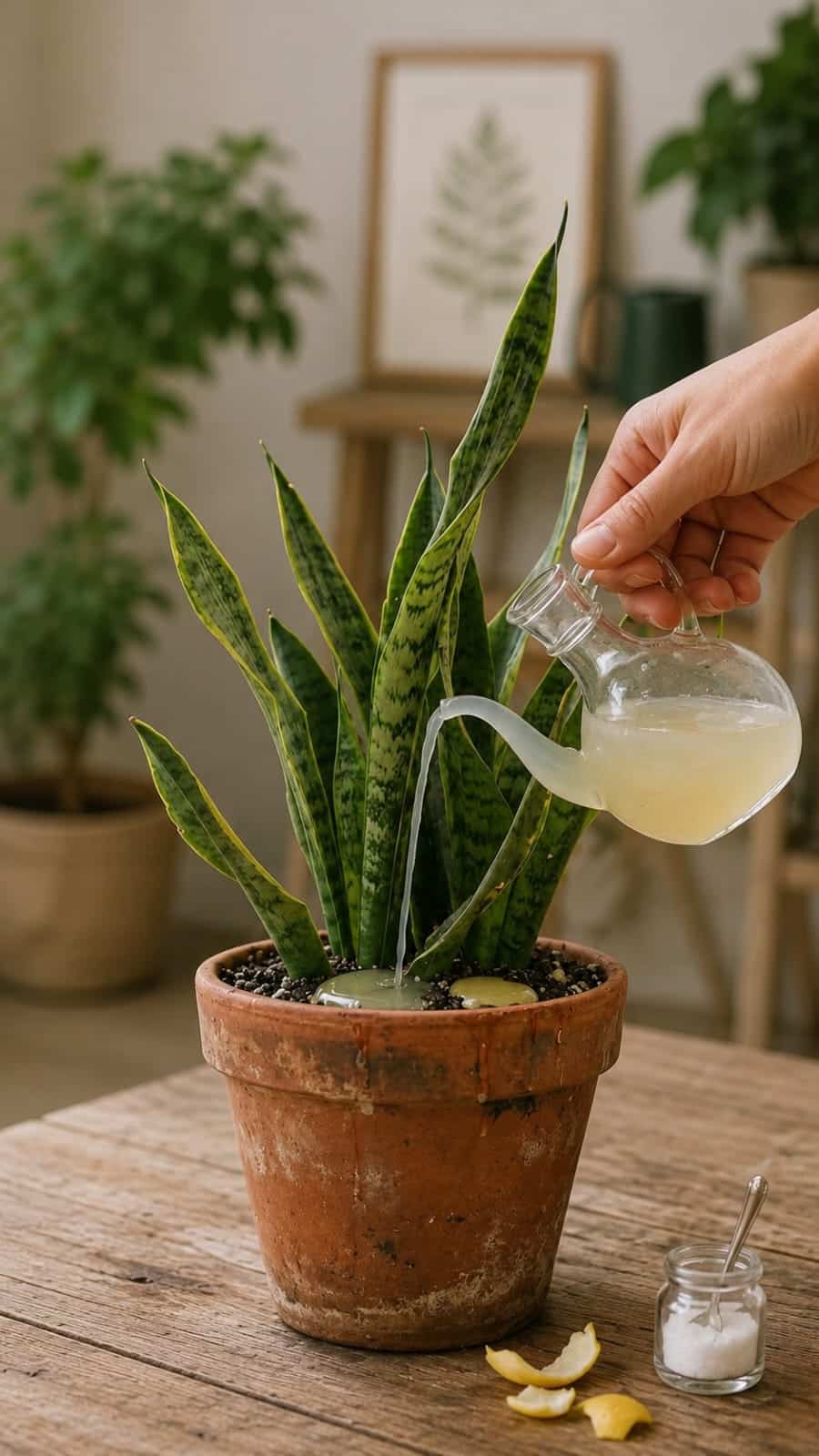
Should You Use Lemon Peel Water on Outdoor Snake Plants? – Yes, Carefully
If your snake plant is outdoors in warm weather, it may dry faster and tolerate occasional mild treatments better than an indoor plant. Still, use the solution weakly and rarely. Outdoor pots can still rot if they sit in rain or dense soil.
Apply only when the soil is dry. Avoid using it before heavy rain. Make sure the pot drains freely.
Should You Use Lemon Peel Water on Indoor Snake Plants? – Extra Caution Needed
Indoor snake plants need extra caution because they dry more slowly. Use less solution indoors. If your room is cool, dim, or humid, skip the trick entirely and use plain water only when needed.
For indoor plants, a few tablespoons of diluted lemon peel water are enough for a small pot. Do not drench the plant.
Can Lemon Peel Water Keep Pests Away? – Limited Effect
The citrus scent may discourage some insects briefly, but it is not a reliable pest treatment. If you have pests, identify them first. Snake plants can get mealybugs, spider mites, scale, and fungus gnats. For natural pest control for snake plants, use targeted methods.
Lemon peel water should not be used as your main pest control. It is a mild soil refresher, not an insecticide.
How to Handle Fungus Gnats – Fix Moisture First
Fungus gnats are tiny flying insects that hover around wet soil. They are a sign that the soil is staying too moist or contains decaying organic matter. Lemon peel water may smell fresh, but it will not solve fungus gnats if you keep watering too often. This how to get rid of fungus gnats on snake plants guide will help.
Fungus Gnat Fix
- Let the soil dry more deeply
- Remove any fruit peels or organic scraps from the pot
- Use yellow sticky traps
- Improve drainage
- Replace the top inch of soil if needed
- Avoid pouring sugary or fermenting liquids into the soil
Do not place lemon peels directly on snake plant soil. They can mold and attract gnats.
How to Clean Snake Plant Leaves – Natural Shine Tips
Snake plant leaves collect dust. Dust blocks light and makes the plant look dull. Cleaning leaves is one of the simplest ways to make the plant look healthier. For naturally shiny snake plant leaves, stick to gentle wiping.
Leaf Cleaning Steps
- Use a soft damp cloth.
- Support the leaf with one hand.
- Wipe from base to tip.
- Clean both sides if needed.
- Dry with a soft cloth.
- Avoid leaf shine products.
You can use plain water for cleaning. You do not need lemon juice or oil on the leaves. Oils can clog leaf surfaces and attract dust.
Should You Spray Snake Plant Leaves With Lemon Water? – No, Soil Only
It is better not to spray lemon water on snake plant leaves. The leaves are thick and waxy, and acidic sprays can leave spots, especially in sunlight. If you want to clean leaves, use plain water on a cloth.
Apply lemon peel water only to the soil, and only in diluted form.
Can You Use Rice Water Instead? – Another Gentle Option
Rice water is another popular plant trick. It contains starch and trace nutrients, but it can sour if left too long. For snake plants, rice water should also be used carefully and rarely. Too much starchy water can attract gnats or create odor in the soil.
If using rice water, dilute it and apply only to dry soil. Lemon peel water and rice water should not be used together frequently. Keep treatments simple.
Can You Use Banana Peel Water Instead? – Use Sparingly
Banana peel water is often used as a potassium-rich homemade plant tonic, but it can ferment and smell. Snake plants do not need frequent organic liquid feeds. If you use banana peel water, dilute it heavily and use it rarely. Never bury banana peels in a snake plant pot.
Can You Use Coffee Water? – Not Recommended
Coffee is too risky for snake plants if used often. It can alter soil conditions, attract gnats, and keep soil wetter. Snake plants are not plants that need coffee treatments. Plain water and occasional diluted fertilizer are better.
Best Fertilizer for Snake Plants – Gentle Feeding Routine
Snake plants are light feeders. They do not need much fertilizer. During spring and summer, you can use a balanced houseplant fertilizer diluted to half strength or a cactus fertilizer. The best fertilizer for snake plants is used sparingly.
Simple Fertilizer Routine
- Feed once every 6 to 8 weeks in spring and summer
- Use half-strength fertilizer
- Do not fertilize dry roots heavily
- Do not fertilize in winter if growth slows
- Do not combine multiple homemade tonics at once
Overfeeding can cause weak growth, salt buildup, and brown tips. Snake plants prefer a light hand.
How to Encourage New Snake Plant Shoots – Getting Pups
New shoots, often called pups, grow from underground rhizomes. If your snake plant is not producing pups, it may need more light, a slightly snug pot, and patience. This how to get snake plant pups guide will help.
Encourage Pups With:
- Bright indirect light
- Warm temperatures
- Fast-draining soil
- Careful watering
- Light feeding during active growth
- A pot that is not too large
Lemon peel water will not force pups, but a refreshed, healthy root environment may support normal growth.
How to Propagate Snake Plants – Multiply Your Collection
If your snake plant is healthy, you can multiply it through division or leaf cuttings. This how to propagate snake plants naturally guide will help you.
Division Method
- Remove the plant from the pot.
- Find natural clumps or pups.
- Separate sections with roots attached.
- Let cut areas dry for a few hours.
- Plant in fresh dry succulent mix.
- Wait several days before watering lightly.
Leaf Cutting Method
- Cut a healthy leaf into sections.
- Remember which end is the bottom.
- Let cut pieces callus for 1 to 2 days.
- Place the bottom end into dry succulent mix.
- Water lightly after several days.
- Wait patiently for roots and pups.
For variegated snake plants with yellow edges, division is best if you want to keep the same variegation. Leaf cuttings may produce plain green pups.
How to Save an Overwatered Snake Plant – Emergency Rescue
If your snake plant has soft yellow leaves, mushy bases, or a bad smell, act quickly. This how to save an overwatered snake plant guide is essential.
Rescue Steps
- Remove the plant from the pot.
- Shake off wet soil.
- Inspect the roots and rhizomes.
- Cut away mushy, black, or smelly parts.
- Keep only firm healthy sections.
- Let them dry for a day.
- Repot into dry fast-draining mix.
- Wait several days before watering.
Do not use lemon peel water during recovery. Use plain water only after the plant has settled and the soil is dry.
Why Snake Plant Leaves Lean – Common Causes
Leaning leaves can happen for several reasons. This why snake plant leaves droop guide will help you diagnose.
- Too little light
- Overwatering weakening the base
- Leaves naturally growing toward light
- Pot too shallow
- Roots crowded or unstable
- Physical damage
If the leaf is firm, it may simply need more light or support. If the base is soft, check for rot.
Why Snake Plant Leaves Wrinkle – Dehydration or Rot
Wrinkled leaves often mean the plant is using stored water. This can happen from underwatering, damaged roots, or rot. It sounds confusing, but both dry roots and rotten roots can cause wrinkling because the plant cannot take up water properly.
Check the soil. If it is bone dry and the roots are healthy, water thoroughly. If the soil is wet and the leaves are wrinkled, inspect the roots for rot.
Why Snake Plant Tips Turn Brown – Common and Usually Minor
Brown tips are common and usually not serious. Causes include dry air, inconsistent watering, mineral buildup, physical damage, or too much fertilizer.
You can trim brown tips with clean scissors, following the natural pointed shape of the leaf. Do not cut too far into healthy tissue.
Can Lemon Peel Water Change Soil pH? – Unlikely in Small Doses
A weak occasional lemon peel water is unlikely to dramatically change soil pH, especially if diluted. But repeated acidic treatments can affect the potting environment over time. That is why this trick should be occasional, not routine.
Snake plants do not require acidic soil tricks. They prefer a stable, well-draining mix.
What to Do If the Soil Smells Bad – Fix the Root Cause
If the soil smells rotten, lemon peel water is not the answer. A bad smell usually means the soil is staying too wet or organic matter is decomposing without enough oxygen. This how to fix smelly snake plant soil guide will help.
Fix Stinky Soil
- Stop watering
- Remove the plant from the pot
- Check roots for rot
- Replace wet soil with fresh dry mix
- Use a pot with drainage
- Increase light and airflow
A fresh citrus scent may hide odor temporarily, but it will not fix the cause.
Can You Put Lemon Peels Directly on the Soil? – No, Never
No, not for snake plants. Lemon peels sitting on the soil can mold, attract gnats, and keep the surface damp. If you want to use lemon peels, soak them in water, strain them out, dilute the water, and discard the peels in compost.
Quick Recipe Card: Lemon Peel Water for Snake Plant – Homemade Tonic
Ingredients:
- Peel from 1 small lemon
- 4 cups water
- 4 more cups plain water for dilution
Steps:
- Wash the lemon peel.
- Soak peel in 4 cups water for 4 to 6 hours.
- Strain completely.
- Dilute with 4 cups plain water.
- Apply a small amount to dry soil only.
- Keep away from the center crown.
- Let the pot drain fully.
- Repeat only every 6 to 8 weeks at most.
Quick Snake Plant Care Checklist – Essential Tips
- Use a pot with drainage holes
- Choose fast-draining succulent soil
- Give bright indirect light
- Water only when soil is dry
- Never let the pot sit in water
- Clean leaves with a damp cloth
- Feed lightly in spring and summer
- Avoid frequent homemade liquids
- Keep lemon peel water weak and rare
Short Caption for This Trick
“To make a gentle lemon peel water for snake plants, soak clean lemon peels in water for 4 to 6 hours, strain well, then dilute the liquid with an equal amount of plain water. Pour only a small amount onto completely dry soil, keeping it away from the center of the plant. Use this trick no more than once every 6 to 8 weeks. Never use straight lemon juice, never leave peels on the soil, and never apply it to a wet or rotting snake plant – this natural snake plant tonic is a gentle soil refresher, not a heavy fertilizer.”
Frequently Asked Questions – Lemon Peel Water for Snake Plants Q&A
Can I use lemon water on a snake plant?
You can use very diluted lemon peel water occasionally, but do not use straight lemon juice. Apply only to dry soil and use it rarely.
Is lemon juice good for snake plants?
No. Lemon juice is too acidic for direct use in a snake plant pot. If using lemon, use only peel-infused water that has been diluted well.
How often should I use lemon peel water?
Once every 6 to 8 weeks during active growth is enough. Do not use it weekly.
Can lemon peel water kill pests?
It is not a reliable pest killer. It may briefly discourage some insects by scent, but real pest problems need proper treatment.
Can I put lemon peels on top of the soil?
No. Lemon peels can mold and attract gnats. Always remove and discard the peels after soaking.
Can I add baking soda?
It is better to skip baking soda. If used, it must be only a tiny pinch in a large amount of water. Too much can harm soil and roots.
Why is my snake plant turning yellow?
Yellow leaves are often caused by overwatering, poor drainage, cold conditions, or root rot. Check the roots before adding any homemade solution.
Should I water my snake plant after using lemon peel water?
No. The lemon peel water counts as moisture. Wait until the soil dries again before watering.
Can I use this on other succulents?
Be careful. Many succulents dislike organic liquids and extra moisture. Plain water and proper light are usually better.
What is the best natural care for snake plants?
The best natural care is simple: bright indirect light, dry soil between waterings, fast-draining mix, a pot with drainage, and occasional leaf cleaning.
Final Thoughts – The Best Natural Snake Plant Soil Refresher
The lemon peel water trick for snake plants can be useful as a gentle soil refresh when used carefully. It may help freshen the pot, lightly rinse the soil surface, and make your plant-care routine feel more natural. But it must be weak, strained, diluted, and rare. Snake plants do not like constant moisture, strong acidic liquids, fruit scraps in the soil, or heavy homemade treatments. This natural snake plant care method is best used as an occasional supplement, not a primary treatment.
The safest method is to soak clean lemon peels in water for a few hours, strain the liquid, dilute it with plain water, and apply only a small amount to completely dry soil. Keep it away from the center crown and let the pot drain fully. Use it no more than once every 6 to 8 weeks during active growth. Following this complete snake plant care guide will keep your plant thriving for years.
Most importantly, remember that snake plants thrive on restraint. They do not need constant feeding, frequent watering, or complicated remedies. They need bright indirect light, a dry period between waterings, a draining pot, and a loose succulent mix. If you provide those basics, your snake plant can stay upright, patterned, strong, and beautiful for years. These professional indoor plant care secrets will help you succeed.
Use the lemon peel trick as a small occasional refresh, not as a main care routine. When in doubt, choose plain water, dry soil, and patience. With snake plants, less is often more, and that simple approach is usually what creates the strongest, healthiest growth.