Best Light for Spider Plants – Optimal Indoor Placement
Spider plants love bright indirect light. They can tolerate lower light, but growth may slow and variegation may become less vivid. Too much direct sun can scorch the leaves, especially the pale white stripes. Providing optimal light for spider plant health is essential.
Best Indoor Locations
- Near an east-facing window
- A few feet from a south-facing window
- A bright north-facing window
- Near a west-facing window with filtered light
- Under a gentle grow light
If the leaves are pale, floppy, or stretching, the plant may need more light. If leaf edges are scorched, move it away from direct sun.
How to Water Spider Plants Correctly – Moisture Management
Spider plants like evenly moist soil, but they do not like soggy roots. Let the top inch of soil dry before watering again. When you water, water thoroughly until excess drains out. This spider plant watering guide for beginners will prevent common problems.
Watering Steps
- Touch the top inch of soil.
- If it feels dry, water.
- If it feels damp, wait.
- Water until liquid drains from the bottom.
- Empty the saucer after watering.
- Do not water again until the top begins to dry.
Overwatering can cause yellow leaves, root rot, and weak growth. Underwatering can cause limp leaves and brown tips. The goal is balance.
Why Spider Plant Tips Turn Brown – Common Causes and Fixes
Brown tips are extremely common on spider plants. They do not always mean the plant is dying. They can be caused by several conditions. This why spider plant leaves have brown tips guide will help you diagnose.
Common Causes of Brown Tips
- Dry air
- Underwatering
- Overfertilizing
- Mineral buildup from tap water
- Fluoride sensitivity
- Too much direct sun
- Old leaf aging
- Low humidity
Milk spray will not reverse brown tips. Once a tip is brown, it stays brown. You can trim it neatly with clean scissors. To prevent more brown tips, improve watering consistency, avoid overfertilizing, and consider using filtered or rainwater if your tap water is very mineral-heavy.
Should You Mist Spider Plants? – Occasional vs Daily
Occasional misting can raise humidity very briefly, but it does not solve dry air long-term. Too much misting can leave leaves damp and encourage fungal issues. If your home is dry, a humidity tray, grouping plants together, or using a humidifier is more effective.
Milk solution should not be treated like daily mist. Use it rarely and intentionally.
Best Soil for Spider Plants – Well-Draining Potting Mix
Spider plants grow well in a light, well-draining potting mix. They do not need heavy soil. A mix that holds some moisture but drains freely is ideal. Choosing the best potting mix for spider plants is half the battle.
Simple Spider Plant Soil Mix
- 2 parts indoor potting mix
- 1 part perlite
- 1 part coco coir or fine bark
This gives the roots moisture and air. If your soil stays wet for too long, add more perlite. If it dries too quickly, add more coco coir.
Choosing the Right Pot – Drainage Is Essential
Use a pot with drainage holes. Spider plants can grow in plastic, terracotta, ceramic, or hanging baskets, but drainage matters most. A saucer is fine as long as you empty it after watering. Using a pot with drainage for spider plants is non-negotiable.
Spider plants like being slightly snug in their pots, but if the roots are packed tightly and water runs straight through, it may be time to repot.
When to Repot a Spider Plant – Signs of Root Crowding
Spider plants grow thick, fleshy roots that can fill a pot quickly. Repotting gives the plant fresh soil and more room. This when to repot spider plants guide helps you decide.
Signs It Needs Repotting
- Roots circling the pot
- Plant drying out very quickly
- Pot bulging or cracking
- Water running through immediately
- Growth slowing despite good care
- Plant lifting out of the pot
Repot in spring or early summer if possible. Choose a pot only one size larger. A pot that is too large may hold too much moisture.
How to Clean Spider Plant Leaves Without Milk – Plain Water Works
If your main goal is cleaning, plain water is often enough. This how to clean spider plant leaves naturally method is simple and safe.
Simple Leaf Cleaning Method
- Place the plant in a sink or shower.
- Use room-temperature water.
- Rinse leaves gently.
- Let the plant drain completely.
- Place it in bright indirect light to dry.
This removes dust and many early pests. You can also wipe leaves with a soft damp cloth.
Milk Spray vs Plain Water Spray – Which Is Better?
Plain water is safer for frequent use. Milk spray should be occasional. If the plant is simply dusty, use plain water. If you want to test the milk trick for mild leaf support, use the diluted solution and watch carefully.
Never assume that more ingredients make a better spray. Often, simple care works best.
Can You Add Soap to Milk Spray? – Avoid Mixing
It is better not to mix soap into milk spray unless you are following a tested recipe for pest control. Soap can help with pests, but it can also damage leaves if too strong. Milk plus soap may create more residue.
If pests are present, use a separate insecticidal soap product according to label instructions, or make a very mild soap spray separately. Do not combine many treatments at once.
Can You Add Neem Oil? – Use Separately
Avoid mixing neem oil with milk spray. Neem oil is already a treatment on its own and must be diluted properly. Combining neem with milk can create a heavy coating on leaves. If you use neem, use it separately, follow directions, and avoid spraying in direct sun.
What to Do If Leaves Smell Sour After Spraying – Quick Fix
If the plant smells sour, the milk solution was too strong, too much was applied, or the leaves stayed wet too long. Rinse the plant with plain water. Let it drain and dry in bright indirect light with good airflow. Do not spray milk again for a long time, or stop using it entirely.
What to Do If Leaves Look Spotty After Spraying – Residue Removal
Leaf spotting can happen if the spray was too strong, the plant was in sun while wet, or residue dried unevenly. Wipe the leaves with a damp cloth and stop using the spray. Move the plant to stable bright indirect light and monitor new growth.
What to Do If Fungus Gnats Appear – Fix the Soil
Fungus gnats usually come from moist soil, not leaf spray alone. But milk residue or organic matter can make conditions more attractive if it reaches the soil. This how to get rid of fungus gnats on spider plants guide will help.
Fix Fungus Gnats
- Let the top inch of soil dry between waterings
- Use yellow sticky traps
- Avoid pouring organic liquids into the soil
- Remove dead leaves from the pot
- Improve airflow
- Consider replacing the top layer of soil
How to Keep Spider Plants Full and Bushy – Growth Tips
A spider plant becomes fuller when it has good light, healthy roots, and enough space. Remove old leaves from the base and rotate the pot every week so all sides receive light. This how to make spider plants fuller and bushier guide will help.
If the plant becomes crowded with many baby plants, you can leave them for a cascading look or remove some to root separately. Removing some plantlets can help the mother plant conserve energy.
How to Propagate Spider Plant Babies – Grow New Plants for Free
Spider plants are famous for producing babies, also called plantlets or spiderettes. These are easy to root. This how to propagate spider plant babies method is simple and effective.
Water Propagation
- Choose a baby with small root bumps.
- Cut it from the runner.
- Place the base in water.
- Keep leaves above water.
- Change water every few days.
- Plant in soil when roots are 1 to 2 inches long.
Soil Propagation
- Fill a small pot with moist potting mix.
- Place the baby on the soil.
- Pin it gently if needed.
- Keep soil lightly moist.
- Wait for roots to anchor.
Do not spray milk solution on new baby plants until they are established.
How to Feed Spider Plants – Gentle Fertilizing Routine
Spider plants are not heavy feeders. Too much fertilizer can cause brown tips and weak growth. Feed lightly during spring and summer. The best fertilizer for spider plants is used sparingly.
Simple Feeding Routine
- Use a balanced liquid houseplant fertilizer
- Dilute to half strength
- Feed once a month during active growth
- Do not feed heavily in winter
- Flush soil occasionally with plain water
Milk spray is not a fertilizer replacement. It is a leaf-care trick, not a complete feeding plan.
How to Flush the Soil – Remove Mineral Buildup
If your spider plant has brown tips from mineral buildup, flushing can help. This how to flush spider plant soil method is simple.
- Take the plant to a sink or shower.
- Slowly pour plain water through the soil.
- Let water drain freely from the bottom.
- Repeat for several minutes.
- Let the pot drain completely.
- Return to bright indirect light.
This helps wash out excess salts. Do not flush if the plant is already waterlogged or showing root rot symptoms.
How to Identify Common Spider Plant Problems – Diagnosis Guide
Yellow Leaves
Usually caused by overwatering, poor drainage, low light, or old leaf aging.
Brown Tips
Often caused by dry air, inconsistent watering, fertilizer buildup, or minerals in water.
Pale Leaves
May mean too much sun, too little light, or nutrient issues depending on the pattern.
Drooping Leaves
Can mean underwatering, overwatering, root stress, or temperature shock.
No Babies
The plant may need more light, maturity, or slightly snug roots.
Sticky Leaves
Check for pests like aphids, scale, or mealybugs.
Best Weekly Spider Plant Care Routine – Simple Checklist
- Check soil moisture
- Rotate the pot
- Inspect leaf undersides
- Remove dead leaves
- Check for brown tips
- Look for pests or webbing
- Wipe dusty leaves if needed
Best Monthly Spider Plant Care Routine – Seasonal Maintenance
- Rinse leaves with plain water
- Feed lightly during active growth
- Check roots if growth has slowed
- Trim brown tips
- Use milk spray only if needed
- Inspect nearby plants for pests
Quick Recipe Card: Milk Solution for Spider Plants – Homemade Leaf Spray
Ingredients:
- 1 tablespoon low-fat or skim milk
- 9 tablespoons water
Steps:
- Mix in a clean spray bottle.
- Shake gently.
- Test on one leaf first.
- Wait 24 hours.
- If no damage appears, mist leaves lightly.
- Avoid soaking the crown.
- Keep plant in bright indirect light with airflow.
- Wipe residue if needed.
- Repeat only occasionally.
Quick Pest-Prevention Checklist – Natural Spider Plant Defense
- Quarantine new plants for 2 weeks
- Inspect leaves weekly
- Rinse plant if pests appear
- Keep leaves clean
- Avoid overwatering
- Improve airflow
- Do not crowd plants too tightly
- Use diluted milk spray only as a gentle support
Short Caption for This Trick
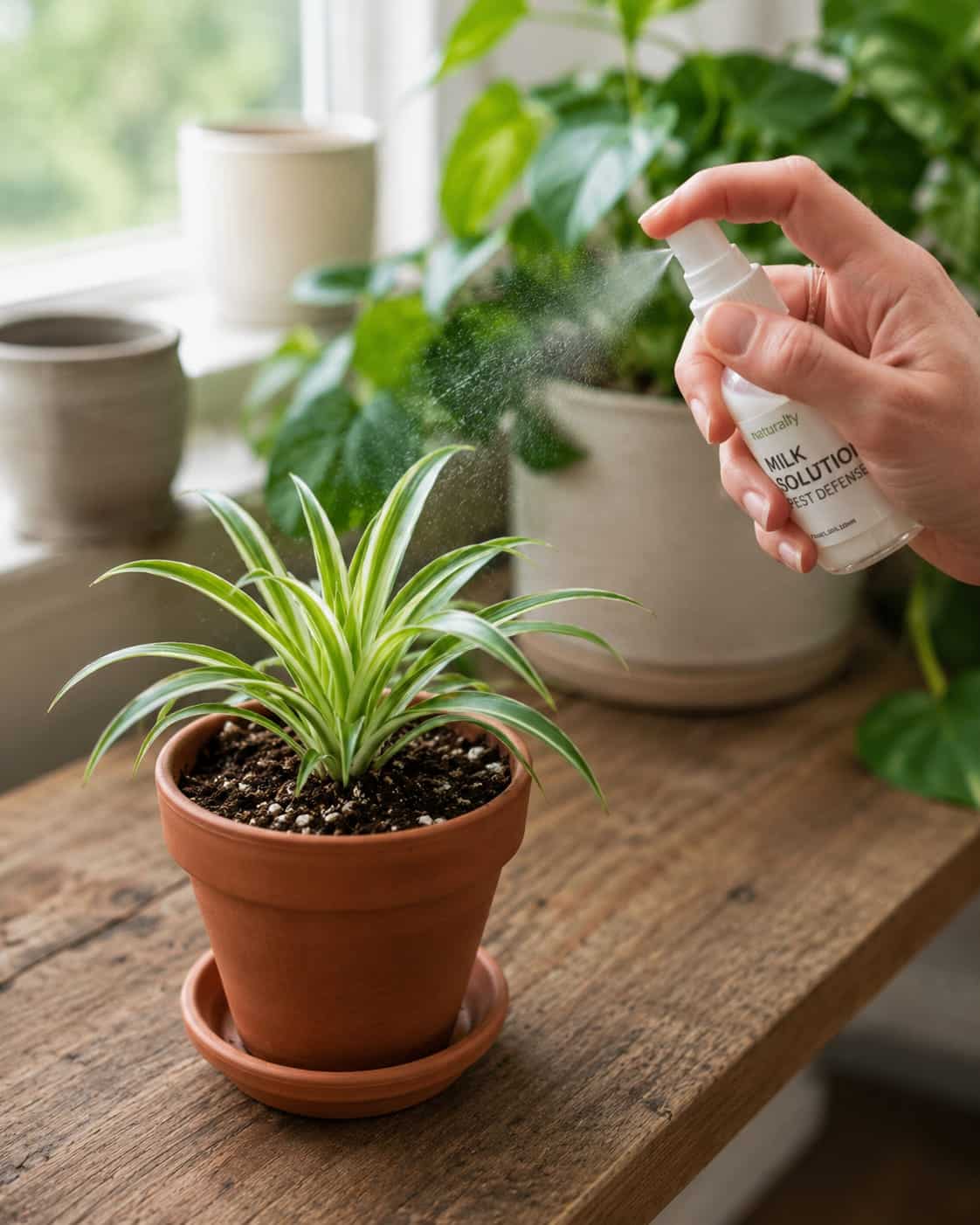
“To make a gentle milk solution for a spider plant, mix 1 part low-fat milk with 9 parts water in a clean spray bottle. Test one leaf first, then mist the leaves lightly in the morning, avoiding the center crown and soil. Let the plant dry in bright indirect light with good airflow. Use only occasionally, not every day. For real pest defense, keep the plant clean, avoid overwatering, inspect weekly, and rinse pests away early – this natural spider plant leaf spray is a gentle helper, not a cure-all.”
Frequently Asked Questions – Milk Spray for Spider Plants Q&A
Can I spray milk on a spider plant?
Yes, but only if it is heavily diluted. Use 1 part milk to 9 parts water and spray lightly. Do not use straight milk.
How often should I use milk spray?
Use it no more than once every 2 to 4 weeks for general care. If treating a mild issue, use once weekly for two weeks, then stop and observe.
Can milk spray kill pests?
Milk spray is not a strong pest killer. It may help with leaf hygiene, but serious pests need rinsing, isolation, and proper treatment.
Will milk spray smell bad?
It can smell bad if the mixture is too strong, applied too heavily, or left wet for too long. Use a weak solution and good airflow.
Can I pour milk into the soil?
No. Do not pour milk into spider plant soil. It can sour, attract fungus gnats, and disturb the roots.
Should I use whole milk?
Low-fat or skim milk is better because it leaves less residue. If using whole milk, dilute it more heavily.
Can I use spoiled milk?
No. Never use spoiled milk on houseplants.
Can I add soap to the milk spray?
It is better not to mix soap with milk spray. If pests require soap, use a separate insecticidal soap treatment.
Why are my spider plant tips brown?
Brown tips are usually caused by dry air, inconsistent watering, mineral buildup, too much fertilizer, or tap water sensitivity. Milk spray will not reverse brown tips.
Is milk spray safe indoors?
It can be safe if diluted, used lightly, and applied with good airflow. Overuse can create odor and residue.
Final Thoughts – The Best Natural Spider Plant Leaf Care
The milk solution trick for spider plants can be a gentle leaf-care method when used with care. A weak mixture of milk and water may help clean leaves and support a healthier leaf surface, especially when used occasionally as part of a broader pest-prevention routine. But the trick is not meant to soak the plant, coat the leaves heavily, or replace proper care. This natural spider plant leaf treatment is best used as an occasional supplement, not a primary treatment.
The safest recipe is simple: 1 part low-fat milk to 9 parts water. Spray lightly in the morning, avoid the crown, avoid the soil, and let the plant dry with good airflow. Use it rarely. If there is residue, wipe it away. If there is odor, rinse the plant and stop using the spray. Following this complete spider plant care guide will keep your plant thriving.
For real spider plant health, focus on the basics. Give bright indirect light. Water when the top inch of soil dries. Use a pot with drainage. Keep leaves clean. Inspect for pests every week. Feed lightly during active growth. Trim brown tips when needed. Repot when roots become crowded. These professional indoor plant care secrets will help you succeed.
A spider plant does not need complicated care to look beautiful. It needs balance. The milk spray can be a small helper, but the true defense against pests and dull leaves is a strong, clean, well-cared-for plant. With gentle attention, your spider plant can stay fresh, bright, full, and ready to send out those charming little baby plants that make it one of the most loved houseplants in the world. Start your spider plant care journey today with the right fundamentals.