Balanced Fertilizer vs Yeast Powder – The Complete Picture
Yeast powder is not a complete fertilizer. It does not provide all the nutrients a geranium needs in balanced amounts. If your plant is in a pot, it will eventually need proper feeding. The best fertilizer for geranium blooms is a balanced formula used at half strength.
A balanced liquid fertilizer or bloom fertilizer is more reliable for long-term flowering. Yeast water can be used as an occasional supplement, but it should not replace regular plant nutrition.
Simple Feeding Schedule
- Use balanced liquid fertilizer every 2 to 4 weeks during active growth.
- Use half strength for potted plants.
- Use yeast water only once every 4 to 6 weeks if desired.
- Do not use fertilizer and yeast treatment on the same day.
- Flush the pot occasionally with plain water to prevent buildup.
Feeding should be gentle and consistent. Too much fertilizer can cause leafy growth with fewer flowers, especially if the fertilizer is high in nitrogen.
Can Yeast Replace Bloom Fertilizer? – No, Use as Supplement
No. Yeast is not a bloom fertilizer. A bloom fertilizer usually contains phosphorus and potassium, along with other nutrients. Yeast may support soil life, but it does not provide a complete nutrient plan for heavy-flowering geraniums.
If your goal is more flowers, use yeast only as a side helper. The main routine should still include sunlight, deadheading, and balanced feeding.
What About Nutritional Yeast? – Inactive Yeast Option
Nutritional yeast is inactive yeast often used as a food seasoning. It is yellow, flaky, and rich in B vitamins. Some gardeners use it as a mild organic powder. If you use nutritional yeast on geraniums, use only a tiny pinch and water it in. Do not pile it around the stem.
Because nutritional yeast is inactive, it will not foam like baker’s yeast. It may still break down as organic matter in the soil. Use it sparingly to avoid mold.
What About Baker’s Yeast? – Active Yeast Caution
Baker’s yeast is active yeast used for bread. When mixed with warm water and a little sugar, it becomes active and foamy. For plants, it should be diluted heavily before use. A strong active yeast mixture can smell unpleasant and encourage unwanted microbial growth in a pot.
Use a weak solution only, and do not store it for long. Make it fresh and use it the same day.
Should You Add Sugar? – Use Extremely Sparingly
A tiny amount of sugar can activate baker’s yeast, but sugar should be used carefully. Too much sugar in potting soil can attract gnats and encourage mold. For geraniums, 1/4 teaspoon sugar in the starter mixture is enough. After the yeast activates, dilute the mixture before watering.
If you already have fungus gnats, skip sugar and skip yeast treatments until the problem is gone.
How to Tell If Your Geranium Likes the Treatment – Positive Signs
After using a gentle yeast solution, watch the plant over the next few weeks. Healthy signs include firm leaves, new growth, fresh buds, and no sour smell from the soil. These are signs of healthy geranium growth.
Good Signs
- Leaves remain firm and green
- New buds continue developing
- Stems stay upright
- No mold appears on soil
- No fungus gnats appear
- Soil dries normally between waterings
Bad Signs
- White fuzzy mold on soil
- Sour or fermented smell
- Fungus gnats flying around the pot
- Yellowing leaves after treatment
- Soil staying wet too long
- Stem base becoming soft
If you notice bad signs, stop using yeast. Remove visible powder, let the soil dry slightly, improve airflow, and water with plain water only.
What to Do If Mold Appears – Emergency Fix
Mold means there is too much moisture, too much organic material, or not enough airflow. Remove the moldy top layer of soil if possible. Do not add more powder. Move the plant to a brighter, airier location. Let the top of the soil dry before watering again.
If the smell is sour or the plant is wilting, check the roots. The problem may be deeper than surface mold.
What to Do If Fungus Gnats Appear – Pest Control
Fungus gnats love damp organic soil. If they appear after a yeast treatment, the pot is staying too wet or the mixture was too strong. This natural fungus gnat control for geraniums guide will help.
Fixing Fungus Gnats
- Let the top inch of soil dry between waterings.
- Use yellow sticky traps.
- Remove any powder or decaying material from the surface.
- Improve airflow.
- Avoid sugar-based plant mixtures.
- Consider replacing the top layer of soil.
Do not keep adding homemade fertilizer when gnats are present. Solve the moisture issue first.
Why Geranium Leaves Turn Yellow – Common Causes and Fixes
Yellow leaves can be confusing because they can mean many different things. It does not always mean the plant needs food. This geranium yellow leaf diagnosis guide will help you.
Common Causes of Yellow Leaves
- Overwatering
- Underwatering
- Low light
- Old leaves aging naturally
- Nutrient deficiency
- Poor drainage
- Cold stress
- Root crowding
If only one or two old lower leaves yellow, that may be normal. If many leaves yellow at once, check soil moisture and drainage before feeding.
Why Geranium Buds Do Not Open – Bud Blast Causes
A geranium may form buds but fail to open them fully. This usually comes from stress rather than lack of one magic ingredient. This why geranium buds won’t open guide will help you.
Possible Causes
- Too little light
- Overwatering
- Sudden cold
- Extreme heat
- Pest damage
- Too much nitrogen fertilizer
- Plant recently moved or shocked
Keep the plant in stable conditions. Give it bright light, steady watering, and good airflow. Avoid overfeeding while buds are developing.
Why Geraniums Grow Leaves but No Flowers – Common Problem
This is one of the most common geranium problems. The two biggest causes are low light and too much nitrogen. If your plant looks leafy but refuses to bloom, move it to more sun and reduce high-nitrogen feeding.
A yeast trick will not fix a low-light problem. Flowers require energy, and energy comes from light.
How to Make Geraniums Bloom More – Complete Bloom Routine
For more blooms, follow a full routine instead of relying on one trick. This how to make geraniums bloom more naturally guide will help you succeed.
Bloom Routine
- Place the plant in strong light.
- Water only when the top inch dries.
- Deadhead faded blooms.
- Pinch leggy stems.
- Feed lightly with balanced fertilizer.
- Use yeast water only occasionally.
- Keep the pot draining well.
- Check weekly for pests.
This routine creates the conditions geraniums need to bloom repeatedly.
Can You Use This Trick on Indoor Geraniums? – Yes, Carefully
Yes, but indoor geraniums need extra caution. Indoor pots dry more slowly, and airflow is often lower. Use a weaker solution indoors and apply it less often.
For indoor geraniums, use half the amount: 1/8 teaspoon yeast in 1 liter of water, then dilute again before applying. Keep the plant near a bright window and avoid overwatering.
Can You Use This Trick on Outdoor Geraniums? – Yes, But Sparingly
Outdoor geraniums often handle gentle organic treatments better because they receive more light and airflow. Still, use the yeast mixture sparingly. Outdoor pots can still develop sour soil if overwatered or overfed.
Apply in the morning, not during the hottest part of the day. Water the soil, not the leaves.
Can You Use This Trick on Other Flowering Plants? – Test Carefully
A mild yeast water may be used on some flowering container plants, but always test carefully. Plants that like dry conditions or very lean soil may not appreciate organic mixtures. Avoid using yeast on succulents, cacti, orchids, or plants already prone to rot.
Better candidates include actively growing flowering annuals in sunny locations, but even then, use very weak solutions.
Best Time of Year to Use Yeast Water – Seasonal Timing
Use yeast water in spring or summer when geraniums are actively growing. Avoid using it during winter rest. When temperatures are low and light is weak, the plant uses less water and fewer nutrients. Organic solutions can sit in the soil too long and cause problems.
If overwintering geraniums indoors, keep them drier and do not push growth with homemade feeding until spring returns.
How to Overwinter Geraniums – Cold Climate Care
In cold climates, geraniums can be brought indoors before frost. They may slow down and lose some leaves, which is normal. During winter, give as much light as possible and water less often.
Do not use yeast water heavily during winter. Wait until the plant begins fresh growth in spring. Then prune lightly, refresh the soil if needed, and resume gentle feeding.
How to Refresh Old Geranium Soil – Better Than Powder
If your geranium has been in the same pot for a long time, old soil may be the real problem. Nutrients run out, roots become crowded, and the mix may compact. This how to refresh geranium potting soil guide is essential.
Refreshing Steps
- Remove the plant gently from the pot.
- Shake away loose old soil.
- Trim dead or mushy roots.
- Add fresh potting mix with perlite.
- Replant at the same depth.
- Water lightly.
- Wait a few weeks before using homemade treatments.
Fresh soil often gives better results than any powder.
How to Prune a Leggy Geranium – Shaping for More Blooms
A leggy geranium has long bare stems and fewer leaves. Pruning encourages compact growth. This how to prune leggy geraniums guide will help.
Pruning Steps
- Use clean scissors.
- Cut long stems back by one-third.
- Cut just above a leaf node.
- Remove weak or crossing stems.
- Place the plant in strong light.
- Resume light feeding after new growth begins.
You can root the cuttings to create new plants.
How to Propagate Geranium Cuttings – Grow New Plants for Free
Geraniums are easy to propagate from stem cuttings. This how to propagate geraniums from cuttings method is simple and effective.
Propagation Steps
- Cut a healthy 4-inch stem.
- Remove lower leaves.
- Let the cut end dry for a few hours.
- Place in moist, airy potting mix.
- Keep in bright indirect light.
- Water lightly until rooted.
Do not use yeast water on fresh cuttings. Wait until they have roots and begin new growth.
Quick Recipe Card: Yellow Powder Geranium Trick – Homemade Tonic
Gentle Yeast Water Ingredients:
- 1 liter lukewarm water
- 1/4 teaspoon dry yeast or nutritional yeast
- Optional: 1/4 teaspoon sugar
- 1 extra liter plain water for dilution
Steps:
- Mix yeast with lukewarm water.
- Add a tiny amount of sugar only if using baker’s yeast.
- Let sit for 20 to 30 minutes.
- Dilute with another liter of water.
- Apply lightly to slightly dry soil.
- Keep away from leaves and flower buds.
- Let the pot drain completely.
- Repeat only every 4 to 6 weeks during active growth.
Quick Dry Powder Method – Simplest Version
Use this only if you want the simplest version:
- Take a tiny pinch of nutritional yeast or dry yeast powder.
- Sprinkle lightly on the outer soil surface.
- Keep it away from the stem.
- Water lightly to settle it into the soil.
- Do not repeat for at least 4 to 6 weeks.
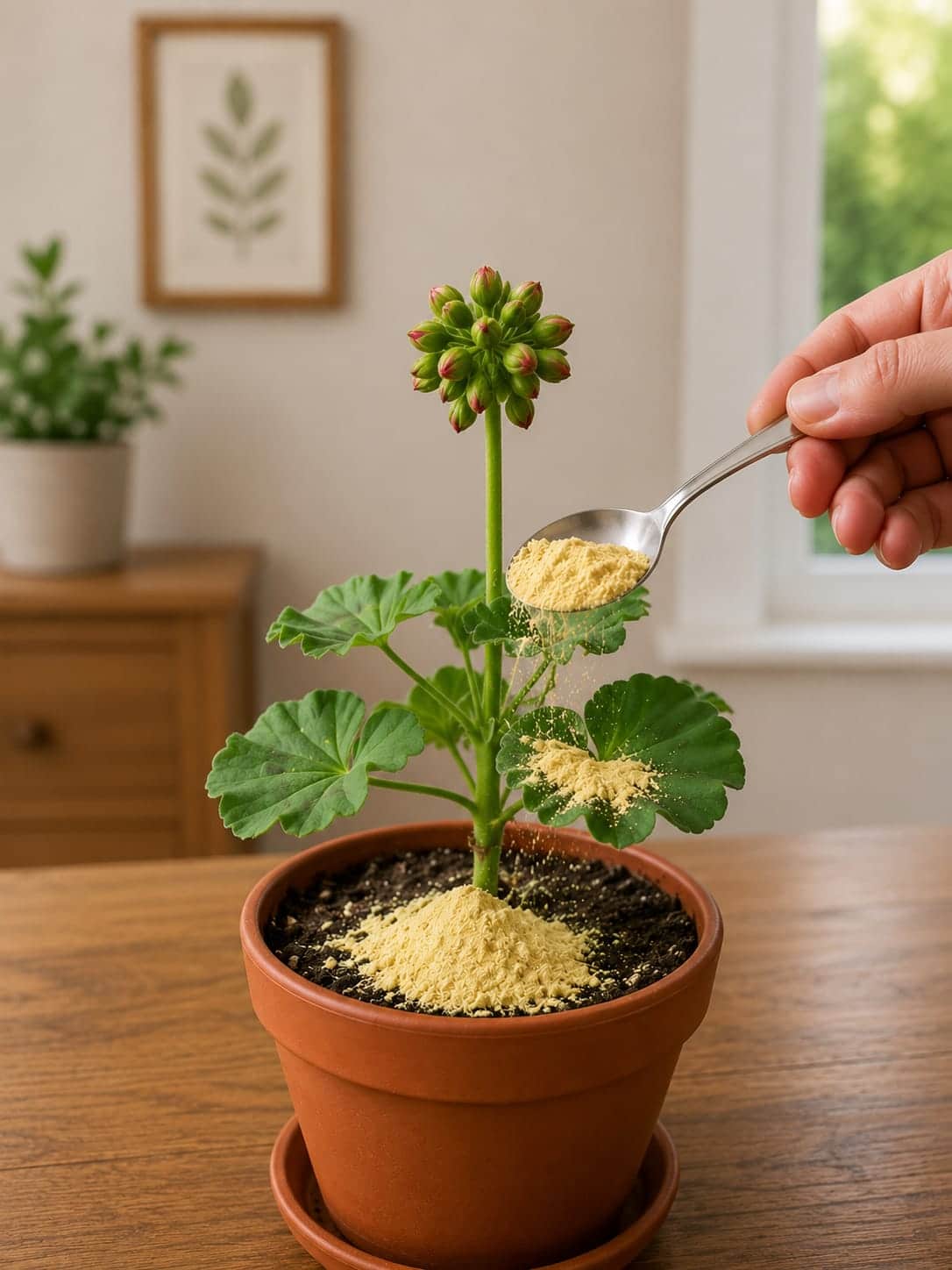
Never create a thick mound like the dramatic image shows. A tiny amount is safer.
Geranium Bloom Checklist – Essential Care
- Give 4 to 6 hours of strong light daily.
- Use a pot with drainage holes.
- Let the top inch of soil dry before watering.
- Deadhead faded blooms often.
- Pinch leggy stems for bushier growth.
- Use balanced fertilizer during active growth.
- Use yeast water only occasionally.
- Watch for mold, gnats, and sour soil.
- Refresh old soil when needed.
Short Caption for This Trick
“To use the yellow powder trick on geraniums, mix 1/4 teaspoon dry yeast or nutritional yeast into 1 liter of lukewarm water, let it sit briefly, then dilute with another liter of plain water. Pour lightly onto slightly dry soil and let the pot drain fully. Use only once every 4 to 6 weeks during active growth. For real blooms, give geraniums strong sunlight, regular deadheading, good drainage, and balanced fertilizer – this natural geranium bloom booster supports healthier growth when combined with proper care.”
Frequently Asked Questions – Yeast for Geraniums Q&A
Can I put yeast powder on geraniums?
Yes, but only in very small amounts. It is safer to dissolve yeast in water, dilute it, and apply it to the soil rather than piling dry powder around the stem.
Does yeast make geraniums bloom?
Yeast may support soil activity and plant vigor, but it does not force blooms by itself. Geraniums need strong sunlight, deadheading, good watering, and balanced fertilizer to bloom well.
How often should I use yeast water on geraniums?
Use it once every 4 to 6 weeks during spring and summer. Do not use it weekly.
Can too much yeast hurt plants?
Yes. Too much yeast or organic powder can mold, attract gnats, create sour soil, and stress roots.
Should I sprinkle the powder on leaves?
No. Apply it to the soil only. Powder on leaves and buds can leave residue and encourage problems if it becomes damp.
Can I use baker’s yeast?
Yes, but use a very weak mixture. Do not pour strong foamy yeast liquid into a pot.
Can I use nutritional yeast?
Yes, but only a tiny pinch or a weak solution. It is not a complete fertilizer.
Do I need to add sugar?
Sugar is optional and should be very limited. Too much sugar can attract fungus gnats and encourage mold.
Why is my geranium not blooming?
The most common reason is not enough sunlight. Other causes include too much nitrogen, lack of deadheading, overwatering, poor drainage, or pest stress.
Can I use yeast water on sick geraniums?
Not if the plant has soggy soil, root rot, mold, or fungus gnats. Fix those problems first.
Final Thoughts – The Best Natural Geranium Bloom Booster
The yellow powder geranium trick can be a fun and gentle homemade method when used carefully. A tiny amount of yeast powder or diluted yeast water may support the soil environment and help a healthy geranium grow with more energy. But the key word is tiny. Geraniums do not need a mound of powder around their stems. Too much can create mold, attract gnats, and harm the root zone. This natural geranium care method is best used as an occasional supplement, not a primary treatment.
The safest method is to dissolve a small amount of yeast in water, dilute it well, and apply it lightly to the soil only once every 4 to 6 weeks during active growth. Use plain water between treatments. Keep the pot draining well. Watch the plant for signs of stress. Following this complete geranium care guide will keep your plants thriving.
Most importantly, remember that geranium blooms come from good care, not from one magic ingredient. Give your plant strong light, remove spent flowers, avoid soggy soil, feed lightly with a balanced fertilizer, and prune when needed. If those basics are right, a gentle yeast treatment can become a small extra boost. These professional gardening secrets will help you succeed.
With patience and balanced care, your geranium can grow fuller, greener, and more generous with its blooms. The trick is not to overwhelm the plant. Give it sunlight, air, clean soil, careful watering, and only a soft touch of homemade support. That is how a simple potted geranium becomes a season-long show of fresh leaves and beautiful flower clusters.