How to Increase Your Success Rate – Rose Propagation Tips
Not every rose cutting roots. Even experienced gardeners lose some cuttings. To improve your chances, take several cuttings at once. If you want one new rose plant, prepare three to five cuttings.
Success tips:
- Use healthy mother plants
- Take cuttings in the right season
- Choose semi-hardwood stems
- Keep tools clean
- Use mild aloe-garlic solution
- Plant in airy medium
- Maintain humidity
- Avoid soggy soil
- Keep in bright indirect light
- Be patient
What to Do If the Cutting Turns Black – Troubleshooting Rot
If the cutting turns black from the bottom upward, it is rotting. Remove it immediately so it does not affect nearby cuttings.
Common causes include:
- Too much water
- Dirty tools
- Strong garlic solution
- Old unhealthy stem
- Poor airflow
- Heavy soil
Start again with fresh cuttings and a cleaner, lighter method.
What to Do If the Cutting Wilts – Reviving Stressed Cuttings
Wilting usually means the cutting is losing moisture faster than it can absorb it. Increase humidity and reduce leaf surface.
Try this:
- Remove extra leaves
- Place under a clear humidity cover
- Move to cooler bright shade
- Check that soil is lightly moist
- Avoid direct sun
If the stem is still green, it may recover.
What to Do If Mold Appears – Preventing Fungal Growth
Mold means there is too much moisture, poor airflow, or too much organic material.
To fix it:
- Open the humidity cover daily
- Remove fallen leaves
- Avoid excess aloe or garlic pieces
- Move to better airflow
- Let the surface dry slightly
If mold spreads heavily, restart with a cleaner setup.
Should You Fertilize Rose Cuttings? – No, Wait for Roots
No, not at first. Fresh cuttings do not have roots to use fertilizer properly. Fertilizer can burn or stress them. Wait until the cutting has rooted and is producing healthy new growth.
After the new rose plant is established, use a weak balanced fertilizer or compost tea at low strength. Young roses prefer gentle feeding.
Aftercare for Young Rose Plants – Growing Strong Roses
Once your cutting has rooted and begins growing, treat it like a baby rose plant. It needs protection, gradual sun exposure, and careful watering. This how to care for rooted rose cuttings guide will help.
For the first few weeks after rooting:
- Keep it in bright indirect light
- Water when the top soil begins to dry
- Avoid strong fertilizer
- Protect from harsh afternoon sun
- Do not let it dry completely
- Do not keep it soggy
After it becomes stronger, gradually introduce it to morning sun. Roses eventually need several hours of sunlight to grow and bloom well.
Quick Recipe Card – Aloe Vera and Garlic Rooting Soak for Rose Cuttings
Ingredients
- 1 small garlic clove
- 1 liter water
- 1 tablespoon fresh aloe vera gel
Method
- Slice one small garlic clove.
- Soak it in 1 liter of water for 1 to 2 hours.
- Strain out all garlic pieces.
- Add 1 tablespoon fresh aloe gel and stir well.
- Dilute 1 cup of this liquid with 1 cup plain water.
- Soak the bottom 1 to 2 inches of rose cuttings for 20 to 60 minutes.
- Plant cuttings into moist airy rooting mix.
- Cover with a humidity dome or clear bag.
- Keep in bright indirect light.
Short Caption for This Trick
“To use aloe vera and garlic for rose cuttings, soak one small garlic clove in 1 liter of water for 1 to 2 hours, strain well, mix in 1 tablespoon fresh aloe gel, dilute the liquid again, and soak only the bottom of the cuttings for 20 to 60 minutes before planting them in a moist airy rooting mix – this natural rooting hormone for roses gives you strong new plants.”
Frequently Asked Questions – Rose Cuttings Propagation Q&A
Can aloe vera help rose cuttings root?
Yes, aloe vera gel can be used as a gentle natural coating for rose cuttings. It helps keep the cut end moist and may support the rooting process when combined with proper planting conditions.
Is garlic water safe for rose cuttings?
Garlic water can be safe only when it is very mild, strained, diluted, and used briefly. Strong garlic juice or long soaking can damage cuttings.
Can I leave rose cuttings in garlic water overnight?
No. Overnight soaking is not recommended. Soak only the bottom of the cuttings for 20 to 60 minutes, then plant them.
Can I put garlic cloves in the soil with rose cuttings?
No. Garlic cloves can rot, attract pests, and create mold. Use only the strained liquid.
Can I use bottled aloe vera gel?
Fresh aloe is best. Bottled aloe products may contain preservatives, fragrance, alcohol, or other additives that are not ideal for cuttings.
How long do rose cuttings take to root?
Most rose cuttings take 4 to 8 weeks to root, but some varieties may take longer.
Why did my rose cutting turn black?
Blackening usually means rot. It can be caused by too much moisture, dirty tools, poor airflow, or weak unhealthy stems.
Should rose cuttings be in sun or shade?
Keep them in bright indirect light or bright shade. Avoid strong direct sun until they have roots.
Can I use this method for other plants?
Aloe can be used for many cuttings. Garlic water should be used carefully and only in very mild form. Some plants are more sensitive than others.
Is this better than rooting hormone?
Commercial rooting hormone is more consistent. Aloe and garlic are natural alternatives, but results can vary.
Final Thoughts – The Best Natural Rooting Method for Rose Cuttings
The aloe vera and garlic water trick is a simple natural method for preparing rose cuttings before planting. It combines the soothing moisture of aloe gel with a mild garlic water infusion. When used correctly, it can be part of a clean and gentle propagation routine. This best natural rooting hormone for roses has helped many gardeners successfully propagate their favorite varieties.
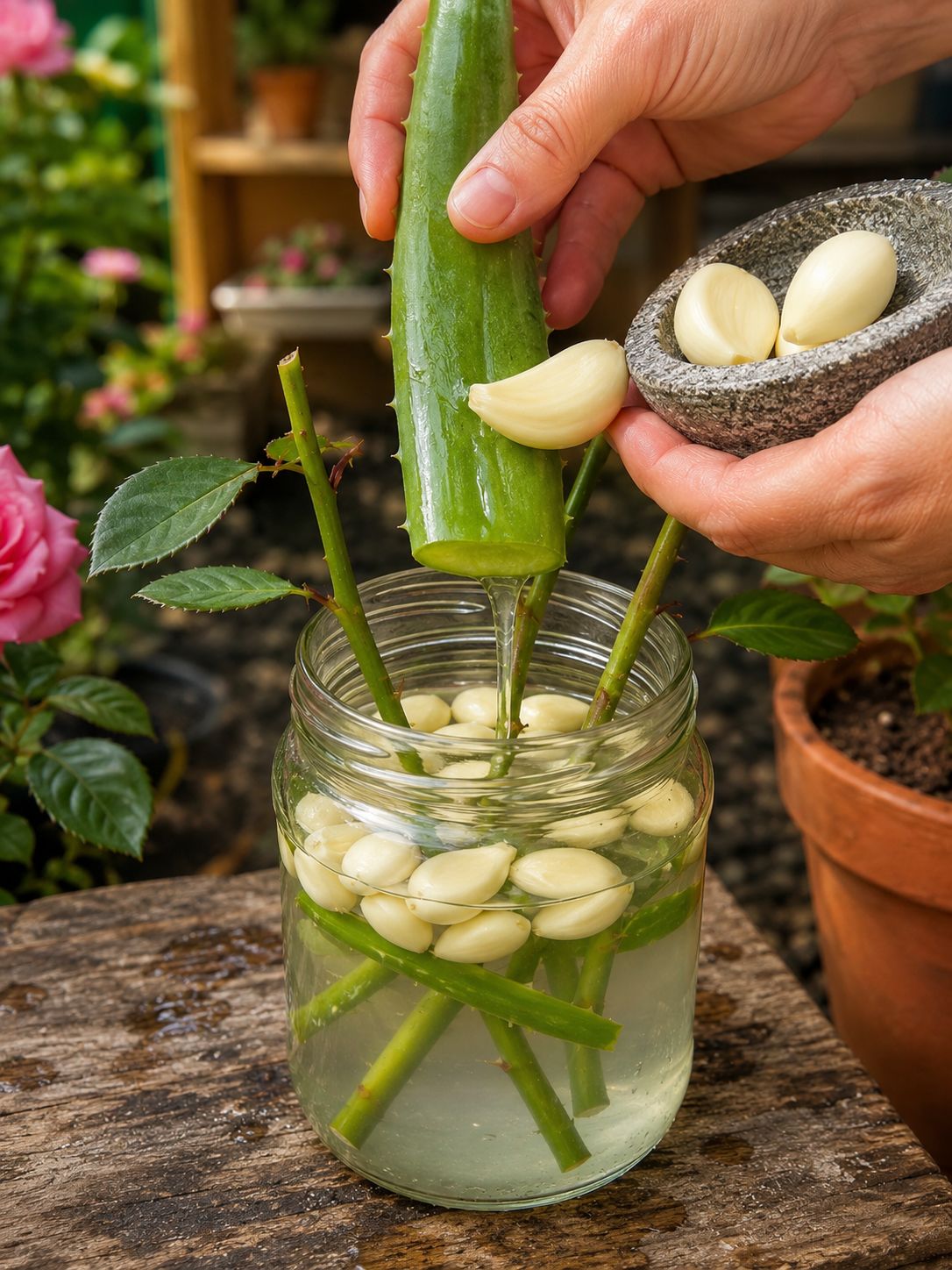
The safest method is not to fill a jar with strong garlic and leave stems soaking for days. The safe method is brief, diluted, and careful. Use one small garlic clove, strain the liquid, add a little fresh aloe gel, dilute again, and soak only the lower part of the cutting before planting. Following this complete rose propagation guide will give you the best chance of success.
Remember that the real secret to rooting roses is not one ingredient. Success depends on healthy stems, clean tools, correct timing, airy rooting mix, humidity, warmth, bright indirect light, and patience. Aloe and garlic can support the process, but they cannot replace good propagation conditions. These professional gardening secrets will help you grow beautiful roses from cuttings.
If you follow the steps carefully, you can turn a simple rose stem into a new plant. With time, that small cutting may grow roots, produce leaves, strengthen into a young rose bush, and eventually reward you with fresh flowers of its own. Start your rose propagation journey today and enjoy the satisfaction of growing your own roses for free.