Why Decorative Pebbles Change the Routine
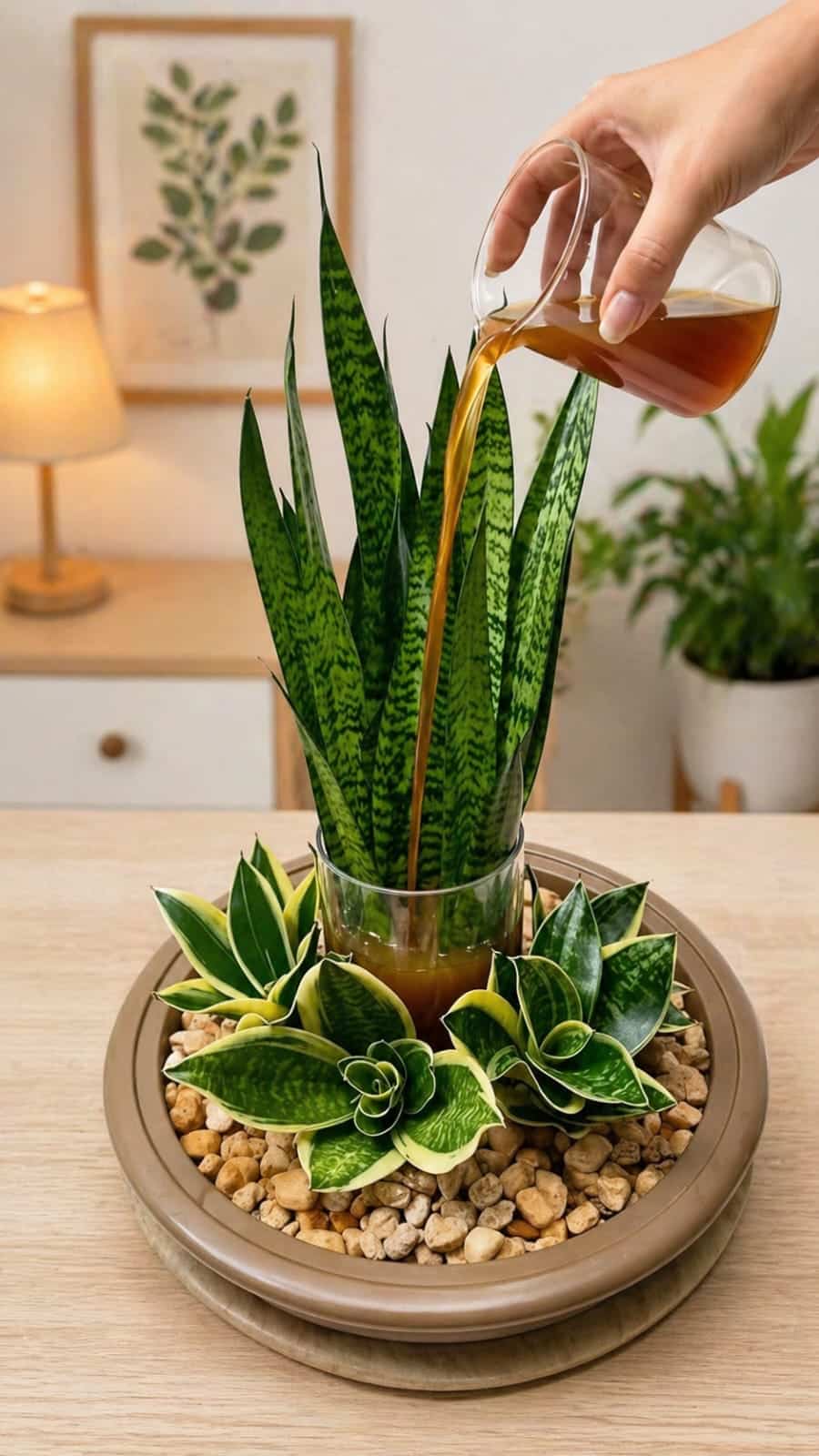
The pot in the image has decorative pebbles over the surface. Pebbles make a snake plant arrangement look polished and finished. They also help hide the soil and create a clean indoor display.
However, pebbles can make it harder to judge soil moisture. The surface may look dry and tidy, but the soil underneath could still be damp. This is why you should check deeper before watering. Move a few pebbles aside and feel the soil below, or use a wooden skewer to test moisture.
Pebbles can also slow surface drying slightly, depending on how thick the layer is. A thin decorative layer is usually fine. A thick sealed layer can trap moisture.
If you use amber tea, make sure the liquid does not leave sticky residue on the stones. If the pebbles become stained or smell bad, remove and rinse them.
Can Amber Tea Help Snake Plants Produce Pups?
It can support pup growth only if the plant is already healthy. Snake plant pups come from underground rhizomes. These rhizomes spread through the soil and send up new shoots when they have enough energy.
A mild amber tea may provide a small nutrient boost. But the biggest pup triggers are bright light, healthy rhizomes, well-draining soil, proper watering, and a slightly snug root system.
If your snake plant is not producing pups, ask these questions first:
- Is it getting enough bright indirect light?
- Does the pot have drainage holes?
- Is the soil gritty and fast-draining?
- Is the pot too large?
- Is the plant being watered too often?
- Is it warm enough?
- Is it actively growing season?
If those conditions are right, the amber tea can become a helpful bonus. If those conditions are wrong, the liquid will not create pups by itself.
Why a Slightly Snug Pot Can Encourage Growth
Snake plants often do well when slightly snug in their pots. This does not mean they should be rootbound forever, but they do not always need a huge container. A very large pot holds extra soil, and extra soil holds extra moisture. That can slow drying and increase the risk of rot.
A slightly snug pot helps the soil dry more predictably. It may also encourage the rhizomes to push new pups upward instead of spreading endlessly through empty soil.
The arrangement in the image has several plants in one decorative container. This can create a full look. If the roots are healthy and the pot drains well, this type of grouped planting can be very attractive. But if the pot is too deep or the soil is too heavy, it may stay wet too long.
Good pot size and drainage matter more than any liquid trick.
Best Soil for This Trick
The amber tea trick is safest when the snake plant is growing in gritty, fast-draining soil. Regular potting soil alone often holds too much moisture. Snake plants prefer a mix that contains air pockets.
A good snake plant mix can include:
- 2 parts cactus or succulent mix
- 1 part perlite or pumice
- 1 part coarse sand, lava rock, fine bark, or small gravel
This type of mix allows water and amber tea to move through the pot instead of sitting around the roots. It also helps oxygen reach the rhizomes.
If your soil is dense, muddy, or slow to dry, repotting into a better mix will help far more than amber tea. A homemade tonic poured into poor soil can make problems worse.
Best Light for a Fuller Snake Plant
Light is one of the most important factors for snake plant growth. Snake plants can survive low light, but they grow much better in bright indirect light. If you want pups, stronger leaves, and better color, give the plant more brightness.
A spot near an east-facing window is often excellent. Bright filtered light from a south or west window can also work. If the plant has been in a dark area, move it gradually to brighter light so it does not scorch.
The amber tea trick works better when the plant has enough light to use the moisture and nutrients. In low light, the soil stays wet longer and growth remains slow.
If you use the trick but keep the plant in a dim corner, you may not see much improvement. Light is the true growth engine.
How to Keep the Leaves Clean and Glossy
A snake plant arrangement looks best when the leaves are clean. Dust can dull the green patterns and yellow edges. It can also reduce the amount of light the leaves receive.
Wipe the leaves gently with a soft damp cloth. Support each leaf with one hand and wipe from base to tip with the other. Avoid using oils, milk, mayonnaise, or commercial leaf shine products. These can leave residue and attract dust.
If amber tea splashes onto the leaves, wipe it off right away. Dried tea residue can leave marks or make the leaves sticky.
Clean leaves make the plant look healthier instantly. Sometimes the easiest “growth trick” is simply removing dust so the plant can use light better.
Can You Use This Trick on a Snake Plant Arrangement With Different Varieties?
Yes, but use caution. The image appears to show tall upright snake plants in the center and smaller rosette-style snake plants around the base. These may be different varieties or growth forms. They likely have similar needs, but smaller rosettes can be more sensitive to trapped moisture.
When watering a mixed snake plant arrangement, avoid pouring into the small rosette centers. Water the soil between plants. Let the pot drain fully. Check moisture carefully because different sections of the arrangement may dry at different speeds.
If one variety begins to rot while the others look fine, remove the damaged section quickly. Group plantings are beautiful, but they require careful watering.
The amber tea should be used even more sparingly in mixed arrangements.
What If the Amber Liquid Smells Bad?
Do not use it. A bad smell is a warning sign. Homemade plant tea should never smell rotten, sour, alcoholic, or unpleasant. If it does, it may be fermenting.
Fermented liquids can attract fungus gnats and create bad smells in indoor pots. Snake plants do not need fermented kitchen mixtures.
Throw the liquid away and make a fresh weak batch another time. It is better to skip the trick than to pour questionable liquid into the pot.
If you accidentally use bad-smelling liquid, let the soil dry and watch for odor or pests. If the pot later smells sour, remove the top layer or repot into fresh mix.
What If Mold Appears After Using It?
Mold means the soil surface is staying too damp or the liquid left too much organic residue. Stop using the amber tea immediately.
Remove the decorative pebbles if needed and inspect the soil surface. Scrape away any moldy top layer and replace it with fresh dry succulent mix. Let the pot dry more between waterings. Improve airflow and move the plant to brighter indirect light.
If mold returns, the soil may be too heavy or the pot may not be draining properly. Repotting may be the best solution.
A little surface mold may not instantly kill the plant, but it is a sign that the conditions are not ideal for snake plants.
What If Fungus Gnats Appear?
Fungus gnats are small flying insects that often appear when soil stays damp and organic material is present. Homemade amber liquids can encourage them if used too often or too strongly.
If gnats appear, stop using the trick. Let the soil dry deeply. Remove decaying leaves and any organic debris. Use yellow sticky traps to catch adults. If the problem continues, repot into fresh gritty soil.
Avoid compost-heavy liquids indoors if you have had gnat problems before. Worm casting tea or diluted fertilizer is usually safer than strong compost tea.
The best gnat control for snake plants is dry, clean, airy soil.
What If Leaves Turn Yellow After the Trick?
Yellow leaves after using amber tea may mean the soil stayed too wet or the liquid was too strong. Check the base of the yellow leaves. If they feel soft or mushy, root or rhizome rot may be starting.
Stop watering and let the plant dry. If more leaves yellow, remove the plant from the pot and inspect the roots. Healthy rhizomes should be firm. Rotten rhizomes are soft, dark, and sometimes smelly.
Cut away rotten parts and repot into fresh gritty soil. Do not use amber tea again until the plant has fully recovered.
One old yellow leaf may simply be natural aging. Several yellow leaves at once are a warning sign.
Can This Trick Fix Root Rot?
No. Amber tea cannot fix root rot. In fact, adding more liquid to a rotting plant can make the situation worse.
If your snake plant has root rot, the correct rescue steps are to remove it from the pot, cut away mushy roots and rhizomes, let healthy cuts dry, and repot into fresh dry succulent mix. Use a pot with drainage holes and wait before watering again.
Only after the plant has recovered and begins growing again should you consider any mild supplement.
Root rot is a moisture problem. It needs dryness, air, and clean soil, not more tonic.
Can This Trick Replace Fertilizer?
Homemade amber tea should not fully replace fertilizer. Banana peel water, weak tea, or worm casting tea may provide mild support, but they are not complete balanced fertilizers.
If your snake plant has been in the same potting mix for a long time and is actively growing, a diluted succulent fertilizer may be more reliable. Use it sparingly. Snake plants do not need heavy feeding.
Homemade teas can be fun and gentle, but they are not precise. A proper fertilizer gives more predictable nutrition.
The best routine is simple: good soil, proper light, plain water most of the time, and occasional weak feeding during active growth.
Can You Use Coffee Instead?
Coffee is not the best choice for snake plants. It may look like the amber liquid in the image, but coffee can be too strong and may affect the soil. Coffee grounds can compact, hold moisture, and grow mold.
Never use sweet coffee, milk coffee, flavored coffee, or leftover drinks in a snake plant pot. These can attract pests and create residue.
If you want the brown liquid look, choose worm casting tea or diluted fertilizer instead. They are more plant-friendly and less likely to create problems indoors.
Coffee is better used in outdoor compost in small amounts, not as a regular houseplant watering trick.
Can You Mix Amber Tea With White Powder?
It is better not to combine tricks. Some plant owners add amber tea, white powder, rice water, eggshells, banana peels, and fertilizer all at once. This can overwhelm the soil and make it hard to know what is helping or hurting.
If you use amber tea, keep the next few waterings plain. Do not add powder, extra fertilizer, or other homemade mixtures at the same time.
Snake plants prefer moderation. Too many treatments can create buildup, pests, or root stress.
One gentle trick at a time is enough.
How to Maintain a Decorative Snake Plant Bowl
A snake plant bowl like the one in the image can look stunning, but it needs practical care. Decorative arrangements sometimes fail because they are treated like decorations instead of living plants.
First, make sure the container drains. If it does not, the arrangement is at risk. Second, use gritty soil beneath the pebbles. Third, keep the pebble layer thin enough that you can check moisture. Fourth, water carefully around the plants, not into their centers.
Rotate the bowl every couple of weeks so all sides receive light. Remove dead leaves quickly. Wipe the tall leaves so dust does not collect. Watch the small rosettes for signs of rot because they sit lower and may trap moisture more easily.
A beautiful bowl display can last a long time if the hidden root zone is healthy.
Should You Remove the Pebbles Before Watering?
You do not have to remove all the pebbles, but it can help to move some aside before checking soil moisture. Pebbles hide the soil, so it is easy to water too soon.
Before using amber tea, move a small section of pebbles and touch the soil. If it is damp, wait. If it is dry, you can water carefully. After watering, leave the pebbles slightly open for better airflow if the pot tends to dry slowly.
If the amber liquid stains the pebbles, rinse them later. If you notice odor under the pebbles, remove them and check the soil.
Decorative stones are attractive, but the plant’s health comes first.
A Safe Amber Tea Routine for Snake Plants
Here is a simple routine you can follow:
- Place the snake plant in bright indirect light.
- Use a pot with drainage holes.
- Grow it in gritty, fast-draining soil.
- Water with plain water most of the time.
- Use amber tea only during spring or summer.
- Check that the soil is dry first.
- Use a fresh, weak, strained liquid.
- Pour slowly onto the soil, not into leaf centers.
- Let the pot drain fully.
- Empty the saucer.
- Wait until the soil dries before watering again.
This routine keeps the trick safe and useful. It gives the plant a gentle boost without turning the pot into a wet organic mixture.
Common Mistakes With the Amber Tea Trick
Using Strong Liquid
Dark, thick, or concentrated liquid can leave residue and stress the roots. Keep it weak.
Using Fermented Banana Water
Old banana water can smell sour and attract pests. Use fresh banana peel tea only.
Pouring Into the Leaf Centers
Liquid trapped between leaves can cause rot. Aim for the soil.
Using It on Wet Soil
This is one of the biggest mistakes. The soil must be dry before watering.
Using It Too Often
Once every six to eight weeks is enough for homemade teas.
Ignoring Drainage
No homemade trick is safe in a pot that traps water.
Expecting Overnight Results
Snake plants grow slowly. Pups and new leaves take time.
Signs the Trick Is Working
The first sign that the trick is working is not dramatic growth. It is stability. The leaves remain firm. The soil smells clean. There is no mold, no gnats, and no yellow mushy growth. The pot dries normally after watering.
Over time, during active growth, you may notice new pups or stronger new leaves. The plant may look fuller and more balanced. The small rosettes may grow larger. The tall leaves may stand firm and colorful.
These changes take weeks or months. Snake plants do not rush. A healthy slow response is better than fast weak growth.
If the plant stays firm and slowly produces new shoots, your care routine is working.
Signs You Should Stop
Stop using amber tea if the soil smells sour, gnats appear, mold develops, leaves turn yellow, leaf bases become soft, or the pot stays wet too long. These are signs that the trick is too much for the plant or the conditions are not right.
Return to plain water only. Let the soil dry. Improve light and airflow. Check the roots if symptoms are serious.
If the soil has become sour or compacted, repot into fresh gritty mix.
A good plant trick should never create stress. If it does, skip it completely.
Frequently Asked Questions
What is the amber liquid poured on snake plants?
It is usually a weak plant tea made from worm castings, banana peel water, weak black tea, compost tea, or diluted organic fertilizer.
Can amber tea make snake plants grow pups?
It may support pup growth slightly, but pups mainly come from healthy rhizomes, bright light, good soil, and proper watering.
How often should I use amber tea?
Use homemade amber tea once every six to eight weeks during active growth. Use plain water most of the time.
Can I use coffee as amber tea?
Coffee is not recommended. It can affect soil, leave residue, and encourage moisture problems.
Is banana peel tea safe for snake plants?
It can be safe if fresh, strained, diluted, and used rarely. Never add banana peel pieces directly to the pot.
Is worm casting tea better?
Worm casting tea is often gentler and cleaner for indoor plants when made weak and used fresh.
Can I use amber tea in winter?
It is better to avoid it in winter unless the plant is actively growing in bright warm conditions.
Should I pour it into the center of the leaves?
No. Pour it onto the soil around the plant. Keep the leaf centers dry to prevent rot.
Can this fix a dying snake plant?
No. A dying snake plant needs diagnosis first. If roots are rotten, remove damaged parts and repot into fresh dry soil.
What matters more than amber tea?
Bright indirect light, drainage holes, gritty soil, careful watering, and healthy rhizomes matter much more than any homemade tonic.
Final Thoughts
The amber tea snake plant trick looks beautiful because it turns ordinary watering into a warm, intentional plant-care ritual. A golden-brown liquid poured into a decorative snake plant arrangement feels like a secret growth drink, especially when the pot already has tall leaves, small pups, and polished stones around the base.
But the safest way to use this trick is with restraint. The liquid should be weak, fresh, strained, and used only occasionally. Good options include worm casting tea, diluted banana peel tea, weak unsweetened black tea, or diluted succulent fertilizer. Bad options include coffee, sweet drinks, fermented liquids, salty cooking water, thick compost sludge, and anything that smells sour.
Snake plants are tough, but their roots do not like wet, heavy, stale conditions. Always use a pot with drainage. Always check that the soil is dry before watering. Always pour around the soil instead of into the leaf centers. Always empty the saucer after watering.
If your snake plant is healthy and actively growing, amber tea can be a small seasonal boost. It may lightly refresh the soil and support steady new growth. If your snake plant is weak, yellowing, mushy, or sitting in damp soil, skip the tea and inspect the roots first.
The real secret to a full snake plant display is not one liquid. It is bright indirect light, gritty soil, dry-down time, healthy rhizomes, and patience. The amber tea is only a helper. The plant’s strength comes from the full care routine.
Use the trick gently, keep the roots airy, protect the leaf centers from trapped moisture, and give the plant enough light. Over time, your snake plant can reward you with firm upright leaves, fresh pups, and a fuller indoor display that looks elegant, natural, and beautifully alive.