How Long Does It Take to Make a Spiral Snake Plant?
This is not a one-day project. A convincing spiral form can take months or even years depending on the plant’s size, variety, and growth speed.
If you start with several small divisions arranged in a spiral, you can create the look immediately, but it will take time to mature. If you start with one plant and train new leaves, the process is slower.
Snake plants are not fast growers indoors. In bright conditions, they may produce new leaves and pups during spring and summer. In low light or winter, growth may pause.
Expect gradual progress. The plant may look better after each small adjustment, but the full tower shape develops slowly.
What If a Leaf Cracks During Training?
If a leaf cracks, stop bending it immediately. A cracked snake plant leaf will not fully repair itself. If the crack is small and the leaf remains firm, you can leave it. If the leaf becomes ugly, soft, or unstable, cut it off at the base.
Keep cracked areas dry. Moisture trapped in a damaged leaf can lead to rot.
A cracked leaf is a sign that the training was too aggressive or the leaf was too mature. Next time, guide younger growth and use softer adjustments.
Do not try to tape a badly cracked leaf into shape. It is usually better to remove it and wait for new growth.
Best Soil for a Shaped Snake Plant
A shaped snake plant still needs normal snake plant care. The soil should be fast-draining and airy. A decorative shape does not change the plant’s basic needs.
A good mix includes:
- 2 parts cactus or succulent mix
- 1 part perlite or pumice
- 1 part coarse sand, lava rock, fine bark, or small gravel
This mix helps prevent root rot and keeps the plant stable. A gritty mix is especially important in a deep decorative pot because large pots can hold moisture for a long time.
Do not use dense garden soil. Do not use heavy compost. Do not use a potting mix that stays wet for many days.
The roots support the whole tower, so keep them healthy.
Best Pot for a Spiral Snake Plant
A spiral snake plant can become top-heavy, so choose a stable pot. A heavy ceramic, concrete, or terracotta pot works well. The pot should have drainage holes.
A shallow but wide pot can help stabilize the plant. A very narrow lightweight pot may tip over as the plant grows taller.
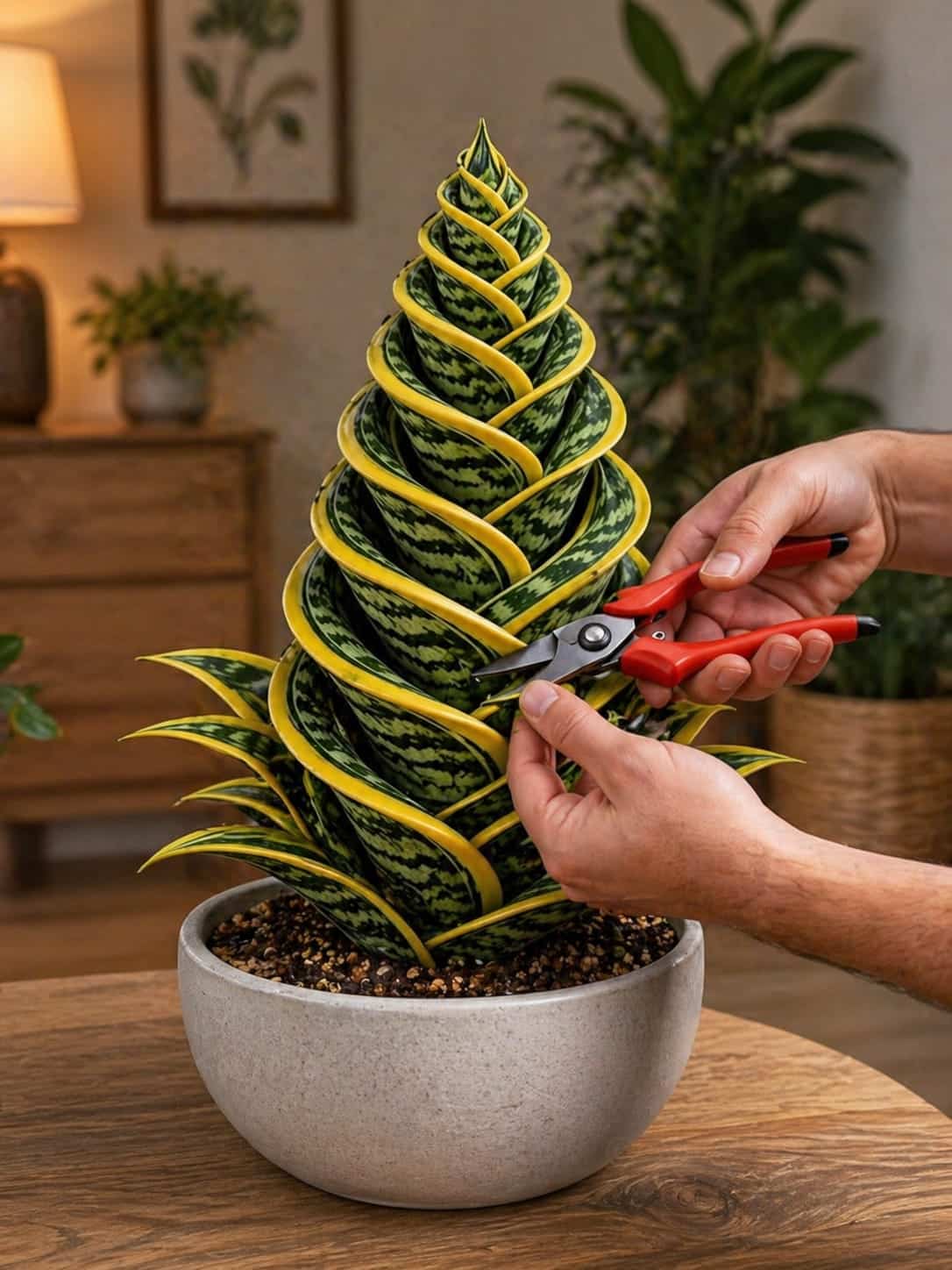
The pot in the image is low and rounded, which helps visually balance the tall plant. This type of container works well if it drains properly.
Do not choose a pot that is too large for the root system. Extra soil holds extra moisture. Snake plants usually prefer being slightly snug.
How to Water a Spiral Snake Plant
Watering should be careful and infrequent. Snake plants store water in their leaves and rhizomes, so they do not need constant moisture.
Water only when the soil is dry. Check deep into the pot, not just the surface. When you water, water thoroughly and let excess drain away. Empty the saucer afterward.
Do not pour water into tight leaf layers where it can become trapped. In a spiral-shaped plant, leaves may overlap more closely than usual, so be extra careful. Aim water at the soil, not into the center of the leaf tower.
If water collects between leaves, blot it with a cloth. Trapped moisture can cause rot.
Best Light for a Spiral Snake Plant
Bright indirect light is best. Snake plants tolerate low light, but they grow more slowly and may not hold compact shapes as well. Bright light encourages stronger, firmer growth.
Morning sun is usually safe. Filtered afternoon light can also work. Avoid suddenly placing a low-light snake plant into harsh direct sun because the leaves may burn.
If the plant is indoors far from a window, use a grow light. Good light helps the plant produce new leaves that can be trained into the spiral form.
The more controlled the shape, the more important even lighting becomes.
Should You Fertilize a Shaped Snake Plant?
Use fertilizer lightly. Snake plants do not need much. Too much fertilizer can cause weak growth, brown tips, or salt buildup in the soil.
During spring and summer, use a cactus or succulent fertilizer at half strength or weaker. Once every month or two during active growth is enough for most indoor plants.
Do not fertilize heavily to force growth. Fast growth may be softer and harder to shape. Slow, firm growth is better for a sculptural plant.
Do not fertilize in winter unless the plant is actively growing in bright conditions.
How to Keep the Yellow Edges Bright
Variegated snake plants need enough light to keep their yellow margins looking bright. In very low light, the plant may still survive, but growth can become duller or slower.
Give bright indirect light. Clean the leaves occasionally with a damp cloth so dust does not hide the color. Avoid harsh chemicals or leaf shine products.
If new growth appears less variegated, the plant may need better light. However, variegation also depends on the variety and individual plant.
The yellow edges are what make the spiral look so dramatic, so keep the leaves clean and well-lit.
Can You Make the Spiral Tighter?
You can make the spiral tighter only to a point. Snake plant leaves need space and airflow. If you force them too tightly together, moisture can become trapped, and leaves may crack or rot.
A tight appearance should come from natural overlap, not compression. Use young leaves, careful arrangement, and selective pruning. Do not strap the whole plant into a tight cone.
If the plant naturally grows too open, consider adding new divisions around the base or starting with a more compact variety.
A healthy loose spiral is better than a damaged tight spiral.
How to Maintain the Shape Over Time
Maintenance is simple but regular. Every few weeks, inspect the plant. Look for new leaves growing outside the pattern. Decide whether to guide them, leave them, or prune them later.
Check ties and clips. Loosen anything tight. Rotate the pot. Wipe dust from leaves. Remove damaged leaves at the base.
As the plant produces pups, decide whether they help the design. Some pups can be trained into the spiral. Others may grow too far from the center and can be removed or repotted.
The shape is never completely finished. It is a living design that changes as the plant grows.
What to Do With Pups Around the Base
Snake plant pups can make the display fuller, but they can also disrupt the clean tower shape. If pups appear close to the center and grow upright, they may help the design. If they appear far out at the edge and grow sideways, they may make the plant look messy.
You can leave pups until they are large enough to evaluate. If you want to remove one, wait until it has its own roots or rhizome connection. Then separate it with clean tools and plant it in its own pot.
Pups are useful for creating future spiral plants. Young pups are easier to train than old leaves.
Can You Sell or Gift a Spiral Snake Plant?
A well-shaped spiral snake plant makes a beautiful gift because it looks unusual and high-end. It can also be a unique item for plant sellers or decorators. However, the plant should be healthy and stable before gifting or selling.
Make sure the pot drains, the plant is rooted, and the leaves are not being held in place by hidden tight wires that may damage them later. Include care instructions so the new owner knows not to overwater or force the leaves.
A shaped plant needs the same care as a regular snake plant, with extra attention to trapped water and tie maintenance.
Common Mistakes With the Braided Snake Plant Trick
Trying to Bend Mature Leaves
Old snake plant leaves are stiff. Forcing them can cause cracks and permanent damage.
Using Tight Wire
Wire can cut into leaves. Use soft ties or padded supports instead.
Pruning Too Much
Removing too many leaves weakens the plant and slows growth.
Using a Pot Without Drainage
A decorative plant still needs drainage. Without it, roots can rot.
Watering Into the Leaf Tower
Water trapped between overlapping leaves can cause rot. Water the soil only.
Keeping the Plant in Low Light
Low light slows growth and makes shaping take much longer.
Expecting Instant Results
This is a gradual training project, not a one-day craft.
Signs the Training Is Working
The training is working if the leaves remain firm, upright, and healthy. New growth should appear in a controlled direction. The spiral should become more visible over time. The plant should not show cracks, soft spots, or yellowing from stress.
The soil should dry normally between waterings. The plant should stay stable in the pot. Ties should not leave marks.
A successful shaped snake plant looks intentional but still alive and natural. It should not look squeezed, bruised, or overworked.
Signs You Should Stop Training
Stop training if leaves crack, crease, yellow, soften, or develop wet spots. Also stop if the plant becomes loose in the pot or shows signs of root stress.
Remove tight ties. Let the plant recover in bright indirect light. Avoid watering too often. If rot appears, cut away damaged parts and repot if needed.
It is better to pause and protect the plant than to chase a perfect shape.
A Simple Spiral Snake Plant Care Routine
Here is a safe routine for maintaining a shaped snake plant:
- Keep the plant in bright indirect light.
- Rotate the pot every one to two weeks.
- Water only when the soil is dry.
- Avoid getting water trapped between leaves.
- Use soft ties for young leaves only.
- Check ties regularly and loosen them.
- Prune damaged or awkward leaves sparingly.
- Use gritty succulent soil.
- Keep the pot stable and well-drained.
- Feed lightly during active growth.
This routine keeps the plant healthy while allowing the shape to develop slowly.
Frequently Asked Questions
Can you really braid a snake plant?
You cannot braid mature snake plant leaves like soft vines, but you can train young leaves and arrange multiple divisions to create a braided or spiral effect.
Will bending snake plant leaves hurt them?
It can if the leaves are mature or forced too much. Only guide young flexible leaves gently.
How long does it take to make a spiral snake plant?
It can take months or years, depending on the plant. Arranging several young divisions can create the look faster.
What type of snake plant is best?
Compact variegated snake plants with yellow edges are best because the leaf margins create the spiral ribbon effect.
Should I use wire to shape the leaves?
Only use padded or soft supports. Bare wire can cut or bruise the leaves.
Can I prune snake plant leaves for shape?
Yes, but sparingly. Remove damaged or awkward leaves at the base with clean shears.
Will a cut snake plant leaf grow back?
A cut leaf will not regrow from the cut point. New growth comes from the rhizome or new pups.
Can this shape cause rot?
It can if water gets trapped between tight leaves. Water the soil carefully and keep the leaf tower dry.
Can I make this shape from pups?
Yes. Young pups are one of the best ways to start a spiral arrangement because they are easier to position.
Does a spiral snake plant need special care?
It needs normal snake plant care, plus extra attention to gentle training, tie checks, and avoiding trapped moisture.
Final Thoughts
The braided snake plant trick is one of the most striking ways to turn a common houseplant into a living sculpture. With its stacked green leaves and bright yellow edges, a spiral snake plant can look like a tropical pinecone, a natural tower, or a carefully designed botanical centerpiece.
The key is to understand what the trick really is. It is not about forcing mature leaves into impossible bends. Snake plant leaves are firm and can crack if twisted too aggressively. The safe method is to guide young leaves, arrange divisions carefully, prune selectively, and let the plant grow into the shape over time.
Start with a healthy compact snake plant. Use bright indirect light, gritty soil, and a pot with drainage. Train only flexible young growth with soft ties. Prune sparingly. Rotate the pot for even light. Keep water out of the tight leaf layers. Let the plant dry between waterings.
If you want a faster spiral effect, plant several young snake plant divisions in a circular pattern around a central point. Angle them gently in the same direction and allow them to grow together. This creates the illusion of a living braid without damaging stiff mature leaves.
The result may not happen overnight, but that is part of the beauty. A shaped snake plant is a slow living project. Each new leaf adds another layer to the design. Each careful adjustment helps the plant become more sculptural. Over time, the plant can become a centerpiece that looks rare, elegant, and completely unique.
Used wisely, the braided snake plant trick is not just a plant hack. It is a creative way to work with the natural shape of the plant. The goal is not to control every leaf harshly, but to guide the plant into a form that looks intentional while keeping it healthy.
With patience, soft training, careful pruning, and the right growing conditions, your snake plant can become much more than an easy-care houseplant. It can become a bold indoor sculpture that brings structure, color, and living art into your home.